Table of Contents >> Show >> Hide
- From Brain Cells to Code: The Basic Idea
- Anatomy of an Artificial Neural Network
- How Neural Networks Learn: Training and Backpropagation
- Main Types of Artificial Neural Networks
- Everyday Applications of Artificial Neural Networks
- Strengths and Limitations of Artificial Neural Networks
- A Short History of Artificial Neural Networks
- Should You Learn About Artificial Neural Networks?
- Real-World Experiences with Artificial Neural Networks
- Wrapping Up
If you have ever let your phone unlock with your face, asked a voice assistant for the weather, or scrolled through eerily accurate video recommendations, you have already met an artificial neural network (ANN). You just didn’t get properly introduced.
At a high level, an artificial neural network is a type of machine learning model that learns patterns from data by connecting lots of simple math units called “neurons” into layers. Together, these layers can recognize images, translate languages, predict prices, and do many other tasks that are hard to describe with traditional, hand-written rules.
In this guide, we’ll unpack what an artificial neural network is, how it works under the hood, where you see it in everyday life, and why it’s both powerful and imperfect. We’ll keep the math light, the analogies friendly, and the jargon under control.
From Brain Cells to Code: The Basic Idea
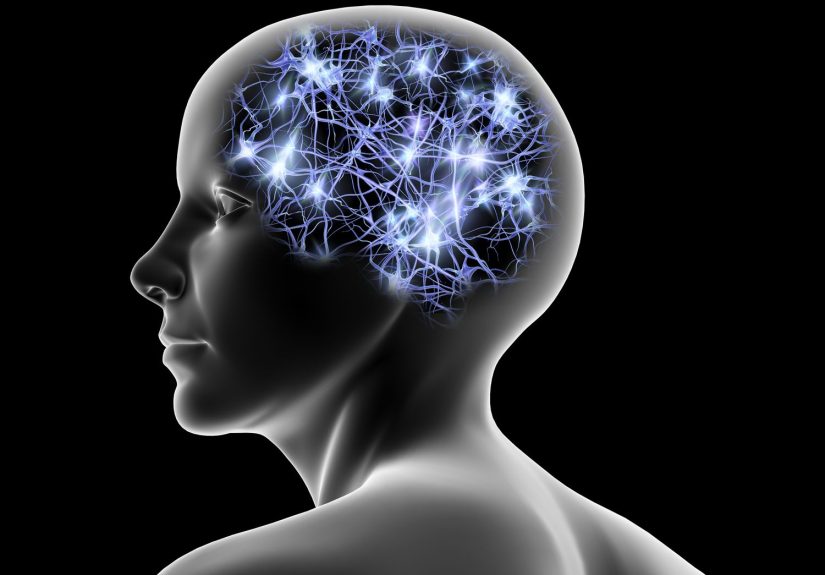
The “neural” in neural network comes from biology. Your brain is made of billions of neurons that receive signals, add them up, decide whether to “fire,” and pass signals on. An artificial neural network borrows this ideabut in code, not biology.
In an ANN:
- Inputs are numbers that represent something in the real world: pixel values in an image, word embeddings in a sentence, sensor readings, and so on.
- Neurons are math units that combine those inputs with adjustable weights, add a bias, and push the result through an activation function.
- Outputs are predictions: “cat vs dog,” “spam vs not spam,” “next word in the sentence,” or a numeric value like a price.
The network’s job is to learn which patterns in the inputs lead to which outputs. It does that by adjusting its internal weights while training on many labeled exampleskind of like a very patient student that gets millions of practice questions.
Anatomy of an Artificial Neural Network
Most basic artificial neural networks share a similar structure, sometimes called a multilayer perceptron or feedforward network.
Input, Hidden, and Output Layers
Picture the network as stacked layers of dots connected by lines:
- Input layer: The first layer where raw data enters the network. Each neuron here typically corresponds to one input feature, such as a pixel brightness or a numeric attribute.
- Hidden layers: One or more layers in the middle that do most of the computation. They’re called “hidden” because you don’t directly see their values as part of the final output.
- Output layer: The last layer that produces predictions in a useful formatprobabilities for each class, a single number, or multiple values for a more complex task.
When people talk about deep neural networks, they usually mean networks with several hidden layers stacked between the input and output.
Weights, Biases, and the Neuron’s Math
Every connection between neurons has a weight, a number that tells the network how strongly one neuron should influence another. Each neuron also has a bias, which shifts its output up or down.
A simplified neuron does something like this:
- Takes its inputs and multiplies each by a weight.
- Adds them all up and adds a bias.
- Passes that sum into an activation function, such as ReLU or sigmoid, which introduces non-linearity.
Without the activation function, the whole network would behave like one big linear equation and wouldn’t be able to handle complex patterns like curved decision boundaries, shapes in images, or language structure.
Forward Pass: How Predictions Happen
When you “run” a neural network on new data:
- The input values are fed into the input layer.
- Each hidden layer takes inputs from the previous layer, computes its neuron outputs, and passes them on.
- The output layer turns those final hidden values into a prediction, for example a probability that the image contains a cat.
This process is called the forward pass. It’s just matrix multiplications, additions, and activation functions, repeated layer by layer.
How Neural Networks Learn: Training and Backpropagation
Knowing the structure is one thing; the magic is how an artificial neural network learns. That happens through a process called training.
Loss Functions: Measuring “How Wrong” the Network Is
First, you give the network many examples where you already know the correct answer:
- Images labeled “cat” or “dog.”
- House features with the known sale price.
- Sentences with the next word already known.
The network makes a prediction, and a loss function measures how far that prediction is from the truth. Common loss functions include cross-entropy for classification and mean squared error for regression.
Gradient Descent and Backpropagation
To improve, the network needs to tweak its weights and biases to reduce the loss. It uses:
- Gradient descent: An optimization algorithm that nudges the weights in the direction that decreases the loss, like walking downhill toward the bottom of a valley.
- Backpropagation: An algorithm that efficiently computes how each weight contributed to the error, layer by layer, using the chain rule from calculus.
Training repeats this process thousands or millions of times over random batches of your data. Over time, the network “fits” to the data and becomes good at making predictions on new, similar examplesideally without memorizing them too literally.
Main Types of Artificial Neural Networks
“Artificial neural network” is a broad family name. Under that umbrella, you’ll find several common types, each suited to particular data and problems.
Feedforward Neural Networks (FNNs / MLPs)
These are the classic fully connected networks where information flows in one directionfrom input to hidden layers to outputwith no loops. They’re widely used for tabular data, simple classification tasks, and as building blocks inside more complex systems.
Convolutional Neural Networks (CNNs)
CNNs are specialized for grid-like data such as images and videos. Instead of connecting every input pixel to every neuron, they use convolutional filters that slide over the input, detecting features like edges, corners, textures, and eventually complex shapes.
This architecture has made CNNs the backbone of:
- Image classification (Is this a dog or a cat?)
- Object detection (Where is the stop sign in this photo?)
- Medical imaging analysis
Recurrent Neural Networks (RNNs)
RNNs add the idea of memory. They’re designed for sequencestext, audio, time serieswhere earlier steps matter later on. An RNN cell not only processes the current input but also passes along a hidden state that carries information from previous steps.
Variants like LSTMs and GRUs improved the ability of RNNs to learn long-range dependencies and have been used in language modeling, speech recognition, and sequence forecasting. Today, they often share the stage (or get replaced) by transformer architectures, but they’re still a core concept.
Other Architectures You’ll Hear About
- Transformers: Power many modern language and vision models by using attention mechanisms instead of simple recurrence.
- Autoencoders: Learn compressed representations (embeddings) of data.
- Generative Adversarial Networks (GANs): Pit two networks against each other to generate realistic images, audio, and more.
Everyday Applications of Artificial Neural Networks
Neural networks have quietly woven themselves into daily life. A few real-world examples:
- Image and video recognition: Tagging people in photos, detecting lane markings in self-driving cars, scanning x-rays or MRIs for anomalies.
- Natural language processing: Autocomplete, grammar correction, machine translation, chatbots, and large language models.
- Speech and audio: Voice assistants, real-time transcription, speech-to-text for meetings and calls.
- Recommendations: Product, music, or video recommendations based on your history and the behavior of similar users.
- Predictive analytics: Forecasting demand, spotting fraud, or scoring leads in sales and marketing.
You don’t see the networks themselvesonly the polished features on top of them. But under the hood, they’re just lots of matrix multiplications, learned weights, and activation functions doing fast, specialized pattern recognition.
Strengths and Limitations of Artificial Neural Networks
Why Neural Networks Are So Powerful
Artificial neural networks shine when:
- Patterns are complex: They can model highly non-linear relationships that are difficult to hand-engineer.
- Data is abundant: With enough labeled examples, they can outperform many traditional algorithms.
- Features are high-dimensional: Images with millions of pixels or text with thousands of dimensions are their comfort zone.
- The same architecture can be reused: You can often take a network designed for one task and fine-tune it for another, saving time and compute.
The “Black Box” Problem and Other Drawbacks
Of course, artificial neural networks are not magical. Some of their main limitations include:
- Opacity: It’s often hard to explain exactly why a network made a particular prediction. This “black box” nature is a challenge in high-stakes domains like healthcare, finance, and law where explanations are required.
- Data hunger: Deep neural networks usually need a lot of high-quality, labeled data. With too little or biased data, they can overfit or learn unfair patterns.
- Computational cost: Training large models can be expensive and energy-intensive, requiring GPUs or specialized accelerators.
- Sensitivity to training choices: Learning rate, batch size, architecture depth, and regularization hyperparameters matter. Poor choices can lead to unstable training or weak performance.
Because of these issues, there’s a growing focus on explainable AI, better data practices, and techniques like regularization, early stopping, and cross-validation to keep neural networks grounded in reality rather than memorizing quirks of the training set.
A Short History of Artificial Neural Networks
Artificial neural networks are not a brand-new idea that appeared with phone cameras and streaming appsthey’ve been in development for decades.
- 1940s–1950s: Early mathematical models of neurons and the first perceptrons show that simple networks can learn basic patterns.
- 1960s–1970s: The limitations of simple perceptrons are exposed, funding dries up, and one of the early “AI winters” arrives.
- 1980s–1990s: Backpropagation and multilayer networks trigger renewed interest as researchers show that deeper networks can approximate complex functions.
- 2010s–today: Massive datasets, powerful hardware, and new architectures like CNNs and transformers push neural networks to state-of-the-art results in vision, language, and more, powering what we now call deep learning.
The modern AI boom is largely the story of artificial neural networks finally getting enough data and compute to show what they can do.
Should You Learn About Artificial Neural Networks?
If you work with data, software, or digital products, understanding the basics of artificial neural networks is increasingly valuable. You don’t need a PhD in math to grasp the core ideas:
- They approximate complex relationships between inputs and outputs.
- They learn from data by adjusting internal weights using loss functions and backpropagation.
- They have strengths (flexibility, accuracy) and weaknesses (opacity, data requirements, compute cost).
Even if you never implement one from scratch, knowing what ANNs are good atand where they can failhelps you evaluate AI tools, ask better questions, and design more responsible systems.
Real-World Experiences with Artificial Neural Networks
To make all of this less abstract, it helps to look at what working with artificial neural networks actually feels like in practice. Whether you are building your first basic classifier or experimenting with a more advanced architecture, some patterns show up again and again.
The first surprise most people encounter is that data preparation takes far more time than writing the model code. Defining a neural network in a modern framework can take just a few lines, but cleaning mislabeled examples, dealing with missing values, and balancing classes can stretch into days or weeks. A model trained on noisy or biased data might still reach an impressive accuracy metric, yet fail spectacularly when it encounters real-world cases that were under-represented in the training set.
Another common experience is wrestling with overfitting. At the beginning, it is tempting to add more layers and more neurons, assuming that a bigger network will automatically perform better. In practice, a model with too much capacity can memorize your training set, producing great results during development and disappointing results in production. Techniques like dropout, weight decay, data augmentation, and early stopping are not just academic ideas; they become the everyday toolkit for anyone running experiments with ANNs.
Developers also learn quickly that interpretability matters, even when stakeholders are initially focused on accuracy alone. For example, a credit-scoring model might technically work well, but regulators and customers will want to know why certain decisions were made. That leads teams to explore feature importance, saliency maps, or model-agnostic explanation tools. While these don’t fully open the black box, they can surface patterns such as “the model heavily relies on this particular feature,” which might raise fairness or compliance questions.
On the positive side, there is a real sense of satisfaction when a neural network starts to generalize. The first time you watch a CNN correctly classify photos it has never seen before, or see a language model generate fluent sentences from a prompt, it feels a bit like science fiction made real. Teams often iterate from a simple baselinemaybe a small feedforward network or a basic CNNthen layer on improvements: better input representations, more expressive architectures, transfer learning from a pre-trained model, and more careful hyperparameter tuning.
Finally, many organizations discover that successful neural network projects are as much about people and process as they are about architecture. Clear problem definitions, realistic success metrics, collaboration between domain experts and ML engineers, and continuous monitoring in production all matter. A technically elegant model that solves the wrong problem, or that drifts silently over time because the incoming data changed, will not deliver value for long. By combining a solid conceptual understanding of artificial neural networks with disciplined experimentation and good governance, teams can turn “smart” models into reliable, human-aligned systems.
Wrapping Up
An artificial neural network is, at its core, a flexible function approximator inspired by the brain, built from layers of simple neurons connected by weighted links. It learns from data, not from hand-coded rules, and has become the engine behind many modern AI breakthroughsfrom recognizing images and understanding speech to translating text and generating content.
At the same time, neural networks are not magic: they need lots of good data, can be hard to interpret, and must be designed and monitored thoughtfully to avoid bias, overfitting, and other pitfalls. Understanding what an artificial neural network isand what it is nothelps you use AI more effectively, responsibly, and creatively.