Table of Contents >> Show >> Hide
- Why sexuality gets “weird” the moment a culture gets organized
- When fertility became a public project
- Love, desire, and the gods: when romance gets a divine co-signer
- Law and status: the bedroom as a courtroom
- Pleasure as a life skill: India’s pragmatic, structured take
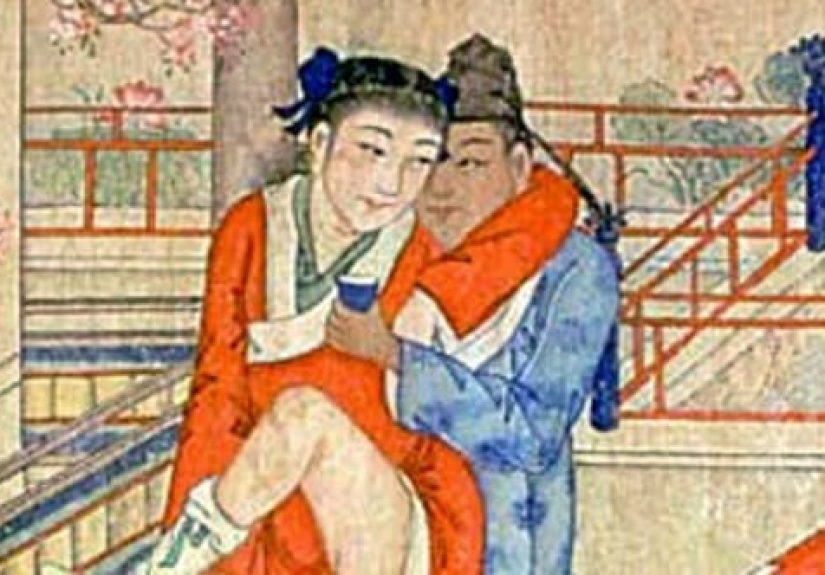
- Health, energy, longevity: China’s “bedchamber arts”
- Erotic art that wasn’t hiding: Japan’s pleasure quarters and “shunga”
- Gender diversity and sexuality beyond a simple binary
- Puritans, Victorians, and America’s talent for moral panic
- So what do we do with all this history?
- Extra: Modern experiences that make this history feel real (and surprisingly personal)
Human sexuality is universal. Human opinions about it? Wildly local. Across history, different societies have treated sex as a civic duty, a spiritual technology, a comedic art form, a legal landmine, a fertility lever, a social status badge, andoccasionallysomething people did privately without turning it into a whole philosophy. (That last one is the rarest vintage.)
This isn’t a “then everyone was either liberated or repressed” story. It’s messierand way more entertaining. Past cultures could be simultaneously practical and mystical, permissive and punitive, romantic and bureaucratic. The “crazy” part isn’t that humans had sex; it’s the creative ways societies explained it, controlled it, celebrated it, or tried to pretend it didn’t exist.
Why sexuality gets “weird” the moment a culture gets organized
The minute a community cares about inheritance, property, legitimacy, gods, or political stability, someone starts writing rules about who can sleep with whom. Sexuality becomes a social technology: it can bind families, produce heirs, build alliances, and keep the population growing. It can also spark scandals, lawsuits, rivalries, and “helpful” moral campaigns that are never actually helpful.
So when you look at old sexual norms, don’t ask only, “Were they prudes?” Ask: “What were they trying to protect?” The answer is usually some blend of land, lineage, labor, and legitimacywith a side of superstition, because humans love a bonus feature.
When fertility became a public project
In many ancient societies, sex wasn’t just personal; it was agricultural. People worried about harvests, healthy births, and survival through harsh seasons. That anxiety shaped rituals, art, and stories that linked bodies to the natural world.
Stone Age “influencers”: figurines, fertility, and big symbolic energy
Prehistoric figurinesespecially those emphasizing pregnancy and reproductive featureshave often been interpreted as connected to fertility, childbirth, or ideals of fecundity. Whether they were goddesses, charms, teaching tools, or something else depends on the site and the scholar, but the theme is consistent: reproduction mattered enough to carve it into stone and carry it around.
Rome’s February mood: purification + fertility (and everyone’s opinions)
Ancient Rome hosted seasonal fertility and purification rites where sexuality symbolized renewal. These were not “rom-com holidays.” They were communal, noisy, and tied to health, luck, and the city’s future. The takeaway: some cultures treated sexuality less like a private confession and more like a public utilityawkward, vital, and occasionally chaotic.
Love, desire, and the gods: when romance gets a divine co-signer
Greek and Roman myth didn’t just allow desire; it built an entire pantheon around it. A goddess like Aphrodite wasn’t merely “love and beauty.” She represented a complicated force that could spark devotion, rivalry, fertility, and conflictbecause desire was understood as powerful enough to reshape lives.
In other words, ancient stories didn’t always moralize sex as “good” or “bad.” They treated it like weather: sometimes pleasant, sometimes destructive, and never fully under human control.
Law and status: the bedroom as a courtroom
If you want to see a culture’s real sexual priorities, don’t start with poetrystart with paperwork. In imperial Rome, for example, marriage was tied to citizenship, inheritance, and social order. That meant rules about adultery, eligibility, and “proper” unions could become state business.
Double standards with a stamp of approval
Many societies historically judged sexual behavior through the lens of status and gender. A common pattern: men’s sexuality was policed mainly when it threatened another man’s household, while women’s sexuality was policed as a matter of lineage control. It wasn’t “because Romans were uniquely dramatic.” It’s because inheritance is dramatic.
Marriage incentives: when governments tried to manage desire
Some Roman-era policies aimed to encourage marriage and childbearing and discourage relationships seen as socially destabilizing. The goal wasn’t romance; it was demographic stability and a neat transfer of property. This is the ancient equivalent of a government saying, “Have more kids,” and then creating a spreadsheet to enforce it.
Pleasure as a life skill: India’s pragmatic, structured take
In the popular imagination, the Kama Sutra is a single-note punchline. Historically, it’s better understood as part of a broader tradition about living wellwhere desire and pleasure are discussed with a surprisingly methodical tone. It treats attraction, relationships, and social etiquette as topics worthy of study, not just impulse.
The “crazy” part to modern readers isn’t that it existsit’s that it approaches sexuality like a craft. Not shameful. Not purely sacred. Not purely animal. More like: “This is a part of human life; let’s talk about it intelligently.”
Health, energy, longevity: China’s “bedchamber arts”
Some premodern Chinese traditions discussed sexuality using the vocabulary of balancevital energy, harmony, health, and longevity. In certain texts, sex wasn’t framed mainly as sin or romance; it was framed as a practice that could affect the body’s well-being, ideally governed by moderation and principles like yin-yang balance.
To be clear, this doesn’t mean “everyone did these practices” or that it was universally accepted. It means there were influential strands of thought that treated sexuality as connected to the body’s systemsalmost like an early wellness discourse, except with more cosmology and fewer water bottles.
Erotic art that wasn’t hiding: Japan’s pleasure quarters and “shunga”
Early modern Japan produced sophisticated urban entertainment districts“pleasure quarters”that shaped fashion, literature, and visual culture. Within that world, erotic art (including woodblock prints often called shunga) circulated across social classes and was intertwined with humor, aesthetics, and everyday life rather than restricted to a hidden “dirty” category.
What’s striking isn’t merely that explicit imagery existedmany cultures produced erotic art. It’s how openly it could function as a social artifact: a mix of satire, desire, and style. Modern viewers sometimes expect either strict repression or modern-style liberation. The reality is usually: “It’s complicated, and also people liked jokes.”
Gender diversity and sexuality beyond a simple binary
Many Indigenous North American communities historically recognized diverse gender roles and social responsibilities that don’t map neatly onto modern Western categories. Today, “Two-Spirit” is a modern umbrella term created by Indigenous people to describe these experiences in a culturally grounded way, while also acknowledging that each nation has its own language and traditions.
The “crazy” part here is a mirror pointed at us: modern society often acts like gender diversity is new. History suggests it’s not newwhat’s new is how aggressively some systems tried to erase it. Colonization and forced assimilation disrupted many traditional roles, and contemporary Two-Spirit communities have worked to reclaim and rebuild what was suppressed.
Puritans, Victorians, and America’s talent for moral panic
If you’ve ever pictured the Puritans as people who thought smiling was a gateway drug, you’re not alone. But historically, the story is more nuanced: many Puritan communities valued marital sex while harshly punishing sex outside marriage. The emphasis wasn’t “sex is bad.” It was “sex belongs in the right box, with the right label, supervised by the right authorities.”
Jump forward to the 19th-century Anglophone world and you get a fascinating contradiction: cultural ideals of restraint mixed with real, thriving markets for erotica, gossip, and scandal. In the United States, campaigns against “obscenity” culminated in laws that regulated what could be mailedsometimes sweeping up sex education and contraception information along the way. This is how a society can loudly preach modesty while quietly building an entire bureaucracy around policing desire.
So what do we do with all this history?
The point isn’t to crown a “best” sexual culture. Every society has blind spots, power imbalances, and contradictions. The point is to notice patternsespecially the ones that still show up today, wearing newer clothes.
- Sex is never just sex. It’s also about power, status, family, and social order.
- Shame and celebration often coexist. A culture can praise fertility while punishing desire.
- Words matter. Modern labels don’t always fit historical realities; context beats certainty.
- Control is the recurring theme. Whoever “owns” the rules about sex often “owns” a lot else too.
If past cultures teach us anything, it’s that humans will keep trying to explain sexuality with whatever tools they have: gods, laws, medicine, art, philosophy, or hashtags. The tools change. The impulse stays.
Extra: Modern experiences that make this history feel real (and surprisingly personal)
Reading about historical sexuality is one thing. Feeling how strange and familiar it isthat usually happens through experience: a museum visit, a book club argument, a classroom discussion that suddenly goes quiet, or a documentary moment that makes you realize, “Oh, we’ve been debating the same themes for thousands of years… just with different costumes.”
One common experience is encountering erotic or body-centered art in a serious settinglike a major museumand realizing your brain doesn’t know which social script to use. Are you supposed to giggle? Analyze symbolism? Look away politely? The best exhibits force a reset: they frame sexuality as history and culture, not as a punchline. Visitors often leave with a new respect for how art can record everyday life and how “adult” material can still be academically important, even when it makes people blush under fluorescent lights.
Another experience comes from reading primary textsanything from moral codes to relationship advice to medical writings. It’s oddly grounding. You expect ancient people to sound alien, and then a line pops up that feels intensely modern: someone complaining about temptation, jealousy, mismatched desire, gossip, or the politics of marriage. The details may differ, but the emotional circuitry is recognizable. That recognition can create empathyeven when you disagree with the rules those societies enforced.
People also talk about the “translation problem” as a lived experience, not just an academic one. You’ll hear a term and want to label it immediatelygay, straight, trans, liberated, oppressed. Then you learn the culture used different categories altogether: status mattered more than identity, community roles mattered more than private self-definition, or spirituality shaped what counted as “proper.” The experience is humbling. It reminds you that modern frameworks are useful, but they’re not universal measuring sticks.
For many readers, the biggest emotional punch comes from learning how often sexuality was used as a lever of control. It’s not always dramatic like a public trial; sometimes it’s a quiet structure that shapes who has options. That can make modern debates feel less random. You start seeing the through-line: laws and norms aren’t only about moralitythey’re about deciding who gets autonomy, who gets believed, and whose relationships count. Even without naming today’s headlines, the historical pattern is easy to recognize once you’ve seen it a few times.
Finally, there’s a surprisingly positive experience that comes from studying the diversity of human sexual cultures: a sense of possibility. Not “anything goes,” but “humans have tried many ways of living.” You can take comfort in the fact that no single era gets to declare itself the final authority on intimacy. If you’re curious, the best way to engage is gently: read widely, visit reputable museums and archives, listen to Indigenous voices when learning about Indigenous identities, and treat the past as a complex place full of real peoplenot as a costume closet for modern arguments. That’s when the history stops being trivia and starts becoming perspective.