Table of Contents >> Show >> Hide
- What Is the Hay Indian Plate Rack?
- Design: Industrial, Minimal, and Surprisingly Warm
- Materials and Build Quality
- Why the Hay Indian Plate Rack Is Great for Small Kitchens
- How to Style the Hay Indian Plate Rack
- Installation Tips Before You Mount It
- How to Clean and Maintain Stainless Steel
- Pros and Cons of the Hay Indian Plate Rack
- Who Should Buy the Hay Indian Plate Rack?
- How It Compares With Regular Dish Racks
- Buying Tips: What to Check Before Ordering
- Experience Section: Living With the Hay Indian Plate Rack
- Conclusion
The Hay Indian Plate Rack is the kind of kitchen object that quietly walks into a room and says, “Yes, I hold plates, but I also have taste.” At first glance, it looks like a practical wall-mounted dish rack made from polished stainless steel. Look a little longer, and you start to see why design lovers, small-space dwellers, and people with suspiciously beautiful coffee mugs are drawn to it. It is storage, display, drying rack, and kitchen personality all rolled into one shiny, organized frame.
Created by HAY, the Danish design brand known for turning everyday objects into thoughtful, modern pieces, the Indian Plate Rack brings together Scandinavian restraint and traditional Indian kitchen utility. Instead of hiding plates, cups, utensils, and bowls behind cabinet doors, this rack puts them within reach. It celebrates the everyday tools of eating and cooking. In other words, your dinner plates finally get their moment on the wall.
For anyone searching for a wall-mounted plate rack, a stainless steel kitchen organizer, or a stylish solution for a compact kitchen, the Hay Indian Plate Rack deserves a close look. It is functional enough for daily use, distinctive enough to change the mood of a kitchen, and sturdy enough to feel less like a trend and more like a long-term design choice.
What Is the Hay Indian Plate Rack?
The Hay Indian Plate Rack is a wall-mounted kitchen storage rack made from stainless steel. It is designed to organize and display plates, cups, cutlery, bowls, and other everyday kitchen items. Unlike a typical countertop dish rack that sits beside the sink and quietly steals valuable workspace, this rack uses vertical wall space. That makes it especially useful in apartments, galley kitchens, studio homes, rental-friendly layouts with limited counters, and any kitchen where every square inch has a job interview.
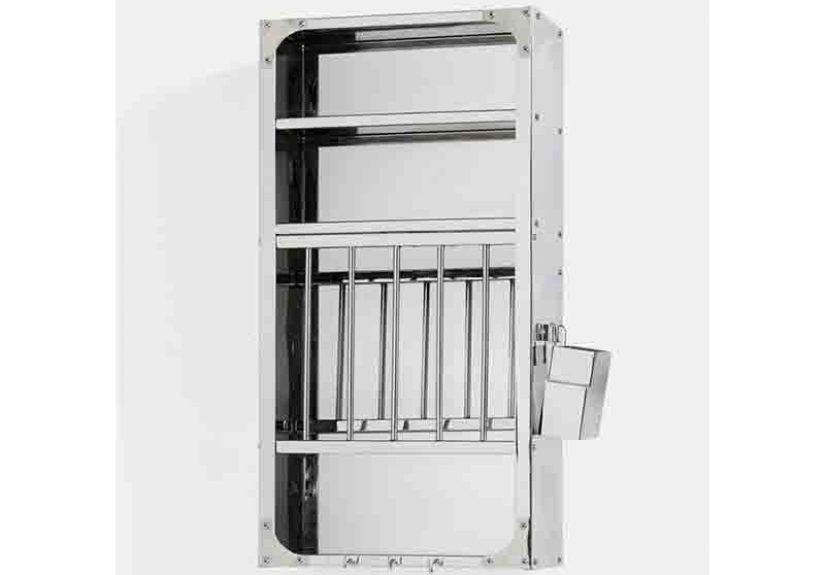
The rack usually includes multiple storage zones: vertical slots for plates, open shelves for bowls or cups, hooks for mugs or utensils, and a side compartment for cutlery. The exact layout may vary by size or retailer listing, but the central idea is consistent: keep your most-used kitchenware visible, dry, and easy to grab.
Why It Is Called an “Indian Plate Rack”
The name refers to a traditional type of Indian kitchen storage rack. In many Indian kitchens, stainless steel wall racks have long been used to dry and store dishes efficiently. The design often allows water to drip downward, keeping plates upright and saving counter space. HAY’s version takes inspiration from that practical format and gives it a clean, contemporary design language suitable for modern homes.
This blend of cultural utility and modern design is what makes the product interesting. It is not merely a decorative shelf pretending to be useful. It comes from a real storage logic: dishes need airflow, kitchens need order, and people need their favorite mug before they can form complete sentences in the morning.
Design: Industrial, Minimal, and Surprisingly Warm
The Hay Indian Plate Rack has a polished stainless steel finish that gives it an industrial edge. However, it does not feel cold or overly commercial when styled well. Its grid-like structure, open compartments, and reflective surface can work beautifully against tile, painted plaster, wood cabinetry, or colorful kitchen walls.
In a white kitchen, the rack adds shine and structure. In a darker kitchen, it provides contrast. In a colorful kitchen, it acts almost like a neutral frame, letting plates, mugs, and bowls bring in personality. If your dishes are mismatched, it can make them look intentionally collected. If your dishes match perfectly, it can make your kitchen look like it has its life together, even if there is a mystery jar in the refrigerator from 2021.
Best Design Styles for This Rack
The Hay Indian Plate Rack works particularly well in modern, Scandinavian, industrial, minimalist, eclectic, and small-space kitchens. It can also be used in a farmhouse-style kitchen if balanced with wood, ceramic dishes, woven baskets, or warm lighting. The key is contrast. Stainless steel can look sleek and practical, but pairing it with softer textures keeps the kitchen from feeling like a restaurant prep station.
Materials and Build Quality
Stainless steel is one of the reasons the Hay Indian Plate Rack feels so practical. Kitchens are wet, steamy, busy places. Between rinsed dishes, splashed sink water, cooking oils, and the occasional dramatic pasta night, kitchen storage needs to handle real life. Stainless steel is valued because it resists corrosion, wipes clean easily, and has a long-lasting appearance when cared for properly.
The polished steel surface also helps the rack feel more like a design feature than a purely utilitarian tool. Instead of disappearing into the background, it reflects light and creates a focal point. This is useful in smaller kitchens where one bold, well-chosen object can do more for the room than several tiny decorative accessories.
Medium vs. Large Size Considerations
The Hay Indian Plate Rack has appeared in different size options, including medium and large versions. The medium version is often better for compact kitchens, narrow walls, coffee stations, or smaller households. The large version suits people who cook often, own more tableware, or want the rack to act as a major storage feature. Before choosing, measure the wall carefully and think about what you actually need to store.
A helpful rule: do not buy the largest rack simply because it looks impressive online. Buy the size your kitchen can support visually and structurally. A large rack on a tiny wall can feel like a stainless steel billboard. A medium rack in the right spot can look intentional, balanced, and far more elegant.
Why the Hay Indian Plate Rack Is Great for Small Kitchens
Small kitchens often suffer from what might be called “countertop creep.” First, there is a toaster. Then a coffee maker. Then a fruit bowl, a cutting board, a dish rack, three bottles of olive oil, and suddenly there is nowhere to slice a lemon. The Hay Indian Plate Rack helps by moving dish storage upward onto the wall.
Because it combines plate storage, cup storage, hooks, and cutlery space, it can reduce the need for several separate organizers. That matters in city apartments, older homes, tiny kitchens, shared spaces, and homes without generous upper cabinets. It also keeps everyday items visible, which can make cooking and cleaning feel faster.
Vertical Storage Is the Secret Weapon
When counter and cabinet space are limited, walls become valuable real estate. A wall-mounted dish rack uses space that often goes unused. Installed above a sink, near a prep area, or beside open shelving, it can turn a blank wall into one of the hardest-working areas in the kitchen.
The advantage is not just storage capacity. It is workflow. Plates can go from washing to drying to storage without traveling across the room. Mugs can hang where coffee is made. Cutlery can sit close to the dish zone. Good kitchen organization is not about making everything look perfect. It is about reducing small daily annoyances before they multiply like unpaired socks.
How to Style the Hay Indian Plate Rack
Styling an open kitchen rack takes a little restraint. Because everything is visible, the goal is to make everyday objects look natural rather than staged. Start with your most-used plates and bowls. Choose items that stack neatly and are durable enough for daily handling. Then add mugs, small cups, serving pieces, or a small container for utensils.
Color matters. White dishes create a clean, gallery-like look. Earth-tone ceramics make the rack feel warmer. Stainless steel cups or utensils emphasize the industrial aesthetic. Colorful mugs can bring playfulness, especially if the rest of the kitchen is neutral.
Simple Styling Formula
A practical formula is: plates in the main slots, bowls on the shelf, mugs on hooks, utensils in the side holder, and one charming object for personality. That object might be a tiny plant, a brass spoon, a small ceramic dish, or a favorite espresso cup. Do not overload it with decoration. The rack already has a strong shape, and too much styling can make it look like a flea market had a caffeine rush.
Installation Tips Before You Mount It
Because the Hay Indian Plate Rack is designed to hold dishes, cups, and utensils, proper installation matters. This is not the moment to rely on hope, vibes, and one lonely screw. Always check the wall type first. Drywall, plaster, brick, tile, and concrete require different anchors and drilling methods.
If possible, mount the rack into wall studs or use heavy-duty anchors rated for the expected load. Remember that the weight includes the rack plus dishes. Plates may look innocent, but stack enough of them together and they become a small architectural event.
Where to Place It
The most practical location is near the sink or dishwasher. If the rack will be used for drying, placing it above or near the sink helps manage drips. If it will be used primarily as display storage, it can go above a counter, coffee bar, or prep zone. Leave enough clearance below for countertop appliances, faucets, or cooking tasks.
Also consider reach. The rack should be high enough to stay out of the way but low enough for daily use. If you need a ladder every time you want a cereal bowl, the rack is no longer storage. It is a test of commitment.
How to Clean and Maintain Stainless Steel
Stainless steel is durable, but it still needs gentle care. For everyday cleaning, use a soft cloth, warm water, and mild dish soap. Dry the surface afterward to prevent water spots. A microfiber cloth is ideal because it cleans without scratching and helps maintain shine.
Avoid steel wool, harsh abrasive pads, bleach, and aggressive cleaners. These can scratch or damage stainless steel surfaces. If fingerprints appear, wipe in the direction of the grain when possible. For stubborn spots, use a cleaner made for stainless steel and test it on a small area first.
Keeping It Beautiful Over Time
The easiest maintenance routine is frequent light cleaning. Wipe it down when you clean the counter. Remove dishes occasionally and clean around the slots, hooks, and cutlery compartment. If the rack is used for drying wet dishes, make sure the wall behind it can tolerate moisture and that water does not collect in hidden corners.
Pros and Cons of the Hay Indian Plate Rack
Pros
The biggest advantage is space efficiency. It moves dishes off the counter and uses vertical space. It also combines several functions in one object: dish rack, shelf, utensil holder, cup hanger, and display piece. The stainless steel construction is durable, easy to clean, and visually striking. For design-minded homeowners, it adds character without requiring a full kitchen renovation.
Cons
The open design is not for everyone. If you prefer hidden storage, this rack may feel too exposed. It also requires careful installation, especially when loaded with heavy plates. Stainless steel can show fingerprints and water marks, so occasional cleaning is necessary. Finally, because it is a designer piece, it may cost more than basic dish racks or standard wall shelves.
Who Should Buy the Hay Indian Plate Rack?
The Hay Indian Plate Rack is ideal for people who want storage that looks intentional. It suits apartment dwellers, design enthusiasts, fans of open shelving, and anyone who likes practical objects with personality. It is especially useful for kitchens without enough upper cabinets or for people who want everyday dishes within easy reach.
It may not be the best fit for someone who owns very delicate china, dislikes visible storage, or does not want to drill into the wall. It also may not suit households where dishes are constantly overloaded, stacked randomly, or handled by tiny humans who believe gravity is a toy.
How It Compares With Regular Dish Racks
A regular countertop dish rack is usually cheaper and easier to move. It is also better for renters who cannot drill into walls. However, it takes up counter space and often looks temporary. The Hay Indian Plate Rack feels more permanent, more architectural, and more decorative.
Compared with open shelves, the Hay rack is more specialized. A shelf can hold almost anything, but this rack is designed around dish storage. The plate slots, hooks, and cutlery compartment make it more efficient for kitchenware. Compared with closed cabinets, it offers faster access and better visual interest, but less dust protection.
Buying Tips: What to Check Before Ordering
Before buying the Hay Indian Plate Rack, check the dimensions carefully. Confirm the width, height, and depth, then tape those measurements on your wall to see how it will feel in the room. Make sure the rack will not interfere with cabinet doors, range hoods, faucets, windows, or nearby shelves.
Check whether mounting hardware is included and whether it suits your wall type. Look at product photos closely to understand the layout of shelves, hooks, and compartments. If buying from a resale marketplace, inspect the condition, especially for scratches, dents, missing hardware, or signs of corrosion.
Ask Yourself These Questions
How many plates do you want to store? Will you use it for drying, display, or both? Do your plates fit the slots? Are your mugs light enough for the hooks? Is the wall strong enough? Does the stainless steel finish match your faucet, appliances, or cabinet hardware? These questions may sound small, but they prevent the classic design mistake known as “beautiful object, wrong house.”
Experience Section: Living With the Hay Indian Plate Rack
Using the Hay Indian Plate Rack changes the rhythm of a kitchen in small but noticeable ways. The first thing you notice is how much calmer the counter feels. A regular dish rack often becomes a landing zone for everything: plates, knives, lids, random measuring spoons, and the one cup nobody admits using. A wall-mounted rack encourages better habits because every item has a visible place. Plates stand upright. Mugs hang neatly. Utensils move into their own compartment. The kitchen starts to feel less like a storage puzzle and more like a working room.
The second experience is visual. At first, you may worry that open storage will look messy. But if you keep only daily-use pieces on the rack, the effect can be surprisingly polished. A stack of white plates, a few ceramic bowls, two or three mugs, and some stainless steel utensils can look like a design magazine moment without trying too hard. It also makes your tableware choices more intentional. Suddenly, the chipped mug from a promotional conference in 2016 has to compete with your nice ceramic cup. The rack does not judge, but it does reveal.
In daily use, the convenience is real. When the rack is placed near the sink, unloading washed dishes becomes faster. Plates do not need to be dried and hidden away immediately. Cups can hang where they get airflow. If the kitchen has no dishwasher, this can make a meaningful difference. For people who cook often, having plates and bowls within arm’s reach makes meal prep smoother. You stop opening and closing cabinet doors twenty times a day, which is good news for both your patience and your cabinet hinges.
There is also a lifestyle element. The Hay Indian Plate Rack works best when you edit what you own. It rewards people who keep their everyday kitchenware simple and useful. If you have twelve novelty mugs, eight chipped bowls, and plates from four different life phases, the rack may gently encourage a little decluttering. That is not a bad thing. Good storage is not just about adding more places to put stuff. Sometimes it is about admitting that nobody needs a mug shaped like a llama unless it brings genuine joy.
Maintenance becomes part of the experience too. Stainless steel looks beautiful when clean, but it shows fingerprints and water spots. A quick wipe with a soft cloth keeps it looking sharp. The open structure also means dust can settle if items are not used often, so this rack is best for everyday pieces rather than special-occasion dishes. If you use it actively, dust is less of an issue because plates and cups rotate in and out naturally.
The most satisfying part is how the rack makes a kitchen feel more personal. It turns ordinary objects into part of the room’s design. Your plates, cups, and utensils are no longer hidden tools. They become the texture of daily life. The Hay Indian Plate Rack is practical, yes, but it also gives a kitchen a sense of confidence. It says the objects you use every day deserve to be organized, accessible, and maybe even admired.
Conclusion
The Hay Indian Plate Rack is more than a stylish kitchen accessory. It is a smart storage solution inspired by a practical tradition and refined through modern Danish design. With its stainless steel build, wall-mounted format, open compartments, hooks, and shelves, it helps organize plates, cups, cutlery, and everyday kitchen tools while adding a bold visual element to the room.
It is especially valuable in small kitchens, open kitchens, and homes where storage needs to work harder. While it requires proper installation and a willingness to keep visible items tidy, the payoff is a kitchen that feels more efficient, more intentional, and far more interesting. For anyone who wants a dish rack that does not look like an afterthought, the Hay Indian Plate Rack is a strong contender.
Note: Product availability, dimensions, finishes, and pricing can vary by retailer and listing. Always confirm current details with the seller before purchasing or installing.