Table of Contents >> Show >> Hide
Hip-hop has never been a shy genre. It does not tiptoe into a room, apologize for the bass, and ask whether the snare is too loud. It arrives wearing confidence like a championship belt. So it makes perfect sense that some of rap’s most unforgettable artists put the word “Big” right in their names. Subtle? Not exactly. Effective? Absolutely.
The best rappers with Big in their names are not connected only by branding. They represent different eras, regions, flows, and ideas about what rap can be. Some were lyrical assassins from New York. Some helped make Southern hip-hop impossible to ignore. Some brought Detroit polish, Mississippi soul, New Orleans bounce, or Bronx pride to the microphone. Together, they show how one small word can carry a massive legacy.
This ranking is not about height, volume, or who owns the largest chain visible from space. It is about influence, technical skill, cultural impact, memorable albums, and the way each artist expanded hip-hop’s vocabulary. In other words, “Big” is not just a name here. It is a job description.
Why “Big” Became Such a Powerful Rap Name
In hip-hop, a name is never just a name. It is a logo, a warning label, a personal myth, and sometimes a whole marketing department wearing sneakers. “Big” signals presence. It tells listeners that the artist is larger than the block, larger than the beat, and occasionally larger than the record label’s expectations.
The word also works because hip-hop loves contrast. A rapper can be physically large, lyrically gigantic, emotionally huge, or culturally oversized. The best “Big” rappers used the name differently. The Notorious B.I.G. made it cinematic. Big Daddy Kane made it royal. Big L made it sharp enough to cut through concrete. Big Boi made it funky, futuristic, and proudly Southern.
The Best Rappers with Big in Their Names
1. The Notorious B.I.G. / Biggie Smalls
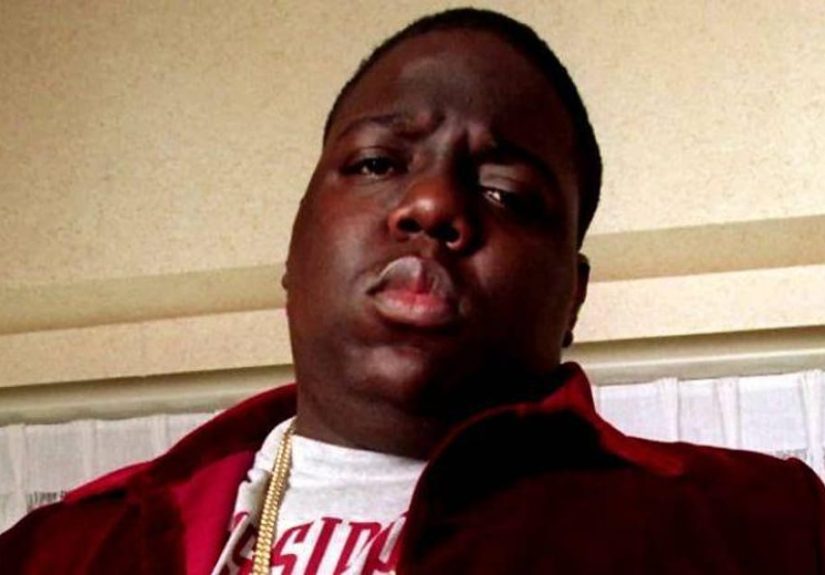
Any serious list of the best rappers with Big in their names has to begin with Christopher Wallace, better known as The Notorious B.I.G., Biggie Smalls, or simply Biggie. His career was brief, but his shadow over hip-hop is enormous. That is not fan exaggeration; that is rap history doing the math.
Biggie’s genius lived in his voice, timing, humor, and storytelling. He could sound relaxed while bending rhyme patterns into impossible shapes. On Ready to Die, he turned personal struggle, ambition, fear, charm, and street-level detail into one of the most important debut albums in rap. His second album, Life After Death, proved his range even further, moving between radio-ready hooks, narrative tracks, and heavyweight lyrical performances.
What separates Biggie from many technically gifted rappers is how effortless he sounded. He did not rap like someone solving a crossword puzzle in public. He rapped like the words had been waiting politely in line for him. His delivery was conversational, but the writing was surgical. He could be funny, menacing, vulnerable, smooth, and brutally direct without losing control of the song.
Biggie remains one of the most influential rappers of all time because he helped define the sound of 1990s East Coast rap while also proving that hardcore lyricism could dominate mainstream radio. That combination is rarer than a calm comment section.
2. Big Daddy Kane
Before rap flows became Olympic-level gymnastics, Big Daddy Kane was already doing backflips with syllables. Born Antonio Hardy, Kane emerged from Brooklyn and became one of the defining MCs of hip-hop’s golden era. His style was smooth, fast, clever, and confident enough to make a mirror ask for advice.
Big Daddy Kane’s importance is impossible to overstate. He helped shape the idea of the complete MC: battle-ready, stylish, charismatic, technically advanced, and able to command a stage. His classic records such as Long Live the Kane and It’s a Big Daddy Thing showcased elite breath control, internal rhymes, punchlines, and a delivery that could switch from velvet to steel in seconds.
Kane also influenced generations of rappers who studied his cadence and lyrical architecture. When people talk about “flow” as a serious art form, they are walking on roads Kane helped pave. He was not just rapping over beats; he was dancing with them, sparring with them, and occasionally making them look underqualified.
Among rappers with Big in their names, Big Daddy Kane represents royalty. The crown fits because he helped build the castle.
3. Big Pun
Big Pun, born Christopher Rios, brought Bronx lyricism into a new era with breathless technical skill and unforgettable charisma. His debut album, Capital Punishment, made history and confirmed what many listeners already knew: Pun was not simply impressive “for a new rapper.” He was impressive by any standard.
His flow was astonishing. Big Pun could pack dense rhyme schemes into rapid-fire verses while still sounding musical. Many fast rappers impress the brain but lose the groove. Pun did both. He had the lyrical horsepower of a sports car and the swagger of someone double-parked outside the studio because greatness should not have to circle the block.
Big Pun’s success was also culturally significant. As one of the most prominent Latino rappers in mainstream hip-hop, he opened doors and inspired artists who saw themselves in his rise. Songs like “Still Not a Player” showed his ability to balance street lyricism, humor, romance, and commercial appeal.
His career ended far too early, but his technical reputation has only grown. In conversations about elite rhyme mechanics, Big Pun is not a footnote. He is a final exam.
4. Big L
Big L, born Lamont Coleman, is the rapper’s rapper on this list. If mainstream fame were the only metric, he might appear lower. But if wordplay, punchlines, underground influence, and pure lyrical danger are the criteria, Big L storms into the top tier like he owns the building.
Coming out of Harlem, Big L became known for razor-sharp punchlines and a dark, witty, highly technical style. His debut album, Lifestylez ov da Poor & Dangerous, remains a cult classic for fans who treat rhyme schemes like sacred geometry. He had a gift for saying something shocking, funny, and rhythmically perfect all at once.
Big L’s influence is especially strong among lyric-focused rap fans. His verses continue to circulate because they reward repeat listening. You catch one joke the first time, a rhyme trick the second time, and then a small internal pattern the third time that makes you stare at the speaker like it owes you money.
Though his life and career were tragically short, Big L’s legacy remains enormous. He represents the underground ideal: skill first, polish second, excuses nowhere on the premises.
5. Big Boi
Big Boi, born Antwan Patton, is one-half of OutKast and one of the main reasons Southern hip-hop moved from regional respect to global dominance. Alongside André 3000, he helped create a catalog that blended funk, soul, rap, Afrofuturism, humor, social commentary, and Atlanta attitude into something nobody could box in.
Big Boi’s greatness sometimes gets unfairly overshadowed because André 3000 became such a beloved figure. That is like ignoring the engine because the paint job is interesting. Big Boi’s verses are precise, funky, nimble, and packed with personality. He brought grounded street wisdom and rhythmic control to OutKast’s wildest experiments.
On albums like Southernplayalisticadillacmuzik, ATLiens, Aquemini, Stankonia, and Speakerboxxx/The Love Below, Big Boi proved that Southern rap could be technically elite, conceptually adventurous, and commercially massive. His solo work, especially Sir Lucious Left Foot: The Son of Chico Dusty, further confirmed that he was not simply part of a legendary duo; he was a world-class MC on his own.
Big Boi’s legacy is big because he made regional identity sound universal. He did not soften Atlanta for the mainstream. He made the mainstream catch up.
6. Big Sean
Big Sean built his career on punchlines, confidence, motivational energy, and Detroit pride. Born Sean Anderson, he emerged through Kanye West’s G.O.O.D. Music ecosystem and developed into one of the most recognizable mainstream rappers of the 2010s.
His style is built around wordplay, bounce, and a conversational delivery that can slide from playful to introspective. Early hits made him a radio presence, but projects like Dark Sky Paradise, I Decided., and Detroit 2 showed more personal depth. Big Sean’s best work often focuses on ambition, self-doubt, family, mental health, and the pressure of trying to level up without losing yourself.
Critics sometimes debate his place among elite lyricists, but his consistency and influence are hard to dismiss. He helped popularize a punchline-heavy style that became common across modern rap, and he has delivered memorable guest verses alongside many major artists.
Big Sean may not have the mythic aura of Biggie or the underground danger of Big L, but his catalog has reach, replay value, and a clear personal voice. That counts. Also, “Bounce Back” did not bounce back by accident.
7. Big K.R.I.T.
Big K.R.I.T., whose name stands for “King Remembered In Time,” is one of the most respected Southern rapper-producers of his generation. From Mississippi, he carries the influence of Southern soul, gospel, blues, trunk-rattling bass, and reflective storytelling.
K.R.I.T. is not just an MC; he is a craftsman. His production often feels warm and lived-in, like vinyl records, church parking lots, humid summers, and late-night drives somehow got invited into the studio. As a rapper, he balances pride and humility, faith and frustration, celebration and self-examination.
Projects such as K.R.I.T. Wuz Here, Return of 4Eva, 4eva N a Day, and 4eva Is a Mighty Long Time made him a favorite among fans who value albums with emotional weight. He is especially strong when discussing identity, Southern heritage, ambition, and the cost of chasing success.
Among the best rappers with Big in their names, Big K.R.I.T. is the soul philosopher. He reminds listeners that being big can mean being loud, but it can also mean being deep.
8. Big Freedia
Big Freedia is a New Orleans bounce icon whose influence stretches far beyond one city. Known as the Queen of Bounce, Freedia helped bring bounce music to wider audiences through explosive performances, call-and-response energy, and a personality large enough to register on weather radar.
Bounce music is built for movement, and Big Freedia understands that better than almost anyone. The vocals are commanding, the rhythms are relentless, and the performance style turns the crowd into part of the song. Freedia’s importance is not only musical but cultural, helping introduce many mainstream listeners to a New Orleans sound that had been thriving locally for decades.
Freedia’s influence can be heard in pop and hip-hop moments that borrow from bounce’s energy, especially through collaborations and high-profile samples. But Big Freedia is not just a feature or a reference point. Freedia is a central figure in the genre’s modern visibility.
If this list were judged by crowd control alone, Big Freedia would be near the top. Few artists can turn a venue into a cardio class with better rhythm.
9. Big Moe
Big Moe was a key figure in Houston rap and a member of the Screwed Up Click, the collective connected to DJ Screw’s legendary slowed-down sound. His music blended rap and singing in a way that gave Houston hip-hop a syrupy, melodic, deeply regional flavor.
Big Moe’s albums, including City of Syrup and Purple World, captured an important chapter in Texas rap. He was not trying to sound like New York, Los Angeles, or Atlanta. He sounded like Houston: slow-rolling, melodic, heavy, and unmistakably local.
His voice was his signature. Where some rappers attacked the beat, Big Moe floated through it. That made his music stand apart in a scene already known for strong personalities and unique production styles.
Big Moe belongs on this list because regional impact matters. Hip-hop is not one highway; it is a map full of side streets, neighborhoods, and local legends. Big Moe helped make one of those streets unforgettable.
10. Big Pokey
Big Pokey was another important Houston rapper associated with the Screwed Up Click. His deep voice, unhurried delivery, and street-level storytelling made him a respected figure in Texas hip-hop. He gained wider recognition through appearances connected to Houston’s mid-2000s mainstream breakthrough, but local fans had valued him long before national audiences caught up.
Big Pokey’s music reflects the power of regional authenticity. He did not need to chase trends because his sound came from a scene with its own language, tempo, and codes. That kind of identity can age better than trend-hopping because it feels rooted rather than manufactured.
For listeners exploring rappers with Big in their names, Big Pokey is a reminder to look beyond the most obvious national stars. Some artists are not measured only by chart peaks. They are measured by how strongly a city claims them.
Honorable Mentions: More “Big” Names Worth Knowing
Hip-hop has plenty of other “Big” names worth exploring. Big Gipp of Goodie Mob helped shape Atlanta’s Dungeon Family legacy. Big Mike had important ties to Southern rap and the Geto Boys universe. Big Bank Hank, as part of The Sugarhill Gang, belongs to hip-hop’s earliest mainstream chapter. Newer names such as BigXthaPlug show that the tradition is still alive, with Texas continuing to produce large-personality rap voices.
Not every “Big” rapper has the same level of fame, and that is part of the fun. The name can belong to a platinum legend, a cult lyricist, a regional hero, or a rising star still building a catalog. Hip-hop keeps the door open, provided you bring something bigger than the font size on your logo.
What Makes These Big Rappers Stand Out?
They Have Distinct Voices
The best rappers with Big in their names do not blur together. Biggie’s voice was plush and commanding. Big Pun’s was agile and thunderous. Big L sounded sharp, cold, and mischievous. Big Boi brought bounce, funk, and Southern precision. Big K.R.I.T. sounds reflective and soulful. Big Freedia sounds like a parade learned how to rap.
They Represent Different Regions
This list travels through Brooklyn, Harlem, the Bronx, Atlanta, Detroit, Mississippi, New Orleans, and Houston. That regional spread matters because hip-hop’s growth came from local scenes refusing to stay local. Each artist brought hometown flavor into a larger conversation.
They Changed the Culture in Different Ways
Some changed rhyme technique. Some changed commercial expectations. Some expanded regional visibility. Some brought marginalized sounds and communities closer to the mainstream. The shared word “Big” is catchy, but the real connection is impact.
Listening Experience: How to Explore the Best Rappers with Big in Their Names
The best way to experience these artists is not to treat them like museum exhibits. Do not simply read the names, nod seriously, and move on like you are inspecting expensive furniture. Listen by era, region, and mood. Each “Big” rapper offers a different doorway into hip-hop history.
Start with The Notorious B.I.G. when you want storytelling that feels cinematic. His albums are built like crime dramas, comedy sketches, confessionals, and victory laps all sharing the same subway car. Pay attention to how naturally he changes tone. One moment he sounds like your funniest friend; the next he sounds like a narrator who knows the ending before everyone else does.
Then move to Big Daddy Kane to understand where technical charisma comes from. Listening to Kane after hearing modern rap can be surprising because so many later flows trace back to his influence. His music teaches you that old-school does not mean simple. Sometimes it means the blueprint was so good that everyone kept photocopying it.
Big Pun is best heard when you are ready to focus. His verses can rush by like a subway express train, so repeat listens are essential. The first listen gives you the energy. The second gives you the rhymes. The third makes you wonder whether he secretly had extra lungs installed by a very talented mechanic.
Big L is perfect for fans who love punchlines and lyrical combat. His music is not background wallpaper. It jumps out of the speakers and demands attention. If you enjoy clever writing, dark humor, and verses that sound like they were built with a switchblade and a dictionary, Big L is required listening.
For a broader musical experience, spend time with Big Boi’s work in OutKast and his solo catalog. Big Boi is especially rewarding because his greatness is sometimes hidden in plain sight. The beats are colorful, André 3000 may be doing something wonderfully strange nearby, and yet Big Boi is often the one locking the song into place with veteran control.
Big Sean works well when you want modern polish, motivation, and punchline-heavy rap. His catalog has gym songs, reflective songs, radio songs, and tracks that sound designed for driving through a city at night while pretending your life has a movie trailer. He is accessible without being empty, which is harder than it looks.
Big K.R.I.T. should be heard in album form. His music rewards patience. Put on a project, let the bass breathe, and listen for the way he connects personal ambition to Southern history and spiritual reflection. He is the kind of rapper who can make a car speaker feel like a diary.
Finally, listen to Big Freedia when you need to remember that hip-hop is also physical. Bounce is not meant to sit politely in a chair. It is communal, sweaty, joyful, and powered by movement. Big Freedia’s music makes the listener part of the performance, which is why the energy translates so well live.
Exploring these artists also teaches a bigger lesson: hip-hop greatness does not come in one shape. It can be lyrical, regional, commercial, experimental, emotional, or performance-driven. The “best” rapper depends partly on what you value most. If you want storytelling, Biggie is hard to beat. If you want pure technical elegance, Big Daddy Kane and Big Pun are essential. If you want punchlines, Big L is waiting with a grin. If you want Southern innovation, Big Boi and Big K.R.I.T. have entire worlds ready.
That is the real beauty of this topic. “Big” is only the starting point. The journey goes through different cities, different eras, different styles, and different definitions of greatness. It proves that hip-hop is not a single sound; it is a giant conversation. And yes, in this case, the conversation is literally big.
Conclusion
The best rappers with Big in their names earned that word in different ways. The Notorious B.I.G. became a towering figure through storytelling and flow. Big Daddy Kane helped define what elite MC technique could sound like. Big Pun delivered breathtaking lyrical speed and historic cultural impact. Big L became a legend of punchline rap. Big Boi carried Southern innovation into the mainstream. Big Sean brought Detroit confidence to modern radio rap. Big K.R.I.T. turned Southern reflection into soulful craftsmanship. Big Freedia pushed bounce music onto bigger stages.
Together, they prove that “Big” is more than a catchy stage-name ingredient. In hip-hop, it can mean influence, ambition, skill, personality, and legacy. Some names are big because the letters say so. These artists are big because the music backs it up.