Table of Contents >> Show >> Hide
- 1. The Voynich Manuscript: The Book Nobody Can Read
- 2. Kryptos K4: The CIA’s Most Famous Unsolved Puzzle
- 3. The Beale Ciphers: Treasure, Mystery, and Maybe a Very Good Hoax
- 4. The Zodiac Killer’s Remaining Ciphers: Short, Dark, and Difficult
- 5. Linear A: The Silent Script of the Minoans
- 6. The Phaistos Disc: A Bronze Age Spiral of Trouble
- 7. Rongorongo: The Lost Script of Rapa Nui
- 8. The Dorabella Cipher: Edward Elgar’s Playful Little Nightmare
- What Makes an Uncracked Code So Difficult?
- Experiences and Lessons from Exploring History’s Most Mysterious Uncracked Codes
- Conclusion: The Beauty of the Unsolved
- SEO Tags
Some mysteries politely fade into history. Others sit in the middle of the room, wearing a trench coat and whispering, “Solve me if you dare.” Uncracked codes belong to the second group. They are part puzzle, part time capsule, part intellectual banana peel. Scholars, cryptographers, computer scientists, historians, linguists, hobbyists, and the occasional overconfident uncle at Thanksgiving have all tried to read them. Many have failed beautifully.
The fascination is easy to understand. A locked code suggests that someone, somewhere, had something worth hiding. Maybe it was treasure. Maybe it was a lost language. Maybe it was a private joke. Maybe it was a shopping list written by a person who simply enjoyed making future researchers suffer. Whatever the case, mysterious uncracked codes keep history alive because they leave one door open: the possibility that tomorrow, someone may finally find the key.
Below are eight of history’s most mysterious uncracked codes, ranging from ancient scripts and strange manuscripts to modern ciphers that still make professional codebreakers stare into the middle distance.
1. The Voynich Manuscript: The Book Nobody Can Read
The Voynich Manuscript is the celebrity of unreadable books. It has everything a mystery needs: unknown writing, strange plant drawings, astronomical diagrams, mysterious bathing scenes, and enough theories to power a small conspiracy convention. The manuscript is believed to date to the early 15th century and is now held at Yale University’s Beinecke Rare Book & Manuscript Library.
Its pages are filled with what researchers often call “Voynichese,” a script that appears organized and language-like, yet has resisted every serious decoding attempt. The illustrations divide the book into sections that look botanical, astronomical, biological, cosmological, and pharmaceutical. That sounds helpful until you notice that many of the plants do not clearly match known species. History, apparently, enjoys adding decorative fog machines.
Why is it still unsolved? First, there is no known bilingual comparison text, such as a “Rosetta Stone” for Voynichese. Second, nobody can agree whether the text represents a natural language, an invented language, a cipher, shorthand, or an elaborate hoax. Third, many claimed solutions have arrived with great confidence and then collapsed under scholarly review like a soufflé in a thunderstorm.
Why the Voynich Manuscript still matters
The manuscript matters because it challenges the basic tools of interpretation. If it is meaningful, it may preserve a lost system of knowledge. If it is meaningless, it is one of the most elaborate historical pranks ever made. Either way, the Voynich Manuscript remains one of the most mysterious uncracked codes in the world.
2. Kryptos K4: The CIA’s Most Famous Unsolved Puzzle
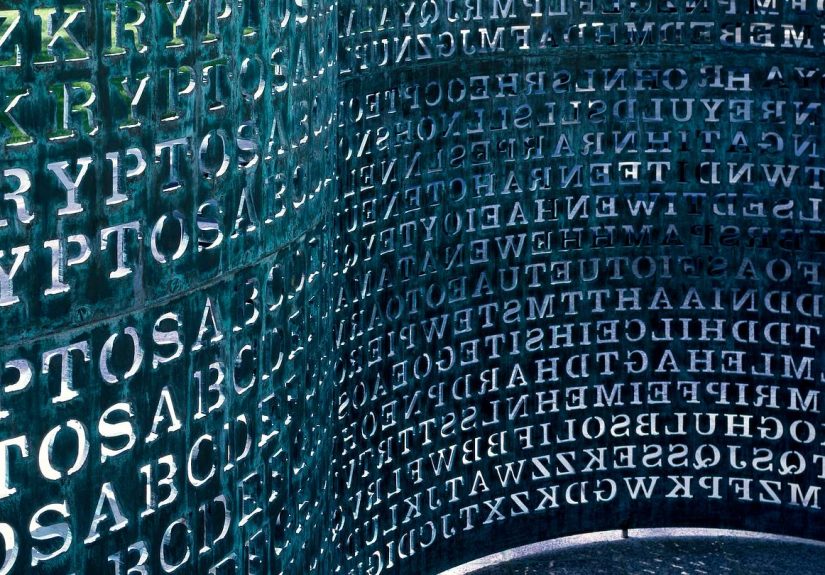
If you were going to hide an unsolved code anywhere, the courtyard of CIA headquarters feels almost too perfect. Kryptos, created by artist Jim Sanborn and installed in 1990 in Langley, Virginia, is a copper sculpture covered in encrypted text. It contains four major coded sections. The first three have been solved. The fourth, known as K4, remains stubbornly unread.
K4 is only 97 characters long, which makes it both tempting and terrible. Short ciphers are difficult because there is less material for pattern analysis. A longer message gives cryptanalysts repeated letters, word structures, and statistical clues. K4 gives them a tiny locked box and a smirk.
Sanborn has released several clues over the years, including words that appear in the plaintext. Those clues have helped narrow the search, but they have not delivered a public, verified solution. Kryptos has attracted professional cryptographers, intelligence workers, programmers, and puzzle enthusiasts from around the world. It also attracts people who believe they solved it after one strong coffee and a spreadsheet. The sculpture remains unimpressed.
Why Kryptos K4 is so captivating
Kryptos is not just a code; it is public art designed to live inside the culture of secrecy. Its unsolved section feels like a challenge aimed directly at the world’s smartest codebreakers. That is why K4 has become a modern legend among famous unsolved ciphers.
3. The Beale Ciphers: Treasure, Mystery, and Maybe a Very Good Hoax
The Beale Ciphers are the kind of mystery that makes treasure hunters check maps, historians check archives, and skeptics check their eyebrows. According to the story, a man named Thomas J. Beale buried a large treasure in Virginia in the early 1800s and left behind three encrypted messages. One cipher was supposedly decoded using the Declaration of Independence as a key. It described the treasure’s contents. The other two, which should reveal the location and the names of the owners, remain unsolved.
That is the deliciously frustrating part. The solved message says, in effect, “Yes, there is treasure.” The unsolved messages say, “Good luck finding it, champ.” For generations, people have tried to crack the remaining Beale cryptograms, hoping for gold, silver, jewels, or at least a dramatic documentary appearance.
There is a serious possibility that the entire story is a hoax. Researchers have questioned the historical evidence for Thomas J. Beale, the language of the pamphlet that popularized the story, and the convenience of having one decoded message that keeps hope alive while the useful parts remain unreadable. Still, the Beale Ciphers endure because they combine three irresistible ingredients: buried treasure, American history, and encrypted instructions that refuse to cooperate.
Why the Beale Ciphers remain famous
The Beale Ciphers show how mystery can survive even when authenticity is uncertain. Whether they hide a real treasure or a brilliant 19th-century marketing trick, they remain among the most discussed uncracked codes in history.
4. The Zodiac Killer’s Remaining Ciphers: Short, Dark, and Difficult
The Zodiac case is one of America’s most infamous unsolved crime mysteries, and its ciphers are a major reason it continues to attract attention. Some Zodiac messages have been solved, including the 408-character cipher and the long-unsolved 340-character cipher, which was finally cracked in 2020 by a private team. But several short cipher fragments, including the Z13 and Z32, remain unresolved.
The Z13 begins with the phrase “My name is,” which naturally makes it irresistible. Unfortunately, a 13-character cipher is so short that many possible solutions can be forced into it. In cryptography, short does not mean easy. Short often means “please enjoy this swamp of ambiguity.”
The Z32 cipher is connected to a map and a claimed hidden location, but it has also resisted definitive interpretation. Because of the sensitive criminal context, responsible researchers treat proposed solutions carefully. A convincing solution must not only produce readable words; it must explain the method, fit the evidence, and avoid wishful pattern-matching.
Why the Zodiac ciphers are hard to verify
The challenge is not only solving the symbols. It is proving that a solution is not accidental. With very short ciphers, multiple answers can look plausible. That is why the remaining Zodiac ciphers continue to sit in the uneasy space between cryptography, history, and unresolved investigation.
5. Linear A: The Silent Script of the Minoans
Linear A was used by the Minoan civilization on Crete during the Bronze Age. It is related in appearance to Linear B, which was deciphered in the 1950s and shown to represent an early form of Greek. That sounds promisinguntil Linear A politely refuses to speak Greek.
Researchers can identify some signs, compare them with Linear B, and recognize possible place names, commodities, and administrative patterns. Yet the underlying language remains unknown. This is a major obstacle. Decipherment usually needs three things: enough text, a known language, and some external clue. Linear A gives scholars pieces of the first, hints of the second, and not nearly enough of the third.
The surviving inscriptions are often short and formulaic. Many appear on tablets, vessels, seals, and administrative objects. That means they may record transactions, offerings, or inventories rather than long stories. Imagine trying to reconstruct an entire language from receipts. “Three goats, two jars, one mystery civilization” is not exactly a full grammar textbook.
Why Linear A matters
Cracking Linear A would transform our understanding of Minoan society, religion, economy, and identity. It would not just solve a code; it would give a voice back to one of the ancient Mediterranean’s most fascinating cultures.
6. The Phaistos Disc: A Bronze Age Spiral of Trouble
The Phaistos Disc was discovered in 1908 on Crete and is now one of archaeology’s most debated artifacts. It is a fired clay disc stamped on both sides with symbols arranged in a spiral. The signs include human figures, animals, tools, plants, and abstract shapes. It looks important. It also looks like it knows exactly how much it is annoying everyone.
The disc is often linked to Minoan Crete, but its script is unique. That uniqueness is the problem. Decipherment depends on comparison, and the Phaistos Disc does not offer much company. With only one substantial example of the script, researchers have limited material for testing patterns, sound values, or grammar.
Many proposed translations exist. Some read it as a hymn, others as a prayer, a calendar, a legal document, a game, a military text, or a message from someone with truly excellent pottery skills. None has achieved broad scholarly acceptance.
Why the Phaistos Disc remains unsolved
The disc may contain real writing, but without more examples, a confirmed language, or a reliable key, its message remains out of reach. It is one of the clearest examples of a historical code that may be unsolved simply because the surviving evidence is too small.
7. Rongorongo: The Lost Script of Rapa Nui
Rongorongo is an undeciphered system of glyphs from Rapa Nui, also known as Easter Island. The signs were carved mainly into wooden objects, including tablets and staffs. Fewer than 30 authentic inscribed objects are known to survive, and none remains in its original cultural setting on the island.
The glyphs include human, animal, plant, and geometric forms. They are often written in a striking reverse boustrophedon style, meaning the reader turns the tablet as they move from line to line. It is beautiful, clever, and deeply inconvenient for anyone who prefers their ancient texts to behave.
Rongorongo may represent true writing, proto-writing, mnemonic notation, chants, genealogies, calendars, or ritual information. Researchers have proposed partial interpretations, especially involving lunar or calendrical patterns, but no full decipherment has been accepted. The loss of cultural context is a major reason. By the time outsiders began documenting the tablets, the tradition of reading them had largely disappeared.
Why Rongorongo is historically important
If Rongorongo is true writing developed independently, it would represent one of the rare independent inventions of writing in human history. That possibility makes it more than a puzzle. It is a key question in the study of human communication.
8. The Dorabella Cipher: Edward Elgar’s Playful Little Nightmare
In 1897, English composer Edward Elgar sent a short encrypted note to Dora Penny, a family friend he nicknamed “Dorabella.” The message contains 87 symbols arranged in three lines. The symbols resemble curved marks or semicircles facing different directions. Dora never deciphered it, and neither has anyone else to general satisfaction.
The Dorabella Cipher is charming because it may not hide state secrets, treasure, or a vanished civilization. It might simply be a private message from a composer with a taste for puzzles. But that does not make it easy. In fact, its short length and unusual symbol set make it extremely difficult to analyze.
Some researchers have proposed that it is a substitution cipher. Others think it may encode music rather than language. That idea is especially tempting because Elgar was, after all, Elgar. If anyone was going to send a message that was secretly a tune, a composer seems like a reasonable suspect.
Why the Dorabella Cipher still delights codebreakers
The Dorabella Cipher reminds us that not every mystery has to be enormous to be irresistible. Sometimes 87 odd little symbols are enough to keep experts arguing for more than a century. History can be very efficient when it wants to be annoying.
What Makes an Uncracked Code So Difficult?
Uncracked codes usually survive for practical reasons, not magical ones. Many are short, damaged, isolated, or written in unknown languages. Some may not be codes at all. Others may be meaningful but lack the context needed to interpret them. A cipher is like a locked door; a lost language is like a locked door in a building with no map, no address, and possibly no floor.
The most successful decipherments in history often depended on comparison. The Rosetta Stone worked because it contained related texts in known and unknown scripts. Linear B was cracked because scholars had enough tablets, repeated patterns, and a brilliant insight into its language. Many uncracked codes lack those advantages.
Modern tools help, but they do not perform miracles. Computers can test patterns quickly, compare symbol frequencies, and search enormous possibility spaces. Artificial intelligence can suggest structures and generate hypotheses. But a machine still needs evidence. Without enough text, context, or a verifiable method, even the most advanced technology can produce confident nonsense at lightning speed. Congratulations, humanity: we automated guessing.
Experiences and Lessons from Exploring History’s Most Mysterious Uncracked Codes
Studying history’s most mysterious uncracked codes is a strange experience because it feels both scholarly and playful. On one hand, you are dealing with manuscripts, archaeological objects, intelligence puzzles, and serious historical research. On the other hand, you are staring at symbols and thinking, “What if that little squiggle is a goat?” It is humbling in the best possible way.
One experience that stands out is how quickly mystery teaches patience. Beginners often assume every code has a clean answer waiting behind the curtain. Read a few cases closely, and that optimism becomes more careful. The Voynich Manuscript may not be a cipher in the usual sense. Linear A may be readable only when more evidence appears. The Phaistos Disc may never be solved unless another similar text is found. In other words, the problem is not always intelligence. Sometimes the problem is missing evidence.
Another lesson is that pattern recognition can be both a superpower and a trap. Humans are excellent at finding patterns. That is why we solve puzzles, read faces, build languages, and notice when the Wi-Fi router has chosen violence. But the same ability can lead us to see meaning where there is none. Many claimed decipherments fail because the solver starts with a desired answer and then bends the symbols until they fit. Good cryptanalysis requires discipline: a proposed solution must explain the system, not merely produce an interesting phrase.
These codes also show the importance of humility in research. A historian may understand the cultural context but not the cryptographic structure. A programmer may test millions of possibilities but miss a linguistic clue. A linguist may identify patterns but lack archaeological evidence. The best work often happens when different fields cooperate. Uncracked codes sit at the crossroads of language, math, history, art, and human behavior. They are team sports disguised as riddles.
There is also a creative pleasure in not knowing. In a world where search engines answer most questions in seconds, unsolved historical codes remind us that some knowledge still has to be earned slowly. They resist shortcuts. They ask for careful reading, skepticism, imagination, and respect for uncertainty. That uncertainty is not a failure; it is part of the appeal. If every mystery were solved by lunchtime, history would be much less dramatic and documentary producers would have to find honest work.
For writers, teachers, and curious readers, these mysteries are valuable because they make the past feel active. The people behind these codes were not flat names in textbooks. They were makers, scribes, artists, officials, composers, islanders, or unknown thinkers who left behind marks that still affect us. Their messages may be hidden, but their presence is not.
The best way to approach uncracked codes is with a balance of wonder and caution. Wonder keeps the investigation alive. Caution keeps it honest. Together, they let us enjoy the mystery without turning every guess into a headline. And perhaps that is the real secret these codes teach: the unknown is not empty. It is full of questions, and questions are one of history’s most durable forms of life.
Conclusion: The Beauty of the Unsolved
The world’s most mysterious uncracked codes are not just puzzles waiting for clever solutions. They are reminders that history is incomplete, human communication is fragile, and meaning can vanish when context disappears. From the Voynich Manuscript to Kryptos K4, from Linear A to Rongorongo, each mystery reveals something about the people who created it and the people still trying to understand it.
Maybe some of these codes will be solved. Maybe some will remain locked forever. Either outcome has its own charm. A solved code gives us knowledge. An unsolved code gives us imagination, debate, and the occasional headache with footnotes. For now, these eight mysteries continue to invite patient minds back to the table, whispering across centuries: “Try again.”