Table of Contents >> Show >> Hide
- What the New Research Found
- Why Neurovascular and Metabolic Changes Matter in Dementia
- What This Could Mean for Diagnosis and Treatment
- What This Research Does Not Mean Yet
- What Families and Patients Can Do Right Now
- Lived Experiences: What This Kind of Progression Can Feel Like
- Conclusion
- Editorial Note
- SEO Tags
Dementia research has entered an era where doctors are no longer just asking, “What symptoms do we see now?” They are also asking a much sharper question: “What was the brain doing before the symptoms got loud enough to crash the party?” A growing body of evidence suggests that long before Alzheimer’s disease and related dementias fully announce themselves, the brain may already be showing subtle warning signs in how it uses fuel and manages blood flow.
That matters because dementia is rarely a switch that flips overnight. It is more like a slow-motion systems failure. Memory, judgment, language, planning, and daily functioning gradually become harder to manage. The challenge for clinicians has always been timing: by the time many people receive a diagnosis, important brain changes have already been underway for years. New research on neurovascular and metabolic patterns suggests we may get better at spotting who is moving from mild impairment toward more serious disease.
In plain English, scientists are learning that the brain’s “fuel gauge” and “plumbing system” may reveal disease progression earlier than many people realize. And yes, the brain is apparently a diva: when it stops getting enough energy, it tends to make that everyone’s problem.
What the New Research Found
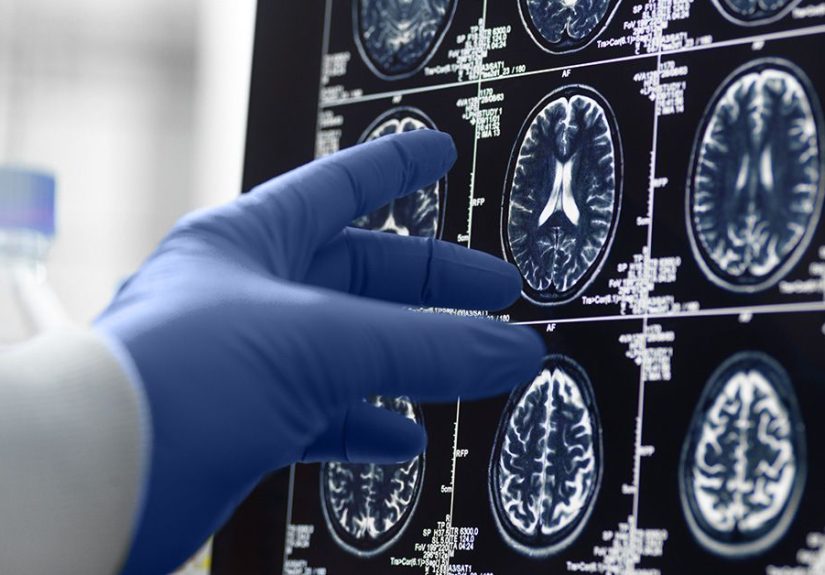
A recent study that drew on Alzheimer’s Disease Neuroimaging Initiative data examined 403 participants across the cognitive spectrum, from cognitively normal adults to people with early mild cognitive impairment, mild cognitive impairment, late mild cognitive impairment, and Alzheimer’s disease. Researchers analyzed 59 brain regions using two key imaging tools: PET scans to measure metabolic activity and arterial spin labeling MRI to assess cerebral blood flow.
The big takeaway was not just that changes existed, but that they seemed to follow stage-specific patterns. Instead of one simple downhill slide, the brain appeared to move through a sequence of mismatched and then failing responses. Some regions showed altered blood flow before severe structural damage was obvious. Others displayed unusual metabolic activity that seemed to reflect compensation, stress, inflammation, or all three arriving at the same awkward family reunion.
How the Brain’s Fuel and Blood Supply Drift Out of Sync
Healthy brain tissue depends on a tight partnership between neural activity, blood flow, oxygen delivery, and glucose use. When one rises, the others typically support it. In Alzheimer’s disease and related dementias, that relationship may become uncoupled. The new imaging work suggests that in early phases, some regions may show higher blood flow but lower metabolism, while later phases may flip toward higher metabolism but lower blood flow. Eventually, in more advanced disease, both measures can drop.
That sequence is important because it may reflect the brain trying to adapt before those compensatory mechanisms fail. Think of it as a building where the lights flicker, the water pressure changes, and the generator kicks on before the whole system starts breaking down. By the time everything is dim and dry, the problem is no longer subtle.
The Four Broad Patterns Researchers Observed
The study grouped affected brain regions into broad neurovascular-metabolic patterns. In early mild cognitive impairment, some regions showed increased blood flow with reduced metabolism, which may represent an early compensation attempt. During mild cognitive impairment, other regions showed increased metabolism with reduced blood flow, suggesting a deeper mismatch between demand and supply. In late mild cognitive impairment, some areas showed increases in both, possibly reflecting another compensatory stage. In established Alzheimer’s disease, many regions shifted toward decreases in both blood flow and metabolism, a pattern consistent with neurodegeneration and failing reserve.
Researchers also reported sex-specific differences in how regions moved through these stages. That does not mean men and women experience dementia in completely different ways, but it does support the idea that progression may not be identical across patients. In the future, that could help clinicians individualize monitoring instead of treating every scan like it came from the same photocopier.
Why Neurovascular and Metabolic Changes Matter in Dementia
Dementia is not a single disease, but Alzheimer’s disease is its most common cause. Clinicians have long relied on symptoms, cognitive testing, and biomarkers such as amyloid and tau to diagnose Alzheimer’s. Those tools remain essential. But neurovascular and metabolic changes may add something highly valuable: a better sense of where someone is on the road from subtle decline to major impairment.
The brain is an energy-hungry organ. It relies on blood vessels to deliver oxygen and glucose and on the blood-brain barrier to regulate what gets in and out. When vascular function is impaired, the result may be less oxygen, less fuel delivery, and weaker clearance of toxic proteins. That is one reason scientists increasingly describe dementia not only as a disease of misfolded proteins but also as a disease of brain resilience, circulation, inflammation, and energy failure.
Inflammation May Be Part of the Story
The imaging study did more than map scans. It also linked disease patterns to gene-expression signatures associated with immune activity, oxidative stress, lipid and mitochondrial metabolism, synaptic dysfunction, and vascular biology. In other words, the scan changes were not random noise. They lined up with biological processes that researchers already suspect are involved in Alzheimer’s progression.
This helps explain why some patients seem stable for a while and then worsen more quickly. The brain may spend years compensating for injury, inflammation, vascular stress, or inefficient fuel use. But compensation is not the same thing as cure. It is more like your phone surviving on 4% battery while every app is still open. Technically impressive, yes. Sustainable, no.
Memory Regions May Show Trouble Earlier
One especially notable point from the study is that brain regions involved in learning and memory appeared more likely to show dysregulation in earlier stages, including early MCI and MCI. That fits with what clinicians see in practice. Subtle changes in recall, attention, organization, or word-finding may appear before a person clearly meets criteria for dementia.
Still, it is crucial to remember that not every person with mild cognitive impairment progresses to dementia. Some remain stable for years, some improve, and some turn out to have symptoms driven by other conditions, including depression, medication effects, sleep problems, uncontrolled diabetes, or vascular issues.
What This Could Mean for Diagnosis and Treatment
For now, these imaging findings are more promising than practice-changing. They are not a replacement for careful clinical evaluation, cognitive testing, blood biomarkers, amyloid and tau assessment, or standard imaging. But they may become a valuable additional layer in how doctors assess risk and track progression.
Earlier Diagnosis May Get Smarter
One of the biggest frustrations in dementia care is that diagnosis often happens after damage is already significant. Earlier detection could give patients and families more time to plan, start treatment when appropriate, manage risk factors, and join clinical trials. If neurovascular and metabolic patterns can distinguish early stages more accurately, doctors may get better at identifying who needs closer follow-up and who may benefit from targeted intervention sooner.
That fits with a broader trend in dementia medicine. Blood tests such as p-tau217, advanced PET imaging, AI-supported speech analysis, and multimodal imaging are all pushing the field toward earlier and more biologically grounded diagnosis. The dream scenario is not just diagnosing dementia earlier, but predicting which people are at highest risk of progressing and why.
Personalized Care Could Improve
If future studies confirm these patterns, clinicians may be able to sort patients into more precise biological subtypes. One person may have stronger vascular contributions. Another may show faster metabolic decline. Another may present a mixed picture involving amyloid, tau, vascular injury, inflammation, and cardiometabolic risk.
That matters because treatment is rarely one-size-fits-all. A person with poorly controlled blood pressure, diabetes, sleep apnea, and early cognitive symptoms may need a very different clinical strategy than someone whose main driver appears to be a more classic neurodegenerative pathway. The better the map, the less medicine has to guess.
Clinical Trials Could Get Better at Picking the Right Patients
Research studies often struggle because participants enter trials at very different disease stages. If neurovascular-metabolic imaging helps identify when someone is in a compensatory phase versus a more advanced degenerative phase, new therapies could be tested more precisely. That would not just help science; it could save patients from being placed into studies that do not match their disease biology.
What This Research Does Not Mean Yet
Exciting does not mean ready for routine use tomorrow morning. The study was based on retrospective data and needs validation in broader, more diverse populations. Imaging tools such as PET and advanced MRI are expensive, not universally available, and not ideal as mass-screening tools. Scientists also still need to determine how well these neurovascular-metabolic patterns predict real-world outcomes in everyday clinics rather than research settings alone.
There is also a major difference between detecting risk and predicting destiny. A scan can show biological change, but it may not tell you exactly when symptoms will worsen or how quickly independence will decline. Biomarkers are helpful; they are not crystal balls with radiology billing codes.
Most importantly, dementia remains a clinical diagnosis shaped by symptoms, function, medical history, family input, and multiple test results. No good doctor is going to look at a single scan and declare the mystery solved with the confidence of a TV detective in the last seven minutes of the episode.
What Families and Patients Can Do Right Now
Even while the science evolves, the practical message is surprisingly grounded. Vascular health and brain health are deeply connected. Managing blood pressure, diabetes, cholesterol, exercise, sleep, smoking, and alcohol use still matters. That is not a glamorous answer, but the boring basics have a habit of being medically useful.
If you or a loved one is noticing changes in memory, judgment, attention, language, or the ability to manage daily tasks, it is worth seeking evaluation early. Mild cognitive impairment does not always become dementia, but it deserves attention. A clinician may consider cognitive testing, standard brain imaging, medication review, depression screening, sleep evaluation, and, in the right setting, biomarker testing.
Families should also remember that early dementia rarely looks dramatic at first. It may appear as missed appointments, repeated questions, slower problem-solving, trouble following conversations, getting lost in familiar places, or subtle financial mistakes. These signs can be easy to explain away one by one. Together, they tell a different story.
Lived Experiences: What This Kind of Progression Can Feel Like
For many families, dementia does not begin with a shocking moment. It begins with a series of odd little scenes that are easy to dismiss. A father forgets the route to a restaurant he has visited for years. A grandmother starts telling the same story twice in one dinner, then three times by dessert. A spouse who once handled bills with military precision suddenly misses two payment dates and blames the mail, the bank, the moon, or all three.
That in-between stage is often the hardest. People are still functioning, still driving, still laughing at old jokes, still insisting they are “fine.” And sometimes they are fine, at least in a broad sense. That is why mild cognitive impairment can be so emotionally confusing. Families sense that something has changed, but the change is not yet dramatic enough to force clarity. It lives in the gray zone, and gray zones are exhausting.
One common experience caregivers describe is the feeling that the person they love is both present and slightly out of reach. On some days, everything seems normal. On others, they seem mentally slower, more irritable, or strangely overwhelmed by tasks that used to be automatic. A trip to the grocery store can become a lesson in executive function. Too many choices, too much noise, too many steps. The cart fills with random items, the list is forgotten, and everybody comes home tired.
There is also a quiet frustration for the person experiencing the changes. Early cognitive decline can feel embarrassing. People know something is off before they have words for it. They may joke more to hide it, withdraw from conversations, avoid new technology, or become defensive when corrected. Families sometimes interpret that as stubbornness. Often, it is fear wearing a grumpy hat.
When research talks about blood flow, metabolism, inflammation, and progression, it can sound abstract. But behind those terms is everyday life. It is the retired engineer who can still discuss baseball statistics in detail but gets lost trying to use a new coffee machine. It is the former teacher who remembers childhood poems perfectly but struggles to follow a medication schedule. It is the husband who notices his wife now pauses longer before answering and wonders whether stress is to blame, or sleep, or aging, or something deeper.
Families also learn that progression is not always smooth. There can be plateaus, sudden dips after illness, brief rebounds, and long periods where everyone thinks, “Maybe it’s not getting worse after all.” That uncertainty can be emotionally brutal. It also explains why better biomarkers matter. Families are not just asking for a label. They are asking for a clearer map of what is happening and what may happen next.
In that sense, the new neurovascular and metabolic research offers something more than scientific curiosity. It offers language for the invisible stage of disease, the stage where changes are real but hard to prove. For patients, that can mean validation. For caregivers, it can mean less second-guessing. And for clinicians, it may eventually mean earlier, smarter, more compassionate care built on biology rather than waiting for life to visibly fall apart.
Conclusion
The emerging science around dementia progression suggests that the brain may reveal its distress signals through changes in blood flow and energy use before decline becomes obvious in daily life. That does not replace established Alzheimer’s biomarkers, and it certainly does not mean every odd memory lapse should trigger panic. But it does strengthen a powerful idea: dementia is not only about plaques, tangles, or symptoms. It is also about circulation, fuel, inflammation, and the brain’s attempt to adapt before it can’t.
If future research confirms these findings in broader populations, neurovascular and metabolic imaging could help doctors identify progression earlier, personalize care more effectively, and design better clinical trials. For now, the message is both hopeful and practical: pay attention to subtle changes, take vascular health seriously, and do not assume that “just aging” explains everything. The brain has a long memory for small problems that get ignored.
Editorial Note
This article synthesizes findings and guidance from leading U.S. medical and research organizations and a peer-reviewed Alzheimer’s disease study. It is intended for educational publishing use and does not replace medical advice, diagnosis, or treatment.