Table of Contents >> Show >> Hide
- What Is Yiannis Ghikas's Candlehandle?
- The Industrial Gas Museum Connection
- Who Is Yiannis Ghikas?
- Design Analysis: Why Candlehandle Works
- How Candlehandle Fits Modern Interiors
- Why Designers Love Objects Like This
- The Return of Candlelight in Contemporary Living
- Buying and Collecting Considerations
- Experiences Related to Yiannis Ghikas's Candlehandle
- Conclusion
Some design objects whisper. Some shout. Yiannis Ghikas’s Candlehandle does something far more charming: it clears its throat, lights a candle, and says, “Remember when technology had a handle?” This witty candle holder may look simple at first glance, but behind its modest form is a layered story about Athens, industrial history, old energy systems, museum retail, Greek manufacturing, and the surprisingly emotional power of a small household object.
Designed for the Industrial Gas Museum in Athens, Candlehandle is not just another decorative candle holder placed on a shelf to look photogenic beside a linen napkin and an unread art book. It is a functional design piece rooted in place. Its reason for existing comes from the former Athens gas plant, a historic site founded in 1857 to bring public lighting to the city. In other words, Candlehandle is a candle holder created for a museum dedicated to the technology that once replaced candles. That is design irony with a clean edge and a tiny flame.
In a world full of objects that try very hard to be futuristic, Candlehandle moves in the opposite direction. It celebrates an “old technology” source of light while quietly reminding us that usefulness, memory, and humor can live in the same object. It is practical, symbolic, and just strange enough to make people ask questions. That is often where good design begins.
What Is Yiannis Ghikas’s Candlehandle?
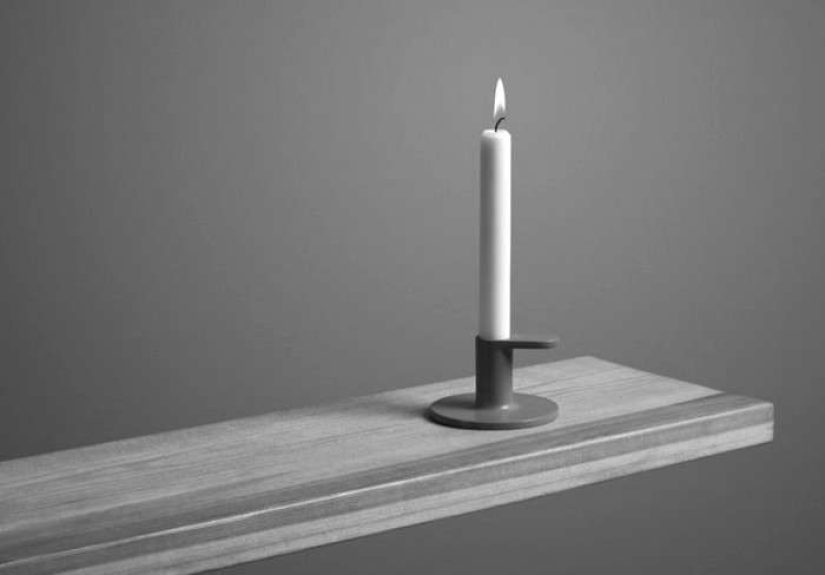
Yiannis Ghikas’s Candlehandle is a candle holder designed for the Industrial Gas Museum, with Convex listed as the manufacturer and Giorgos Vitsaropoulos credited for photography on the designer’s official project page. The object was created as part of the museum shop’s effort to support Greek industrial designers and local production. Rather than producing a generic souvenir, Ghikas created a compact design object that connects directly to the museum’s history of lighting, energy, and urban transformation.
The name itself is a clever little handshake: “Candlehandle.” It fuses the candle with the handle, turning the object’s function into a linguistic wink. It sounds almost too obvious, which is exactly why it works. The name is memorable, descriptive, and playful without needing a paragraph of philosophical fog to explain it.
A Candle Holder With a Built-In Story
The best museum objects do more than sit politely in a gift shop. They carry the museum’s story home with the visitor. Candlehandle does this beautifully. It refers to candlelight, one of humanity’s oldest forms of domestic illumination, while being designed for a site that once produced gas for public lighting and power. The contrast is sharp: a hand-held candle holder born from the memory of a vast industrial system.
That contrast is what gives the piece its personality. It is not nostalgic in a dusty, antique-store way. Instead, it uses nostalgia as a design tool. The result is modern, minimal, and thoughtful, but still warm enough to belong on a table, a shelf, or a bedside surface.
The Industrial Gas Museum Connection
To understand Candlehandle, you have to understand where it came from. The Industrial Gas Museum is housed in the old gas plant of Athens, one of the city’s important industrial landmarks. The site is deeply tied to Athens’ growth, public lighting, and modernization. The gas plant began in the nineteenth century and supplied the city with lighting and power for many decades before its operations finally stopped in 1984.
The museum officially opened in 2013, transforming an industrial site into a cultural destination. It preserves machinery, architectural structures, tools, appliances, and stories connected with gas production. Instead of hiding the past behind polished walls, the museum lets visitors experience the physical presence of industrial history. Pipes, machinery, retorts, and old equipment become part of the narrative. It is history with bolts still attached.
The museum shop continues that mission in a smaller, more portable form. It supports Greek designers, handmade objects, homeware, ceramics, publications, and souvenirs inspired by the old gasworks. Candlehandle fits perfectly into that philosophy because it is not merely branded merchandise. It is a design response to the museum’s identity.
Why a Candle Holder Makes Perfect Sense
At first, designing a candle holder for a gas museum might seem like showing up to a smartphone launch with a carrier pigeon. But that is exactly the point. The gas plant existed because cities needed reliable public lighting. It represented progress. Over time, the gas-based energy model became outdated, and the plant itself became obsolete. Candlehandle turns that history into an object by returning to an even older source of light: the candle.
This backward step is not a rejection of progress. It is a way of making progress visible. By holding a candle, the user holds a small reminder of what came before gas lighting, before electricity, before LEDs, before the tiny glowing rectangle that now wakes half the planet at 2 a.m. to say someone liked a sandwich photo.
Who Is Yiannis Ghikas?
Yiannis Ghikas is an Athens-born Greek designer whose background combines computer science and design. His work often centers on functionality while exploring emotional responses. That combination matters. A purely functional object may solve a problem, but a memorable design also creates a feeling. Ghikas’s work often walks that line: useful, intelligent, and quietly expressive.
His Monarchy stool received the Red Dot Design Award in 2009 and the German Design Award in 2016. His later work includes internationally recognized pieces such as the Soda tables for Miniforms, made from mouth-blown Murano glass. Across furniture, lighting, home objects, ceramics, and accessories, Ghikas has built a reputation for objects that are practical but never boring.
Candlehandle reflects that design attitude in miniature. It satisfies a tangible need: holding a candle. But it also satisfies an intangible one: connecting a person to memory, atmosphere, and place. That is a lot of work for a small candle holder, but good objects often do more than their job description.
Design Analysis: Why Candlehandle Works
Candlehandle succeeds because it avoids the trap of over-design. Many contemporary decorative objects try to look important. They twist, swoop, shine, or shout until the room quietly asks them to calm down. Candlehandle takes a more disciplined path. It uses a familiar typologythe portable candle holderand gives it a precise cultural context.
The handle is essential. It recalls older chambersticks and handheld candle holders, objects designed for movement through dim spaces. Before switches, sensors, and rechargeable lamps, light was carried. Candlehandle brings back that physical relationship with illumination. You do not just turn light on; you pick it up, move it, place it, and notice it.
That small shift changes the user experience. A candle in a generic holder is decoration. A candle in a handled holder feels like a companion. It suggests a hallway, a quiet table, a late-night conversation, or an old building where the walls know more than they admit.
Material Honesty and Industrial Memory
Although Candlehandle is tied to an industrial museum, its appeal is not heavy-handed. It does not need to imitate gears, pipes, or factory machinery. Instead, it borrows from industrial thinking: clear function, efficient form, repeatable production, and a strong relationship between object and use.
The association with Convex, a Greek manufacturer known for hardware and design production, also adds meaning. The museum shop’s mission was not only to sell attractive objects but to support domestic production and Greek industrial design. Candlehandle becomes a small ambassador for that idea. It says that local manufacturing can produce objects with cultural intelligence, not just utility.
How Candlehandle Fits Modern Interiors
Yiannis Ghikas’s Candlehandle works especially well in interiors that value restraint, tactility, and conversation pieces. It is not the kind of object that needs a marble mansion to feel relevant. In fact, it may be at its best in ordinary spaces: a small apartment, a reading corner, a dining table, a guest room, or a shelf where it can quietly steal attention from louder objects.
Its design language pairs well with modern minimalism, Scandinavian-inspired interiors, industrial loft spaces, rustic-modern homes, and museum-like contemporary rooms. It can soften a concrete surface, add structure to a wooden table, or give a plain shelf a small architectural accent.
Styling Ideas for Candlehandle
On a dining table, Candlehandle can be used as a low, intimate centerpiece. Instead of tall candlesticks that make dinner guests lean around flames like they are negotiating a diplomatic treaty, a handled candle holder keeps the mood relaxed. Pair it with simple ceramics, linen napkins, and a few imperfectly arranged flowers. Perfection is overrated; atmosphere is not.
On a bedside table, it can act as a sculptural accent even when unlit. Of course, actual candle use should always be handled safely, but as a visual object, it brings a sense of calm and ritual. In an entryway, it can become a symbolic welcome: a small object about light placed at the threshold of the home.
For industrial interiors, Candlehandle offers a subtle historical nod. It does not scream “factory aesthetic” with fake rivets or cartoon metalwork. Instead, its connection to the gasworks gives it authenticity. That is far more interesting than buying a brand-new lamp designed to look like it escaped from a warehouse in 1912.
Why Designers Love Objects Like This
Designers often appreciate objects that solve more than one problem at once. Candlehandle holds a candle, yes, but it also explains a place, references a lost technology, supports local production, and gives museum visitors a meaningful object to take home. That kind of layered design is difficult to achieve without making the object feel forced.
The restraint is important. Candlehandle does not require the user to know the entire history of the Athens gas plant to enjoy it. It remains useful and attractive on its own. But when the story is known, the object becomes richer. This is one of the secrets of strong product design: the surface should be inviting, while the deeper layers reward attention.
A Souvenir That Avoids Souvenir Syndrome
Many museum souvenirs fall into two categories: tiny replicas that collect dust, and tote bags that multiply in closets like well-designed rabbits. Candlehandle avoids both. It is not a miniature monument or a disposable keepsake. It is a functional home object with a direct conceptual link to the museum.
That makes it a better model for cultural retail. Visitors increasingly want objects that feel authentic, useful, and locally connected. Candlehandle delivers all three. It is specific to the Industrial Gas Museum, but it does not become useless outside that context. You can place it in a home, use it with care, and still appreciate its story years later.
The Return of Candlelight in Contemporary Living
Candlelight has never really gone away. Even in a world of smart bulbs and app-controlled mood lighting, people still light candles for dinner, meditation, celebrations, power outages, baths, and those evenings when the living room needs to stop feeling like a spreadsheet. Candlelight is imperfect, and that is its charm.
Modern consumers are also paying more attention to tactile rituals. Lighting a candle slows the room down. It creates a pause. It asks for presence. Candlehandle strengthens that ritual by making the candle feel held, carried, and framed. The object turns a small act into a design moment.
This is why Yiannis Ghikas’s Candlehandle remains relevant beyond its original museum context. It speaks to a broader desire for objects that are not only decorative but meaningful. It brings old light into new rooms without pretending the past was simpler, cleaner, or better. It simply says: here is a flame, here is a handle, here is a story.
Buying and Collecting Considerations
Because Candlehandle was created for the Industrial Gas Museum Shop, availability may be more limited than mass-market candle holders sold by large home retailers. That limitation can actually increase its appeal for design collectors. Objects tied to specific institutions, especially those produced through local manufacturing partnerships, often carry more narrative value than anonymous decor.
For collectors, the key appeal is not rarity alone. It is the combination of designer, place, concept, and function. Candlehandle connects to Ghikas’s wider body of work, the museum’s industrial setting, and the history of Athens’ public lighting. Those layers make it more than a pretty object. They make it a compact piece of design storytelling.
For everyday users, the appeal is simpler: it looks good, it has a useful form, and it gives a room character. Not every purchase has to become a thesis. Sometimes the best reason to own something is that it makes your table look thoughtful without making your wallet file a complaint.
Experiences Related to Yiannis Ghikas’s Candlehandle
Experiencing Candlehandle is less about dramatic spectacle and more about noticing small shifts in mood. Imagine walking through the Industrial Gas Museum in Athens. You pass old equipment, industrial structures, and traces of a city that once depended on gaslight. The scale of the site is large, mechanical, and public. Then, in the museum shop, you encounter Candlehandle: small, domestic, and intimate. That contrast is powerful. It turns the history of city lighting into something you can hold in your hand.
At home, the experience becomes personal. Place Candlehandle on a dinner table and the object changes the rhythm of the meal. The handle suggests movement, even when the piece is still. Guests may notice it before they notice the plates. Someone may ask what it is, where it came from, or why it looks both old-fashioned and contemporary. That is the magic of a well-designed object: it starts conversations without clearing its throat too loudly.
One of the most enjoyable ways to use a design like Candlehandle is during a quiet evening ritual. Set it near a reading chair with a small stack of books. Light the candle safely, sit nearby, and let the object do what electric lighting rarely does: create edges of shadow. Modern lighting often tries to remove darkness completely, but candlelight works differently. It lets the room keep a little mystery. Suddenly, the same corner feels warmer, slower, and more human.
Candlehandle also fits beautifully into seasonal living. In winter, it can bring warmth to a table setting with ceramic dishes, dark bread, soup bowls, and folded cloth napkins. In summer, it can sit outdoors on a protected patio during a late dinner, adding a small glow as the evening cools. During holidays, it can provide atmosphere without becoming theme decor. No glitter required. The flame is enough.
For design lovers, the experience is intellectual as well as sensory. You can look at Candlehandle and think about technological cycles: candlelight, gaslight, electric light, digital light. Each stage promised improvement, and each changed how people used public and private space. Candlehandle compresses that history into a simple form. It is a reminder that “obsolete” does not always mean useless. Sometimes old technologies return as rituals, symbols, or pleasures.
There is also a lesson here for anyone interested in product design. Candlehandle shows that a small object can carry a big idea without becoming complicated. It does not need excessive ornament, exotic materials, or a dramatic silhouette to be meaningful. Its strength comes from alignment: the designer, the museum, the history, the function, and the name all point in the same direction. That alignment is what makes the piece feel complete.
Living with an object like Candlehandle can also change how you evaluate other things in your home. It encourages you to ask better questions. Does this object have a reason to exist? Does it improve a moment? Does it connect to a story, a material, a place, or a habit? Not everything in a home needs a deep biography, of course. A spoon can just be a spoon. But when an object combines usefulness with memory, it earns a different kind of attention.
Ultimately, the best experience related to Yiannis Ghikas’s Candlehandle is the way it makes light feel physical again. Instead of tapping a switch and forgetting the miracle, you become aware of the source, the holder, the hand, and the room. The flame is small, but the design thinking behind it is generous. Candlehandle proves that even in the age of smart homes, there is still room for an object that asks us to slow down, look closer, and appreciate the old-fashioned pleasure of carrying light.
Conclusion
Yiannis Ghikas’s Candlehandle is a small object with a surprisingly wide glow. It connects the old Athens gas plant with the domestic ritual of candlelight, turning industrial history into a useful and poetic home accessory. Designed for the Industrial Gas Museum and manufactured by Convex, it reflects Ghikas’s broader design philosophy: function first, emotion close behind, and a little wit holding the door open.
What makes Candlehandle memorable is not only its form but its intelligence. It understands where it comes from. It respects the museum’s story. It supports the idea of locally meaningful design. And, perhaps most importantly, it reminds us that an object does not have to be large, loud, or expensive-looking to feel significant. Sometimes all it needs is a candle, a handle, and a very good reason to exist.