Table of Contents >> Show >> Hide
- What Yerba Mate Is, and Why It Keeps Coming Up in Cancer Discussions
- What the Strongest Research Signal Actually Shows
- Where Yerba Mate Itself Fits In
- Why Temperature May Matter So Much
- The PAH Question: Is Processing Part of the Problem?
- What the Research Does Not Show
- How to Drink Yerba Mate More Cautiously
- The Bottom Line
- Experiences Related to Yerba Mate Cancer Risk: What This Looks Like in Real Life
- SEO Tags
Yerba mate has one of the best public-relations teams in the beverage world. It is earthy, energizing, loaded with antioxidants, and stylish enough to make plain coffee feel underdressed. But it also comes with a question that refuses to stay quietly in the pantry: does yerba mate increase cancer risk?
The honest answer is not a dramatic yes-or-no movie trailer voice-over. The research is more nuanced than that. Studies do not support the idea that every sip of yerba mate is a one-way ticket to doom. At the same time, the literature does raise legitimate concerns, especially around very hot drinking temperatures, heavy long-term intake, and possibly polycyclic aromatic hydrocarbons (PAHs) that can be introduced during traditional smoke-drying and processing.
In other words, the biggest issue may not be yerba mate in the abstract. It may be how much you drink it, how hot you drink it, and what kind of product you choose.
This article breaks down what the research actually finds, where the evidence is strong, where it is shaky, and what a practical, not-panicky person should do with that information.
What Yerba Mate Is, and Why It Keeps Coming Up in Cancer Discussions
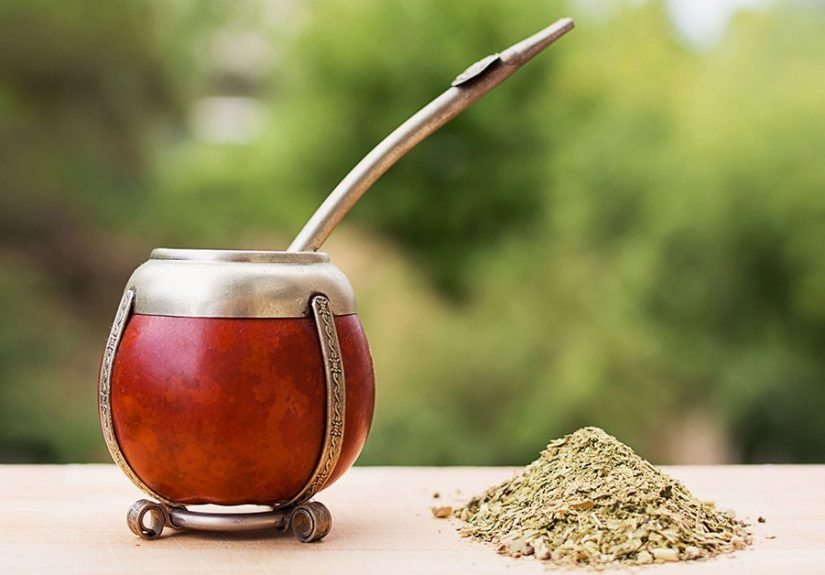
Yerba mate is made from the leaves of Ilex paraguariensis, a South American plant traditionally brewed in a gourd and sipped through a metal straw. It contains caffeine, polyphenols, and other plant compounds that have made it popular among people who want the alertness of coffee with a more herbal personality.
So why does cancer risk enter the chat? For a few reasons. First, some epidemiologic studies, especially from South America, have linked long-term mate drinking with higher rates of certain cancers, particularly cancers of the esophagus, mouth, throat, and related tissues. Second, researchers have looked at whether very hot beverages can damage the esophageal lining over time. Third, some yerba mate products may contain PAHs, which are compounds formed during incomplete combustion and smoke exposure. That means the concern is not just about the leaf itself, but also about temperature and processing.
This is why discussions about yerba mate and cancer often get messy. People hear “yerba mate may raise cancer risk,” but the research is really asking several different questions at once. Is the risk coming from the plant? The heat? The smoke-drying process? The drinking pattern? Or from other exposures common in the same populations, like tobacco and alcohol?
What the Strongest Research Signal Actually Shows
The clearest and most consistent finding is this: drinking beverages at very high temperatures appears to raise the risk of esophageal squamous cell carcinoma. That concern is not unique to yerba mate. It also shows up in research on very hot tea and other hot drinks.
This matters because yerba mate is traditionally consumed extremely hot in some settings. In 2016, cancer experts with the International Agency for Research on Cancer shifted the focus away from mate as a blanket villain and toward very hot beverages as the more convincing concern. Mate consumed at temperatures that are not very hot was not classifiable as carcinogenic, while very hot beverage drinking was classified as probably carcinogenic to humans.
That is a big distinction. It means the headline should not be “yerba mate equals cancer.” A more accurate headline is “scalding-hot mate may be risky, especially for the esophagus.” Not quite as catchy, but much less likely to make your tea kettle file a complaint.
Meta-analyses have backed up this broader temperature theory. Studies pooling evidence on hot tea and other hot drinks have found a stronger association with esophageal squamous cell carcinoma, not necessarily with esophageal adenocarcinoma. That subtype detail matters. Esophageal cancer is not one single disease, and risk factors can behave differently depending on the tumor type.
Where Yerba Mate Itself Fits In
Now for the harder part. Even after accounting for temperature, some observational research still suggests that heavy, long-term yerba mate intake may be associated with a higher risk of certain cancers. A meta-analysis found that mate consumption was linked with a higher risk of esophageal squamous cell carcinoma, with risk appearing greater at higher intake levels.
Clinical summaries from major U.S. medical centers also note that chronic, high-volume use has been associated with cancers of the esophagus, head and neck, lung, and in some reports bladder or prostate. Mayo Clinic similarly notes that people drinking about 1 to 2 liters a day over long periods may have a higher risk of some cancers, especially if they also smoke or drink alcohol regularly.
That last part is important enough to underline with a metaphorical yellow marker: smoking and alcohol are major confounders. Many studies of mate come from populations where tobacco and alcohol exposure can overlap with heavy mate drinking. That makes it harder to prove whether mate is the direct cause, a contributing factor, or part of a cluster of behaviors traveling together like an unfortunate road trip.
Some reviews have pointed out that the older evidence base relies heavily on case-control studies, which are useful but not perfect. They can be affected by recall bias, measurement problems, and incomplete control for lifestyle factors. So the research raises concern, but it does not support simplistic certainty.
Why Temperature May Matter So Much
The temperature theory is biologically plausible and surprisingly unglamorous. Very hot liquid can repeatedly irritate or injure the lining of the esophagus. Over time, that chronic thermal damage may promote inflammation, tissue repair, and cellular changes that could help cancer develop in susceptible tissue.
This also helps explain why the risk signal is strongest for the esophagus. That tissue takes the direct hit. Your liver is not sipping the mate. Your esophagus is. And it would very much prefer not to be flash-boiled every morning.
American Cancer Society and MD Anderson guidance both reflect this broader concern: frequently drinking very hot liquids may increase risk for esophageal cancer, especially the squamous cell type. Recent prospective research has continued to support this pattern. A 2025 study in the UK Biobank found higher risk of esophageal squamous cell carcinoma among people drinking hot or very hot beverages, while a clear association was not seen for esophageal adenocarcinoma.
So if there is one takeaway that survives every argument, every internet thread, and every wellness podcast detour, it is this: let your drink cool down.
The PAH Question: Is Processing Part of the Problem?
Another major line of research looks at polycyclic aromatic hydrocarbons, or PAHs. These compounds can form when plant materials are exposed to smoke or combustion during processing. Some yerba mate products, especially traditionally smoke-dried ones, have been found to contain substantial levels of PAHs.
Researchers have measured PAHs in dried yerba mate leaves and in the beverage infusions themselves. Some studies suggest that repeated infusions, which are common in traditional mate drinking, can release meaningful amounts of these compounds into the final drink. Other researchers argue that temperature may be the larger danger and that PAH exposure may not fully explain the cancer signal.
That is why PAHs remain a live research question rather than a neatly solved case. The current evidence suggests that processing probably matters, but temperature may still be the more consistent explanation for esophageal risk. In practical terms, though, this is not useless information. It means consumers who want to lower potential risk may reasonably look for less smoke-exposed or smoke-free processed mate products when possible.
What the Research Does Not Show
There are a few things the evidence does not justify saying.
1. It does not show that one casual cup is clearly dangerous.
Most risk discussions center on long-term, high-volume use, often several cups a day or traditional all-day drinking patterns. That is a very different scenario from the occasional mug you drink while answering emails and pretending you enjoy spreadsheets.
2. It does not prove that all yerba mate causes cancer regardless of temperature.
The temperature distinction is one of the most important updates in the literature. Non-very-hot mate does not carry the same level of evidence-based concern as scalding-hot mate.
3. It does not mean mate has zero beneficial compounds.
Yerba mate contains antioxidants and other bioactive substances, and some lab or preclinical studies have explored possible anti-inflammatory or anti-cancer effects. But those findings do not cancel out the human observational data on heavy intake and very hot consumption. A beverage can contain beneficial compounds and still pose risk under certain conditions. Biology loves nuance almost as much as the internet hates it.
How to Drink Yerba Mate More Cautiously
If you enjoy yerba mate and would rather not break up dramatically over one research topic, a practical middle ground exists.
Let it cool
Avoid drinking it when it is piping hot. Warm is one thing. “Could strip wallpaper” is another.
Watch the volume
The concern becomes more noticeable in studies of high daily intake over a long period. A moderate pattern is more reassuring than the all-day, every-day gourd lifestyle.
Be extra cautious if you smoke or drink heavily
Research consistently suggests the risk picture gets worse when mate use overlaps with tobacco and alcohol. If those risk factors are present, this is not the moment to argue that your tea is the least of your problems. It may not be the biggest problem, but it is not necessarily innocent either.
Consider product processing
Because smoke-drying may increase PAH levels, it is reasonable to look for products marketed as air-dried, steam-dried, or unsmoked, even though direct long-term clinical comparisons are still limited.
Mind the caffeine, too
Cancer risk is not the only question. Yerba mate can contain meaningful caffeine, and too much caffeine can lead to restlessness, sleep trouble, fast heartbeat, or stomach irritation. For most healthy adults, total daily caffeine intake around 400 mg is generally considered a reasonable upper range.
The Bottom Line
So, what does the research find on yerba mate and cancer risk?
The strongest evidence points to very hot beverage temperature as the biggest recurring concern, especially for esophageal squamous cell carcinoma. Heavy, long-term yerba mate use has also been associated with higher cancer risk in observational studies, but that evidence is complicated by smoking, alcohol use, regional drinking habits, and differences in product processing.
That means the most evidence-based conclusion is not “never drink yerba mate again.” It is closer to this: don’t drink it scalding hot, don’t make extreme daily consumption your entire personality, and be aware that processing methods may matter.
If you already have significant reflux, swallowing problems, Barrett’s esophagus, or other esophageal issues, discussing hot beverage habits with a clinician is a smart move. Your esophagus has enough to deal with without becoming a test kitchen.
Experiences Related to Yerba Mate Cancer Risk: What This Looks Like in Real Life
In real life, concerns about yerba mate and cancer risk usually do not begin in a laboratory. They begin with a habit. Someone swaps coffee for mate because it feels smoother. Someone else grew up around traditional hot mate and never thought twice about temperature. Another person stumbles onto a scary headline and suddenly looks at their favorite gourd like it just betrayed them on social media.
One common experience is the daily traditional drinker. This is the person who refills the same leaves again and again, drinks mate throughout the day, and prefers it extremely hot. For them, the research matters most because their real-world pattern looks a lot like the high-exposure patterns that have raised concern in observational studies. The issue is not one ceremonial cup. It is the combination of frequency, heat, and years of repetition.
Another familiar experience is the wellness enthusiast who discovers yerba mate through bottled drinks, powders, or trendy tea blends. This person often hears about antioxidants, metabolism, focus, and “clean energy,” but not always about temperature or processing. Their surprise is understandable. Health marketing tends to speak in sparkles. Cancer epidemiology tends to speak in caveats. Those are very different dialects.
Then there is the former smoker or heavy drinker who turns to mate as a “better” ritual. That can be a meaningful improvement overall, but this is also the group that should take the research especially seriously. Studies repeatedly suggest that tobacco, alcohol, and mate may interact in a risk-amplifying way. For someone with that history, switching from cigarettes to a hot herbal drink is not a magical reset button. It is more like changing lanes while still driving on the same highway.
There is also the experience of the person with reflux, chronic throat irritation, or swallowing discomfort. For them, even before cancer enters the conversation, very hot drinks can feel aggravating. The practical lesson here is refreshingly boring: cooler beverages are usually kinder to irritated tissue. Sometimes the least glamorous advice is the most useful.
Finally, there is the moderation crowd: people who enjoy yerba mate a few times a week, drink it warm rather than scalding, and do not use it in heroic amounts. Their experience is usually less dramatic. They read the evidence, make a few adjustments, and move on with life. That may be the most realistic model for many adults. Not fear. Not denial. Just informed, slightly less reckless sipping.
And honestly, that is probably where the smartest experience lands: appreciating yerba mate for what it is, respecting what the research says, and remembering that your beverage should wake you up, not start a philosophical crisis before breakfast.