Table of Contents >> Show >> Hide
- The Giant Rat That Was Hiding in Plain Sight
- Meet Mallomys istapantap: Not Your Average Rat
- How Scientists Finally Captured It on Camera
- Why This First Photo and Video Matter
- New Guinea: A Biodiversity Machine With a Fog Machine
- The Role of Indigenous Knowledge in the Discovery
- Is the Subalpine Woolly Rat Endangered?
- Why People Love Stories Like This
- What This Discovery Teaches About Modern Wildlife Science
- Fieldwork Experiences Related to the Elusive Rat Discovery
- Conclusion
Some animals make their scientific debut with a roar. Others arrive with a splash, a leap, or a dramatic documentary voice-over. The subalpine woolly rat, however, chose a more mysterious entrance: it quietly padded through the cold mountain forests of New Guinea, avoided cameras for decades, and finally appeared as if it had been running a very successful public-relations blackout.
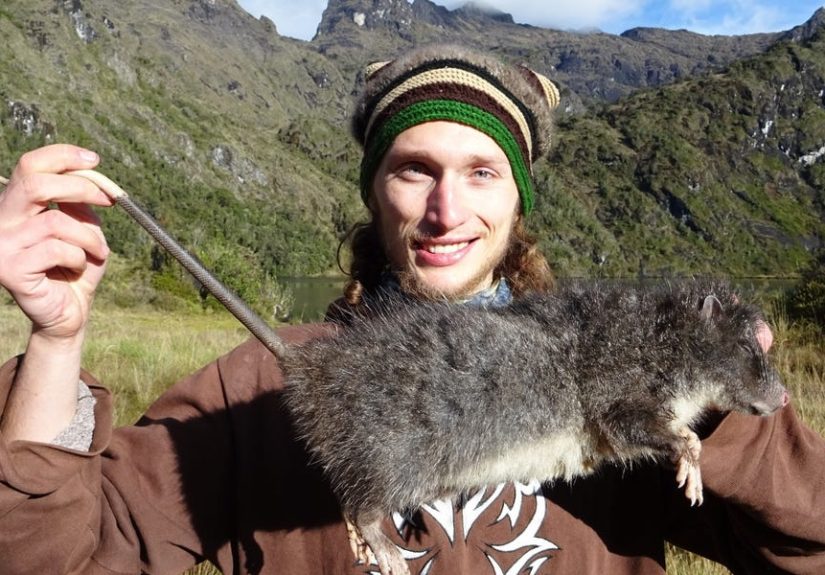
The animal at the center of this story is Mallomys istapantap, a giant, shaggy rodent from the highlands of New Guinea. It is not the kind of rat most people imagine when they hear the word “rat.” This is not a city alley acrobat with a French fry. This is a thick-furred, high-altitude mammal that can stretch more than two and a half feet from nose to tail and weigh around four pounds. In other words, it is closer to “small terrier in a fur coat” than “kitchen pest with confidence issues.”
For scientists, the exciting part is not just that the rat is big. It is that the animal has finally been photographed and filmed alive in its natural habitat for the first time. Until recently, science knew the subalpine woolly rat mostly from museum specimens and limited records. It had been described in 1989, but for decades, researchers had very little direct information about how it behaved, where it moved, what it ate, and how it lived in the wild.
That changed when Czech researcher František Vejmělka documented the animal during fieldwork on Mount Wilhelm, Papua New Guinea’s highest mountain. The discovery is a reminder that even in the age of satellites, smartphones, drones, and people filming every sandwich they eat, nature still has excellent hiding skills.
The Giant Rat That Was Hiding in Plain Sight
The phrase “elusive rat” sounds like the setup to a cartoon chase, but Mallomys istapantap is genuinely difficult to study. It lives in remote, wet, cold, high-elevation environments, often between roughly 3,200 and 3,700 meters above sea level. These are not casual hiking zones. They are misty, rugged mountain habitats where the forest can feel less like a workplace and more like a test of patience, boots, and personal waterproofing.
The subalpine woolly rat is also nocturnal. While humans are usually asleep, complaining about the cold, or wondering why the tent zipper is stuck again, the rat is active. It moves through mossy forest, climbs when needed, and feeds on plant material. During daylight, it may shelter in burrows or tree cover, staying out of sight like a celebrity avoiding paparazzi.
This explains why the animal went scientifically undocumented alive for so long. It was not necessarily absent. It was simply living in places where standard research methods struggled to find it. Small rodent traps, which work for many mammal surveys, are not ideal when the animal is large, cautious, strong, and living in steep mountain terrain. The rat was not exactly lining up to sign a consent form and pose for a field guide.
Meet Mallomys istapantap: Not Your Average Rat
The subalpine woolly rat belongs to the family Muridae, the enormous rodent family that includes many rats and mice. But calling this animal “just a rat” is a little like calling a grizzly bear “just a picnic problem.” It is one of the largest murine rodents known from Australia and Oceania, and its body is built for a chilly, elevated world.
A Body Made for the Mountains
The animal has dense, shaggy fur, large paws, powerful incisors, and a sturdy body. Its woolly coat is not decorative. At high elevations, temperatures can drop sharply, rain and mist are common, and insulation matters. The thick fur helps the animal survive in a landscape where being underdressed is not just uncomfortable; it is a biological mistake.
Its large paws help it move through rough terrain and vegetation. Its teeth are suited for plant-based feeding, and field observations suggest that ferns and other vegetation are important parts of its diet. Rather than being a tiny scavenger, this rat plays the role of a mountain herbivore, quietly turning tough plant material into rodent energy.
A Name With a Local Clue
The species name istapantap reflects local language and highland geography, roughly connected to the idea of being “up on top” or living above. That is fitting, because this animal is a creature of elevation. It occupies a world above many human settlements, where local hunters and communities often knew far more about its presence than outside scientists did.
This is one of the most important parts of the discovery. The rat was not invisible to everyone. It was elusive mainly to formal science. Local Indigenous knowledge helped researchers locate and understand the animal, showing once again that scientific discovery often works best when modern tools and long-standing local expertise cooperate instead of pretending they live in separate universes.
How Scientists Finally Captured It on Camera
The breakthrough came through a combination of persistence, camera traps, field surveys, and collaboration with local Indigenous hunters. Vejmělka spent months surveying Mount Wilhelm’s mammal life, documenting dozens of non-flying mammals, including rodents and marsupials. The subalpine woolly rat became the star of the expedition because it represented a rare chance to turn old museum knowledge into living ecological knowledge.
Camera traps are simple in concept but powerful in practice. A motion-triggered camera is placed in a promising location, then left to wait. It does not get bored. It does not sneeze. It does not whisper, “Was that it?” at the worst possible moment. In places where animals are shy, nocturnal, or active in difficult terrain, camera traps can collect evidence that human observers might miss.
Eventually, the cameras recorded the woolly rat moving in its natural habitat. That may sound like a small moment: a rat appears, a camera clicks, science cheers politely. But scientifically, it was huge. For the first time, researchers could study the living animal’s appearance, movement, activity patterns, and habitat use through direct evidence rather than relying mainly on preserved specimens.
Why This First Photo and Video Matter
A photograph is not just a pretty picture for a press release. In biology, an image can be data. It can confirm a species’ presence in a location. It can show posture, movement, body condition, habitat, coloration, and behavior. Video adds even more, capturing how an animal climbs, pauses, feeds, or travels through its environment.
For Mallomys istapantap, the new documentation helped scientists gather information about male body measurements, diet, parasites, activity, movement, and physical traits that were poorly understood before. That matters because museum specimens, while extremely valuable, are limited. A skull or preserved skin can tell researchers many things, but it cannot show how an animal uses a fallen log at night or how it moves through wet mountain forest.
The discovery also helps correct a common misunderstanding: rare in museum collections does not always mean rare in nature. Sometimes it means the animal lives in a difficult place, avoids standard traps, or is known mostly to people who live near its habitat rather than to institutions far away. In this case, the woolly rat may be less of a vanishing ghost and more of a mountain resident that science had not learned how to properly meet.
New Guinea: A Biodiversity Machine With a Fog Machine
New Guinea is one of the most biologically fascinating regions on Earth. Its mountains, rainforests, valleys, and isolated habitats have produced extraordinary wildlife, from birds of paradise to tree kangaroos and unusual rodents. The island’s complex terrain creates natural pockets of evolution, where species can adapt to specific elevations and environments.
In the highlands, woolly rats evolved into large, specialized forms. Some species are more arboreal, spending much of their time in trees. Others, like the subalpine woolly rat, appear more comfortable using the ground while still being capable climbers. Elevation can shape body size, tail length, fur thickness, and behavior. Nature, in this case, was not casually doodling rodents. It was engineering mountain specialists.
The rediscovery also highlights how much remains unknown about tropical mountain ecosystems. People often imagine that large mammals are mostly discovered, named, photographed, and neatly filed away. Yet here is a large rodent, known scientifically for decades, only now appearing in the wild through modern documentation. If an animal this big can remain poorly studied, smaller creatures must be pulling off even greater disappearing acts.
The Role of Indigenous Knowledge in the Discovery
One of the strongest lessons from this story is that local knowledge is not a footnote. It is often the map. Indigenous hunters and mountain communities understood where the animals might be found, what habitats mattered, and how to move through difficult terrain. Without that guidance, the expedition would have been far less successful.
In conservation and field biology, this kind of collaboration is essential. Scientists bring genetic testing, cameras, measurements, and academic methods. Local communities bring generations of observation, place-based knowledge, and practical experience. When those strengths are combined respectfully, the result can be more accurate, more ethical, and more useful than either approach alone.
The subalpine woolly rat’s public debut is therefore not just a story about technology. It is a story about listening. A camera trap may have captured the image, but people who knew the mountain helped lead science to the right place.
Is the Subalpine Woolly Rat Endangered?
The subalpine woolly rat is currently listed as Least Concern in major mammal diversity records, but that does not mean scientists know everything they need to know. “Least Concern” is not the same as “nothing to worry about.” It means that, based on available information, the species is not currently considered at high risk of extinction. But available information can be thin for animals in remote regions.
Highland ecosystems face pressures from habitat change, hunting, climate shifts, and outside development. Species that depend on cool, high-elevation habitats may be especially sensitive to environmental change because they cannot simply move upward forever. Mountains have tops. Once a cold-adapted species runs out of elevation, the options become limited.
That is why this discovery matters for conservation. Better data helps researchers understand where the species lives, how it behaves, and what conditions it needs. A blurry unknown animal is hard to protect. A documented species with habitat data, images, measurements, and local context is easier to include in serious conservation planning.
Why People Love Stories Like This
Part of the appeal is obvious: giant fluffy rat. That phrase alone has the energy of a children’s book, a science documentary, and a slightly alarming camping story. But the deeper appeal is that discoveries like this make the world feel less finished. They remind us that science is not just about laboratories, equations, and people wearing safety goggles near bubbling liquids. Science is also muddy boots, local guides, cold nights, patient cameras, and the thrill of realizing that a supposedly mysterious animal has been living its life all along.
There is also something charming about the rat refusing to match human expectations. Many people think of rats as urban survivors. This one is a mountain specialist. Many people imagine scientific discovery as finding something brand-new. This was different: science knew the animal existed, but had not properly seen it alive in the wild. It was less “new species discovered” and more “longtime mystery finally shows up for the appointment.”
What This Discovery Teaches About Modern Wildlife Science
The first wild images of Mallomys istapantap show how modern wildlife science is changing. Researchers increasingly combine camera traps, genetics, field measurements, local knowledge, and long-term ecological surveys. This mix is especially important in regions where animals are hard to detect and where biodiversity is high but scientific coverage has historically been limited.
The discovery also warns against assuming that the most visible animals are the most important ones. Some species are famous because they are large, colorful, or easy to film. Others are ecologically important but quiet, nocturnal, or hidden. The subalpine woolly rat may not become the next global mascot, although honestly, with the right lighting and a tiny mountain ranger hat, anything is possible. Still, its value is not based on cuteness. It is part of a highland ecosystem that scientists are still working to understand.
Fieldwork Experiences Related to the Elusive Rat Discovery
Anyone who has spent time looking for wildlife knows that nature rarely follows the schedule humans prepare in a notebook. You can hike for hours, set equipment perfectly, stay silent, and see absolutely nothing except your own breath, several suspicious insects, and a patch of mud that seems personally committed to your downfall. Then, five minutes after you relax, the animal appears where you least expected it. That is why the story of the subalpine woolly rat feels so familiar to field biologists, wildlife photographers, birders, and patient nature lovers everywhere.
The experience of searching for an elusive animal is a strange mix of boredom and electricity. Most of the time, nothing happens. The forest drips. Leaves move for no clear reason. A branch cracks, and your imagination immediately promotes it to “rare mammal.” Then the actual evidence arrives: a track, a feeding sign, a flash of fur, or a camera-trap image waiting quietly on a memory card. In that moment, all the wet socks and mosquito negotiations suddenly become worth it.
For researchers in New Guinea’s highlands, the challenge is even greater. The terrain is steep, weather changes quickly, and moving equipment through mountain forest is exhausting. Camera traps must be placed with care. Too low, too high, too exposed, or pointed at the wrong trail, and the camera may collect hundreds of empty images or, worse, a dramatic portfolio of waving grass. Fieldwork requires humility. The animal knows the habitat better than the scientist does.
This is where local experience becomes priceless. Indigenous hunters and landowners often understand animal signs that outsiders would miss: a feeding area, a likely route, a tree hollow, a seasonal pattern, or a place where a certain animal is known to pass after dark. Good field science is not about arriving as the smartest person in the forest. It is about learning from the people and the landscape before trying to draw conclusions.
The subalpine woolly rat also gives everyday readers a new way to think about discovery. You do not need to be in a remote mountain camp to appreciate the lesson. Sometimes the things around us remain unseen because we are using the wrong method, looking at the wrong time, or ignoring people who already know where to look. In science, business, education, and ordinary life, breakthroughs often come from changing the question, not just working harder at the old one.
That may be the most memorable experience connected to this story: the feeling that the world is still wonderfully unfinished. A giant woolly rat can live in the mountains for decades, known locally but barely documented scientifically, and then finally step into view. It is funny, humbling, and oddly inspiring. Somewhere out there, another camera trap is waiting. Another researcher is checking a trail. Another local guide is pointing toward the right ridge. And another animal, completely uninterested in human deadlines, is deciding whether tonight is the night it finally becomes famous.
Conclusion
The first scientific photos and video of the subalpine woolly rat are more than a fun animal headline. They mark a meaningful advance in the study of New Guinea’s mountain biodiversity. Mallomys istapantap was never just a rumor, but until now, science had only a limited view of its living world. Thanks to patient fieldwork, camera traps, and Indigenous knowledge, researchers finally gained a clearer picture of this remarkable rodent’s behavior, habitat, size, diet, and ecological role.
The discovery proves that even large mammals can remain poorly understood when they live in remote places and follow secretive habits. It also shows why biodiversity research still matters. The planet is not fully cataloged, and some of its most fascinating residents are not hiding because they are mythical. They are hiding because humans have not yet learned how to meet them properly.
Note: This article is written for web publication in standard American English, with no source links inserted in the body content. The information is based on verified scientific reporting, research summaries, and taxonomic records available about Mallomys istapantap.