Table of Contents >> Show >> Hide
- The quick answer (for people who are already at the party)
- First things first: what “lines” are we talking about?
- The real meaning: industrial design doing its job
- But why does everyone think the lines are measurements?
- So… are those “shot/wine/beer” amounts actually correct?
- How to use Solo cup lines as a practical pour guide (without kidding yourself)
- Why the lines feel “right” even if they weren’t meant to measure
- Why you still shouldn’t treat a Solo cup like a measuring cup
- A responsible-drinking side quest (because the lines can help you, but they can also trick you)
- Waitdo Solo cups still have lines?
- FAQ: fast answers you can deliver like a trivia champ
- Conclusion: the lines mean “function first, myth second”
- Bonus: of real-life experiences with Solo cup lines
The red Solo cup is basically America’s unofficial unit of “good times.” It shows up at tailgates, cookouts,
dorm move-ins, backyard weddings, and any event where someone says, “We don’t need fancy glassware.”
And thenlike a plot twist in a low-budget mystery movieyou notice the lines.
Are they secret bartender hacks? A corporate Easter egg? A design choice made by someone who loves symmetry
a little too much? The short version: the lines can line up with some common pour sizes, but that’s not
why they exist. The long version: buckle up, because this story has everythinginternet myths, industrial design,
and the eternal human desire to measure things without actually owning a measuring tool.
The quick answer (for people who are already at the party)
-
On older 18-ounce Solo “party cups,” the horizontal ridges often land at roughly 1 oz,
5 oz, and 12 oz. -
However, Solo’s official stance is that those ridges were made for functional performance
(grip, stacking, sturdiness), not as measuring marksany alignment with measurements is essentially a happy accident. - Also: today’s Solo party cups may not have those lines at all, depending on the current design.
First things first: what “lines” are we talking about?
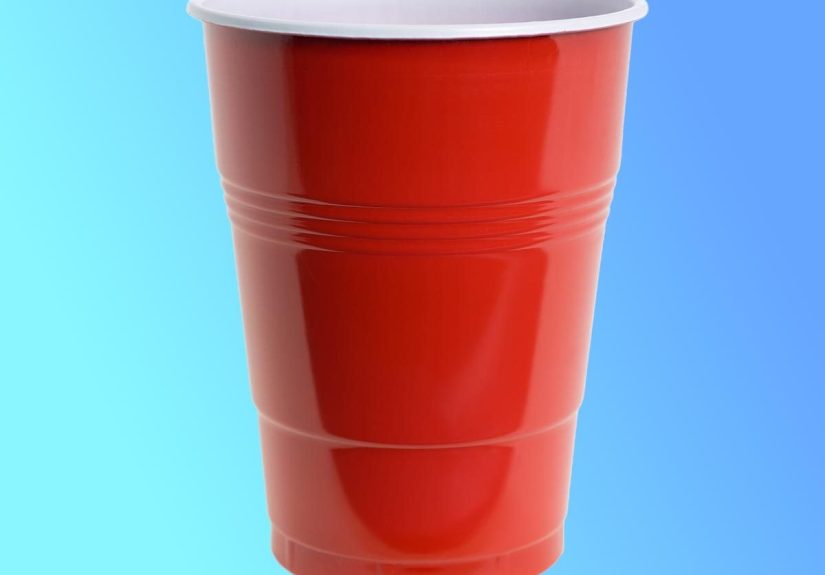
When people say “the lines on a Solo cup,” they usually mean the three indented rings on the outside of the classic
red plastic party cup (and sometimes faint rings inside). These rings look like intentional measurement markerswhich
is exactly why the internet decided they must be.
But the cup isn’t a lab beaker. It’s a disposable cup designed to survive being squeezed, stacked, and carried around
by someone holding a paper plate, a phone, and a mysterious sauce-stained napkin… all at the same time.
The real meaning: industrial design doing its job
Those ridges help you hold the cup (even when your hand is doing its best impression of a slip-and-slide)
Smooth plastic + condensation + sweaty hands + enthusiastic gesturing = a drink on the ground.
The rings give your fingers a little extra traction, so you’re less likely to yeet your beverage during a
passionate debate about whether pineapple belongs on pizza.
They help with stacking and “unsticking”
If you’ve ever tried to separate a stack of plastic cups and accidentally pulled out five at once, you’ve experienced
the dark side of physics. Design features like rims and ridges help reduce the “vacuum seal” effect that makes cups cling
to each other like they’re in an emotionally codependent relationship.
They add stiffness so the cup is less likely to buckle
Thin plastic needs structural help. Ridges can stiffen the wall of the cup so it doesn’t crumple the moment you pick it up
like a delicate, hydrated origami swan.
But why does everyone think the lines are measurements?
Because the internet loves three things:
- “Secret” knowledge you can share at parties.
- Simple visuals that feel like a life hack.
- Anything that suggests you don’t need special tools.
The most common meme says:
bottom line = 1 oz (liquor), middle line = 5 oz (wine),
top line = 12 oz (beer).
It’s tidy. It’s memorable. It’s exactly the kind of thing your brain wants to be true.
So… are those “shot/wine/beer” amounts actually correct?
Here’s where it gets deliciously nuanced: on the older 18-ounce Solo cup design, the ridges may land
roughly near those volumesbut “roughly” is doing a lot of work.
Solo itself has acknowledged the classic cup’s lines “roughly equaled 1, 5 and 12 ounces,” while also emphasizing
the lines weren’t created as official measuring marks and can mean different things to different people.
In other words: the cup can be useful for approximate measuring, but it was not created to be a bartender’s ruler.
Think “good-enough cheat sheet,” not “precision instrument.”
A key reality check: a U.S. “standard drink” doesn’t match the meme perfectly
A U.S. standard drink is generally defined as:
12 oz beer (about 5% ABV),
5 oz wine (about 12% ABV),
1.5 oz distilled spirits (about 40% ABV).
Notice the difference? The meme’s “shot line” often gets shared as 1 oz, but a standard spirits serving is
typically 1.5 oz.
That means if you’re using the bottom ridge as “one drink of liquor,” you may actually be pouring less than a standard
drinkwhich is not a tragedy, unless your cocktail is mostly vibes and you’re trying to match a recipe.
How to use Solo cup lines as a practical pour guide (without kidding yourself)
If you’re missing a jigger, measuring cup, or any other adult tool that suggests you planned ahead, the cup can still help.
Here’s the sensible way to treat the lines: as approximate reference points.
Solo cup “line legend” (approximate)
| Ridge | Approx. volume | Common use | Smart caveat |
|---|---|---|---|
| Lowest ridge | ~1 oz | Quick “small pour” of spirits | Standard spirits drink is usually 1.5 oz, so this is conservative |
| Middle ridge | ~5 oz | Wine pour / base for a spritzer | Great for portion awareness |
| Upper ridge | ~12 oz | Beer or soda portion | High-ABV beer can count as more than one standard drink |
| Near the top | Up to ~18 oz (to brim) | Room for ice + mixer, big soft drinks | Brim-full pours are chaosleave headroom |
Three quick examples (because theory is boring and nobody came here for homework)
1) A simple rum & cola: Add spirits first (aim for a measured 1.5 oz if you can; if not, bottom ridge + a little extra),
then ice, then top up with cola. If you keep the mixer near the 12 oz zone (depending on ice), you’ll avoid the “oops, I made a bathtub” effect.
2) A wine spritzer: Pour wine to the middle ridge (~5 oz), then add ice and top with sparkling water. It feels fancy,
even if your “stemware” is a red cup and your garnish is optimism.
3) Portion-friendly soda: If you’re trying not to mindlessly refill, pour to the upper ridge (~12 oz).
It’s not a diet plan. It’s just a helpful little speed bump between you and the “I drank half a 2-liter” realization.
Why the lines feel “right” even if they weren’t meant to measure
The meme caught fire because the numbers are culturally familiar. In the U.S., people commonly talk about:
a “12-ounce beer,” a “5-ounce wine pour,” and a “shot” (often assumed to be around 1–1.5 ounces depending on context).
So when a cup’s ridges happen to sit near those volumes, it looks like intentional genius.
Add in the fact that the cup is taperedwider at the top than the bottomand those ridges are placed where they’re visually and
structurally useful. The “measurement coincidence” is basically ergonomics photobombing your pour.
Why you still shouldn’t treat a Solo cup like a measuring cup
1) Cup sizes vary
Not all “red cups” are the same size. Some are 12 oz, 16 oz, 18 oz, 20 oz, and some aren’t even Solo-brand.
Different molds mean the ridges (if present) may land at different volumes.
2) Manufacturing tolerances exist
These are mass-produced disposable cups, not calibrated cylinders. Small variations in plastic thickness, molding, and shape can change
where a given ounce lands.
3) Foam and ice lie to you
Beer foam inflates volume without increasing liquid. Ice displaces liquid while making the cup look “full.” If you’re measuring something
like a cocktail recipe, these two things will happily sabotage your math.
A responsible-drinking side quest (because the lines can help you, but they can also trick you)
The idea of “standard drink” portions exists for a reason: different beverages can deliver similar amounts of alcohol in different volumes.
A 12-ounce beer at ~5% ABV is often considered one standard drinkbut that same 12 ounces at 10% ABV can be closer to two.
Translation: your “one cup” may not equal “one drink.”
If you’re using cup lines as a pacing tool (smart!), pair it with common-sense guardrails:
eat food, alternate with water, pay attention to ABV, and don’t drive. Be the person who remembers the night fondly instead of through
blurry group photos and a mysterious text that just says “u ok?”
Waitdo Solo cups still have lines?
According to Solo’s own FAQ, their party cup design today may have no lines. So if you’re staring at a cup with ridges and thinking,
“Aha, the sacred measurement markings!” you might be holding an older design, leftover stock, or a similar cup from another brand.
The myth lives on even if the lines don’t.
FAQ: fast answers you can deliver like a trivia champ
Are the lines officially meant for measuring alcohol?
No. The best-supported explanation is that they’re functional design elements (grip, stacking, sturdiness), and any measurement alignment is coincidental.
Can I still use them to measure in a pinch?
Surejust treat it as approximate. If precision matters (cocktail ratios, baking, anything involving “don’t mess this up”), use proper measuring tools.
Why does the “shot line” often say 1 oz if a standard drink is 1.5 oz?
Because “shot” is used loosely in casual conversation, and the meme spread faster than nuance. For a standard-drink pour of spirits, aim for 1.5 oz.
Conclusion: the lines mean “function first, myth second”
The lines on older Solo cups are a perfect example of how the internet turns practical design into folklore.
They weren’t created as measuring marksbut they do land near some familiar volumes, which makes them handy in a pinch.
The grown-up way to use them is simple: lean on them as a rough guide, not a promise from the gods of calibration.
So the next time someone at a party announces, “Did you know the cup tells you exactly how much to pour?!” you can smile,
nod, and gently upgrade the conversation: “It’s not official… but it’s a surprisingly useful coincidence.”
And then you can go back to the grill, where the real measurements are “a pinch,” “a handful,” and “that looks right.”
Bonus: of real-life experiences with Solo cup lines
The first time I saw someone use the Solo cup lines “professionally,” it was at a tailgate where the cooler was organized like a NASA launch checklist
and the guy mixing drinks had the calm focus of a surgeon. He didn’t own a jigger (or at least he didn’t bring it), but he had the cup lines.
Spirits to the bottom ridge, mixer up near the beer line, ice on topboom, a perfectly drinkable highball. Was it a competition-level cocktail?
No. Was it exactly what everyone wanted at 11:07 a.m. in a parking lot? Absolutely.
Later, at a backyard barbecue, I watched the lines do their best work as a peacekeeping tool. Someone volunteered to pour wine, then immediately
started free-pouring like they were auditioning for a flair-bartending show. A friend quietly slid a red cup across the table and said,
“Just hit the middle line.” The vibe instantly improved. Nobody had to lecture anyone. No one had to be the fun police. The cup handled it.
In that moment, the Solo cup lines were basically tiny plastic boundaries.
The funniest “line moment” I’ve ever witnessed happened at a camping trip. Measuring cups? Forgotten. Shot glass? Somewhere deep in a cooler
next to a bag of ice that had transformed into a single arctic boulder. So we used the cup. Someone announced the plan like it was a cooking show:
“Okay, we’re doing science: bottom line for the spirit, middle line for the citrus stuff, top line for the sparkling thing.” Nobody knew if the ratios
were correct, but everyone agreed the drink tasted like “vacation,” which is the only real metric that mattered.
And it’s not just booze. I’ve seen the lines used for pancake mix when the kitchen was missing a measuring cup (risky, but brave),
for watering plants when someone said, “Just give it about this much,” and even for kids’ craft projects where glue and water needed
to be “kinda even.” The cup lines basically become a visual shortcut for “close enough.” They don’t replace proper tools, but they reduce the number
of times you have to shout, “How much is a tablespoon again?”
My personal favorite use is the “soda sanity check.” At parties, it’s easy to keep topping off your cup until you’ve had three refills without noticing.
Pouring to that upper ridge and calling it one serving is a tiny hack that makes you more awarewithout making you feel like you’re tracking macros at a cookout.
The Solo cup isn’t trying to be your life coach, but if you let it, it can quietly help you pace yourself.
In the end, the lines are a perfect party metaphor: not as deep as people make them, but more useful than they look. They’re design, coincidence, culture,
and convenience all stacked into one little red icon. Which, honestly, is the most American thing a cup can be.