Table of Contents >> Show >> Hide
- First: What Type of Dry Eye Are We Talking About?
- So… What Is Radio Frequency (RF) Treatment for Dry Eye?
- How Might RF Help Dry Eye Symptoms?
- What Happens During an RF Session?
- Does RF Hurt? What Does It Feel Like?
- How Many Sessions Do People Usually Need?
- How Long Do Results Last?
- What Does the Research Say So Far?
- Who Is a Good Candidate for RF Dry Eye Treatment?
- Who Should Be Cautious or Avoid RF?
- How Does RF Compare to Other In-Office Dry Eye Treatments?
- Is RF Safe Around the Eyes?
- How Much Does RF for Dry Eye Cost? Will Insurance Cover It?
- What Should I Ask at a Consultation?
- How to Get Better Results (Even If You Do RF)
- Red Flags: When to Seek Care Quickly
- Bottom Line
- Experiences With RF for Dry Eye: What It’s Like in Real Life (Approx. )
Dry eye can make you feel like you’ve been blinking through desert wind all daywhile staring at a screen that never blinks back. If you’ve tried warm compresses, artificial tears, and the “I swear I drank water today” routine, you may have heard about radio frequency (RF) treatments for dry eye and wondered: “Wait… like radio… on my eyelids?”
Yep. But not in a tin-foil-hat way. RF is a controlled energy treatment that creates gentle heat in tissues. In eye care, it’s being used in some clinics as an in-office option to help certain types of dry eyeespecially evaporative dry eye linked to meibomian gland dysfunction (MGD).
This FAQ-style guide breaks down what RF is, who it may help, what it feels like, how it compares to other treatments, and what questions to ask before booking an appointment. (Spoiler: “Will my eyelids pick up FM stations?” is not the most important onebut it is funny.)
First: What Type of Dry Eye Are We Talking About?
Dry eye isn’t one single thing. It’s more like a messy group project with multiple causes. Two big categories show up most often:
- Evaporative dry eye: Your tears evaporate too quicklyoften because the oily layer of the tear film is weak.
- Aqueous-deficient dry eye: You don’t make enough watery tears (sometimes linked to autoimmune conditions like Sjögren’s).
MGD is a major driver of evaporative dry eye. The meibomian glands sit along your eyelid margins and release oil (meibum) that slows tear evaporation. When those glands clog or the oil quality changes, your tear film becomes unstable and your eyes can burn, sting, water, blur, or feel grittyoften worse later in the day or after screen time.
So… What Is Radio Frequency (RF) Treatment for Dry Eye?
Radio frequency uses electrical energy that generates controlled heat in targeted tissue. In aesthetics, RF has been used for years for skin tightening around the face and eyes. In dry eye care, some providers apply RF around the eyelids to warm the area and support better meibomian gland function.
Here’s the key idea: heat can soften thickened meibum. If your gland oil has become waxy or sluggish, warming the lids may help it flow more easilyespecially when paired with manual meibomian gland expression (a provider gently expresses the glands after heating).
Important reality check
RF for dry eye is an evolving area. Some clinics use RF as a standalone step; others combine it with treatments like intense pulsed light (IPL) and gland expression. Not every RF device is specifically cleared for dry eye, and treatment protocols vary by clinic.
How Might RF Help Dry Eye Symptoms?
RF is mainly discussed for people whose dry eye is driven by MGD and eyelid inflammation. Potential benefits may include:
- Warming the lids to help melt/soften thick meibum
- Improving tear film stability by supporting the oily layer
- Supporting eyelid tissue health (some devices also aim to improve skin elasticity around the lid area)
- Pairing well with expression to help clear obstructed glands
Think of it like this: if your meibomian glands are “trying to squeeze toothpaste that’s been in the fridge,” heat can make that toothpaste less stubborn. (Not a glamorous metaphor, but very accurate energy.)
What Happens During an RF Session?
Most in-office RF sessions for dry eye look something like this:
1) Your lids are prepped
The provider cleans the skin and may apply a conductive gel. If the clinic combines RF with IPL, you may also have protective eye shields and additional prep.
2) RF energy is applied around the eyelids
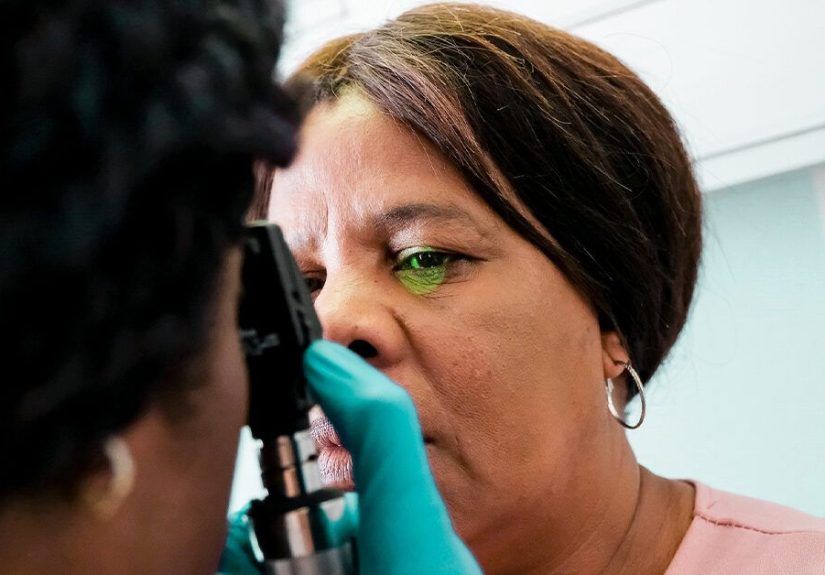
A handheld device is moved along the skin near the eyelids (typically not directly on the eyeball). The goal is controlled heatingwarm, not “I fell asleep on the beach without sunscreen.”
3) (Often) gland expression follows
Many protocols pair heat-based treatments with meibomian gland expression right after, while oils are softer. This step can feel like pressure on the lidsuncomfortable for some people but usually quick.
4) You go back to your day
Downtime is usually minimal. Some people look slightly pink around the eyes for a short time, like they just speed-walked to a meeting.
Does RF Hurt? What Does It Feel Like?
Most people describe RF as:
- Warmth around the lids (often surprisingly relaxing)
- Mild tingling or a heating sensation
- Pressure during gland expression (if performed)
If you’re sensitive, tell your provider. Comfort settings, technique, and whether expression is done can change the experience a lot.
How Many Sessions Do People Usually Need?
There isn’t one universal schedule. Many clinics recommend a series (for example, multiple sessions over several weeks), especially when RF is combined with IPL. Some people do periodic maintenance after the initial series.
Your plan should be based on what your exam shows: gland blockage severity, lid inflammation, tear film stability, and whether you have contributing issues like blepharitis or ocular rosacea.
How Long Do Results Last?
Dry eye is typically a chronic condition, so think in terms of management, not a magical “one-and-done.” Some studies and clinical reports suggest improvements can last for months in many patients, but results vary widely.
Why the range? Because MGD is influenced by daily factorsscreen time, contact lenses, medications, hormones, skin inflammation, environment, and whether you keep up with home care (warm compresses, lid hygiene, omega-3s if recommended, etc.).
What Does the Research Say So Far?
The evidence base is growing, but it’s not as standardized as some other dry-eye device treatments. Here’s the honest summary:
- Small clinical studies and pilot data suggest RF (often with gland expression) may improve signs and symptoms of MGD-related dry eye for some patients.
- Combination approaches (like RF + IPL + gland expression) have shown promising improvements in symptom scores and gland function in published studiesthough larger randomized trials are still needed to tease out how much each component contributes.
- Expert protocols and “tools-of-the-trade” discussions increasingly list RF as one of several in-office options for MGD management, alongside thermal pulsation and IPL.
Translation: it’s not hype, but it’s also not a guaranteed cure. If a clinic promises you’ll never use eye drops again, that’s your cue to blink slowly and back away.
Who Is a Good Candidate for RF Dry Eye Treatment?
You may be a better match for RF if you have:
- Evaporative dry eye with MGD (blocked glands, poor meibum quality)
- Ocular rosacea or lid margin inflammation contributing to gland dysfunction
- Symptoms worse with screens, wind, air conditioning, or end-of-day fatigue
- A history of partial relief from warm compresses but not enough
Clinics often confirm candidacy with tests such as tear breakup time, meibomian gland imaging (meibography), lid margin evaluation, and surface staining.
Who Should Be Cautious or Avoid RF?
Only your eye-care professional can tell you what’s appropriate, but RF may be delayed or avoided in situations like:
- Active skin infection or significant irritation around the treatment area
- Uncontrolled ocular surface disease that needs a different first step
- Implanted electronic devices or medical conditions where energy-based treatments require special precautions (ask your provider and your medical team)
- Pregnancy (many clinics avoid elective energy-based treatments due to limited data)
Also, if your dry eye is primarily aqueous-deficient (low tear production) from autoimmune disease, RF aimed at eyelid glands may not be the main solutionthough some people have mixed disease and still benefit from comprehensive treatment plans.
How Does RF Compare to Other In-Office Dry Eye Treatments?
If you’re choosing between options, it helps to understand the menu. Here’s a practical comparison:
RF (Radio Frequency)
- Goal: Controlled heating around lids; often paired with gland expression
- Best fit: MGD/evaporative dry eye, sometimes combined with IPL
- Upside: Noninvasive, minimal downtime; may support gland function
- Limitations: Protocols vary; evidence base still standardizing
Thermal pulsation systems (heat + pressure devices)
- Goal: Heat glands and express them using device-driven pressure
- Best fit: Obstructive MGD
- Upside: Established category with FDA-cleared devices for MGD
- Limitations: Cost; results vary; maintenance often needed
IPL (Intense Pulsed Light)
- Goal: Reduce lid inflammation and abnormal blood vessels associated with rosacea; improve gland function
- Best fit: MGD with rosacea/inflammation patterns; frequently done as a series
- Upside: Strong clinical adoption; often combined with expression
- Limitations: Not for everyone; requires proper eye protection and technique
Many patients do best with a layered plan: daily home care + prescription therapy (when needed) + an in-office procedure targeted to their specific dry eye subtype.
Is RF Safe Around the Eyes?
When performed by trained professionals using appropriate technique and eye protection when needed, RF is generally described as well-tolerated in clinical settings. Possible short-term side effects can include:
- Temporary redness or warmth
- Mild swelling or tenderness
- Transient irritation
- Rarely, skin burns or pigment changes (more likely with improper technique)
Safety depends heavily on the provider’s training, the device used, and whether the protocol is designed for the sensitive eyelid region. This is not a DIY-at-home-with-a-gadget situation. Your eyelids are not a craft project.
How Much Does RF for Dry Eye Cost? Will Insurance Cover It?
In many clinics, RF-based dry eye treatments are considered elective or fall into a gray zone between medical and aesthetic services. That often means:
- Out-of-pocket costs are common
- Pricing may be packaged as a series (especially if combined with IPL)
- Insurance coverage is variable and often limited
Ask for a written estimate before you startespecially if the plan involves multiple sessions and maintenance visits.
What Should I Ask at a Consultation?
Walk in with questions that cut through marketing and get to outcomes:
- What’s driving my dry eye? (MGD, aqueous-deficient, mixed, allergy, meds, autoimmune?)
- What tests will you use to confirm this (meibography, tear breakup time, staining, osmolarity)?
- What device and protocol do you use for RF, and why?
- Do you combine RF with expression or IPL? If yes, what’s the rationale?
- What results should I expect realisticallyand by when?
- What are the risks for my skin type and medical history?
- What home routine is required to maintain benefits?
How to Get Better Results (Even If You Do RF)
RF isn’t a replacement for the boring-but-effective basics. The best outcomes often happen when people treat dry eye like a routine, not a rescue mission:
- Lid hygiene: Clean lashes/lid margins if blepharitis is present
- Heat at home: Consistent warm compresses (as recommended by your clinician)
- Blink training: Full blinks during screen use; consider the 20-20-20 rule
- Environment tweaks: Humidifier, avoid direct fan/AC to the face
- Medication review: Some meds can worsen drynessask your doctor
- Targeted prescriptions: Anti-inflammatory drops or other therapies when appropriate
In other words: the procedure can be the “power wash,” but daily habits are the “don’t track mud onto the carpet again” plan.
Red Flags: When to Seek Care Quickly
Dry eye is common, but some symptoms shouldn’t wait:
- Sudden, severe eye pain
- Significant light sensitivity
- Vision loss or dramatic vision changes
- Thick discharge or suspected infection
- One eye becoming very red and painful
If that’s you, skip the internet rabbit hole and contact an eye-care professional urgently.
Bottom Line
RF can be a helpful tool for certain dry eye patientsespecially those with MGD-driven evaporative dry eyebut it works best as part of a tailored plan based on proper diagnosis and objective testing. The strongest results are often reported when RF is paired with other therapies (like gland expression and sometimes IPL) and supported by consistent home care.
If you’re curious, book a consultation with a clinic that treats dry eye medically (not just cosmetically), asks smart diagnostic questions, and explains outcomes in normal human languagenot just brochure language.
Experiences With RF for Dry Eye: What It’s Like in Real Life (Approx. )
Because dry eye treatments can sound futuristic, it helps to know how RF tends to land in real human bodiesnot in glossy marketing timelines where everyone smiles in slow motion.
Experience #1: “The screen-time sufferer.” One common story is the office worker who’s fine in the morning and miserable by 4 p.m. They’ve already tried artificial tears, but their eyes still feel hot and gritty after spreadsheets, Zoom calls, and the kind of blinking rate usually associated with statues. During RF, they often describe the sensation as a warm massage around the eyes. The surprising part? Many people say the “heat” portion feels easier than they expected. The less fun part is if the visit includes gland expression afterwardsome describe it as “pressure that’s a little spicy,” but quick. Over the next few weeks, improvementswhen they happenare often described as less end-of-day burning and fewer random watery-eye moments (the annoying kind where your eyes tear up while still feeling dry).
Experience #2: “I did warm compresses… kind of.” Another familiar patient is the one who did warm compresses for three days, felt slightly better, then forgot for two weeks, then remembered again when their eyes got cranky. RF can feel like a reset, but clinics often coach this person hard on maintenance. Patients who get the best mileage tend to be the ones who treat lid heat and hygiene like brushing teeth: not dramatic, just consistent. They’ll say the procedure helped, but the real win was finally getting a routine that kept symptoms from bouncing back so fast.
Experience #3: “Post-procedure dryness.” Some people who’ve had LASIK or cataract surgery notice dryness afterward and go looking for solutions. If MGD is part of the picture, RF may be offered as one piece of the plan. These patients often pay attention to timing: improvements can feel gradual rather than instant. They’ll report that the first week is “mostly just normal dry eye,” then slowly they notice fewer flare-ups triggered by wind or air conditioning. Many still use dropsbut less often, and with less frustration.
Experience #4: “Rosacea and the angry eyelids.” People with facial/ocular rosacea often describe chronic lid margin irritation and recurring styes. When RF is combined with other in-office treatments (commonly IPL in many practices), they sometimes notice a bigger difference in eyelid comfort and appearance than they expected: less redness at the lid edges, fewer “puffy morning eyelids,” and a general feeling that the eyes are less reactive. They also tend to be the ones who learn triggers fastspicy food, hot showers, alcohol, and stress can all show up in the symptom diary like uninvited guests.
Across all of these: the most honest takeaway is that RF is rarely a solo hero. Patients who describe it as “worth it” usually mention the whole package: better diagnosis, better daily habits, and a procedure that made the glands easier to manage. And yessome people don’t feel a dramatic change. That’s why good clinics measure objective signs (tear breakup time, gland function, staining) instead of relying only on vibes.