Table of Contents >> Show >> Hide
- How “Life-Changing” Books Actually Change You
- The Top 10 Life-Changing Books
- 1. Man’s Search for Meaning – Viktor E. Frankl
- 2. Atomic Habits – James Clear
- 3. The Power of Now – Eckhart Tolle
- 4. The 7 Habits of Highly Effective People – Stephen R. Covey
- 5. How to Win Friends and Influence People – Dale Carnegie
- 6. Mindset: The New Psychology of Success – Carol S. Dweck
- 7. Daring Greatly – Brené Brown
- 8. The Alchemist – Paulo Coelho
- 9. Meditations – Marcus Aurelius
- 10. Think and Grow Rich – Napoleon Hill
- How to Get the Most Out of These Books
- Real-World Experiences with Life-Changing Books (Extended)
- Final Thoughts
Some books entertain you, some teach you a few facts, and a tiny, magical handful grab you by the shoulders and
quietly say, “We’re changing everything now.” Those are the life-changing booksthe ones that sneak into your
daily decisions, your relationships, even your bank account, long after you’ve closed the cover.
This Listverse-style roundup isn’t just another “you should really read more” lecture. It’s a curated list of
transformative books that millions of readers lean on for new habits, deeper meaning, better conversations, and
braver choices in life. From classic psychology to modern habit science, from ancient philosophy to spiritual
wake-up calls, these titles keep showing up again and again on reading lists, book clubs, and “this book changed
my life” threads.
Whether you’re stuck in a rut, hungry for growth, or just curious what all the hype is about, these ten books
will give you tested frameworks, mind-bending stories, and practical tools to live differentlynot someday, but
starting with the next page.
How “Life-Changing” Books Actually Change You
Before we dive into the list, it’s worth asking: what makes a book “life-changing” instead of just “pretty good”?
- It shifts your perspective. You start seeing old problems with fresh eyes.
- It gives you language for your experience. Suddenly you can name what you’ve been feeling.
- It offers concrete tools. Not just inspiration, but steps you can actually try today.
- It sticks. Months later, you still quote it, recommend it, or catch yourself using its ideas.
The books below hit at least one of those criteria; the best of them hit all four. Think of this as your starter
pack for a more intentional, thoughtful, and yes, upgraded life.
The Top 10 Life-Changing Books
1. Man’s Search for Meaning – Viktor E. Frankl
If you’ve ever wondered how people survive the absolute worst life can offer, this book is your answer. Psychiatrist
Viktor Frankl survived Nazi concentration camps and came out with a profound insight: we can’t always choose our
circumstances, but we can choose how we respond and what meaning we give to them.
The first part of the book is a harrowing, deeply human account of daily life in the camps; the second part explains
logotherapy, Frankl’s approach to finding meaning as a powerful human drive. It’s not motivational-poster
fluffit’s philosophy forged in the darkest possible real-world test.
Why it changes your life: It reframes suffering. Instead of asking “Why is this happening to me?”
you start asking “What can I stand for in this moment?” People reach for this book during grief, burnout, illness,
or any season where life feels unfair and too heavy. It won’t magically fix everything, but it will give you a
sturdier inner backbone.
2. Atomic Habits – James Clear
If your life currently runs on a tight cycle of “I will absolutely change next Monday” followed by “Oops,” this
is the book that breaks that loop. Atomic Habits explains why small, everyday decisions compound into giant
results over timeand why relying on willpower alone is a losing game.
Clear shows you how to make good habits obvious, attractive, easy, and satisfying while making bad ones harder to do.
Forget dramatic New Year’s resolutions; this is about tiny, consistent improvements that quietly stack up into a new
identity: the person who actually goes to the gym, writes regularly, or saves money.
Why it changes your life: It doesn’t just tell you what to do; it redesigns the system around you
so doing the right thing becomes the easiest option. You begin to see yourself not as someone who “tries” but as
someone who is the kind of person who follows through.
3. The Power of Now – Eckhart Tolle
On paper, this is a spiritual book about presence and consciousness. In practice, it’s like a cold splash of water
for a racing mind. Tolle argues that most of our suffering comes from being trapped in regrets about the past or
anxiety about the future, while the present momentthe only thing that actually existsgets ignored.
Through simple, direct language, he invites you to watch your own thoughts instead of automatically believing them.
The more you notice, the more you realize how often your brain is running scary movies that never actually happen.
Why it changes your life: When you learn to drop back into the present, you become less reactive,
less stressed, and more intentional. Everyday activitieswashing dishes, walking the dog, answering an emailturn
into chances to practice calm awareness instead of opportunities to spiral.
4. The 7 Habits of Highly Effective People – Stephen R. Covey
This one’s basically a personal-development Swiss Army knife. Covey lays out seven habits that help you become more
proactive, value-driven, and effective in both your personal and professional life. It’s part productivity, part
character-building, and part relationship repair kit.
Ideas like “Begin with the end in mind” and “Seek first to understand, then to be understood” sound simple, but
applying them can radically change how you set goals, make decisions, and navigate conflict.
Why it changes your life: It gives you a big-picture framework, not just quick hacks. Instead of
chasing every new habit trend, you build a life that’s aligned with your values and long-term vision. It’s the
book you dog-ear, highlight, and keep on your shelf for years.
5. How to Win Friends and Influence People – Dale Carnegie
First published in 1936 and still selling like crazy, this book is living proof that human nature doesn’t change as
fast as technology does. Carnegie breaks down timeless principles for getting along with people: remembering names,
listening more than you talk, giving honest appreciation, and seeing situations from the other person’s point of view.
Don’t be fooled by the titlethis isn’t about manipulating people. It’s about basic respect and genuine curiosity.
Use these ideas in job interviews, friendships, family dinners, customer service calls, and yes, even internet
arguments (if you’re feeling especially brave).
Why it changes your life: When you learn how to truly connect, everything gets easieryour career,
your relationships, your daily interactions with strangers. This is the book that quietly upgrades your social
operating system.
6. Mindset: The New Psychology of Success – Carol S. Dweck
Ever catch yourself saying, “I’m just not a math person,” or “I’ll never be good at that”? Dweck’s research on
fixed versus growth mindsets shows how those beliefs quietly limit what we attempt, how we handle
failure, and how much we grow.
A fixed mindset sees abilities as static: you’re either talented or you’re not. A growth mindset sees abilities as
developable: you get better with effort, feedback, and smart strategy. Same brain, completely different life.
Why it changes your life: Once you spot fixed-mindset thinking“If I were smart, this wouldn’t be
hard”you can swap it for “This is hard because I’m learning.” That shift transforms how you approach
school, career, hobbies, parenting, and even relationships. Challenges stop being proof that you’re not enough and
become invitations to level up.
7. Daring Greatly – Brené Brown
If vulnerability sounds like the soft, squishy opposite of strength, Brené Brown is here to lovingly argue with you.
Drawing on years of research, she shows that vulnerabilitybeing seen as you really are, imperfect and allis
actually the birthplace of courage, creativity, and connection.
The book dives into shame, perfectionism, and the armor we wear to avoid being judged. It’s not always comfortable
reading, but it’s the kind of discomfort that leads to freedom: the freedom to raise your hand, say “I don’t know,”
or admit “this matters to me” without apologizing for existing.
Why it changes your life: Once you stop treating vulnerability as a weakness, you start showing up
more honestly in your relationships, your work, and your creative projects. Life becomes less about maintaining an
image and more about actually living it.
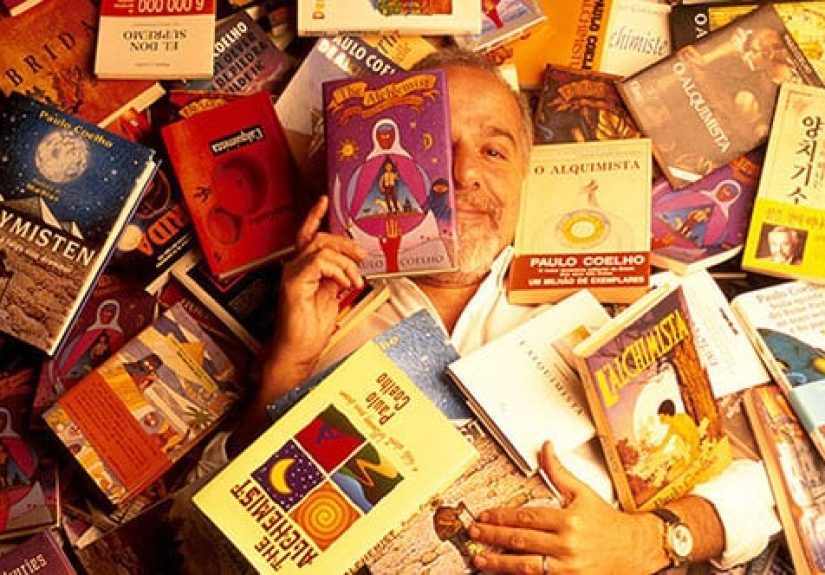
8. The Alchemist – Paulo Coelho
On the surface, The Alchemist is a simple novel about a shepherd named Santiago who follows a recurring
dream and leaves home in search of treasure. Underneath, it’s a modern fable about purpose, intuition, and the idea
that the universe tends to help those who are brave enough to pursue their “Personal Legend.”
You won’t find step-by-step exercises here. Instead, you’ll find symbols, metaphors, and short, memorable lines
that stick in your head (“When you want something, all the universe conspires in helping you to achieve it.”).
Why it changes your life: It makes you look at your own “safe but unsatisfying” routines and ask,
“What am I secretly yearning for?” Many readers credit this book with giving them the nudge to travel, change
careers, start businesses, or simply take their own dreams a bit more seriously.
9. Meditations – Marcus Aurelius
Imagine reading the private journal of a Roman emperor who was trying very hard not to lose his mind or his values
while running an empire. That’s basically what Meditations is: a collection of Stoic reflections on how to
live well in a messy, unfair world.
Marcus writes about staying calm, accepting what you can’t control, and keeping your ego in check. Despite the
ancient setting, his struggles sound suspiciously like our modern ones: difficult coworkers, bad news, insecurity,
and a brain that loves to freak out.
Why it changes your life: This book becomes a companion during stressful seasons. You may not be
emperor of anything, but when you remember, “You have power over your mindnot outside events,” it’s a lot easier
to survive traffic, social media drama, or an overloaded inbox with at least 30% less rage.
10. Think and Grow Rich – Napoleon Hill
Don’t let the title fool you: this isn’t just about money (though it absolutely talks about money). Hill studied
successful entrepreneurs of his time and boiled their common patterns into principles around desire, persistence,
belief, planning, and the power of a focused mind.
Some parts feel dated, but the core ideasclarity of purpose, persistence through setbacks, surrounding yourself
with the right peopleare still powerful. It’s less “manifest a yacht” and more “train your mind to cooperate with
your goals instead of sabotaging them.”
Why it changes your life: It forces you to confront what you actually want, not just what you’ve
been told to want. Used well, it helps you replace vague wishing with specific goals and disciplined action.
How to Get the Most Out of These Books
Spoiler: simply owning these titles will not magically give you a new personality, six-figure income, or Zen-like
calm. (If only.) The magic happens in how you use them.
- Read with a highlighter (or notes app). Mark anything that makes you pause, nod, or squirm.
- Summarize each book in 3–5 bullet points. If you can’t explain what you learned, you didn’t really learn it.
- Pick one tiny action. From each book, choose one small idea to try for a week.
- Revisit your favorites. The truly life-changing books get better on the second and third read.
Treat this list as a menu, not homework. Start with the book that feels most relevant to your current seasonmeaning,
habits, relationships, careerand let that one lead you to the next.
Real-World Experiences with Life-Changing Books (Extended)
To see how powerful these titles can be, it helps to step away from theory and look at how people actually use them
in real life. Across book clubs, online forums, and casual conversations, the same kinds of stories keep showing up.
Someone picks up Atomic Habits because they’re tired of feeling like a walking bundle of “almosts”:
almost in shape, almost organized, almost writing that novel. They start ridiculously smalltwo push-ups a day,
five minutes of writing, putting out workout clothes the night before. A few months in, they notice they’re not just
doing the habits; they’re thinking of themselves as “a person who follows through.” The external changes (stronger
body, cleaner house, growing savings account) are great, but the identity shift is the real prize.
Another reader discovers Man’s Search for Meaning during a brutal season: a breakup, a layoff, or a health
scare. Instead of feeling punished by life, they begin asking, “What kind of person do I want to be in this
situation?” They might choose to be kinder to people who are stressed, to show up for friends even while hurting, or
to pursue a long-postponed dream. The pain doesn’t vanish, but it stops being just pointless suffering and becomes
part of a story they are actively writing.
Someone else stumbles into The Power of Now after a period of constant anxiety. They experiment with noticing
the physical sensations of panic: the tight chest, the racing heart, the buzzing thoughts. Instead of fighting them,
they practice observing: “Here’s my mind telling scary stories again.” Over time, they learn that fear often lives
in imaginary futures, while the present momentthis breath, this step, this sip of coffeeis usually safe. Their
life on the outside looks the same, but the inner noise dial turns way down.
A shy, conflict-avoiding person picks up How to Win Friends and Influence People and realizes that being
“good with people” isn’t some mysterious talent reserved for extroverts. It’s a set of skills: listening more,
criticizing less, remembering details about others, and genuinely caring. They test these ideas at workasking
coworkers about their projects, giving credit generously, and showing appreciation. Suddenly, they’re the person
people want on their team, not because they turned into a loud networker, but because they learned to make others
feel seen.
Mindset often hits students, professionals, and parents especially hard. A manager reads it and realizes
they’ve been praising their team only for “being smart” or “being talented,” accidentally feeding a fixed mindset.
They switch to praising effort, strategies, and improvement. Over time, they watch their team take more risks, share
half-formed ideas, and recover from setbacks faster. The same book in a parent’s hands might lead to a subtle but
powerful shift from “You’re so clever” to “I love how hard you worked on that.”
Then there’s Daring Greatly, which has a way of sneaking into people’s relationships. A person reads about
vulnerability and realizes that their constant sarcasm and emotional distance are just armor. They experiment with
saying, “I’m actually hurt,” or “I’m scared this won’t work,” or even that terrifying sentence, “I need help.” The
result? Some relationships fade (because they were built on surface-level performance), but the ones that remain
become richer and more honest.
Even the more “woo” or philosophical books like The Alchemist, Meditations, and Think and Grow
Rich show their power in concrete ways. A reader of The Alchemist decides to finally apply for a job
abroad. A fan of Meditations uses Stoic ideas to stay grounded during political turmoil or workplace chaos.
Someone who takes Think and Grow Rich seriously sits down, writes a clear financial goal, and pairs it with
a specific plan instead of vague hoping. Over the years, those decisions compound into a completely different life
trajectory.
The common thread in all these experiences isn’t the book aloneit’s the reader’s willingness to act. The most
life-changing moment isn’t when you click “buy” or even when you finish the last chapter. It’s the quiet decision
to test one idea from a book in the messy laboratory of your real life. Do that with enough good books, and your
bookshelf stops being decoration and becomes a control panel for who you’re becoming.
Final Thoughts
There are thousands of books that can make you think, but only a few that keep living in your head long after you
close them. The ten titles above earned their reputation not because they went viral on social media, but because
readers keep coming back to them, recommending them, and using them as turning points in their own stories.
You don’t need to read them all at once. Pick one that fits your current season, read it with curiosity, and commit
to trying at least one idea from it in the next week. Do that over and over, and one day you’ll look back and
realize that no, a book didn’t magically change your lifebut it did give you the courage, clarity, and tools to
change it yourself.