Table of Contents >> Show >> Hide
- What the Pentagon Actually Confirmed
- Why This Meteor Matters So Much
- How Scientists Reached the Interstellar Conclusion
- Why Some Scientists Are Still Cautious
- What Makes Interstellar Objects So Valuable?
- Planetary Defense Gets a Bonus Plot Twist
- The Experience of Following a Story Like This
- Conclusion
If that headline makes you want to put on a tinfoil helmet and stare dramatically at the night sky, take a breath. This story is real, fascinating, and just weird enough to make science writers grin like kids in a planetarium gift shop. But it is not quite the same as saying, “Aliens dropped by and forgot their car keys in the Pacific.”
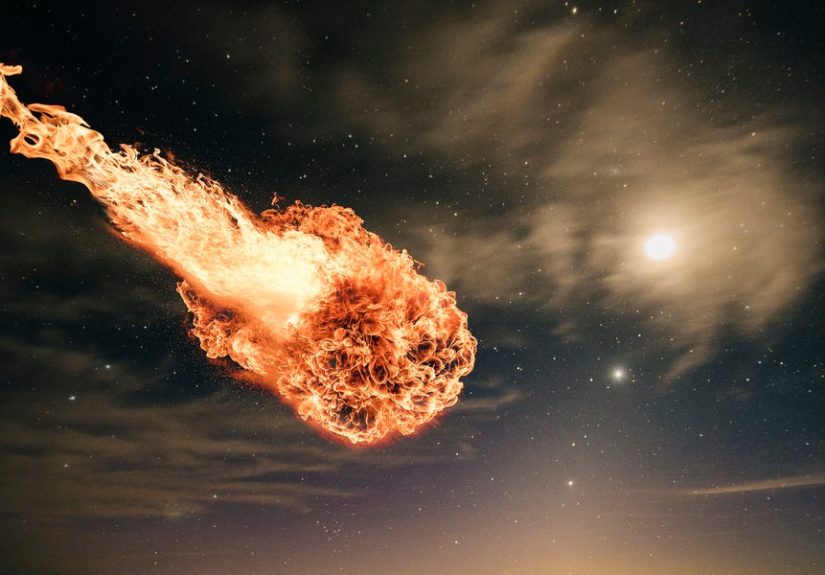
What actually happened is this: a fast-moving meteor slammed into Earth’s atmosphere on January 8, 2014, near Papua New Guinea. Years later, after scientists flagged it as a possible object from outside our solar system, U.S. Space Command confirmed that the velocity data were accurate enough to support an interstellar trajectory. That mattered because if the object really did come from beyond the Sun’s gravitational family tree, it would make this little fireball the first known interstellar object to reach Earthand chronologically, it would predate the much more famous ‘Oumuamua.
That is a huge deal. Interstellar objects are cosmic tourists from other star systems. They are leftovers from planet formation, orbital chaos, and gravitational kicks powerful enough to boot rocks, ice, and dust into the galaxy. Scientists love them because they offer a chance to study material from somewhere else without needing a trillion-dollar road trip. The catch? They move fast, they are hard to spot, and in this case, the evidence is compelling but not completely drama-free.
What the Pentagon Actually Confirmed
Let’s start with the headline-sized truth and the footnote-sized nuance.
The confirmation came through U.S. Space Command, which operates under the Department of Defense. In April 2022, officials verified that the object’s recorded speed was sufficiently accurate to indicate an interstellar path. This was important because earlier research by Harvard’s Amir Siraj and Abraham Loeb had argued that the meteoroften called CNEOS 2014-01-08 or IM1was moving so fast that it was not gravitationally bound to the Sun.
In plain English: it was going too fast to be a normal neighborhood rock.
Scientists often use a simple idea here. If an object is traveling on a hyperbolic path, it is not orbiting the Sun in a closed loop. It is basically saying, “Thanks for the gravity assist, but I’m just passing through.” That is what made the 2014 meteor extraordinary. The object’s speed suggested it came from outside the solar system, burned through Earth’s atmosphere, and exploded over the ocean.
But here is where science does what science does best: it ruins a perfectly dramatic headline by adding caution. NASA has stated that the data window for the 2014 event was very shortless than five seconds. That limited record makes it difficult to determine the object’s origin with absolute finality. So yes, the Pentagon-linked confirmation gave the interstellar interpretation serious weight. No, it did not magically vaporize every scientific debate in a burst of patriotic stardust.
Why This Meteor Matters So Much
Before this object entered the conversation, the celebrity interstellar visitor was ‘Oumuamua, discovered in October 2017. That object was the first confirmed interstellar object observed passing through our solar system. Then came 2I/Borisov in 2019, the first confirmed interstellar comet. Together, those discoveries transformed an idea that once sounded theoretical into something measurable: objects from other star systems really do drift through our cosmic backyard.
But the 2014 meteor adds a wild twist. If its interstellar origin holds up, then the first known interstellar object to reach Earth was not a giant telescope-friendly body spotted in space. It was a comparatively small object that announced itself by exploding in our atmosphere years before ‘Oumuamua became famous.
That matters for two reasons. First, it suggests interstellar material may reach Earth more often than many people assumed. Second, it means our atmosphere can serve as a kind of accidental detector. Instead of waiting for giant telescopes to catch everything zipping through the solar system, scientists can study bright fireballs and ask whether some of them came from beyond it.
That is an incredible idea. Earth, in effect, may be wearing a galactic raincoat and occasionally catching droplets from other stars.
How Scientists Reached the Interstellar Conclusion
1. The speed was the big clue
The 2014 fireball’s recorded velocity was the heart of the case. Researchers argued that after accounting for Earth’s motion and the object’s geometry, the meteor’s speed relative to the Sun remained high enough to imply an unbound orbit. In other words, this was not just a speedy local rock having an energetic day. It looked like an outsider.
2. Government sensor data strengthened the claim
The original obstacle was not imagination. It was data transparency. The object had been detected by U.S. government sensors, but the uncertainty estimates needed for full scientific confidence were not publicly available. Once military officials confirmed the measurements were accurate enough to support the conclusion, the claim jumped from “interesting paper” to “serious scientific contender.”
3. It fits a bigger pattern
Astronomers already knew interstellar bodies exist because of ‘Oumuamua and Borisov. So the idea of a much smaller interstellar object hitting Earth is not crazy at all. In fact, many scientists think smaller interstellar debris should be more common than the big, showy visitors we happen to notice with telescopes. The real challenge is proving which meteors are truly interstellar and which just look suspiciously speedy because of measurement limits.
Why Some Scientists Are Still Cautious
This is the part of the story that separates serious astronomy from late-night cable nonsense.
Even though the Department of Defense-backed confirmation was important, later analyses have urged caution. NASA itself has said the short duration of the available data makes the object’s origin difficult to determine definitively. More recent scientific and journalistic reviews have also emphasized how hard it is to verify interstellar meteors from limited datasets. In short, the object may indeed be interstellar, but proving that beyond all reasonable argument is tougher than it sounds.
Then there is the ocean-floor controversy. In 2023, an expedition recovered tiny metallic spherules from the Pacific near the proposed fall zone and argued that some could be related to the 2014 meteor. That claim generated enormous excitement, plus a healthy amount of eyebrow-raising. Later criticism, including a Johns Hopkins-led analysis reported in 2024, suggested a seismic signal used in the search area may have come from a truck rather than the meteor itself. That, naturally, is less cinematic than “cosmic relic from another star,” but it is exactly the kind of correction real science depends on.
So where does that leave us? With a story that is still remarkable even after the hype gets a haircut. The meteor remains one of the strongest candidates ever proposed for an interstellar object striking Earth. But the safest version of the claim is not “case closed.” It is “strong evidence, serious interest, ongoing debate.”
What Makes Interstellar Objects So Valuable?
Imagine being able to study the leftovers of another solar system without leaving home. That is the dream.
Interstellar objects can carry clues about how planets form around other stars, what kinds of materials exist in distant systems, and how often cosmic debris gets flung into the Milky Way. They may reveal differences in chemistry, structure, and composition that help astronomers compare our solar system with others.
‘Oumuamua sparked intense debate because it behaved oddly. Borisov looked more familiar, like a comet you might expect from a distant planetary system. A meteor like CNEOS 2014-01-08 is exciting for a different reason: it may offer the possibility of physical material. Not a blurry telescope image. Not just orbital calculations. Actual stuff. Tiny fragments. Real matter from beyond our solar system, if the interpretation holds.
That possibility explains why this story got so much attention. It also explains why scientists are so careful. If you are going to tell the world you found material from another star, you need more than confidence. You need receipts.
Planetary Defense Gets a Bonus Plot Twist
This story is not only about interstellar curiosity. It is also about planetary defense.
NASA and the U.S. Space Force have been building better databases of fireballs and bolides for years. Those records help researchers understand how objects break up in the atmosphere, how much energy they release, and how to model future impacts. Most of these objects are too small to cause major harm, but every well-measured event improves the science behind tracking and risk assessment.
The 2014 meteor became famous because of where it may have come from. Yet it also highlighted how valuable government sensor data can be for civilian science. Better public access, better error estimates, and better coordination between agencies could help astronomers identify more unusual objects in the future. That means the next interstellar meteor might not show up as a scientific cold case solved years later. It could be recognized much faster.
That is good news for astronomy, good news for planetary defense, and very good news for anyone who enjoys a universe that still knows how to surprise us.
The Experience of Following a Story Like This
Part of what makes this topic so gripping is not just the object itself, but the human experience wrapped around it. Stories like this land in public culture with a strange mix of wonder, confusion, and caffeine-powered headline chaos. One minute, you are reading about a meteor over Papua New Guinea. The next, your brain is asking whether Earth just got bonked by a visitor from another star system. That escalation happens fast.
For science lovers, following the interstellar meteor story has felt a bit like riding a roller coaster designed by astrophysicists. First comes the thrill: a meteor from outside the solar system may have hit Earth years before ‘Oumuamua was discovered. Then comes the second drop: the Pentagon confirms key data. Then, because the universe apparently enjoys pacing, the third drop arrives with caveats, disputes, competing papers, and one very unexpected truck.
There is also the emotional pull of the timeline. The event happened in 2014, but the wider public did not really engage with it until years later. That delay gives the story a detective-novel flavor. Scientists were not watching a glowing object in real time with dramatic orchestral music in the background. They were revisiting archived data, checking velocities, arguing over uncertainties, and doing the kind of patient work that rarely gets a movie trailer. And yet that is exactly what makes the story compelling. It reminds us that discovery is often less “Eureka!” and more “Wait, can you rerun that calculation?”
For ordinary readers, there is something deliciously humbling about realizing Earth may occasionally get tagged by material from beyond the solar system. It makes the night sky feel less decorative and more alive. Shooting stars stop being just pretty streaks and start feeling like messages written in fire. Not messages in the alien-postcard sense, but in the deeper scientific sense: evidence that our solar system is not sealed off. We are part of a messy, dynamic galaxy where material travels, collides, escapes, and sometimes crashes into our atmosphere with impeccable timing for a future headline.
The expedition angle added another layer of experience entirely. The idea of researchers dragging instruments across the seafloor in search of tiny possible fragments from an ancient fireball sounds like a mashup of oceanography, astronomy, and treasure hunting. It captures the imagination because it feels tactile. Space is usually distant. Here, the search moved from telescopes and equations to magnets, ships, maps, and grains smaller than a fingernail clipping. Even the skepticism made the story richer. Science became visible not as a list of facts, but as a living argument.
And maybe that is the best part of the experience. Whether the 2014 meteor ultimately stands as the first confirmed interstellar visitor to Earth or remains an extraordinary near-miss in scientific certainty, it has already done something valuable: it reminded people that the universe is still capable of showing up unannounced. Sometimes as a cigar-shaped object named ‘Oumuamua. Sometimes as a comet like Borisov. Sometimes, perhaps, as a blazing little rock that hit Earth before anyone realized how exotic it might be.
That feelingthe mix of awe, caution, curiosity, and argumentis the real human signature of this story. It is what makes space science fun. Not because every mystery turns into a clean answer, but because the best ones keep pulling us back to the sky.
Conclusion
The requested headline makes for excellent internet drama, but the deeper story is even better. A meteor detected on January 8, 2014, appears to have moved fast enough to come from outside our solar system, and a Pentagon-linked confirmation in April 2022 gave that interpretation major credibility. If correct, it would make this fireball the first known interstellar object to reach Earthyears before ‘Oumuamua became the poster child for cosmic gate-crashers.
At the same time, the science is still nuanced. NASA has noted the brief data record, and later criticism has challenged parts of the follow-up search for fragments. That does not make the story less exciting. It makes it more honest. This is how discovery often works: a thrilling clue, a strong case, a serious debate, and a universe that refuses to be boring.
So no, Earth probably did not host a sci-fi welcome party. But it may have received something nearly as cool: a tiny visitor from another star, arriving fast, burning bright, and leaving scientists with one of the most irresistible cosmic mysteries of the decade.