Table of Contents >> Show >> Hide
- 1) Know Your Backyard “Operating System” (Berkeley Edition)
- 2) Budget First, Not Last (Because Plants Are the Cheap Part)
- 3) The Water-Wise Backbone: Design Like You Pay the Water Bill (You Do)
- 4) Deer-Resistant Landscaping: The Truth, the Myth, and the Fence
- 5) A Berkeley-Friendly Plant Palette: Tough, Attractive, and Not Thirsty
- 6) Design Moves That Make a Budget Yard Look Expensive
- 7) Berkeley Budget Hacks (The “Smart, Not Cheap” Edition)
- 8) Rebates, Rules, and Free Help: Don’t Leave Money on the Table
- 9) A Practical “Berkeley Starter Plan” (Works for Many Small Front Yards)
- 10) Maintenance That Won’t Ruin Your Weekends
- Experiences: What It’s Like to Build a Drought-Tolerant, Deer-Resistant Berkeley Yard on a Budget (500+ Words)
- Conclusion: A Berkeley Garden That’s Resilient, Deer-Savvy, and Budget-Real
Berkeley yards have a very specific vibe: a little foggy, a little artsy, and occasionally patrolled by deer who act like they pay rent.
If you want a landscape that looks intentional (not “we gave up and put down wood chips”), survives dry summers, shrugs off browsing,
and doesn’t drain your bank account, you’re in the right place.
This guide breaks down a practical, designer-style approachplant choices, layout moves, water-saving tactics, and money-saving shortcuts
tailored to Berkeley’s conditions. The goal is simple: build a garden that’s tougher than a January kale and prettier than a spreadsheet.
1) Know Your Backyard “Operating System” (Berkeley Edition)
Berkeley sits in a classic California pattern: mild winters that bring most of the rain, followed by long, dry summers. Translation:
the plants that thrive here aren’t necessarily the thirstiestthey’re the ones that can handle a seasonal drought like it’s a normal Tuesday.
Local tourism climate summaries commonly cite about 25 inches of rain a year, with a big chunk falling November through March.
That means your garden’s “free water season” is limited, and your summer strategy matters.
Now add microclimates. A sunny front slope in the flats can feel like a tiny oven by late afternoon; a yard closer to the hills might be cooler,
windier, and more deer-forward (think: “drive-thru salad bar”). A designer approach starts by accepting that your yard has zones, moods, and
dramathen planning around them.
- Dry-summer reality: Choose plants that look good with less summer irrigation.
- Soil reality: Many Bay Area yards have compacted soil from construction and foot trafficwater runs off instead of soaking in.
- Deer reality: “Deer resistant” is a spectrum, not a promise. Hungry deer will sample nearly anything.
2) Budget First, Not Last (Because Plants Are the Cheap Part)
Here’s the quiet truth designers know: the budget doesn’t disappearit just hides in hardscape, soil prep, and irrigation. So before you buy
a single adorable plant, do a quick “yard audit”:
Make three lists
- Must-haves: e.g., a path that doesn’t turn into a mud slip-n-slide, privacy screening, a small seating spot.
- Nice-to-haves: boulders, fancy steel edging, a pergola, a water feature (your deer will enjoy it, too).
- Not-now: anything that can be phased in later without tearing everything up.
On a tight budget, prioritize the “bones”: simple paths, clear planting beds, and efficient irrigation. Plants fill in over timelike a good
thrifted wardrobe, your garden can look better as it ages.
3) The Water-Wise Backbone: Design Like You Pay the Water Bill (You Do)
Water-smart landscaping isn’t just “pick cactus and hope.” It’s a system: group plants with similar water needs, build soil that holds moisture,
and deliver water efficiently so it goes into rootsnot the sidewalk.
Hydrozoning: group plants by thirst
A classic approach is to create zones:
- Low-water zone: natives and Mediterranean-climate plants that need minimal summer irrigation once established.
- Moderate-water zone: a few “treat yourself” plants (maybe a favorite flowering shrub) that need occasional deep watering.
- High-use micro-zone: a small patch for herbs, containers, or a few edibleskept tight so it doesn’t dominate your budget.
Use plant water-need references (not vibes)
In California, the go-to reference is a UC Davis-based system that classifies landscape plants by irrigation need. You don’t need to become a
botanistjust use the categories to avoid pairing “I like it dry” plants with “water me constantly” plants.
Mulch is your cheapest “irrigation upgrade”
A thick layer of mulch reduces evaporation, moderates soil temperature, and suppresses weeds (which steal water and make your yard look messy).
Many water-wise programs emphasize mulch as a core requirement for a reason: it works.
Drip irrigation + smart scheduling = less waste
Drip irrigation targets the root zone instead of misting the air. Pair it with seasonal schedule changeswatering less in cooler months and more
during heat spikesso you’re not paying to irrigate a rainstorm. Even basic “water earlier in the morning” habits reduce waste from heat and wind.
If you’re upgrading controllers, “smart” irrigation controllers are often recommended because they adjust watering based on weather conditions
and can cut unnecessary outdoor water use when set up correctly.
4) Deer-Resistant Landscaping: The Truth, the Myth, and the Fence
Let’s clear the air: there’s no such thing as a truly deer-proof plant in every situation. Some plants are simply less appealingoften
because they’re aromatic, fuzzy, bitter, toxic, or spiky. But when food is scarce or deer pressure is high, deer will improvise.
The most reliable strategy is physical protection
If deer are a major issue where you live (especially near open space), a properly built fence is the most dependable solution. Guidance from
university-based integrated pest management programs commonly recommends fencing around 7–8 feet, with extra attention on slopes
where deer get a launching advantage.
Plant traits deer often avoid (often, not always)
- Aromatic plants: rosemary, lavender, many salvias, oregano, mint-family plants.
- Fuzzy/rough leaves: lamb’s ear and other textured foliage.
- Gray/silver foliage: plants with resinous or tough leaves can be less tasty.
- Spiky plants: agaves and other architectural “don’t even try it” shapes.
Protect young plants like they’re toddlers at a birthday party
Deer are especially interested in new plantingstender shoots are basically garden candy. Use temporary cages, tree guards, or simple wire
fencing around favorite targets during the first year. Once plants toughen up, they often become less appealing.
5) A Berkeley-Friendly Plant Palette: Tough, Attractive, and Not Thirsty
Berkeley is a sweet spot for California natives and other Mediterranean-climate plants that evolved to handle winter rain and summer drought.
Native plants also support local pollinators and birdsso your yard becomes an ecosystem, not just an outdoor rug.
Sun-loving shrubs (structure without constant watering)
- Ceanothus (California lilac): evergreen structure and seasonal blue blooms (great for pollinators).
- Manzanita (Arctostaphylos): sculptural branches, glossy leaves, and serious drought tolerance once established.
- Toyon (Heteromeles arbutifolia): a classic California native with berries that birds appreciate.
- Coffeeberry (Frangula californica): adaptable, evergreen, and useful as a backdrop plant.
Perennials that look designed (not accidental)
- Yarrow (Achillea): long bloom, heat tolerance, and a meadow-y vibe that still looks intentional in drifts.
- California fuchsia (Epilobium canum): late-season color and hummingbird magnet energy.
- Penstemon: flower spikes that bring pollinators and a little drama without demanding daily watering.
- Salvias: many are drought-tolerant and often less appealing to deer due to scent and leaf texture.
Shade or part shade (yes, you can be water-wise in shade)
- Hummingbird sage (Salvia spathacea): excellent for dry shade once established, with bold blooms.
- Evergreen groundcovers: choose tough, low-water options that knit soil together and reduce weeds.
Grasses and grass-like plants (the secret weapon for budget “polish”)
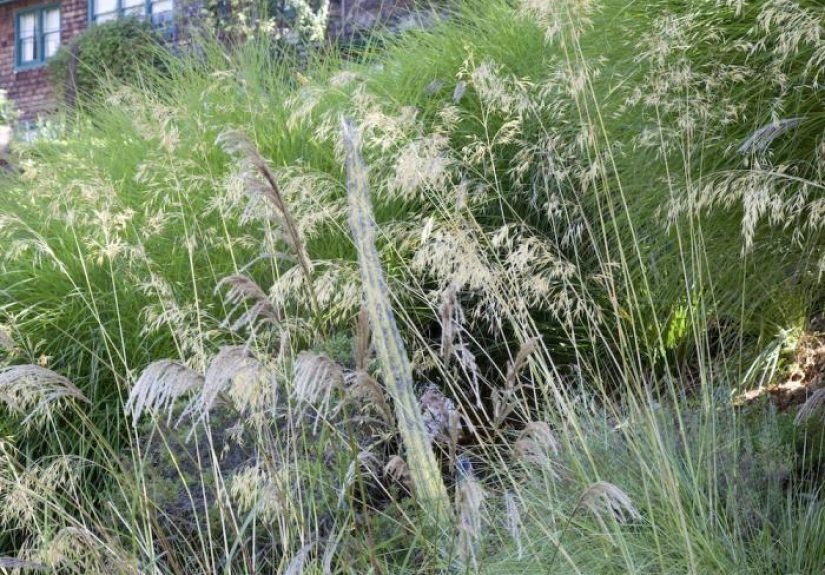
- Deer grass (Muhlenbergia rigens): big, fountain-like clumps that scream “designer” without designer maintenance.
- Blue fescue (Festuca glauca): compact, tidy, and useful for edging or repeating rhythm along paths.
- Sedges (Carex): many varieties handle part shade and give you movement without high water use.
Want a shortcut? Use a California-native plant finder that lets you filter by your location and site conditions (sun/shade, soil moisture, slope).
You’ll get plant options that actually make sense for Berkeley instead of a generic “drought tolerant” list that assumes you live in Arizona.
6) Design Moves That Make a Budget Yard Look Expensive
A garden doesn’t look “designed” because it has rare plants. It looks designed because it has repetition, clear lines,
and simple geometry.
Repeat a few plants in larger drifts
Instead of buying one of everything (the “plant collector” approach), pick 6–10 core plants and repeat them. Repetition creates calm.
Also, it’s cheaper because you can buy multiples of smaller sizes and let them fill in.
Use negative space on purpose
Gravel, decomposed granite, or mulch areas aren’t “empty.” They’re breathing room. A small patio of gravel with a couple of boulders and a bench
can look like a magazine spread if your edges are clean.
Edge like you mean it
Crisp edges between path and planting bed make the whole yard look cared for. If metal edging isn’t in the budget, a well-cut spade edge is
old-school and surprisingly elegant.
7) Berkeley Budget Hacks (The “Smart, Not Cheap” Edition)
Sheet mulching: the lawn-removal method that doesn’t require back surgery
Sheet mulching typically involves layering cardboard, compost, and then coarse mulch to smother turf and build soil at the same time. It’s slower
than ripping everything out, but it can be easier, more soil-friendly, and very popular in Bay Area sustainable landscaping.
Buy smaller plants, plant in the cool season
Smaller plants cost less and often establish faster than oversized nursery stock (less transplant shock). Planting in fall and winter gives roots
months of gentle weather to grow before summer heat arrives.
Put your money where it shows
Spend on a few visible “anchor” elementslike a simple path, one small tree, or two bouldersand keep the rest restrained. A yard with one strong
focal point looks more intentional than a yard filled with expensive randomness.
8) Rebates, Rules, and Free Help: Don’t Leave Money on the Table
In Berkeley, your water utility may offer significant incentives for converting lawn to water-wise planting. One major local program offers
lawn conversion rebates (with higher rates when you follow ecological best practices), plus optional design assistance reimbursement for a
professional consultation. In other words: you can get paid to stop watering a lawn that doesn’t even make you happy.
Water-efficient landscaping standards
California also maintains statewide standards for water-efficient landscapes. Local agencies are required to adopt and enforce water-efficient
landscape ordinances that meet or exceed the state model. You don’t need to memorize the policy, but it’s helpful to know there’s a consistent
push toward efficient irrigation, soil improvement, and smart plant selectionespecially for larger projects or permitted work.
9) A Practical “Berkeley Starter Plan” (Works for Many Small Front Yards)
Zone A: Sunny, street-facing strip (lowest water, highest curb appeal)
- Backbone shrubs: ceanothus or coffeeberry (choose sizes that fit your space).
- Color + pollinators: yarrow, California fuchsia, salvias, penstemon.
- Texture: deer grass or blue fescue in repeating clumps.
Zone B: Entry path planting (moderate water, high “designed” factor)
- Aromatic “deer discouragers”: rosemary, lavender, and other scented plants near walkways.
- Seasonal rhythm: mix long-bloomers with evergreen structure so it doesn’t look sad in July.
Zone C: Under a tree or building shade (dry shade specialists)
- Groundcover: hummingbird sage or other tough shade-tolerant natives.
- Mulch: keep it consistent to suppress weeds and conserve moisture.
This plan isn’t a rigid recipeit’s a framework. The designer trick is to repeat plants, keep a limited palette, and let the layout do the heavy
lifting.
10) Maintenance That Won’t Ruin Your Weekends
Water-wise doesn’t mean “no work.” It means “less work over time.” The first year is the establishment phase: plants need consistent attention
while roots grow. After that, many drought-tolerant landscapes can shift to occasional deep watering (depending on plant choices, exposure, and
heat waves).
Quick rules of thumb
- Water deeply, less often (for most shrubs and perennials once established).
- Check soil before watering so you’re not irrigating out of habit.
- Refresh mulch as it breaks downthis is normal and beneficial.
- Weed earlysmall weeds are a quick task, big weeds are a grudge match.
Experiences: What It’s Like to Build a Drought-Tolerant, Deer-Resistant Berkeley Yard on a Budget (500+ Words)
People often imagine a landscape makeover as one big dramatic weekend: you wave a shovel, the yard transforms, and a hummingbird immediately
files a change-of-address form. In real life, the Berkeley budget version is more like a smart mini-seriesshort episodes, steady progress,
and one recurring character: cardboard.
Episode one is usually the “truth walk,” where you step outside with coffee and notice what you’ve been ignoring. The lawn looks innocent until
you do the math on summer watering. The path is fine until you remember that the mail carrier has been doing parkour around a muddy spot every
winter. And then there’s the deer: you don’t always see them, but you see their reviews of your landscaping choices written in jagged leaf edges.
The first budget win tends to be defining the footprint. Instead of trying to “redo the whole yard,” homeowners often pick one
high-impact zone: the front strip, the entry path, or the patch that’s always embarrassing in photos. When you focus, you can afford better soil
prep, thicker mulch, and an irrigation setup that doesn’t waste water. A smaller, finished area looks more expensive than a large, half-started
area. It’s design psychologyand it’s kind to your wallet.
Next comes the oddly satisfying phase: sheet mulching. There’s something delightfully Berkeley about turning a lawn into a lasagna
of cardboard, compost, and mulch. It feels like recycling, gardening, and a mild act of rebellion all at once. The yard looks messy for a minute,
like you’re moving in and haven’t unpacked. Then the mulch settles, edges get cleaned up, and suddenly it looks intentionalespecially if you add
a simple path line or a few repeating plant clusters.
Planting day is when optimism peaks. You set in small plants that look too tiny for the space and wonder if you made a mistake. Then you remember:
small plants establish faster, cost less, and grow into the garden you want. You water them, tuck mulch around them like a blanket, and promise
yourself you’ll keep up with the first-year care. (A reasonable promiseas long as you don’t schedule it during a heat wave and a work deadline.)
The deer part is… humbling. Even “deer-resistant” plants can get sampled, especially when new. That’s why the best “experience hack” is temporary
protection: a few simple wire cages, some discreet fencing, and guards around young shrubs. It’s not forever; it’s training wheels. Over time,
tougher leaves and stronger scents help, and your garden stops smelling like “fresh salad grand opening.”
The most rewarding moment usually arrives quietly: a hot afternoon when the yard still looks good. The mulch is doing its job, the plants aren’t
wilting, the grasses are moving in the breeze like they’re in a slow-motion commercial, and you realize the garden isn’t begging for water.
You’re not fighting your climate anymoreyou’re working with it. That’s the Berkeley sweet spot: low-water, wildlife-aware, and stylish without
trying too hard. The yard feels like it belongs here, because it does.
Conclusion: A Berkeley Garden That’s Resilient, Deer-Savvy, and Budget-Real
A drought-tolerant, deer-resistant landscape in Berkeley isn’t about deprivationit’s about smarter choices. Start with the “bones” (layout,
soil, mulch, efficient watering), choose plants that match a dry-summer climate, protect new plantings while they establish, and repeat a simple,
cohesive palette so the garden looks designed instead of accidental.
If you do it right, your yard becomes the rare Bay Area miracle: attractive in July, lower-stress in August, and not dependent on constant
watering or constant spending. And if the deer still wander through? Fine. Let them tour. Just don’t let them eat the lobby plants.