Table of Contents >> Show >> Hide
- The Viral Family Story That Sparked the Backlash
- Why the Brother’s Comment Hit So Hard
- The Real Issue: A Joke That Was Never Just a Joke
- Why Families React So Strongly to This Kind of Comment
- Adoption Was Not the Problem. The Weaponizing Was.
- What a Better Response Would Have Looked Like
- Could This Family Repair the Damage?
- Related Experiences: What Stories Like This Reveal in Real Life
- Final Thoughts
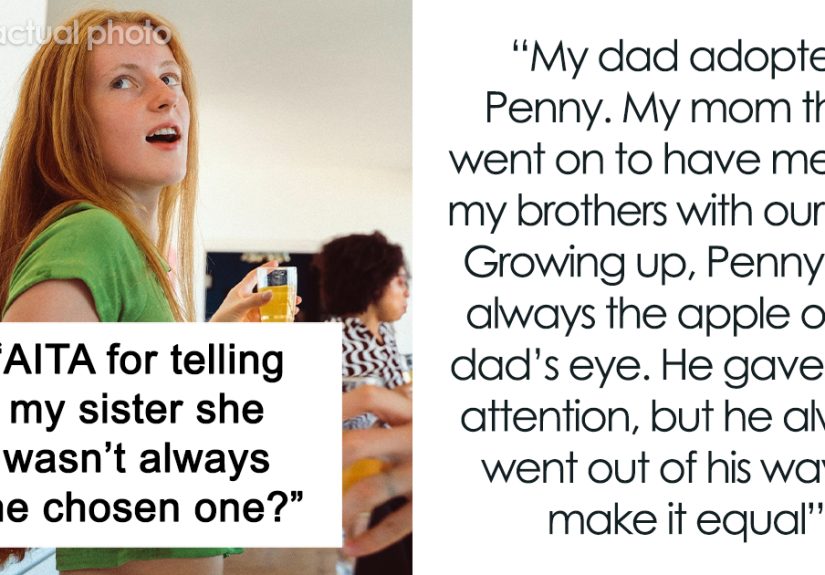
Some family jokes age like fine wine. Others age like milk left in a hot car. The viral story behind this headline belongs firmly in the second category. What started as a long-running “chosen one” joke between siblings turned into a brutal, public humiliation when a brother weaponized the most painful part of his sister’s history: her absent biological father.
On the surface, this looks like internet drama with the usual ingredients: one night out, one sharp tongue, one ruined vibe, and a family group chat probably lighting up like a Christmas tree. But underneath the spectacle sits a far more serious issue. This story taps into adoption, abandonment, sibling resentment, family identity, shame, and the emotional landmines that form when people laugh at the same wound for years without ever actually talking about it.
That is why this family conflict struck such a nerve online. The brother’s comment was not merely rude. It was targeted. It took a private ache and turned it into public theater. And while the sister’s repeated “I’m the chosen one” line may have annoyed everyone within earshot, the comeback crossed the line from irritation into emotional cruelty.
The Viral Family Story That Sparked the Backlash
According to the widely shared account, the sister had been adopted by the man who became her stepfather after her biological father left the picture. Over time, she developed a joking habit of calling herself the family’s “chosen one,” a phrase she used because her adoptive dad intentionally chose to raise her as his own. For some relatives, it became one of those quirky family bits that gets recycled at gatherings until nobody can remember whether it is still funny or just deeply baked into the furniture.
Her brother, however, clearly never found it charming. During a night out, after hearing the joke again, he snapped and said that she may have been chosen by their dad, but she was not chosen by her biological father. That comment reportedly stunned the group, hurt the sister, and triggered immediate backlash from siblings, partners, and later the parents as well. In other words, nobody at the table thought, “Wow, what a cool and productive way to express bottled-up feelings.”
And honestly, why would they? There is a difference between finally being honest and finally being vicious. This was the second one.
Why the Brother’s Comment Hit So Hard
Family conflict is rarely about one sentence. It is usually about years of silent irritation, unspoken insecurity, and emotional bookkeeping. Still, some statements carry more force than others because they hit identity, not behavior. If he had said, “That joke is old and it bothers me,” the evening might have turned awkward. By invoking her absent bio dad, he did something far worse: he implied that the deepest rejection in her life was fair game because he was tired of being annoyed.
That matters. Children and adults who experience abandonment often internalize it in painfully personal ways. Instead of seeing a parent’s absence as the adult’s failure, many interpret it as evidence that they were not enough, not lovable enough, not wanted enough, not worth staying for. That belief can linger long after a person becomes successful, funny, married, confident, or fully capable of assembling IKEA furniture without crying. Old wounds do not vanish just because someone learned how to function around them.
In that light, the sister’s “chosen one” joke becomes more complicated. Maybe it was obnoxious. Maybe it was overused. Maybe it made the other siblings feel subtly pushed aside. But it may also have been a protective story she told herself over and over: I belong here. I was wanted. I matter. People do not always repeat these lines because they are arrogant. Sometimes they repeat them because they are still convincing the scared version of themselves that the door is not about to close.
The Real Issue: A Joke That Was Never Just a Joke
Now, let us be fair to the brother for one second. The sister’s line probably did create tension. If one sibling repeatedly presents herself as “the chosen one,” the others may hear an unspoken comparison: You were expected; I was special. Even if that was not her intention, repetition has a strange power. What starts as a cute line can become a family script, and family scripts often produce resentment when one person gets the spotlight while everyone else is expected to laugh along.
That is especially true in blended or adoptive family dynamics, where identity can already feel delicate. Small phrases can carry big emotional weight. A running joke about being specially chosen may comfort the person saying it while quietly irritating the people hearing it. Over time, the family can get trapped in a fake peace: one person keeps making the joke, everyone else smiles, and irritation grows mold in the dark.
So yes, the sister’s behavior may have contributed to the blowup. But contributing to tension is not the same as deserving humiliation. If the brother had a problem, he had dozens of chances to handle it like an adult. He could have raised it privately. He could have said the joke made him feel dismissed. He could have asked for a reset. Instead, he stored the frustration like a human pressure cooker and then exploded in public. That is not communication. That is emotional arson.
Why Families React So Strongly to This Kind of Comment
The family’s outrage makes sense because public humiliation inside a family system rarely stays between two people. It splashes on everyone. Once a sibling says something like this at dinner or during a night out, the moment becomes communal. Suddenly, the parents are pulled into old history. Other siblings feel pressure to take sides. Partners feel uncomfortable. The person who was targeted feels exposed. The person who lashed out often tries to reframe their cruelty as “just being honest,” which is usually honesty wearing steel-toe boots.
Families also react strongly because shame is contagious. When one member is humiliated, everyone nearby feels the shock. That is one reason estrangement is so emotionally messy. People are not only dealing with anger or sadness; they are also dealing with embarrassment, stigma, silence, and the fear that the family image has cracked open in front of other people.
This story also pushes on a cultural pressure point. In the United States, millions of children live in one-parent households or in family arrangements shaped by separation, divorce, remarriage, adoption, or parental absence. So while this particular night-out disaster may be hyper-specific, the emotional terrain is familiar to a lot of people. Many readers recognize some version of the same wound: the “funny” comment that was never funny, the sibling who never said anything until they detonated, the family secret that everybody knew but nobody named.
Adoption Was Not the Problem. The Weaponizing Was.
It is important to say this clearly: adoption itself is not the source of the problem here. In fact, the adoptive father appears to have done something loving and meaningful by stepping up and raising a child who was not biologically his. That part of the story is not tragic. It is the rescue rope. The tragedy is that a symbol of belonging was turned into a sibling rivalry prop and, later, into a verbal weapon.
The sister used adoption as a badge. The brother used biological abandonment as a knife. Neither move was healthy, but only one was openly cruel. That distinction matters.
Healthy family storytelling makes room for complexity. It says: Yes, something painful happened. Yes, love also showed up. Yes, everyone in this family deserves dignity. Unhealthy family storytelling turns those facts into rankings. Who was chosen? Who was wanted more? Who got sacrificed? Who got the better deal? Once a family starts keeping score like that, every joke starts sounding less like affection and more like a subtle audition for emotional survival.
What a Better Response Would Have Looked Like
If the brother had wanted a better outcome, he had options. He could have chosen timing, privacy, and clarity instead of alcohol, spectators, and maximum damage. A healthier version of the conversation might have sounded like this:
1. Name the behavior, not the wound
“When you call yourself the chosen one over and over, it lands like the rest of us are second-tier, and I don’t think you mean it that way, but it bothers me.”
2. Speak before resentment becomes a personality trait
Waiting years to address a recurring issue is rarely wise. By the time someone finally speaks, they are no longer describing the problem. They are punishing the person.
3. Refuse the “just a joke” loophole
Plenty of family damage hides behind humor. If a joke keeps hurting someone, it is not harmless simply because it arrives wearing a smile.
4. Protect dignity, even during conflict
You can be upset, blunt, and completely serious without reaching for the one trauma you know will make another person crumble.
Could This Family Repair the Damage?
Yes, but not with fake apologies or “everybody was wrong” symmetry. The brother’s comment caused a different level of harm. Repair would likely require a direct apology that names the act clearly: not “I’m sorry if you were offended,” but “I used your biological father’s absence to hurt you in front of other people, and that was cruel.” That is step one.
The sister may also need to hear, gently and privately, that the “chosen one” joke has not landed well and may be masking unresolved insecurity while stirring resentment in others. That conversation should happen later, not as a condition for her being allowed to feel hurt. You do not make someone earn compassion by first proving they were annoying.
From there, the family would need new rules: no trauma-based jokes, no public takedowns, no bottling things up until they come out like shrapnel, and no pretending everything is fine because the photos from brunch look nice. Healing in families usually looks boring before it looks beautiful. It is repetition, boundaries, honesty, and restraint. In other words, not exactly viral, but much better for everybody involved.
Related Experiences: What Stories Like This Reveal in Real Life
Stories like this resonate because they mirror real experiences many people never fully talk about. In families shaped by divorce, remarriage, adoption, estrangement, or parental absence, identity is often negotiated in tiny everyday moments. It can show up in the cousin who always says, “Well, at least your dad stuck around,” as if that is casual conversation and not a lit match. It can show up in the sibling who acts tough and sarcastic but suddenly goes quiet whenever fathers are mentioned. It can show up in the adult who laughs the hardest at family jokes because they learned early that humor is cheaper than vulnerability.
One common experience is the child who grows up trying to turn pain into a “brand.” Maybe they become the funny one, the successful one, the easygoing one, or the self-declared special one. Those identities can be coping strategies dressed up as personality. They help a person feel less powerless. If your biological parent left, being “the chosen one” may feel safer than being “the one who was left.” It is a rewritten headline for a chapter that still hurts.
Another common experience is the sibling who feels they are expected to be emotionally flexible forever. They may think, Why does one person’s pain become the whole family’s organizing principle? They stay quiet because they do not want to seem cruel or jealous. Over time, however, silence often mutates into resentment. Then the resentment looks for an exit, and unfortunately it usually picks the worst possible door. That is how families end up with moments like this one: not because the issue came out of nowhere, but because it came out years too late and in the ugliest form available.
Many adults from complicated family systems also describe feeling two truths at once. They love the people who raised them and still grieve the people who did not. They feel grateful for step-parents or adoptive parents and still ache over abandonment. They know a joke is meant to be playful and still feel punched by it every single time. Human emotion is inconvenient that way. It refuses to stay in one tidy box labeled “healed.”
There are also experiences on the other side of the table: the relative who witnesses a humiliating comment and freezes, the partner who does not know whether to intervene, the parent who realizes too late that a family joke stopped being cute years ago. Those people often carry guilt afterward. They replay the scene. They wonder if they should have said something sooner. In many cases, the answer is yes.
That may be the biggest takeaway from this story. Family wounds rarely explode without warning signs. Usually there were little clues everywhere: the repeated line that was not as funny as everyone pretended, the eye-rolls, the stiff laughter, the sibling who withdrew, the old ache nobody wanted to touch. When families ignore those moments, they create the exact conditions for a bigger blowup later. And when the blowup finally comes, it is never really about one sentence. It is about years of poor emotional maintenance and one spectacularly bad choice in public.
So if this story feels familiar, that is probably because the specifics are unique but the emotional pattern is not. One person turns pain into a joke. Another turns resentment into cruelty. The family acts shocked, even though the leak was in the wall the whole time. And somewhere in the aftermath, everybody has to decide whether they want to keep defending the script or finally write a better one.
Final Thoughts
The reason “Brother Humiliates Sister Over Absent Bio Dad, Fam Outraged At Comment Made During Night Out” spread so quickly is simple: it is not just a messy family story. It is a story about belonging, rejection, identity, and how quickly unresolved hurt can turn a dinner table into a battlefield. The sister’s “chosen one” routine may have been irritating and overdue for retirement. The brother’s comeback, however, was not a clever correction. It was a deliberate strike at one of the most vulnerable parts of her life.
When families confuse silence for peace, this is often the result. The lesson here is not that siblings should never joke. It is that families should never normalize jokes that sit too close to abandonment, shame, or worth. Because once those wounds get dragged into public, nobody leaves the night looking like the winner. Not the brother, not the sister, not the family, and definitely not the poor server who probably just wanted to drop off fries in peace.