Table of Contents >> Show >> Hide
- What the Billy Goat leaf vacuum actually is
- Why Billy Goat earns the GOAT nickname
- Which Billy Goat vacuum feels right for your property?
- Where a Billy Goat vacuum beats a blower, and where it does not
- What to know before you buy
- How to get the best performance from a Billy Goat leaf vacuum
- Experience section: what ownership and use actually feel like in the real world
- Final verdict
Every fall, the same tragic comedy unfolds: the trees dump half a forest onto your lawn, the wind redistributes your hard work like an unpaid intern with attitude, and your rake starts feeling less like a tool and more like a punishment. That is exactly why the Billy Goat leaf vacuum has earned such a loyal following. It is not a gimmick, and it is definitely not just a glorified outdoor dustbuster. It is a purpose-built cleanup machine designed to inhale leaves, litter, hedge clippings, seed pods, and other yard debris with the kind of confidence that makes a broom look emotionally unprepared.
If you are trying to decide whether a Billy Goat leaf vacuum deserves its “GOAT” status, the answer is this: for the right property and the right cleanup jobs, it absolutely does. Billy Goat’s vacuum lineup has real depth, from residential-friendly models to contractor-grade machines built for bigger messes and wider surfaces. Some are better for turf. Some are better for hard surfaces. Some are self-propelled. One even adds an onboard chipper for small branches. In other words, this is not a one-note machine. It is a whole cleanup strategy on wheels.
Here is what makes the Billy Goat leaf vacuum stand out, which model types make the most sense, where it beats a blower or rake, and what real-world use actually feels like when the leaves start piling up and your yard begins to resemble a crunchy orange crime scene.
What the Billy Goat leaf vacuum actually is
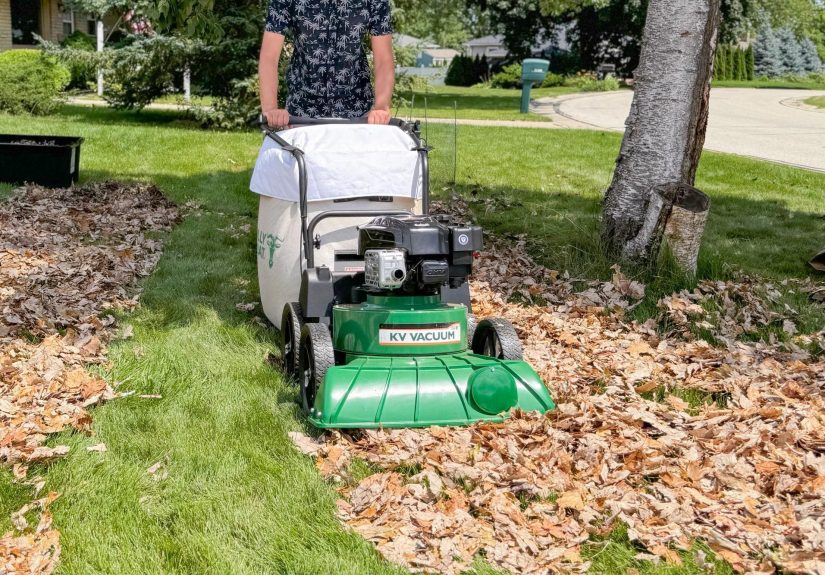
At its core, a Billy Goat leaf vacuum is a walk-behind leaf and litter vacuum made to collect debris into a large bag while also reducing volume along the way. That last part matters more than it sounds. Plenty of tools can move leaves around. Fewer tools can actually pick them up, reduce their bulk, and leave you with a tidier finish instead of one giant leaf mountain in the corner of the yard.
The best-known residential-style models in the lineup are the KV series, which use a 27-inch intake width and a roomy collection bag. Move up the ladder and you get the TKV, which adds self-propelled drive and an onboard 2-inch chipper for small branches and trimmings. Step further into commercial territory and you hit the MV series, which bumps up the working width, airflow, and overall muscle. For hard-surface specialists, the QuietVac line is built to keep dust and noise more controlled while covering broad paved areas.
That lineup matters because “leaf removal” is not one job. Cleaning a fenced backyard with beds, shrubs, and a deck is different from clearing a church parking lot, a school walkway, or a long suburban driveway lined with maples that shed like they are training for a competition.
Why Billy Goat earns the GOAT nickname
It does more than push leaves around
A rake gathers. A blower relocates. A Billy Goat vacuum actually removes debris from the surface and stores it in a bag. That changes the whole rhythm of yard cleanup. Instead of blowing leaves into piles, re-blowing the piles, bagging the piles, and then wondering why the pile somehow got bigger when you looked away, you can move in a more direct pattern: vacuum, collect, empty, repeat.
It is built for mixed debris, not just pretty dry leaves
One of the biggest reasons people step up to a Billy Goat is versatility. These machines are built to handle more than textbook fall foliage. Think seed pods, blooms, mulch spillover, hedge clippings, light litter, and small sticks. That makes the vacuum useful outside peak leaf season too. In spring, it can help with flower drop and leftover winter debris. In summer, it can be handy after trimming hedges or cleaning fence lines and beds.
Self-propelled models save your legs on slopes
If you have a hilly lawn, the difference between a push model and a self-propelled Billy Goat is the difference between “productive afternoon” and “why do my calves hate me?” The self-propelled KV and TKV versions are especially appealing for uneven or sloped yards where a vacuum full of debris can get heavy in a hurry.
The hose kit is a quiet little superstar
One of the smartest reasons to buy into the Billy Goat ecosystem is the optional hose kit. This is where the machine starts to feel less like a brute-force lawn tool and more like a cleanup specialist. Between shrubs, under decks, around utility boxes, beside retaining walls, and down into window wells, a hose attachment can reach the spots where a blower tends to just launch dust and mulch into low orbit.
Debris reduction is a bigger deal than people expect
Leaf cleanup is not just about pickup speed. Volume reduction matters too. Billy Goat builds its vacuums with serrated impellers, and some configurations can reduce dry leaves dramatically. That means fewer dump runs, fewer stops to empty, and less time wrestling with giant fluffy bags of yard waste that somehow weigh nothing and everything at the same time.
Which Billy Goat vacuum feels right for your property?
KV601 or KV601SP: the smart choice for homeowners and smaller properties
If your property includes a lawn, driveway, walkway, patio, shrubs, beds, or fence lines, the KV family is the most approachable place to start. This is the model range that makes the strongest case for Billy Goat in everyday residential use. It is wide enough to move efficiently, compact enough to store without needing a warehouse, and versatile enough to work on both turf and hard surfaces.
The self-propelled KV601SP is the sweet spot for a lot of buyers. It keeps the same general footprint and bag capacity as the push version but makes life much easier on hills and longer cleanup sessions. If your yard is flat and modest in size, the standard KV601 may be enough. If your yard has slopes or you simply value your knees, the self-propelled version is the better long-term bet.
TKV601SP: for people who want one machine to do a little more
The TKV version is where Billy Goat gets extra practical. It adds an onboard 2-inch chipper, which means you are not limited to leaves and soft debris. Small twigs and branch trimmings can join the party too. For homeowners with mature trees, shrubs, and regular seasonal pruning, that extra capability can make the TKV feel more like an all-purpose cleanup companion than a single-season purchase.
This model makes a lot of sense for larger residential lots, property maintenance work, and anyone who wants a vacuum that can handle the messy overlap between leaf season and trimming season.
MV series: when your cleanup area starts getting serious
The MV line is where Billy Goat shifts from “very capable” to “bring me the big mess.” These units are built for larger properties, commercial lots, municipal work, schools, parks, and broader cleanup routes. They offer more airflow, a wider intake, and a heavier-duty feel overall. Some versions also add electric start and more robust self-propelled capability.
If your job involves long paved stretches, repeated commercial cleanups, or a business where downtime is expensive, the MV is the model family that starts justifying its footprint and cost in a hurry.
QuietVac: for paved surfaces where dust and noise matter
The QuietVac line deserves attention because it solves a different problem. On hard surfaces, dust can get obnoxious fast. Noise can be an issue too, especially around institutions, hospitality properties, sidewalks, and dense commercial areas. QuietVac models are built for that environment, with dust-control features and a lower-noise pitch than you would expect from a machine that is still moving serious debris.
For the average homeowner, QuietVac may be more machine than necessary. For contractors and facilities crews working on pavement-heavy properties, it can be exactly the right kind of overachieving.
Where a Billy Goat vacuum beats a blower, and where it does not
Here is the honest take: a Billy Goat vacuum is amazing, but it is not magic. On very large open turf areas with a light layer of dry leaves, a powerful blower may still be faster for initial corralling. If the goal is to move leaves from Point A to Point B as fast as possible, air wins. But when the goal is to finish the job cleanly, the Billy Goat vacuum usually takes over.
It shines in places where precision matters: along walkways, around plant beds, beside patios, near decorative stone, under decks, along fences, and in those maddening corners where a blower creates more chaos than progress. It also makes sense when you want to reduce bagging labor and keep the cleanup contained instead of blasting everything into the neighbor’s county.
Wet, matted leaves can slow down any cleanup setup, including a Billy Goat. That does not make the machine weak; it just means timing still matters. Slightly damp is manageable. Fully soaked leaf lasagna is going to test everything short of divine intervention.
What to know before you buy
This is premium equipment, not a bargain-bin toy
Billy Goat vacuums are built like serious property-maintenance machines, and they are priced accordingly. That is not bad news; it just means you should think about usage honestly. If you have a tiny yard with three small trees and a rake you barely resent, a Billy Goat may be overkill. If you maintain a larger property, hate bagging leaves by hand, or run recurring cleanup jobs, the value equation changes quickly.
Storage and bag emptying matter
Even compact Billy Goat models are still real machines. You need storage space, access for fueling and service, and enough room to unload debris without performing interpretive dance in a crowded shed. On the bright side, some handles fold for easier off-season storage, which helps more than you would think.
Accessories can make the machine dramatically better
Do not overlook the accessories. The hose kit is the obvious upgrade, but wear kits, caster kits, dust-control options, covers, and shredder-related accessories can materially improve how the machine fits your property. The best Billy Goat setup is often not just the base machine. It is the base machine plus the one add-on that solves your specific annoyance.
How to get the best performance from a Billy Goat leaf vacuum
Start with realistic expectations and a good pattern. Work methodically instead of attacking the yard like you are chasing confetti at a parade. Use height adjustment correctly for turf versus hard surfaces. Empty the bag before it becomes comically full. Clean filters, bags, and dust-control components as recommended. And when you are dealing with tricky zones like shrubs, mulch beds, or window wells, switch to the hose kit instead of trying to ram the main nozzle everywhere like a shopping cart with ambition.
It also helps to use the right tool sequence. Many pros use a blower first to pull scattered leaves into more manageable lanes, then bring in the vacuum for final pickup and detail work. That combination is often faster than pretending one tool has to do every single step.
Experience section: what ownership and use actually feel like in the real world
The most telling thing about the Billy Goat leaf vacuum is that people rarely describe it as “nice.” They describe it as a time-saver, a back-saver, or a machine they wish they had bought sooner. That is a very different kind of praise. It means the machine tends to earn its reputation not in a showroom, but on cold mornings when the lawn is buried, the driveway is lined with wet oak leaves, and the cleanup job has already overstayed its welcome.
For a homeowner with a medium-to-large yard, the typical experience is less about speed in the first ten minutes and more about momentum over the entire cleanup. A rake feels manageable until the fifth tarp load. A blower feels great until the leaves collect in beds, under shrubs, and against the garage where you still have to bend, bag, and scoop. The Billy Goat changes that experience because you are collecting as you go. That means the yard starts looking finished sooner, and your cleanup pile does not keep getting reintroduced to the plot by every passing breeze.
On sloped ground, the self-propelled models tend to be where the machine becomes a favorite rather than just a useful purchase. Pushing a loaded vacuum uphill is not anyone’s idea of leisure. With the self-propelled drive doing some of the work, the cleanup feels more controlled and less like cardio disguised as lawn care. That matters if you have a long side yard, a hill toward the street, or a backyard that looks flat in photos and suspiciously not flat in real life.
There is also the detail-work factor. This is where a lot of users end up loving the hose kit. Around AC units, deck stairs, fence corners, foundation plantings, and window wells, a blower can create a dramatic special effect but not necessarily a clean finish. The Billy Goat hose lets you clean those spots with more precision and less collateral mess. Instead of blasting mulch into the lawn or dust into your face, you can remove debris more deliberately. It is one of those accessories that seems optional until you use it once and start wondering why it was not attached from day one.
Contractors and property-maintenance users often seem to appreciate something slightly different: consistency. A Billy Goat vacuum is not exciting in the way a flashy new gadget is exciting. It is exciting in the way a dependable truck is exciting. It starts, it works, it handles ugly cleanup days, and it fits into a workflow that needs to make money. If you are clearing multiple properties, school grounds, sidewalks, or commercial lots, that reliability matters more than any marketing slogan ever could. Saving even a little labor on every cleanup compounds quickly across a season.
Of course, the experience is not perfect. You still need to empty the bag. You still need to maintain the machine. You still need to avoid asking any vacuum to perform miracles on debris that is soaked, packed, or half-composted into the earth. But even with those realities, the common feeling surrounding Billy Goat vacuums is that they reduce the grind. They turn leaf cleanup from a sprawling, messy chore into a process. And when a machine can make a miserable seasonal job feel organized, faster, and just a little less annoying, that is usually the moment it starts earning a nickname like GOAT.
Final verdict
The Billy Goat leaf vacuum is not the right tool for every yard, but for the people who need it, it can feel like a revelation. The KV series makes a compelling case for homeowners and light commercial users. The TKV adds branch-handling flexibility. The MV is built for bigger and tougher cleanup routes. The QuietVac line brings extra refinement to hard-surface work where dust and noise matter. Across the lineup, the theme is the same: efficient pickup, meaningful debris reduction, and less time spent wrestling leaves by hand.
So yes, calling it the GOAT of leaf removal is a little dramatic. But only a little. When a machine can vacuum, reduce, bag, and simplify one of the most annoying chores in property maintenance, a little drama is probably fair. The leaves may still fall. They just do not get to run the place anymore.