Table of Contents >> Show >> Hide
- How Nuts Help Lower Cholesterol
- The Best Nuts for Cholesterol, Ranked by Research and Nutrition
- 1. Walnuts: Best for Omega-3 Fats and Heart Health
- 2. Almonds: Best Everyday Nut for LDL Cholesterol
- 3. Pistachios: Best for Fiber, Antioxidants, and Snack Control
- 4. Pecans: Best for Polyphenols and Replacing Desserts
- 5. Hazelnuts: Best for Monounsaturated Fats
- 6. Peanuts: Best Budget-Friendly Option
- 7. Macadamia Nuts: Best Creamy Nut for Replacing Saturated Fat
- How Much Should You Eat?
- Raw, Roasted, Salted, or Nut Butter?
- What About Cashews and Brazil Nuts?
- Best Nut Combinations for Cholesterol-Friendly Meals
- Nutrition Mistakes to Avoid
- of Practical Experience: Making Nuts Work in Real Life
- Conclusion
Cholesterol can be a little dramatic. Your body needs it to build cells and make hormones, but when LDL cholesterolthe “bad” kindhangs around in high amounts, it can contribute to plaque buildup in arteries. That is where food choices become powerful. Not magic-wand powerful, unfortunately, but definitely “small daily habit with big long-term payoff” powerful.
Among the most practical foods for heart health, nuts deserve a front-row seat. They are crunchy, portable, naturally satisfying, and packed with unsaturated fats, fiber, plant sterols, minerals, and antioxidants. Research consistently suggests that eating nuts as part of a balanced diet can help improve blood lipids, especially by lowering LDL cholesterol and supporting better overall cardiovascular health.
The key phrase is “as part of a balanced diet.” A handful of almonds will not cancel out a daily parade of fried foods, processed meats, and sugary desserts. But when nuts replace snacks high in saturated fat, refined carbs, or added sugar, they can become one of the easiest upgrades in a cholesterol-lowering eating pattern.
How Nuts Help Lower Cholesterol
Nuts work through several nutrition pathways at once. First, most nuts are rich in monounsaturated and polyunsaturated fats. These fats can help lower LDL cholesterol when they replace saturated fats from foods such as butter, fatty meats, full-fat dairy, pastries, and many ultra-processed snacks.
Second, nuts contain fiber. Fiber helps reduce cholesterol absorption and supports fullness, which may prevent overeating. Third, many nuts contain plant sterols, natural compounds that compete with cholesterol during digestion. Think of plant sterols as polite little bouncers at the absorption door: cholesterol wants to get in, and sterols make the line more difficult.
Finally, nuts provide magnesium, potassium, vitamin E, arginine, polyphenols, and other bioactive compounds that support blood vessel function, inflammation control, and overall metabolic health. That is why the benefit of nuts is not just about one nutrient. It is the whole package.
The Best Nuts for Cholesterol, Ranked by Research and Nutrition
1. Walnuts: Best for Omega-3 Fats and Heart Health
Walnuts are one of the most researched nuts for cardiovascular health. Their standout feature is alpha-linolenic acid, or ALA, a plant-based omega-3 fat. While ALA is not the same as the omega-3s found in fatty fish, it still supports a heart-healthy eating pattern.
Clinical research has shown that walnut-rich diets can reduce total cholesterol and LDL cholesterol. Walnuts may also help improve lipoprotein quality and reduce inflammation markers. Their rich polyunsaturated fat content makes them especially useful when they replace foods high in saturated fat.
Best way to eat them: Add chopped walnuts to oatmeal, Greek yogurt, roasted vegetables, salads, or whole-grain toast with mashed avocado. They also work beautifully in homemade trail mix with no added candy. Sorry, chocolate-coated “trail mix” pretending to be a hiking snack does not count as heart medicine.
2. Almonds: Best Everyday Nut for LDL Cholesterol
Almonds are a cholesterol-lowering classic for good reason. They are high in monounsaturated fat, fiber, vitamin E, magnesium, and plant protein. Research suggests that eating almonds regularly can lower LDL cholesterol while maintaining HDL cholesterol, the “good” cholesterol.
Almonds also score high for convenience. A one-ounce serving is about 23 almonds, making portion control simple. Their fiber and protein help keep hunger under control, which is useful because cholesterol management often works best when paired with a healthy weight and balanced calorie intake.
Best way to eat them: Choose raw or dry-roasted unsalted almonds. Slice them onto salads, mix them into oatmeal, or pair them with fruit. Almond butter can also be useful, but check the label. The best versions contain almonds and maybe a little saltno added sugar, palm oil, or mystery ingredients that sound like they escaped from a chemistry quiz.
3. Pistachios: Best for Fiber, Antioxidants, and Snack Control
Pistachios bring a lot to the cholesterol conversation. They provide unsaturated fats, fiber, plant sterols, potassium, and antioxidants such as lutein and gamma-tocopherol. Studies have found that pistachio-enriched diets may reduce LDL cholesterol, total cholesterol, triglycerides, and oxidized LDL, which is a more artery-irritating form of LDL.
Pistachios also have a behavioral advantage: shells. In-shell pistachios slow you down, and the pile of empty shells gives your brain visual evidence that, yes, you have been snacking. This is helpful because nuts are nutritious but calorie-dense.
Best way to eat them: Eat unsalted in-shell pistachios as a snack, crush them over baked fish, or sprinkle them onto grain bowls. They also add color and crunch to roasted carrots, quinoa salads, and yogurt bowls.
4. Pecans: Best for Polyphenols and Replacing Desserts
Pecans often get unfairly trapped in pie, where they are surrounded by sugar, butter, and a crust that is basically a delicious cholesterol management loophole. On their own, however, pecans are rich in monounsaturated fat, fiber, and polyphenols.
Research suggests pecans can improve markers of cardiometabolic health when they replace less nutritious snacks. Their naturally buttery flavor makes them especially helpful for people who want a satisfying dessert-like food without diving into cookies every afternoon.
Best way to eat them: Toast pecans lightly and add them to oatmeal with cinnamon, roasted sweet potatoes, or spinach salads. For a simple dessert, try sliced apples with a tablespoon of chopped pecans and a dusting of cinnamon.
5. Hazelnuts: Best for Monounsaturated Fats
Hazelnuts are rich in monounsaturated fats, similar to the type found in olive oil. They also provide vitamin E, magnesium, copper, and plant compounds that support heart health. Research on hazelnuts is smaller than the research base for almonds or walnuts, but the nutrition profile is highly compatible with a cholesterol-lowering diet.
Best way to eat them: Use chopped hazelnuts in salads, roasted Brussels sprouts, or whole-grain breakfast bowls. Be cautious with chocolate-hazelnut spreads, which often contain more sugar and oil than actual hazelnuts. Delicious? Yes. A cholesterol-lowering strategy? Not exactly.
6. Peanuts: Best Budget-Friendly Option
Peanuts are technically legumes, not tree nuts, but nutritionally they behave like honorary nuts. They provide monounsaturated fats, protein, fiber, niacin, magnesium, and plant sterols. They are also widely available and usually less expensive than tree nuts.
Peanuts and natural peanut butter can fit well into a cholesterol-conscious diet, especially when they replace processed snacks. The biggest watch-outs are added sugar, hydrogenated oils, and excess sodium.
Best way to eat them: Choose unsalted peanuts or natural peanut butter. Spread peanut butter on whole-grain toast, stir it into oatmeal, or pair it with apple slices. Keep the serving reasonable: about two tablespoons of peanut butter or one small handful of peanuts.
7. Macadamia Nuts: Best Creamy Nut for Replacing Saturated Fat
Macadamia nuts are rich in monounsaturated fats and have a creamy texture that makes them feel luxurious. Some research supports their role in improving cholesterol levels when eaten as part of a diet low in saturated fat and not used to add excess calories.
Because macadamias are calorie-dense, portion size matters. A small handful can be heart-smart; a giant bowl during a movie marathon can quickly become a “how did this happen?” situation.
Best way to eat them: Chop macadamias and add them to fruit salads, oatmeal, or homemade granola. Choose unsalted versions most of the time.
How Much Should You Eat?
For most adults, a practical serving is about one ounce of nuts per day. That equals roughly 23 almonds, 14 walnut halves, 49 pistachios, 18 cashews, 19 pecan halves, or a small handful. Many cholesterol-lowering eating patterns include nuts several times per week, and daily use can work if total calories stay balanced.
The most important rule is substitution. Nuts help most when they replace less heart-friendly foods. Swapping chips for pistachios, cookies for almonds, or processed meat snacks for walnuts is a win. Adding nuts on top of an already high-calorie diet may reduce the benefit.
Raw, Roasted, Salted, or Nut Butter?
Raw and dry-roasted nuts are both good choices. Roasting may slightly change antioxidant levels, but it does not erase the heart-health value. The bigger issue is what gets added. Choose unsalted or lightly salted nuts most often, especially if you are watching blood pressure. Avoid candy-coated nuts, heavily sweetened nut mixes, and “honey roasted” versions that turn a smart snack into dessert wearing a tiny health halo.
Nut butters can also be healthy. Almond butter, peanut butter, walnut butter, and cashew butter can fit into a cholesterol-friendly diet if the ingredients are simple. Look for nut butter with no added sugar and no hydrogenated oils. Stirring natural nut butter may be annoying, but consider it a tiny arm workout with heart benefits.
What About Cashews and Brazil Nuts?
Cashews are tasty and provide magnesium, copper, and unsaturated fats. They can be part of a healthy diet, but they are not usually the top research pick for lowering LDL cholesterol compared with walnuts, almonds, and pistachios. Still, unsalted cashews are a far better snack than many refined, salty, ultra-processed options.
Brazil nuts are famous for selenium, an essential mineral. However, they are so high in selenium that moderation is important. One or two Brazil nuts can provide plenty. Eating large amounts regularly may lead to excessive selenium intake, so they are best treated like a garnish rather than a by-the-handful snack.
Best Nut Combinations for Cholesterol-Friendly Meals
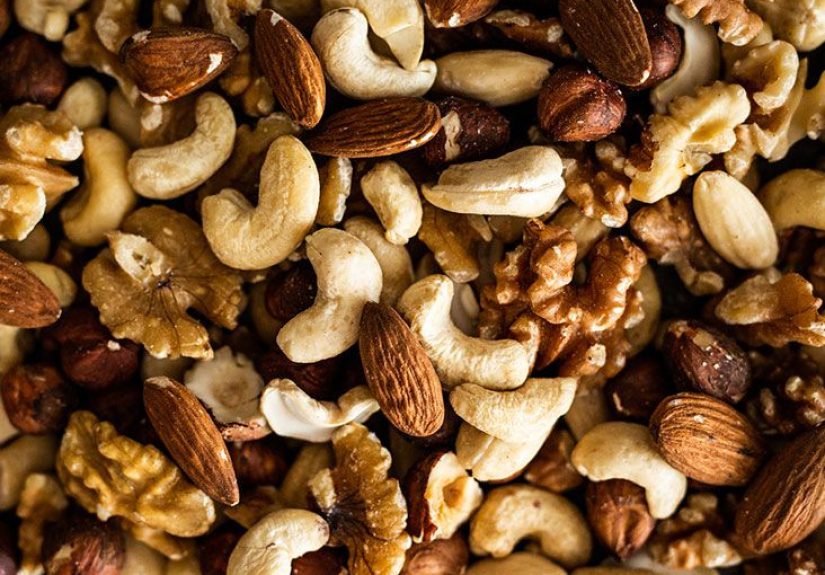
One of the easiest strategies is to rotate nuts instead of searching for one “perfect” nut. A mix of walnuts, almonds, and pistachios gives you omega-3 fats, monounsaturated fats, fiber, vitamin E, plant sterols, and antioxidants. Pecans, hazelnuts, peanuts, and macadamias can add variety and help prevent snack boredom.
Here are practical combinations:
- Breakfast: Oatmeal with walnuts, berries, and cinnamon.
- Lunch: Spinach salad with almonds, beans, tomatoes, and olive oil vinaigrette.
- Snack: In-shell pistachios with an apple.
- Dinner: Baked salmon or tofu with crushed pistachios and roasted vegetables.
- Dessert: Greek yogurt with pecans and sliced fruit.
Nutrition Mistakes to Avoid
Eating Nuts Without Watching Portions
Nuts are nutrient-dense, but they are also energy-dense. A one-ounce serving is heart-smart. Three cups of nuts eaten while answering emails is a different story. Portion nuts into small containers instead of eating straight from the bag.
Choosing Sugary or Salty Versions
Salted nuts can add a lot of sodium, and sweetened nuts can add unnecessary sugar. If your goal is cholesterol and heart health, choose plain, dry-roasted, or lightly salted varieties most often.
Expecting Nuts to Replace Medication
Food can make a meaningful difference, but people with high LDL cholesterol, diabetes, kidney disease, heart disease, or strong family history may need medical treatment too. Nuts are a helpful tool, not a substitute for professional care.
of Practical Experience: Making Nuts Work in Real Life
Here is the real-world truth about eating nuts for cholesterol: the hardest part is not knowing that nuts are healthy. Most people already know almonds are better than a glazed doughnut. The hard part is making the healthier choice easy when life is busy, snacks are everywhere, and your future self keeps assuming your current self has more discipline than a monk at a salad bar.
A practical experience-based approach starts with visibility. Put a small jar of unsalted almonds, walnuts, or pistachios where you normally reach for snacks. Keep the cookies out of sight, or better yet, do not invite them into the house every week like tiny frosted roommates. When nuts are the easiest option, they become the default option.
Portioning matters. One of the best habits is creating small one-ounce servings in containers or snack bags. This prevents accidental overeating and makes nuts grab-and-go. A person who says, “I’ll just eat a few from the big bag,” is often the same person who later wonders why the bag looks emotionally wounded. Pre-portioning solves that problem before it starts.
Another useful habit is pairing nuts with high-fiber foods. Pistachios with an apple, almonds with berries, peanut butter with whole-grain toast, or walnuts with oatmeal creates a more filling snack or meal. This pairing matters because cholesterol-friendly eating is not just about single foods. It is about patterns. Fiber from fruits, oats, beans, and vegetables works alongside the healthy fats in nuts.
For people who dislike plain nuts, texture and seasoning can help. Try cinnamon on almonds, smoked paprika on walnuts, or a little chili-lime seasoning on pistachios. Roast nuts at home for a few minutes to bring out flavor without adding sugar. Just watch the salt. Your taste buds may campaign loudly for more sodium, but your blood pressure gets a vote too.
Nut butters can be a lifesaver for busy mornings. A tablespoon of natural peanut butter stirred into oatmeal makes breakfast more filling. Almond butter on apple slices can stop a late-afternoon vending machine visit. The label is the deciding factor: choose versions with nuts as the main ingredient and avoid products loaded with sugar or hydrogenated oils.
Finally, variety keeps the habit alive. Walnuts may be the research star, almonds may be the reliable everyday choice, and pistachios may be the snack champion, but rotating them prevents boredom. The goal is not to eat “perfectly.” The goal is to make a smart choice so often that your cholesterol numbers, energy, and long-term heart health have a reason to send you a thank-you card.
Conclusion
The best nuts to lower cholesterol are walnuts, almonds, and pistachios, with pecans, hazelnuts, peanuts, and macadamia nuts also offering heart-smart nutrition. Their benefits come from unsaturated fats, fiber, plant sterols, antioxidants, and minerals that support healthier LDL cholesterol levels and better cardiovascular function.
For the best results, eat about one ounce of unsalted nuts most days and use them to replace less healthy snacks. Pair them with other cholesterol-friendly foods such as oats, beans, fruits, vegetables, olive oil, and fatty fish or plant-based proteins. Nuts are small, but when used consistently, they can play a surprisingly mighty role in a heart-healthy lifestyle.