Table of Contents >> Show >> Hide
- 1. A Little-Known Civil War Battle in New Mexico Helped Shape the West
- 2. Cowboys Reported UFOs Long Before Roswell
- 3. Legends Told of Red-Haired Cannibal Giants in Nevada
- 4. A Texas Family Feud Made the Hatfields and McCoys Look Mild
- 5. Oregon Tried to Ban Slavery – and Black Residents
- 6. Camels Once Roamed the Western Deserts
- 7. Towns Often Had Stricter Gun Laws Than You’d Expect
- 8. Women in the West Could Be Surprisingly Powerful
- 9. The Wild West Was Far More Multicultural Than the Movies
- 10. One Outlaw Became More Famous After He Died
- Bonus: How to Experience the Strange Wild West Today
When you picture the Wild West, you probably see dust clouds, gunslingers, and a saloon piano bravely
trying to outplay a bar fight. Hollywood has trained us well. But the real American frontier was even
stranger than the movies – full of experimental armies on camels, UFO reports in tiny towns, cannibal
legends, and a law in Oregon that somehow managed to be both anti-slavery and anti-Black at
the same time.
The Wild West stretched roughly from the mid-1800s through the early 1900s, as settlers pushed across
the Mississippi toward the Pacific. It was a mash-up of cultures, laws (and non-laws), experiments,
and improvisation. Some of those experiments worked. Others left behind stories so bizarre they sound
made up – but they’re backed up by historians, court records, and old newspapers.
Saddle up: here are ten of the strangest Wild West stories and realities you probably never learned in
school – plus a bonus section at the end on how to experience this weird history when you visit
Western towns today.
1. A Little-Known Civil War Battle in New Mexico Helped Shape the West
Ask most Americans where the Civil War was fought and they’ll rattle off places like Gettysburg,
Antietam, and Atlanta. Almost no one says “New Mexico.” And yet a small but crucial battle at
Glorieta Pass in 1862 helped decide who would control the future of the American West.
Confederate forces from Texas pushed into the New Mexico Territory hoping to secure a route to the
Rocky Mountain mining regions and, ultimately, to the Pacific. Control of that corridor would have
given the Confederacy access to precious metals and West Coast ports – not a small prize. A few
thousand soldiers clashed in the mountain pass, far from the big Eastern battlefields.
Union volunteers – including New Mexicans who knew the terrain – pulled off a daring move, scrambling
over cliffs to attack the Confederate supply train. With their wagons destroyed and animals scattered,
the Texans had to retreat. The Union victory at Glorieta Pass helped shut down Confederate dreams of a
Pacific empire. It’s sometimes called the “Gettysburg of the West,” but it barely gets a paragraph in
most school textbooks.
2. Cowboys Reported UFOs Long Before Roswell
Think UFO talk started in the 20th century? Frontier Americans would like a word. In the late 1800s,
people across the West reported “mystery airships” and strange visitors from the sky – decades before
Roswell became conspiracy central.
In 1896, a Civil War veteran and journalist named H. G. Shaw claimed he encountered three bizarre,
tall, thin beings near Lodi, California. He wrote in the local paper that they had remarkably long
feet and tried to carry him away, which is basically an Old West version of an abduction report. A
year later, the town of Aurora, Texas, reported a cigar-shaped “airship” that supposedly crashed,
leaving behind a “Martian” body buried in the local cemetery.
Modern historians suspect some of these stories were hoaxes, misidentified meteors, or newspaper
editors having a slow news week. But they show that people on the frontier were already using the
language of space visitors to explain the unexplainable, long before science fiction became a genre.
3. Legends Told of Red-Haired Cannibal Giants in Nevada
Not all Wild West scares came from outlaws. In what is now Nevada, the Northern Paiute people preserved
oral traditions about a tribe of red-haired giants called the Si-Te-Cah – described as fierce
cannibals who preyed on other groups before being destroyed and sealed in a cave.
According to 19th-century accounts recorded by Paiute activist and writer Sarah Winnemucca Hopkins, the
tribe’s hair was said to be reddish, and some Paiute families even claimed to keep garments trimmed
with that hair. The giants were supposedly trapped in a cave, where Paiute warriors set a fire at the
entrance, wiping them out.
Archaeologists today suspect that the legend may have grown out of encounters with a real group of
people who were somewhat taller or simply culturally distinct. Over generations, details were
mythologized: regular enemies turned into monstrous cannibals, and “tall” became “giant.” Like many
frontier legends, the Si-Te-Cah story blends scraps of history with a lot of imaginative retelling.
4. A Texas Family Feud Made the Hatfields and McCoys Look Mild
You’ve probably heard of the Hatfields and McCoys, the famously feuding families along the
Kentucky–West Virginia border. But in Texas, the Sutton–Taylor feud spiraled into something even
bloodier and more chaotic.
Beginning in the late 1860s, members of the Sutton and Taylor families, along with their allies, spent
years ambushing, assassinating, and cattle-rustling each other across DeWitt County, Texas. Former
Confederates, Reconstruction-era lawmen, and local militias all got pulled in, blurring the line
between “official” justice and private revenge.
By the time the gun smoke cleared, dozens of people were dead, entire communities were traumatized,
and the Texas Rangers had been forced to intervene just to slow the bloodshed. Courts spent decades
trying to untangle the mess. The feud is a stark reminder that “law and order” in the West was often
more aspirational slogan than everyday reality.
5. Oregon Tried to Ban Slavery – and Black Residents
Here’s one of the strangest legal twists in Western history: Oregon’s early leaders wanted to keep
slavery out of their new territory. That sounds progressive… until you read the fine print. In 1844,
local lawmakers passed an exclusion law that said enslaved people brought into Oregon had to be freed
after a grace period – but then those newly freed Black residents were required to leave the territory
or face whipping.
The law, nicknamed the “lash law,” ordered between 20 and 39 lashes every six months for any Black
person who stayed. Enforcement appears to have been spotty, and parts of the law were later repealed,
but the message was unmistakable: Oregon’s founders wanted a “free” state that was also aggressively
white.
The exclusionist spirit didn’t vanish quickly, either. Various anti-Black provisions lingered in
Oregon’s laws and constitution well into the 20th century. So while the state likes to brand itself as
quirky and progressive today, its roots in the “Old West” are much more complicated.
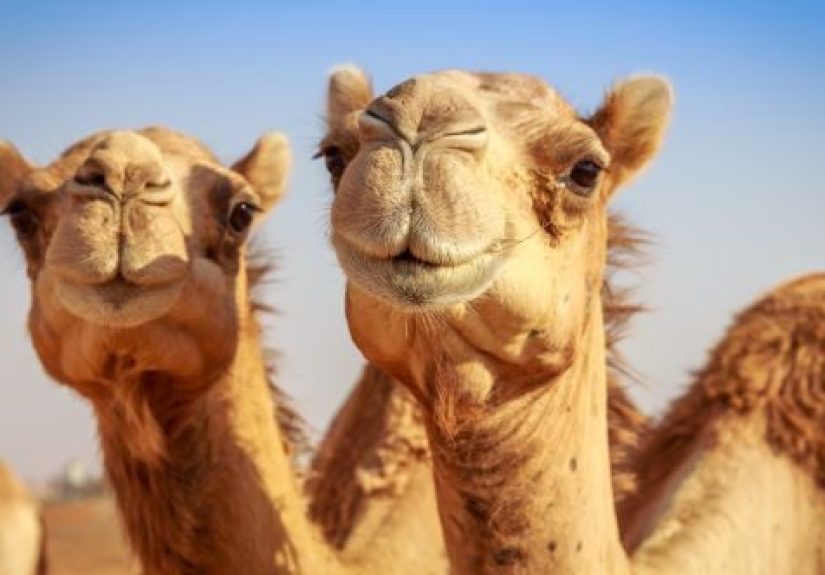
6. Camels Once Roamed the Western Deserts
Picture a classic Western: dusty trail, wagons, a line of riders on horseback… and a camel? As odd as
it sounds, the U.S. Army really did experiment with camels as pack animals in the 1850s. They were
tough, could go days without water, and seemed perfect for long desert marches.
Congress funded what became known as the “Camel Corps,” importing dozens of animals from the Middle
East and North Africa. They were tested in Texas and the Southwest, and reports at the time praised
their stamina. Some were used to carry supplies, mail, and even military equipment. One camel, known
as Old Douglas, ended up serving with a Confederate regiment during the Civil War.
But camels had PR problems. Soldiers used to horses hated their smell and temperament. When the Civil
War disrupted funding and priorities, the experiment fizzled. Many of the animals were auctioned off or
simply released. For years afterward, frontier newspapers occasionally reported sightings of stray
camels wandering the desert – including one infamous “Red Ghost” blamed for trampling a woman to
death. Eventually the last of them died off, leaving behind one of the West’s strangest what-ifs.
7. Towns Often Had Stricter Gun Laws Than You’d Expect
The pop-culture West is full of quick-draw duels in the middle of Main Street. In reality, many
frontier towns were surprisingly strict about firearms inside city limits.
In places like Dodge City, Tombstone, and Deadwood, arriving cowboys were often required to check their
guns with the sheriff or leave them in a hotel or livery stable. Local ordinances banned carrying
weapons openly in town to reduce drunken shootouts. The famous gunfight at the O.K. Corral in 1881
actually started because lawmen were trying to enforce Tombstone’s no-guns rule on a group of armed
cowboys.
That doesn’t mean the West was safe and calm – homicide rates in some boomtowns were high – but the
idea that everyone walked around constantly strapped by law is a myth. Ironically, the “Wild West” was
sometimes more regulated than modern pop culture gives it credit for.
8. Women in the West Could Be Surprisingly Powerful
Hollywood gives us a narrow view of Western women: saloon girls, long-suffering wives, maybe the
occasional schoolteacher. The real story is much more interesting. Women in the West ran ranches,
staked homestead claims, served on juries, and even beat Eastern states to the ballot box.
Under the 1862 Homestead Act, single, widowed, or divorced women could claim 160 acres of federal land
in their own name if they lived on and improved it for several years. Historians estimate that roughly
one-fifth of homesteaders in some Western states were women, many of whom successfully gained title to
their land.
The West also led the way in women’s voting rights. Wyoming Territory granted women full suffrage in
1869, making it the first U.S. jurisdiction where women could both vote and hold office. When Congress
hinted that Wyoming might have to give up women’s suffrage to become a state, territorial leaders
reportedly replied they’d rather stay out of the Union for a hundred years than give up women’s votes.
Other Western states like Colorado, Utah, and Idaho followed in the late 19th century.
Add in entrepreneurs, saloon owners, midwives, and traveling performers, and the picture changes
completely: the Wild West was one of the first regions where large numbers of women could openly step
into roles beyond traditional domestic life.
9. The Wild West Was Far More Multicultural Than the Movies
If you go by old Western films, the frontier was almost exclusively white cowboys and sheriffs. In
reality, the population of the West was a complex mix of Native Americans, Mexican and Spanish
communities, African Americans, Chinese and other Asian immigrants, and European settlers – plus
people of mixed ancestry everywhere you looked.
Chinese immigrants, for example, played a major role in building railroads and working in mining camps.
At the same time, racist stereotypes painted Chinese communities as dens of vice and opium. Chinese
women were often assumed to be sex workers whether or not that was true, and anti-Chinese campaigners
used those stereotypes to push for exclusion laws and crackdowns on opium smoking.
Yet within that hostile environment, real people built rich lives. In Tombstone, Arizona, a woman known
as “China Mary” managed businesses, coordinated jobs for Chinese laborers, and wielded major influence
in the local community. In San Francisco, Ah Toy became one of the most famous Chinese madams on the
West Coast, maneuvering through a legal system stacked against her and building a small empire in the
process.
Meanwhile, Black cowboys, Mexican vaqueros, and Native guides were essential to cattle drives, trail
expeditions, and the day-to-day running of Western life. It was messy, unequal, and often violent – but
far more diverse than the monochrome Wild West many of us grew up watching.
10. One Outlaw Became More Famous After He Died
The frontier produced plenty of colorful outlaws, but few had a post-mortem career like failed train
robber Elmer McCurdy. In 1911, McCurdy attempted to rob a train in Oklahoma, believing it carried a
fortune. He picked the wrong train and escaped with a pitiful amount of cash. Lawmen tracked him down
and killed him in a shootout shortly afterward.
With no one to claim the body, a local undertaker embalmed McCurdy with an arsenic solution and put him
on display to recover his costs, charging people a nickel to view “The Bandit Who Wouldn’t Give Up.”
Years passed. Sideshow operators eventually claimed the body and carted it around carnivals and
haunted houses as a “mummy” prop. He changed hands over and over, from traveling shows to wax museums.
By the 1970s, McCurdy’s remains had been so thoroughly painted and posed that workers on a TV set in
California thought his body was just another rubber dummy – until a crew member accidentally broke off
a piece of his arm and realized there was bone inside. An investigation finally confirmed his identity.
More than 60 years after his death, Elmer McCurdy was buried in a real cemetery, ending one of the
strangest afterlives in Wild West history.
Bonus: How to Experience the Strange Wild West Today
Reading about these stories is fun, but the Wild West really sinks in when you walk through places
where this history unfolded. If you’re planning a Western road trip, here are some ways to bring these
strange tales to life – without needing a time machine or a six-shooter.
Walk the Streets of Old Western Towns
Start with the classic boomtowns that still survive: places like Tombstone, Arizona; Deadwood, South
Dakota; and Dodge City, Kansas. Many of their main streets are preserved or reconstructed with wooden
sidewalks, false-front buildings, and old-style saloons. As you stroll past the boardwalks, imagine
the signs that aren’t in the movies – “Check Your Guns With the Sheriff,” “No Shooting in
Town Limits,” “Gambling Restricted to Licensed Halls.”
It’s easy to picture a showdown, but it’s weirder (and more accurate) to picture what most people were
actually doing: buying groceries, filing land claims, hauling water, bringing kids to school, and
complaining about the mud. That mundane daily life is the backdrop for all the oddball stories on this
list.
Look for the Multicultural Layers
When you visit Western museums, pay attention to how many cultures show up in the exhibits. Railroad
museums often talk about Chinese laborers. Mining and ranching towns highlight Mexican vaquero
traditions. You’ll see displays about Buffalo Soldiers (Black cavalry units), Native scouts, and the
Indigenous nations whose land was taken.
One simple exercise: every time you see a “classic cowboy” photo, ask yourself who else is missing from
the frame. Where are the women running boarding houses? The Native traders? The Black cowboys and
Mexican ranch hands who taught many of the roping and riding skills we now think of as “all-American”?
That mental checklist brings out the real texture of the frontier.
Follow the Weird Side Trails
If you’re the kind of traveler who loves odd roadside attractions, the Wild West is your playground.
Look for markers about obscure Civil War actions in New Mexico, small-town museums that proudly display
a single camel photograph, or plaques honoring early women voters in Wyoming and Colorado. Some towns
have walking tours that point out former red-light districts, Chinese laundries, or sites of long-gone
opium dens.
Don’t be afraid of the super-local stuff – homemade displays in old post offices, family-run museums
with hand-lettered labels, or tiny historical societies open only on Saturdays. These are the places
where you’ll hear stories that never make it into big-budget documentaries, like the town legend about
a wandering camel or the jury of local women who shocked everyone by convicting a popular saloon owner.
Remember That “Strange” Is Often Just “Human” With the Volume Turned Up
The strangest thing about the Wild West might be how familiar it feels once you strip away the dust and
horses. People argued about politics and race, panicked over new technology, worried about outsiders,
hustled for money, and tried (sometimes badly) to write laws that matched their fears and hopes.
Yes, they did it with camels, UFO stories, cannibal myths, and gun checks at the edge of town – which
makes for great conversation at your next trivia night. But underneath all the odd details, the Wild
West was just people improvising their way through massive change. That might be the strangest – and
most relatable – truth of all.