Table of Contents >> Show >> Hide
- Quick Mattress Matchmaker: Start With Your Sleep Position
- Before We Talk “Best”: The 3 Jobs Your Mattress Must Do
- Best Mattress Types for Each Sleeping Position (With Real-World Examples)
- Best Mattress Features for Common Pain Points
- Lower Back Pain: Look for “Support + Gentle Cushion,” Not a Brick
- Sciatica-Like Pain: Prioritize Alignment and Pressure Relief Together
- Shoulder Pain (Often Side Sleeping): More Cushion on Top, Support Underneath
- Hip Pain: Cushion + Stable Support (Especially for Side Sleepers)
- Neck Pain: Your Pillow Might Be the Plot Twist
- Arthritis, Joint Pain, and General Stiffness: Pressure Relief + Easy Movement
- Hot Sleepers: Breathability Beats “Ice-Cool Marketing”
- Heavier Bodies (Plus-Size Sleepers): Stronger Support and Higher-Density Materials
- How to Choose the Right Mattress Without Losing Your Mind
- Fast Fixes You Can Try Tonight (Even Before You Buy Anything)
- Bottom Line: “Best Mattress” Means “Best Match”
- Real-World Experiences: What Choosing the “Right” Mattress Actually Feels Like (Extra )
Buying a mattress should be simple: you lie down, your body says “ahhh,” and your wallet says “ouch.” But in real life, mattress shopping is a confusing carnival of buzzwordscooling gel, zoned support, responsive coilsplus that one friend who insists their bed is “like sleeping on a supportive cloud.” (A cloud. Famously known for its lumbar alignment.)
Here’s the truth: the “best” mattress isn’t a single magical model. It’s a match between your sleeping position, your body type, and the specific pain points you wake up with. This guide breaks it down in plain English, with just enough humor to keep you from panic-buying a mattress that feels great for 30 seconds and terrible for 30 months.
Quick Mattress Matchmaker: Start With Your Sleep Position
Your sleep position is basically your body’s overnight job description. Side sleeping demands pressure relief. Back sleeping needs balanced support. Stomach sleeping requires your mattress to stop your hips from auditioning for a sinkhole documentary.
Side Sleepers
- What you need: Pressure relief at shoulders and hips, with enough support to keep the spine neutral.
- Best feel: Soft-to-medium, or medium if you prefer a “hug” without getting stuck.
- Best builds: Memory foam, foam hybrids, and plush-top hybrids with strong support underneath.
Back Sleepers
- What you need: Even support, especially under the lower back (lumbar area), without feeling like a plank.
- Best feel: Medium to medium-firm.
- Best builds: Hybrids and supportive foams (especially with zoned support or firmer center sections).
Stomach Sleepers
- What you need: Strong support to prevent the midsection from sinking and tugging the lower back.
- Best feel: Medium-firm to firm (usually firmer than back/side sleepers).
- Best builds: Firm hybrids, responsive latex, firmer foams with thinner comfort layers.
Combo Sleepers
- What you need: A mattress that’s easy to move on, with balanced cushioning.
- Best feel: Medium to medium-firm.
- Best builds: Hybrids and latex hybrids (they tend to feel “springier” and less sticky than deep foam).
Before We Talk “Best”: The 3 Jobs Your Mattress Must Do
1) Keep Your Spine in a Neutral Line
“Support” doesn’t mean “hard.” It means your spine stays alignedno banana bend, no hammock dip, no dramatic plot twists in your lower back. A supportive mattress should hold you up while still letting heavier parts (hips and shoulders) sink just enough to keep everything level.
2) Relieve Pressure Where You’re Bony and Grumpy
Side sleepers tend to feel pressure at the shoulder and hip. If the mattress is too firm, those areas take the hit. Too soft, and you sink unevenly, which can twist the spine and make you wake up feeling like you lost a wrestling match with your own bed.
3) Manage Heat and Motion (Especially if You Share the Bed)
If you sleep hot, you’ll want materials that breathecoils, latex, and covers designed for airflow. If you sleep with a partner (or a pet who believes your side is their side), pay attention to motion isolation and edge support.
Best Mattress Types for Each Sleeping Position (With Real-World Examples)
Not everyone needs the same mattress type. In fact, two “medium-firm” mattresses can feel totally different depending on materials, construction, and your body weight. Use these as starting points, then narrow down by your pain point in the next section.
Best for Side Sleepers: Pressure-Relieving Hybrids or Adaptive Foams
Side sleepers usually do best on mattresses with a cushioned top layer that reduces pressure on hips and shoulders. Look for terms like “pressure relief,” “plush comfort layer,” or “pillow-top,” but don’t ignore what’s underneath: you still need support coils or dense foam to keep your spine aligned.
- Great fit if you: wake up with shoulder pain, hip soreness, or numb arms.
- Watch out if you: sink so deeply you feel stuck or your waist isn’t supported.
- Example styles: medium-feel hybrids with a cushy top; memory foam with a supportive core; hybrids with zoned lumbar support.
- Example models people often consider: Helix Midnight Luxe (hybrid), Leesa Sapira (hybrid), Tempur-Pedic Adapt line (foam), Nectar-style memory foam beds (foam).
Best for Back Sleepers: Balanced Medium to Medium-Firm Support
Back sleepers want that “just right” feelenough cushion for comfort, enough pushback to support the lumbar area. Mattresses marketed with “zoned support” or “lumbar reinforcement” can be helpful, but a classic medium to medium-firm hybrid is often a safe bet.
- Great fit if you: feel stiff in the morning or have lower-back tension that improves once you’re moving.
- Watch out if you: feel a gap under your lower back (too firm or too flat) or if your hips sink too much (too soft).
- Example styles: medium-firm hybrids, supportive foams with lumbar zoning.
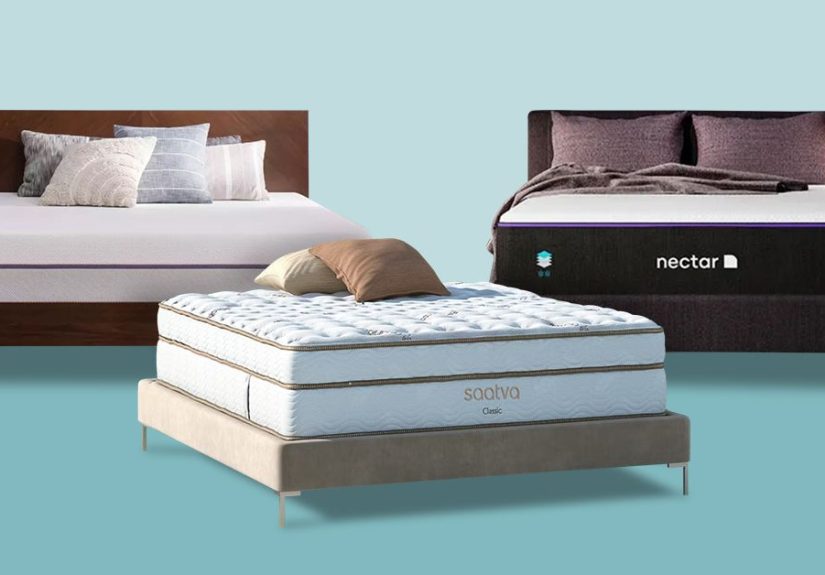
- Example models people often consider: Saatva Classic (hybrid/innerspring feel), Leesa Sapira (hybrid), many “medium-firm” memory foam hybrids.
Best for Stomach Sleepers: Firmer, Flatter, and Less “Sinky”
Stomach sleeping can stress the lower back if the midsection sinks, so support is the priority. A firmer mattress helps keep the hips level with the shoulders. If you can’t quit stomach sleeping (no judgmentyour body wrote that habit in permanent marker), aim for a firmer hybrid or latex bed with a thinner comfort layer.
- Great fit if you: wake up with lower-back pain and you often sleep on your stomach.
- Watch out if you: get shoulder/chest pressure from a mattress that’s too hard.
- Example styles: firm hybrids, latex hybrids, firmer foams with minimal sink.
- Example models people often consider: Avocado Green (latex hybrid style), firmer Saatva options, firm coil-forward hybrids.
Best for Combination Sleepers: Responsive Hybrids and Latex
If you rotate like a rotisserie chicken (side… back… side… maybe stomach), you need a mattress that responds quickly when you move. Deep memory foam can feel cozy but may slow you down. Hybrids and latex often make changing positions easier while still offering cushion.
Best Mattress Features for Common Pain Points
Here’s where the magic happens: you match your mattress features to your specific “why does my body do this?” issue. Pain can have multiple causes, so think of these as cluesnot a diagnosis.
Lower Back Pain: Look for “Support + Gentle Cushion,” Not a Brick
A lot of people assume the solution is the firmest mattress possible. Often, it’s not. Many sleepers do well with a medium-firm feel that supports the spine while still allowing the hips and shoulders to settle into alignment. If your lower back hurts most in the morning, it may be a sign your bed isn’t supporting you consistently through the night.
- Helpful features: zoned lumbar support, medium-firm feel, sturdy coils, dense support foam.
- Helpful add-ons: an adjustable base (slight elevation) or a small pillow under the knees (back sleepers).
- Extra tip: If your mattress is sagging in the middle, no amount of “cooling gel” will save your spine.
Sciatica-Like Pain: Prioritize Alignment and Pressure Relief Together
Radiating pain down the leg can be aggravated by poor alignment or pressure at the hips. Side sleepers often do best with cushioning at the hip plus support under the waist so the spine stays neutral. Back sleepers may prefer a medium to medium-firm mattress with good lumbar support.
Shoulder Pain (Often Side Sleeping): More Cushion on Top, Support Underneath
If your shoulder feels jammed into the mattress, you probably need more pressure relief. Look for a comfort layer that lets the shoulder sink without forcing the rest of your body to collapse. A plush hybrid can be a sweet spot: cozy on top, supportive below.
- Helpful features: thicker comfort layers, adaptive foams, plush-top hybrids.
- Helpful habit: hug a pillow to keep your top shoulder from rolling forward and straining.
Hip Pain: Cushion + Stable Support (Especially for Side Sleepers)
Hip pain often flares when the mattress is too firm (pressure) or too soft (misalignment). Many people find relief with a medium-feel mattress that has a pressure-relieving top and a supportive core. Latex can be great here: it cushions without letting you sink as deeply as some foams.
Neck Pain: Your Pillow Might Be the Plot Twist
A mattress can’t fix everything above the shoulders. Neck pain often comes from pillow height and how your mattress interacts with it. If your mattress is softer, you may need a slightly lower pillow (because your body sinks more). If your mattress is firmer, you might need a pillow with more loft to keep your head aligned with your spine.
Arthritis, Joint Pain, and General Stiffness: Pressure Relief + Easy Movement
When joints are cranky, you want a mattress that cushions pressure points but also lets you change position without effort. Some mattresses feel comfortable at first but make moving harder (deep foam “sink” is a common culprit). A responsive hybrid or latex hybrid can help you feel supported without feeling trapped.
- Helpful features: responsive comfort layers, strong edge support, medium feel (often), stable coils.
- Bonus: Edge support makes it easier to get in and out of bedan underrated quality-of-life upgrade.
Hot Sleepers: Breathability Beats “Ice-Cool Marketing”
Cooling claims are everywhere, but the basics still matter most: airflow and heat retention. Coil systems allow more airflow than solid foam. Latex tends to sleep cooler than traditional memory foam. Covers and quilting can help, but they can’t overcome a heat-trapping core.
- Helpful features: hybrid coils, breathable covers, latex comfort layers, phase-change materials (nice-to-have), open-cell foams.
- Helpful reality check: “Cooling” is a spectrumthink “less hot,” not “sleeping in a snow globe.”
Heavier Bodies (Plus-Size Sleepers): Stronger Support and Higher-Density Materials
If you’re in a higher weight range, you may “feel” a mattress as softer because you sink in more. Look for stronger coils, durable foams, and builds designed to resist sagging. Medium-firm for one person may feel like medium-soft for another, and that’s normal.
- Helpful features: reinforced edge support, robust coil systems, thicker support layers, higher-density foams.
- Common win: supportive hybrids and latex hybrids often hold up better over time.
How to Choose the Right Mattress Without Losing Your Mind
Step 1: Identify Your “Non-Negotiable” Problem
Pick the top issue you want to solve: lower back pain, shoulder pain, overheating, partner motion, or “I just want to wake up feeling human.” If you try to solve everything at once, you’ll end up with analysis paralysis and a cart full of mattresses you didn’t buy.
Step 2: Use the 10-Minute Alignment Test
- Lie in your normal sleep position for a few minutes (not just a quick flop).
- Notice pressure points: shoulders, hips, tailbone.
- Check for “gaps”: does your waist feel unsupported on your side? Does your lower back feel arched on your stomach?
- If you share the bed, have your partner roll around a bitdoes it feel like a small earthquake?
Step 3: Respect the Break-In Period
Many mattresses feel different after a few weeks of use, and your body also needs time to adjust. If you’re switching from an old sagging mattress to a supportive new one, your muscles may complain before they celebrate. Give yourself timeunless the mattress is obviously wrong (numb arms, sharp back pain, or the sensation of sliding into a crater).
Step 4: Choose Brands With Real Sleep Trials and Returns
A showroom test is helpful, but your bedroom is the real boss fight. Look for a meaningful home trial and clear return policies. The “best” mattress is the one you can actually live with for a month, not the one that felt great under fluorescent lighting.
Fast Fixes You Can Try Tonight (Even Before You Buy Anything)
If you’re waking up sore, a few simple tweaks can reduce strain while you work on the bigger decision. No, a pillow can’t turn a terrible mattress into a masterpiece, but it can help your alignment.
- Back sleepers: Try a pillow under your knees to reduce lower-back strain.
- Side sleepers: Put a pillow between your knees to keep hips stacked and reduce twisting.
- Stomach sleepers: If you can’t switch positions, a thin pillow under the pelvis may reduce strain.
- Everyone: Replace a flattened pillow. Your neck deserves better than a sad pancake.
Bottom Line: “Best Mattress” Means “Best Match”
The best mattresses for each sleeping position and pain point all do the same core things: they keep your spine aligned, reduce pressure where you need it, and support you consistently through the night. Start with your sleeping position, then fine-tune for your pain point and temperature needs. And remember: the goal isn’t a mattress that wins the internetit’s a mattress that helps you wake up without stiffness, numbness, or the urge to negotiate with your alarm clock.
Real-World Experiences: What Choosing the “Right” Mattress Actually Feels Like (Extra )
Mattress advice can sound wonderfully tidy in theory: “Side sleepers need softer beds,” “Back pain equals medium-firm,” “Hybrids are the Goldilocks choice.” Then real life shows up with a shoulder that hates pressure, a lower back that hates sagging, and a partner who sleeps like they’re practicing for a breakdancing competition.
Below are a few familiar scenarioscomposite examples based on common experiences shoppers reportso you can see how the “best mattress” decision plays out in real bedrooms, not just in product descriptions.
Experience #1: The Side Sleeper Who Bought “Firm for Back Pain”
A classic story: someone wakes up with lower back pain, reads that firm mattresses are “supportive,” and chooses a very firm bed. The first night feels stableno sinking, no wobble. By night three, the hips and shoulders start complaining. The body can’t sink enough at the pressure points, so it compensates by twisting slightly. Morning arrives with a sore hip, a stiff shoulder, and the original back pain is still hanging around like an uninvited houseguest.
The fix often isn’t “go softer forever.” It’s “add targeted pressure relief while keeping support.” That might mean switching to a medium-feel hybrid with a cushioned top, adding a supportive topper temporarily, or choosing a mattress with zoning so the midsection stays supported while the shoulders and hips get more give. The “ahhh” moment usually happens when the sleeper feels both cradled and held upnot one or the other.
Experience #2: The Back Sleeper Who Thought Plush = Luxury
Some back sleepers love a plush feel at firstespecially if the mattress has a cloud-like top layer. For a few weeks, it’s cozy. Then subtle sagging under the hips begins. The sleeper doesn’t always notice during the night, but the morning stiffness tells the truth. What’s happening is small misalignment: the hips settle deeper than the upper back, and the lumbar area loses its “supported curve.”
In this situation, people often do better moving slightly firmer or choosing a mattress with stronger center support. A medium to medium-firm hybrid can preserve comfort while preventing the hips from dipping. Sometimes the simplest change is not the mattress at all: placing a pillow under the knees reduces strain and makes a supportive bed feel instantly more comfortable.
Experience #3: The Hot Sleeper Who Kept Falling for “Cooling” Labels
Hot sleepers frequently try multiple “cooling” foams and still wake up sweaty. The pattern is predictable: the cover feels cool for a few minutes, but once body heat builds, airflow matters more than surface sensation. Many people report that switching to a coil-forward hybrid or latex hybrid finally changes the game, because air can move through the mattress instead of getting trapped in dense foam.
A common compromise is a hybrid with a modest foam comfort layer: enough cushioning for pressure relief, but not so much that it becomes a heat sponge. Pairing that with breathable sheets can turn “I’m melting” into “I can sleep.” The best part? When you sleep cooler, you often toss and turn lessso your mattress choice can improve comfort and your sleep quality.
The biggest takeaway from these experiences is simple: mattress rules are helpful, but they’re not laws of physics. Your body is the final reviewer. Use position-based guidance to narrow the field, use pain points to refine your pick, and lean on real trial periods so you can make a decision with evidencenot just vibes and marketing poetry.