Table of Contents >> Show >> Hide
- What “Stealth Luxury” Really Means in the Bathroom
- Why Dip-Dyed Towels from Japan Stand Out
- The Japanese Design DNA Behind the Appeal
- What to Look for When Buying Dip-Dyed Japanese Towels
- How to Style Dip-Dyed Towels at Home
- Are They Worth the Splurge?
- The Experience: Living with Dip-Dyed Towels from Japan
- Final Thoughts
Luxury has changed its outfit. It used to arrive wearing a giant logo, carrying a shopping bag the size of a carry-on, and practically screaming, “Please notice me.” These days, the most interesting luxury tends to be quieter. It lives in the details: the smooth slide of a drawer, the perfect weight of a coffee mug, the linen sheet that somehow makes bedtime feel like a boutique hotel. And yes, it can absolutely live in a towel.
That is exactly why dip-dyed towels from Japan feel so compelling. They are not flashy in the traditional sense. They do not need metallic embroidery, oversized monograms, or the visual energy of a Vegas fountain. Instead, they work their magic through restraint: nuanced color, refined texture, impeccable absorbency, and the kind of craftsmanship that makes you pause mid-fold and think, “Well, this is annoyingly nice.”
In the world of bath linens, these towels represent a form of stealth luxury. They look simple at first glance, but the longer you live with them, the more sophisticated they seem. Their beauty is not only visual. It is tactile, practical, and quietly emotional. They turn an ordinary daily ritual into a design moment without ever acting like the star of the show.
What “Stealth Luxury” Really Means in the Bathroom
Stealth luxury is all about understatement. In fashion, it might mean a beautifully cut coat with no obvious branding. In interiors, it often shows up through natural materials, muted palettes, and craftsmanship that speaks softly but confidently. In the bathroom, stealth luxury looks like textiles that do their job exceptionally well while also making the room feel calmer, richer, and more intentional.
Dip-dyed towels from Japan fit this idea perfectly. Their color gradation has visual interest, but it is not loud. Their softness feels elevated, but not overstuffed. Their design is thoughtful without crossing into precious. This balance matters because towels are deeply functional objects. Nobody wants a towel that looks like a work of art but dries like a soggy apology.
The best Japanese bath towels tend to avoid that trap. They bring together utility and beauty in a way that feels deeply modern. They are decorative, yes, but they are also meant to be used, washed, hung, folded, and enjoyed. That is where the luxury lands hardest: not in display, but in daily life.
Why Dip-Dyed Towels from Japan Stand Out
1. The color story is subtle, not shouty
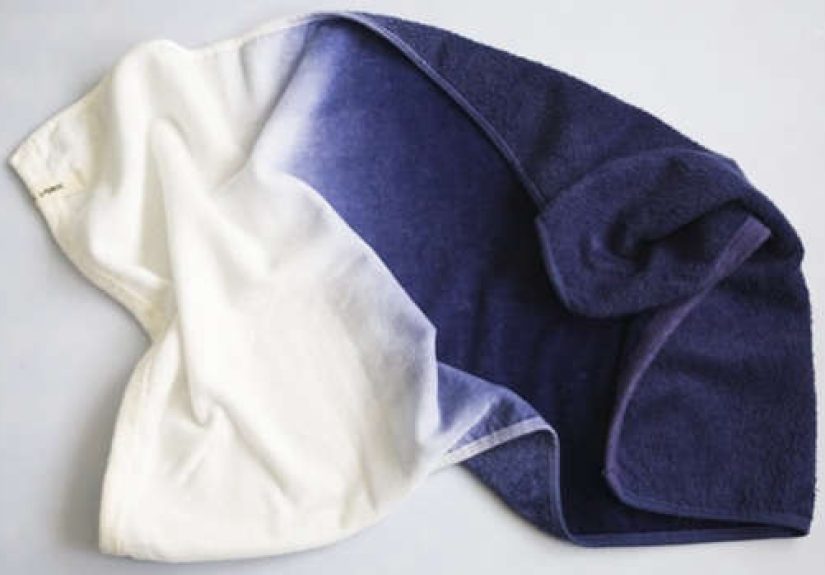
Dip-dyeing creates a gradient effect by immersing fabric partially into dye, allowing color to deepen or fade across the surface. When done well, the result feels organic rather than gimmicky. Japanese design is especially good at this kind of restraint. Instead of neon ombré or beach-resort theatrics, many Japanese dip-dyed towels lean into shades like navy, charcoal, stone, ash, slate, and foggy gray.
That palette gives the towels a hushed elegance. A plain white towel can look clean, but a soft gray-to-charcoal fade can look curated. It adds dimension to a bathroom without demanding a whole redesign. Think of it as the textile version of saying something clever in a low voice and somehow getting everyone’s attention anyway.
2. They often prioritize hand feel over puffed-up bulk
Not every luxury towel needs to be thick enough to qualify as upholstery. One of the signatures of many Japanese towels is that they feel refined rather than oversized. Some are plush, but even the plush ones often avoid that marshmallow effect that looks indulgent in a store and then takes roughly fourteen business days to dry at home.
Japanese towels are frequently praised for feeling soft, light, and highly absorbent at the same time. That balance is part of their appeal. They can feel substantial without becoming cumbersome, and elegant without becoming fragile. In a smaller bathroom or an apartment with limited airflow, that matters more than most people realize.
3. Craftsmanship is the actual flex
What makes these towels luxurious is not just the dye treatment. It is the underlying quality of the textile itself. Japanese towel-making, especially from regions known for bath-linen production, has built a strong reputation around absorbency, thoughtful weaving, and soft finishing. That reputation is not marketing glitter; it is tied to how the towel performs after repeated use.
A dip-dyed towel only feels special if the fabric beneath the color is excellent. Otherwise, you are just paying extra for a gradient. The best versions combine visual artistry with cotton quality, careful construction, and edges that hold up over time. The color catches your eye; the performance earns the repeat purchase.
The Japanese Design DNA Behind the Appeal
Part of the fascination with dip-dyed towels from Japan comes from their design language. Many Japanese home goods are shaped by an appreciation for simplicity, usability, and material honesty. In plain English: they tend to look clean because they are clean. No fussy extras, no decorative panic, no “just because” tassels having an identity crisis in the corner.
That design approach works beautifully in bath textiles. Towels are already visually repetitive objects. They appear in stacks, on bars, on hooks, in closets, in guest rooms, and in laundry baskets that you swear you folded yesterday. A dip-dyed Japanese towel adds just enough variation to break up the monotony while still feeling serene.
There is also something emotionally intelligent about the color transitions themselves. A gradient reads as softer than a hard line. It feels atmospheric, almost watery, which makes perfect sense in a bathing space. Good dip-dye does not just decorate the room; it echoes the mood of the room.
What to Look for When Buying Dip-Dyed Japanese Towels
Material matters
Start with fiber content. Cotton remains the gold standard for absorbency and comfort in bath towels. Long-staple or extra-long-staple cotton is often associated with smoother, stronger, and softer yarns, which can improve both feel and durability. If the towel is marketed mainly for looks but gets fuzzy, stiff, or sad after a few washes, the romance tends to end quickly.
Pay attention to weave and weight
Terry towels with looped piles typically feel plush and absorbent. Waffle weaves are lighter, quick-drying, and textural. Some Japanese towels blend these ideas beautifully, offering softness on one side and a more breathable structure on the other. Neither is inherently better. It depends on your bathroom, your climate, and your tolerance for damp towel drama.
Weight also matters. Heavier towels can feel sumptuous, but lighter or midweight towels are often easier to live with. If you want that spa-like sensation, go denser. If you want a towel that dries fast and folds neatly, lean toward midweight. Mature luxury is knowing your lifestyle, not just your Pinterest board.
Look beyond the dye effect
A beautiful gradient should be a bonus, not a disguise. Check the stitching, hem quality, softness before washing, and care instructions. A premium towel should feel intentional all the way through. If the dye is gorgeous but the edges look like they were finished during a fire drill, keep scrolling.
Choose colors that age well
One reason stealth-luxury towels work so well is that the colors tend to be timeless. Deep indigo, smoke gray, warm stone, muted oatmeal, and inky blue all age more gracefully than trend shades that burn bright and vanish by next spring. The point is not to make your bathroom boring. The point is to make it feel composed.
How to Style Dip-Dyed Towels at Home
These towels work best when you give them room to breathe. If the whole bathroom is already competing for attention with patterned tile, bold wallpaper, brass octopuses, and a mirror the size of a movie screen, the towel may not get a fair chance. Dip-dyed towels shine in calmer settings where their tonal shifts can actually register.
They pair especially well with natural woods, pale stone, matte black fixtures, unlacquered brass, and ceramics in chalky or earthy finishes. White walls help them pop softly. Concrete and limewash make them feel even more architectural. In a neutral bathroom, one stack of dip-dyed hand towels can do more for the room than another “spa” candle with a suspiciously aggressive eucalyptus agenda.
You can also lean into contrast. A charcoal-dipped towel in a bright white bathroom looks crisp and modern. A navy fade in a warm oak space feels cocooning and grounded. For guest baths, a pair of dip-dyed hand towels can create an instant boutique-hotel impression, the kind that suggests you have your life together even if your hallway closet says otherwise.
Are They Worth the Splurge?
Sometimes yes, sometimes absolutely not. That is the unglamorous truth. A premium Japanese towel is worth the money when the quality justifies the experience: softness that lasts, absorbency that improves or remains consistent, beautiful dye work, and construction that survives regular laundering. In that case, the towel becomes one of those rare home purchases that delivers a tiny bit of satisfaction every single day.
But the splurge is less convincing when the price is attached mainly to scarcity, branding, or the vague promise of artisanal vibes. Luxury should not mean babying a towel like it is a museum artifact. It should mean enjoying something better made.
The strongest argument for buying dip-dyed towels from Japan is not that they are trendy. It is that they sit at a rich intersection of design, utility, and atmosphere. They elevate the bathroom without forcing it into performance. They feel personal rather than performative. And in a home full of noisy objects, that quiet competence can feel incredibly luxurious.
The Experience: Living with Dip-Dyed Towels from Japan
The real test of any towel happens after the online cart closes, the delivery box is flattened, and the product has to enter the very glamorous world of actual human use. This is where dip-dyed towels from Japan often become more impressive, not less. They are not just pretty folded rectangles. They become part of the rhythm of the day.
First, there is the visual pleasure. In the morning, a dip-dyed towel hanging in soft light has a painterly quality. The gradient catches the eye differently than a solid towel would. It looks intentional, almost composed, even when the rest of the bathroom is in a less curated state. Toothpaste cap rolling away? Fine. Hair tie colony near the sink? Not ideal. But somehow the towel still brings the room back to dignity.
Then comes the hand feel. Many mass-market towels go all in on fluff and then reveal their betrayal later: they feel good for a week, shed like a nervous golden retriever, and eventually develop the texture of cardboard with emotional baggage. A well-made Japanese towel tends to feel calmer than that. Softer in a grounded way. Less puff, more polish. It dries the skin efficiently, wraps comfortably, and does not leave you wondering whether it is absorbing water or simply escorting it from one body part to another.
There is also a sensory calm to them that is hard to quantify until you live with one. The colors are usually gentler. The textile often folds flatter and hangs neater. The whole thing feels less like bathroom clutter and more like part of the interior design. That sounds dramatic for a towel, but good home objects earn that kind of language. A dip-dyed Japanese towel can make a rushed weekday shower feel slightly less rushed. Not because it transforms your life into a minimalist film set, but because it removes a little friction from the routine.
Guest reactions are part of the experience too. People notice them. Not always in a loud, “Where did you get that?” way, but in the slower glance people give to something unexpectedly refined. A towel with a smoky navy fade or a soft charcoal dip looks considered. It suggests the home has a point of view. It says somebody made choices here, and they did not choose chaos.
Over time, the experience becomes less about novelty and more about attachment. These are the towels you reach for first. The ones that never seem to stay in the cabinet for long because they are always in use, in the wash, or back on the hook. That is usually the truest sign of value in the home: the item that quietly becomes your favorite without needing to announce itself. Stealth luxury, in other words, is not about impressing visitors. It is about repeatedly impressing the person who actually lives there.
And that may be the strongest case for dip-dyed towels from Japan. They make a common object feel uncommon. They turn drying off into a small but satisfying aesthetic experience. They prove that luxury can be intimate, practical, and refreshingly free of nonsense. Which, frankly, is more than can be said for most things marketed as luxurious these days.
Final Thoughts
Dip-dyed towels from Japan capture a specific kind of modern luxury: quiet, tactile, useful, and deeply considered. They are beautiful without being fussy, distinctive without being loud, and indulgent without becoming ridiculous. In a category crowded with overbuilt fluff and trend-chasing color, they offer something smarter.
If you are drawn to interiors that feel calm, elevated, and just a little bit smarter than average, this is the kind of upgrade worth considering. Not because a towel will change your life. Let us remain emotionally stable. But because the right towel can absolutely improve a small daily ritual, and sometimes that is exactly where good design matters most.