Table of Contents >> Show >> Hide
- Why Crimea Matters So Much
- Why Jet Skis Actually Make Sense
- The Raids That Put Jet Skis on the Map
- Jet Skis Were Not Working Alone
- Why Small Craft Became So Effective
- Russia’s Problem: Defend Everything, Everywhere, All at Once
- What It Means in 2026
- Extended Section: The Human Experience Behind the Jet Ski Raids
- Conclusion
War usually arrives in the imagination wearing a steel helmet, riding a tank, or roaring overhead in a jet. Then Ukraine came along and reminded the world that history also gets made by the weird little thing nobody expected. In this case, that thing was the jet ski.
Yes, the same machine many people associate with beach vacations, sunscreen, and that one guy who absolutely should not be trusted near a marina. In Ukraine’s hands, however, the jet ski became something very different: a fast, low-profile tool for raiding occupied Crimea, slipping commandos onto hostile shores, and turning the Black Sea into a place where expensive Russian hardware suddenly looked vulnerable, nervous, and very much not in charge.
The headline-grabbing footage of Ukrainian special operators skimming through the night toward Crimea made the concept feel almost cinematic. But the deeper story is more serious and more important. Jet skis were never the whole strategy. They were one sharp edge of a broader Ukrainian campaign built on improvisation, intelligence, sea drones, missiles, sabotage, and a relentless willingness to exploit Russian weak spots. In other words, the jet ski was not a magic wand. It was the perfect accessory for a war that rewards speed, surprise, and nerve.
Why Crimea Matters So Much
To understand why jet skis showed up in this story at all, you first have to understand Crimea. The peninsula is not just a symbol. It is a military prize, a logistics hub, a naval fortress, and a political obsession. Since Russia seized and annexed it in 2014, Crimea has served as the centerpiece of Moscow’s military posture in the Black Sea. From there, Russia has projected naval power, launched strikes, protected supply lines, and supported its occupation of southern Ukraine.
That makes Crimea both shield and sword. It protects Russian positions while also enabling attacks on Ukraine. For Kyiv, then, Crimea is not merely about flags and maps. It is about degrading Russia’s ability to wage war. Hit Crimea, and you rattle the Black Sea Fleet. Hit Crimea, and you threaten depots, air defenses, radar sites, electronic warfare positions, and transport links. Hit Crimea, and suddenly the Kremlin has to spend time, money, and attention defending what it once treated like a secure rear area.
That is why Ukrainian operations around Crimea have mattered so much. Even when they do not seize territory, they force Russia to react. They complicate command. They create uncertainty. And in war, uncertainty is often more valuable than swagger.
Why Jet Skis Actually Make Sense
On paper, jet skis sound absurd. On water, in darkness, near a hostile coast, they start to sound clever.
They are fast. They are nimble. They can approach shallower areas than larger craft. They present a smaller visual and radar signature than many traditional boats. They can be launched, recovered, and hidden more easily. They are based on commercial technology, which matters in a conflict where cost and availability are not footnotes but central facts. A nation fighting a larger adversary does not always need the fanciest tool. Sometimes it needs the tool that can move now, turn hard, and not bankrupt the operator.
Jet skis also fit the logic of commando work. Raids on coastal sites are often about brief windows: arrive quickly, land a small team, hit a target, gather intelligence, raise psychological pressure, and disappear before the enemy can mass a response. That mission set rewards platforms that are quick, flexible, and expendable. A jet ski is not there to dominate the sea. It is there to make the sea useful for a few dangerous minutes.
Most of all, jet skis fit Ukraine’s style of war. Kyiv has repeatedly shown that it prefers to turn the ordinary into the operational. Civilian drones became battlefield eyes. Modified maritime drones became strike platforms. Everyday tech became military leverage. In that ecosystem, the jet ski was less an oddity than an example of Ukrainian adaptation at work.
The Raids That Put Jet Skis on the Map
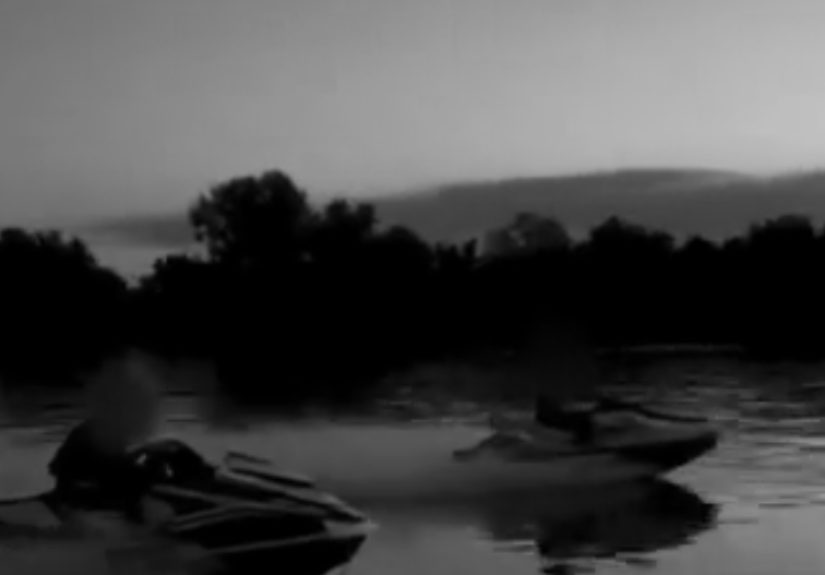
The idea burst into wider public view in 2023, when Ukrainian military intelligence publicized a special operation in occupied Crimea. Officials said units landed on the western side of the peninsula, near places such as Olenivka and Mayak, carried out assigned tasks, and briefly reasserted a visible Ukrainian presence. Later footage and follow-up reporting pushed the story further: Ukrainian special units were shown using jet skis and small boats in a coastal raid that looked less like conventional naval warfare and more like a cross between special operations doctrine and a midnight smuggling run with elite training.
That imagery mattered because it told a story bigger than one raid. It said Crimea was reachable. It said the shoreline was not sealed. It said Russia’s occupation forces could be touched by small, mobile units arriving from the sea. In a war where perception and psychology matter almost as much as terrain, that was a strategic message wrapped in spray and engine noise.
Some reports suggested Ukrainian commandos used jet skis in missions aimed at electronic warfare targets and other Russian positions. Other reporting tied the raids to units from Ukraine’s military intelligence structure, including teams linked to the “Timur” special unit. As with much covert or semi-covert wartime activity, some details remained difficult to verify independently. But the broad picture was consistent: Ukraine was using small maritime craft, including jet skis, to stage provocative, tactically useful operations on or near occupied Crimea.
Jet Skis Were Not Working Alone
Here is the key analytical point: the jet ski was never the star by itself. It was part of a cast.
Ukraine’s Black Sea campaign has relied on multiple layers of pressure. Anti-ship missiles helped sink or damage major Russian assets. Maritime drones attacked ships and infrastructure. Long-range strikes hit headquarters, depots, air defenses, and support facilities. Intelligence operations kept identifying vulnerabilities. Special operations raids signaled reach and tested defenses. Together, these tools produced something larger than any single gadget could deliver: they made Crimea feel exposed.
That matters because Russia’s Black Sea Fleet was once supposed to be an overwhelming advantage. Instead, Ukrainian strikes and drone warfare steadily imposed costs, forced redeployments, and helped push Russian naval activity away from its most prized Crimean bases. The result was not total naval dominance for Ukraine; that would be an exaggeration. But it was a remarkable denial of Russian control by a country that entered the full-scale war with a far smaller conventional navy.
In that environment, jet skis made sense as the commando version of the same idea. Sea drones could ram. Missiles could blast. Jet skis could insert. Different tools, same strategic mood: move fast, hit where the enemy feels secure, and make every Russian assumption expire early.
Why Small Craft Became So Effective
1. They weaponized surprise
Large warships announce themselves. Small craft whisper until they are already ruining someone’s evening. Jet skis are useful because they compress warning time. Defenders have fewer seconds to identify intent, fewer clean engagement windows, and more opportunities to make mistakes.
2. They were cheap enough to be practical
Modern warfare punishes expensive habits. Ukraine has repeatedly found value in lower-cost systems that can be modified, replaced, or risked without strategic heartbreak. Jet skis fit that logic. No admiral holds a press conference because one personal watercraft got scratched. That is partly the point.
3. They matched the geography
Crimea’s coastline, exposed points, and military installations created opportunities for small maritime approaches. Western Crimea in particular offered conditions where quick coastal insertion could be plausible for a raiding force willing to accept real risk.
4. They amplified psychological pressure
Military systems are built to stop what commanders think the enemy will do. Ukraine kept doing things that felt slightly rude to the rulebook. A fleet worried about missiles now had to worry about sea drones. A coastline worried about larger boats now had to worry about jet skis carrying commandos. Defenders hate surprise almost as much as they hate paperwork, and Ukraine gave them both.
Russia’s Problem: Defend Everything, Everywhere, All at Once
Once Ukraine proved that Crimea could be harassed from multiple directions, Russia had to spend resources hardening defenses. Harbor barriers, patrols, surveillance, dispersal, camouflage, and more aggressive force protection all became part of the picture. That response was rational, but it was also expensive and reactive. Every extra layer of defense is a confession that the previous layer was not enough.
And that is where the jet ski story becomes strategically interesting. A small raiding platform can force a larger power into broad defensive spending. You do not need to sink a cruiser every week to shape the battlespace. Sometimes all you need to do is create enough risk that the enemy moves ships, shifts assets, closes gaps, reroutes logistics, and loses confidence. Ukraine’s wider Black Sea campaign has done exactly that, and the commandos on jet skis became one of the most memorable symbols of the trend.
The image also cut against a favorite old assumption about power: that control belongs to the side with the biggest navy. In the Black Sea, Ukraine has repeatedly shown that control can also be contested by intelligence, ingenuity, and cheap systems used with terrifying creativity.
What It Means in 2026
Even now, the significance of those raids has not faded. Ukraine’s maritime war has evolved rapidly, with sea drones growing longer-range, heavier-payload, and more versatile. But the original lesson still stands. Small, fast systems can open doors for larger operational effects. The jet ski raids helped demonstrate a method: probe the Crimean coast, unsettle Russian defenders, and prove that the peninsula is not untouchable.
That lesson has outlived the novelty. Today, Crimea remains central to the military and political contest over the Black Sea. Ukraine continues to treat maritime innovation as a strategic equalizer, while Russia continues trying to protect ships, ports, and approaches that once seemed secure. In that sense, the jet ski was not just a quirky wartime improvisation. It was an early chapter in a broader rewrite of naval warfare, one in which agility often beats grandeur and the side with fewer traditional assets can still force the side with more to retreat, harden, and adapt.
So yes, jet skis may sound like an odd way to write military history. But that is exactly why they worked so well as a symbol. They captured the essence of Ukraine’s Black Sea approach: practical, audacious, low-cost, and deeply irritating to a larger opponent. The Russian Black Sea Fleet expected to dominate. Instead, it found itself living in a world where the shoreline might produce missiles, drones, or commandos on personal watercraft. That is not just embarrassing. It is strategically corrosive.
And that is why the jet ski belongs in the story of Crimea. Not because it replaced destroyers or submarines. Not because it won the war alone. But because it embodied the kind of warfare Ukraine has used with increasing skill: asymmetric, improvisational, and sharp enough to turn a recreational machine into a military headache.
Extended Section: The Human Experience Behind the Jet Ski Raids
Behind the viral clips and catchy headlines, the experience of these raids was almost certainly less “action movie” and more “controlled misery with a mission.” That matters, because the technology tells only half the story. The other half is what it asks from the people riding it.
Imagine the practical reality. Night over the Black Sea is not a friendly setting. It is cold, dark, wet, and disorienting. Distance is hard to judge. A shoreline can look close and impossibly far at the same time. Every engine vibration feels louder than it probably is. Every change in wave pattern can make a small craft buck, slam, or drift at exactly the wrong moment. A jet ski is fast, but it is also physically punishing over water at night, especially when the rider is carrying weapons, protective gear, communications equipment, and the knowledge that nobody on the shore is there to offer directions and hot coffee.
Then there is the mental load. Coastal raid teams are not just trying to arrive; they are trying to arrive on time, in formation, at the right landing point, while preserving surprise. They have to monitor navigation, spacing, speed, and the possibility of observation. If there is supporting intelligence, they are translating that into split-second decisions on the water. If there is incoming fire, or even the suspicion of it, small mistakes become enormous very quickly. There is not much room for drama. Professionalism is the drama.
What makes the jet ski experience especially intense is exposure. Operators are not tucked inside armored hulls. They are out in the elements, balancing speed with silence and aggression with control. Spray reduces visibility. Darkness distorts shapes. Fatigue matters. Hands go numb. Muscles tighten. A landing that sounds simple in a briefing can become complicated because a beach is steeper than expected, the surf is rougher, or the shoreline is more exposed than imagery suggested. Even getting off the craft cleanly becomes part of the mission.
And once ashore, the pressure hardly eases. Raid teams move with the clock running. The goal is not to linger. It is to complete a defined task and get back out before the defender can concentrate force. That means speed, discipline, and nerves strong enough to function under uncertainty. If the sea insertion worked, the extraction still has to work too. Many missions in war are remembered for the strike itself; operators often remember the return, because the return is when fatigue, weather, and enemy reaction all begin arguing at once.
There is also the emotional dimension. These missions to Crimea were not random stunts. For Ukrainians, Crimea is politically, historically, and emotionally charged territory. Reaching that coast carries symbolic weight. Planting a flag, hitting a target, or even proving access can matter beyond the immediate tactical result. That does not make the operators sentimental in the moment. It does, however, help explain why these raids resonated so widely. They were about capability, but also about presence: proof that occupation did not equal permanence.
So when people remember the jet skis, it is worth remembering the riders too. The real story is not that a recreational machine showed up in war. The real story is that highly trained people turned a humble, unlikely platform into a serious operational tool under some of the most demanding conditions imaginable. That combination of ingenuity and human endurance is what made the raids memorable. The jet skis were fast. The people on them were the weapon.
Conclusion
Jet skis did not become Ukraine’s “secret weapon” because they were glamorous. They became important because they were useful. In the fight over Crimea, usefulness has often beaten tradition. Small craft, smart planning, and special operations daring helped Ukraine show that the peninsula could be reached, challenged, and psychologically unsettled. In a war that has repeatedly rewarded adaptation over orthodoxy, the jet ski became a fitting icon: strange, nimble, inexpensive, and unexpectedly effective.
That is the larger lesson. Modern conflict does not always belong to the side with the biggest platform. Sometimes it belongs to the side that can combine modest tools with bold thinking and exact timing. Ukraine’s commando war on Crimea made that painfully clear. And somewhere in the spray, engine noise, and darkness, the jet ski earned its place in military history.