Table of Contents >> Show >> Hide
- What Is a Battalion Tactical Group?
- Where the BTG Came From
- What a BTG Usually Includes
- How BTGs Were Supposed to Work
- Why the BTG Looked Good on Paper
- Why BTGs Struggled in Ukraine
- The Gap Between Official Numbers and Real Combat Power
- How Russia Adapted After the Early Failures
- What the BTG Really Teaches Us
- Conclusion
- Experience and Perspective: Watching the BTG Go from Buzzword to Battlefield Lesson
If military organizations had dating profiles, Russia’s Battalion Tactical Group, or BTG, would have described itself as “flexible, heavily armed, ready to move fast, and maybe a little too confident.” For years, the BTG was treated as one of the signature features of Russia’s post-Soviet military reform: a compact combined-arms formation designed to deploy quickly, hit hard, and operate with more independence than a plain old battalion.
On paper, that sounded impressive. In practice, especially during Russia’s full-scale invasion of Ukraine, the BTG became one of the most debated military concepts of the war. Analysts discovered that the formation was not exactly fake, but it was often misunderstood, sometimes overstated, and frequently less formidable than the brochure version. The result is that “BTG” went from sounding like a sleek military innovation to feeling more like a cautionary tale about structure, manpower, logistics, and the difference between a PowerPoint concept and a battlefield reality.
So how do Russia’s Battalion Tactical Groups actually work? The short version is this: a BTG is a task-organized combined-arms unit built around a maneuver battalion, then reinforced with artillery, air defense, engineers, reconnaissance, electronic warfare, and logistics support. It is designed to be more self-contained than a normal battalion, but smaller and faster than a full brigade or regiment. Think of it as a battalion that raided the supply closet and borrowed every useful capability it could find.
What Is a Battalion Tactical Group?
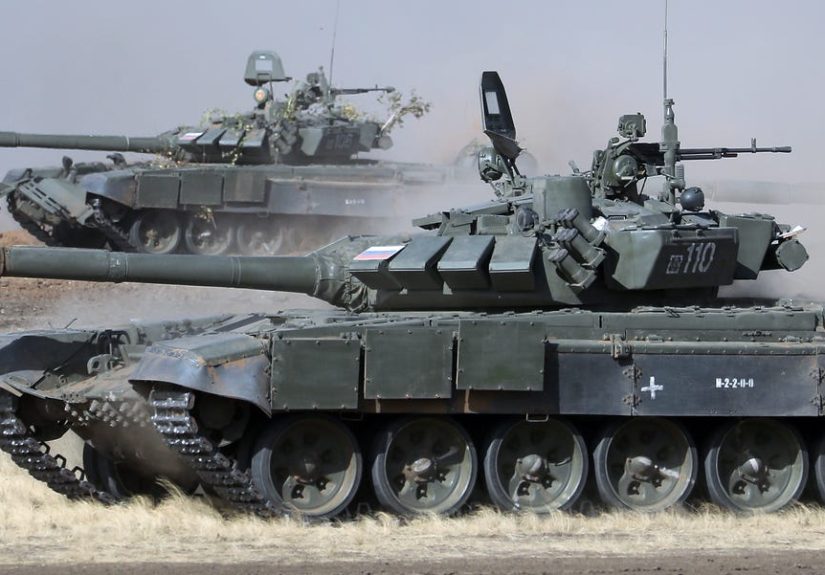
A Battalion Tactical Group is not a fixed, universal unit with one exact blueprint. That is the first thing to understand. It is a task-organized formation built from a larger parent unit, usually a brigade or regiment. At its core sits either a motor rifle battalion or a tank battalion. Around that core, the Russian military attaches extra capabilities so the group can fight as a mini combined-arms team.
This is what made the BTG attractive to Russian planners. Instead of moving an entire brigade every time a crisis erupted, commanders could deploy a smaller, supposedly high-readiness package. The BTG became a yardstick for readiness because it represented the kind of formation Russia believed it could field on short notice, using contract soldiers, officers, and critical enablers rather than waiting for a bigger mobilization machine to wake up, stretch, and find its boots.
Where the BTG Came From
The BTG concept did not appear out of thin air. Russia’s military reforms after the 2008 war with Georgia pushed hard for higher readiness, quicker deployment, and more practical fighting formations. The older mobilization-heavy model was too slow and too clumsy for the kinds of regional conflicts Moscow expected to face along its periphery.
Over time, Russian planners leaned into the idea that brigades and regiments should be able to generate battalion-sized combined-arms packages. Official statements before the 2022 invasion claimed growing numbers of available BTGs, with the figure rising substantially from the mid-2010s into 2021. That growth helped create an image of a force that was modern, ready, and scalable. It also created a problem: counting BTGs is easier than fully manning them.
In other words, the BTG was partly an operational tool and partly a readiness metric. That dual role looked neat in theory. It also invited inflated assumptions, because a large number of nominal BTGs did not always translate into a large number of fully manned, fully effective combat formations.
What a BTG Usually Includes
Although no two BTGs are perfectly identical, most were expected to include a familiar menu of capabilities:
1. A Maneuver Core
The centerpiece is usually a motor rifle battalion or tank battalion. This provides the main combat punch and determines whether the BTG is more infantry-heavy or armor-heavy. In theory, this core is the formation’s engine. In practice, that engine often ran with fewer actual infantry than outsiders assumed.
2. Artillery
Artillery is where the BTG starts looking very Russian. These groups often receive attached tube artillery, mortars, and sometimes rockets from higher formations. Russian doctrine traditionally places enormous emphasis on firepower, and the BTG was meant to deliver that firepower in a compact package. If the BTG had a favorite love language, it was definitely “indirect fires.”
3. Air Defense
Short-range air defense assets are commonly attached as well. That gives the BTG some ability to protect itself from aircraft, helicopters, and certain aerial threats. Again, the goal is to make the formation less dependent on outside help for immediate battlefield survival.
4. Engineers, Reconnaissance, and Electronic Warfare
Engineers help with obstacles, mobility, and survivability. Reconnaissance elements help the group see the battlefield earlier. Electronic warfare units can interfere with communications or sensing. These attachments matter because the BTG is supposed to function as a real combined-arms team, not just a stack of armored vehicles hoping the situation becomes someone else’s problem.
5. Logistics and Maintenance
A BTG also needs fuel, ammunition, vehicle recovery, maintenance, food, and transport. This is less glamorous than tanks and artillery, but it is the part that decides whether a tactical concept survives first contact with distance, mud, and physics. Russia’s BTGs were often described as lethal in concentrated action, yet their support structure was much thinner than that of many Western counterparts.
How BTGs Were Supposed to Work
In theory, the BTG offered Russia a practical answer to modern limited war. A brigade or regiment could generate a high-readiness formation, attach the right support, and send it into action quickly. The group would use reconnaissance to locate threats, artillery to soften or suppress them, armor and infantry to maneuver, and air defense plus electronic warfare to reduce vulnerabilities. Because the BTG brought multiple capabilities under one roof, it looked agile, professional, and dangerous.
This approach made particular sense in smaller or more localized operations, especially near Russia’s borders, where support from higher headquarters and fixed supply networks could help compensate for the BTG’s internal limitations. A BTG did not need to be everything everywhere all at once. It just needed to be ready, concentrated, and backed by the larger Russian system.
That last phrase is doing a lot of work. Once the formation had to sustain high-tempo offensive operations across broad fronts, the neat little logic of the BTG started fraying at the edges.
Why the BTG Looked Good on Paper
The BTG concept had real strengths. First, it encouraged combined-arms integration at a smaller level. Second, it let Russia deploy forces more quickly than a slower mobilization model would allow. Third, it matched the Russian military’s long-standing emphasis on fires, air defense, and layered support.
It also fit Russia’s manpower realities before the full-scale war. A fully professional force was expensive and difficult to sustain, but the BTG model allowed Russia to concentrate contract soldiers and officers in selected formations while leaving less-ready elements elsewhere. That made the ready units look sharper than the force as a whole.
Analysts also noted that Russia invested in training centers meant to provide advanced combined-arms training for BTGs and similar groupings. In other words, the concept was not imaginary. It was practiced, refined, and embedded in Russian force planning. The problem is that a formation can be real, trained, and still not be the right tool for a giant war.
Why BTGs Struggled in Ukraine
The biggest problem was infantry. Many BTGs were not as large as the widely repeated 700-to-900-soldier estimate suggested. Some were much smaller in practice, and many were heavily weighted toward armor, artillery, and enablers rather than dismounted infantry. That left them short of the very people needed to clear terrain on foot, protect vehicles in close environments, and hold what they captured.
This weakness mattered immediately. Armored vehicles without enough infantry support are vulnerable in urban areas, wooded terrain, villages, and ambush-heavy environments. During the early phases of the invasion, Russian formations often showed exactly that vulnerability. A lot of metal, not enough boots. It turns out the battlefield is rude like that.
The second major problem was logistics. Russian support structures were built more thinly than many outside observers realized. BTGs could function when concentrated and operating with relatively predictable supply lines. But rapid advances over long distances, especially in the opening drive toward Kyiv, exposed how fragile that system could be. Fuel, recovery, repair, and resupply became bottlenecks. When logistics stumble, even the fanciest tactical unit becomes an expensive way to park vehicles in awkward places.
Third, command and control became difficult. A BTG includes many attachments, which sounds great until a small headquarters has to coordinate them under combat pressure. Analysts pointed out that these formations could be top-heavy in some ways and underpowered in others, with too many moving parts for their staff structures to manage efficiently in large-scale, fast-changing operations.
Fourth, scale mattered. Russia’s 2022 invasion was not a tidy local war. It was a broad, sustained, high-intensity campaign requiring large formations, enduring logistics, replacements, reserves, and the ability to seize and hold large amounts of territory. The BTG model was better suited to rapid, limited operations than to grinding theater-scale war. Once attrition rose and fronts widened, the structure that once looked flexible started looking brittle.
The Gap Between Official Numbers and Real Combat Power
One reason the BTG story confused so many outsiders is that the official count of BTGs sounded impressive. But a nominal BTG is not the same thing as a fully manned, combat-effective BTG. Some units appear to have been understrength before they crossed the border. Others had enough equipment but not enough personnel in maneuver elements. In several cases, the group existed more cleanly in reporting than in battlefield muscle.
That mismatch helps explain why counting Russia’s BTGs was never the same as counting its usable ground combat power. A formation with artillery, armor, and vehicles can look formidable in an order of battle chart. But if the infantry element is thin, the logistics are fragile, and the command system is strained, the chart is lying by omission.
How Russia Adapted After the Early Failures
Russia did not simply cling to the BTG model forever like a dad refusing to update his phone. Over time, the Russian military adapted. Analysts increasingly observed a shift away from BTGs as the core frame for offensive ground operations. Russia relied more on mobilized manpower, larger parent formations, defensive belts, and smaller assault elements tailored to the realities of drone-heavy, surveillance-saturated combat.
By 2024 and 2025, outside assessments highlighted Russian experimentation with assault companies and assault groups that included reconnaissance, fire support, and unmanned aerial system elements. That does not mean the BTG concept vanished overnight. It means the war forced a reappraisal. In a battlefield dominated by persistent surveillance, attrition, and precision fires, battalion-sized combined-arms packages were often too small for some tasks and too complicated for others.
Put differently, the BTG was not useless. It was just not a magic trick. It could still provide combined-arms capability, especially in certain contexts, but it no longer looked like the all-purpose answer many had assumed before 2022.
What the BTG Really Teaches Us
The real lesson of Russia’s Battalion Tactical Groups is not simply that they failed. It is that force design is always a gamble. The BTG reflected smart instincts: readiness matters, combined arms matter, deployability matters. But it also reflected dangerous shortcuts: concentrated professionalism can hide broader manpower weakness, firepower can mask infantry shortages, and readiness metrics can become public-relations trophies if nobody asks whether the units are actually built to fight a large war.
In that sense, the BTG is one of the defining military stories of the Ukraine war. It shows how an organization can look streamlined and modern while still carrying structural vulnerabilities into battle. It shows why logistics and manpower are not side issues. And it shows that a unit designed to strike hard is not automatically a unit designed to endure.
Conclusion
Russia’s Battalion Tactical Groups were designed as fast, combined-arms formations built around a maneuver battalion and reinforced with artillery, air defense, engineers, reconnaissance, electronic warfare, and support assets. Their purpose was to give the Russian military a high-readiness package that could move quickly and punch above the weight of a standard battalion.
That design had real logic behind it. But the full-scale invasion of Ukraine exposed its limits. Many BTGs were understrength in infantry, dependent on thin logistics, and too fragile for sustained large-scale warfare. What once looked like an elegant formula for modern combat turned out to be much better suited to concentrated, limited operations than to a grinding war of distance, attrition, and adaptation.
So if you want the simplest answer to how Russia’s Battalion Tactical Groups work, here it is: they work best as compact combined-arms formations supported by a larger system. When the larger system cannot keep up, the BTG stops looking like a battlefield cheat code and starts looking like a very expensive lesson.
Experience and Perspective: Watching the BTG Go from Buzzword to Battlefield Lesson
One of the most interesting experiences surrounding the topic of Russia’s Battalion Tactical Groups is the way the term itself changed in public discussion. Before the full-scale invasion of Ukraine, “BTG” often sounded like a polished piece of military jargon that signaled efficiency, professionalism, and reform. It was one of those phrases that made defense analysts, reporters, and casual readers pause and think, “Okay, that sounds serious.” And to be fair, it was serious. The concept reflected years of Russian reform efforts, real training, real investment, and a real attempt to solve readiness problems inside the Russian armed forces.
But the experience of following the war showed how dangerous it can be to fall in love with labels. As the invasion unfolded, the BTG turned from a tidy analytical unit into something messier. Suddenly, the question was no longer “How many BTGs does Russia have?” but “How strong are they really?” That shift mattered. It reminded observers that military formations are not just names on a chart. They are collections of people, vehicles, supplies, staffs, habits, and limitations, all of which only reveal themselves under pressure.
Another striking experience was watching how quickly battlefield reality humbled assumptions. Many early conversations about the Russian military focused on equipment counts, official readiness claims, and structural reforms. Then combat exposed the fine print. A BTG with attached artillery and armored vehicles looked intimidating until it had to move deep into hostile territory, coordinate multiple functions at once, protect itself in restrictive terrain, and stay supplied over time. The broader lesson was almost embarrassingly human: no matter how modern a force sounds, it still needs food, fuel, repair crews, recoverable vehicles, and enough infantry to get out of the armored box and deal with the world face-to-face.
The public discussion also revealed how military concepts can become victims of their own reputation. Once the BTG was recognized as a core piece of Russia’s force design, it became tempting to treat it like a universal measuring stick. But that led to oversimplification. Some people treated every Russian ground action as if a BTG was the main operating lens. Others assumed the BTG itself explained every success or failure. The more useful experience was learning to see it as one piece of a larger puzzle: personnel quality, command culture, logistics, intelligence, reserves, terrain, adaptation, and political assumptions all mattered too.
In the end, studying how Russia’s Battalion Tactical Groups work is valuable not just because it explains one military structure, but because it teaches a broader habit of analysis. It encourages readers to ask better questions. What is the official design? What is the real manning level? What conditions was the unit built for? What happens when those conditions disappear? Those questions are useful far beyond Russia and far beyond this war. They are the difference between being impressed by a concept and actually understanding it.