Table of Contents >> Show >> Hide
- What Is Isamu Noguchi's Ceiling Lamp Model L5?
- Who Was Isamu Noguchi?
- The Story Behind the Akari Light Sculptures
- Design Features of the Akari L5 Ceiling Lamp
- Why the Model L5 Still Feels Modern
- How to Style Isamu Noguchi's Ceiling Lamp Model L5
- Light Quality: The Real Magic of the L5
- Buying Tips for the Akari L5
- Care and Maintenance
- Why Designers Love Noguchi Ceiling Lamps
- Is the Akari L5 Worth It?
- Real-World Experience: Living With Isamu Noguchi's Ceiling Lamp Model L5
- SEO Metadata
Some lamps light a room. Isamu Noguchi’s Ceiling Lamp Model L5 changes the room’s mood, posture, and possibly its confidence level. It is not the loudest object in an interior, and that is exactly the point. The Akari L5, as it is commonly known, belongs to Noguchi’s legendary Akari Light Sculptures, a family of handmade paper lamps that blur the line between lighting, sculpture, craft, and everyday living.
At first glance, the L5 appears almost impossibly simple: a tall, softly glowing paper form suspended from above. But simplicity, when Noguchi handled it, was never lazy. It was edited, tested, balanced, and made poetic. The lamp is built from handmade washi paper, bamboo ribbing, and a metal frame, materials that sound humble until the light comes on. Then the whole thing becomes a floating column of warmth, like the moon decided to rent an apartment and bring excellent taste with it.
For homeowners, collectors, designers, and lovers of mid-century modern lighting, Isamu Noguchi’s Ceiling Lamp Model L5 is more than a decorative fixture. It is a lesson in how an object can be practical without becoming boring, artistic without becoming impossible to live with, and historically important without acting like it needs its own security guard.
What Is Isamu Noguchi’s Ceiling Lamp Model L5?
Isamu Noguchi’s Ceiling Lamp Model L5 is a ceiling-mounted Akari light sculpture designed within Noguchi’s broader Akari series. The Akari collection began in the early 1950s after Noguchi visited Gifu, Japan, a city known for traditional lantern making. Rather than treating the lantern as a nostalgic relic, Noguchi saw an opportunity to modernize the form for electric lighting while preserving the beauty of Japanese craft.
The L5 is one of the taller, more vertical Akari ceiling lamps. Official contemporary listings commonly describe it as approximately 24 inches wide and 61 inches high, while some vintage and auction references list comparable dimensions in centimeters, often around 148 to 155 centimeters tall. In plain English: this is not a tiny pendant that politely disappears over a breakfast nook. The L5 has presence. It hangs like a soft architectural gesture, creating a visual anchor without the heaviness of metal chandeliers or glass globes.
The Meaning of “Akari”
The word “Akari” means light in Japanese, but Noguchi loved that the term could suggest both illumination and lightness. That double meaning is essential to understanding the L5. It gives off light, yes, but it also appears light in weight, light in spirit, and light in the way it occupies space. A large object that does not feel bulky is a rare design achievement. The L5 manages it with quiet confidence.
Who Was Isamu Noguchi?
Isamu Noguchi was a Japanese American artist, sculptor, and designer whose career stretched across sculpture, furniture, stage design, gardens, public spaces, and lighting. Born in Los Angeles in 1904 and shaped by both American and Japanese cultural influences, Noguchi developed a creative language that refused to stay in one category. He did not treat “art” and “design” as separate islands with customs officers checking passports at the border.
That cross-disciplinary approach is why his work still feels modern. His famous coffee table, public sculptures, stage sets for dancers, playground concepts, and Akari lamps all share a belief that form should be experienced physically. A Noguchi object is rarely just something to look at. It asks you to move around it, live with it, and notice how it changes the space around you.
The Akari lamps are among his most approachable works because they bring sculpture into the home. Not everyone can install a monumental stone garden in the living room. Most people, however, can understand the emotional upgrade of a beautifully glowing paper lamp.
The Story Behind the Akari Light Sculptures
The Akari story begins in Gifu, Japan, where paper lantern making had deep roots. Traditional Gifu lanterns used bamboo structures and handmade paper, often illuminated by candles. By the mid-twentieth century, the craft faced pressure from changing technology and consumer habits. Noguchi’s response was not to imitate the past exactly, but to carry it forward.
He adapted the lantern for electric bulbs and transformed it into what he called a light sculpture. That phrase matters. The Akari lamps are functional fixtures, but they are also sculptural objects. The bulb is not simply hidden inside a shade; it activates the entire form. The washi paper diffuses the light, the bamboo ribbing draws subtle lines across the surface, and the whole lamp becomes an atmospheric presence.
The Model L5 sits beautifully within this history. Its tall, elongated shape emphasizes vertical rhythm. It feels less like a conventional lampshade and more like a suspended volume of warm air. It is a pendant, but it behaves like a sculpture.
Design Features of the Akari L5 Ceiling Lamp
Handmade Washi Paper
The shade of the L5 is made from handmade washi paper. Washi is valued for its strength, texture, and ability to diffuse light softly. Unlike glossy plastic or harsh glass, washi gives light a human quality. It softens edges, reduces glare, and creates a glow that feels comfortable rather than clinical. It is the visual equivalent of lowering your voice in a beautiful room.
Bamboo Ribbing
The bamboo ribbing gives the lamp its structure and rhythm. These ribs are not merely technical supports; they are part of the visual identity of the piece. When illuminated, the lines of the bamboo become delicate shadows, giving the surface depth and movement. The L5’s tall form makes this ribbing especially noticeable, almost like the lamp is breathing in slow vertical lines.
Metal Frame
The internal metal frame provides support and helps the lamp maintain its shape. This combination of natural and industrial materials is classic Noguchi: paper, bamboo, and metal working together without one material bullying the others. The result is durable enough for use, but still visually fragile in the best possible way.
Authentic Akari Markings
Authentic Akari lamps are associated with the red sun-and-moon logo designed by Noguchi. Contemporary models may also include the “I. Noguchi” signature. For buyers, these markings matter because Akari lamps are widely imitated. A paper lantern can be inexpensive and pleasant, but an authentic Akari is a specific design object with a documented artistic lineage.
Why the Model L5 Still Feels Modern
The funny thing about good design is that it often looks obvious after someone brilliant invents it. The L5 feels natural in contemporary interiors because it solves several problems at once. It provides ambient light, adds vertical interest, softens architectural lines, and introduces organic material into rooms that may otherwise be dominated by drywall, screens, and suspiciously sharp coffee table corners.
Its form also fits several popular interior styles without looking like it is trying too hard. In a minimalist room, it adds warmth. In a Japandi interior, it feels completely at home. In a mid-century modern space, it connects beautifully with wood, stone, low furniture, and quiet geometry. In an eclectic apartment, it calms the visual noise. The L5 is not a diva, but it is definitely not background furniture either.
How to Style Isamu Noguchi’s Ceiling Lamp Model L5
Over a Dining Table
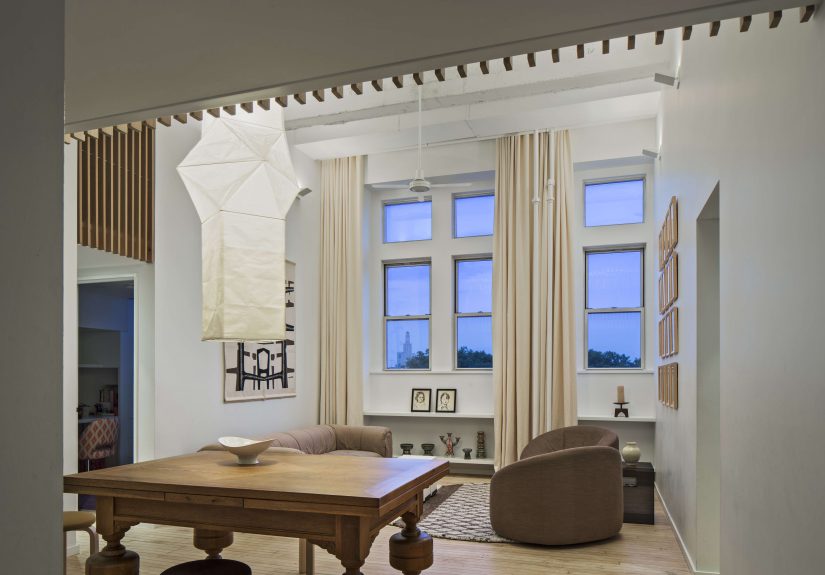
The L5 can work beautifully above a dining table, especially in a room with enough ceiling height to let the lamp hang gracefully. Because it is tall, proportion matters. Over a long wooden table, the L5 creates a warm central glow that feels intimate without being dim. Pair it with simple tableware, natural textiles, and chairs with clean silhouettes. The lamp will do the poetic heavy lifting.
In a Living Room Corner
Suspended in a corner, the L5 can act almost like a vertical floor lamp without taking up floor space. This is especially useful in smaller homes or apartments where every square foot is already negotiating for survival. Hang it near a reading chair, a low sofa, or a quiet corner with books and plants. The result is calm, sculptural, and pleasantly grown-up.
In an Entryway
An entryway is a strong place for the Akari L5 because the lamp creates an immediate sense of atmosphere. Instead of greeting guests with a harsh overhead flush mount that says “dentist waiting room,” the L5 offers a warm, memorable welcome. It sets the tone before anyone has even taken off their shoes.
In a Bedroom
In a bedroom, the L5 can create a restful glow that feels softer than typical ceiling lighting. It works best when paired with additional bedside lamps or wall sconces, allowing the Akari to provide ambient light rather than serving as the only source. Think of it as the room’s mood director, not the entire electrical department.
Light Quality: The Real Magic of the L5
The most important feature of Isamu Noguchi’s Ceiling Lamp Model L5 is not its shape, material, or pedigree. It is the quality of the light. Washi paper transforms electric light into something gentle and atmospheric. It reduces glare and spreads illumination evenly, giving rooms a warm softness that is difficult to achieve with exposed bulbs or metal shades.
For best results, use a warm LED bulb, usually around 2700K, depending on the fixture kit and local electrical requirements. Warm light complements the natural paper and enhances the lamp’s golden glow. Cool white bulbs can make the shade feel flatter and less inviting. In other words, do not invite hospital lighting to a Noguchi party.
Buying Tips for the Akari L5
Because Akari lamps are popular, buyers should pay attention to authenticity, condition, and installation needs. When purchasing a new Model L5, reputable sources typically offer appropriate wiring options, such as hardwire or plug-in kits. For vintage models, inspect the paper carefully for tears, stains, brittle areas, and repairs. Some wear is expected in older paper objects, but structural damage can affect both appearance and value.
Collectors should also look for proper markings, including the red sun-and-moon logo. Auction records and vintage dealers may identify the L5 as part of the Akari series and sometimes reference Ozeki & Co., the long-associated Japanese manufacturer. Documentation, original boxes, or provenance can increase confidence, especially for higher-priced vintage examples.
For everyday homeowners, the most practical buying question is scale. Measure the ceiling height, furniture placement, and viewing angles. The L5 is tall, so it needs space to hang without feeling cramped. When properly scaled, it looks elegant. When squeezed into a low ceiling, it may look like a very refined paper stalactite.
Care and Maintenance
The L5 is beautiful, but it is still made of paper. Treat it with respect. Dust it gently with a feather duster or a very soft cloth. Avoid wet cleaning, harsh chemicals, or aggressive vacuum attachments. Keep it away from damp areas, cooking grease, and places where children, pets, or enthusiastic adults might bump into it.
Installation should be handled carefully, especially for hardwired versions. Because the shade is lightweight and delicate, assembly should be done slowly. This is not the moment to prove how fast you can unpack something. Good design rewards patience.
Why Designers Love Noguchi Ceiling Lamps
Interior designers often gravitate toward Noguchi lamps because they solve a common problem: how to add beauty without clutter. The L5 has volume but not visual heaviness. It fills empty vertical space, yet it remains translucent and breathable. It can make a room feel more intentional without making it feel decorated within an inch of its life.
The lamp also photographs beautifully, which has helped Akari designs remain popular in design magazines, museums, homes, and social media interiors. But its appeal is not only visual. People respond to the glow. A room with an Akari lamp often feels calmer, warmer, and more human. That emotional effect is difficult to fake.
Is the Akari L5 Worth It?
Whether the L5 is “worth it” depends on what you want from lighting. If you only need a cheap fixture to stop you from walking into furniture at night, there are many options. If you want a piece that combines design history, craft, atmosphere, and daily usefulness, the Akari L5 makes a strong case for itself.
It is not merely a lamp shaped by a famous name. It is a carefully developed object from one of the twentieth century’s most influential artist-designers. It brings together traditional Japanese lantern craft, modern electric lighting, and Noguchi’s sculptural imagination. That combination is rare. More importantly, it is livable.
Real-World Experience: Living With Isamu Noguchi’s Ceiling Lamp Model L5
The experience of living with Isamu Noguchi’s Ceiling Lamp Model L5 is less about dramatic first impressions and more about daily atmosphere. The first thing many people notice is scale. Online, the L5 can look delicate and almost modest. In a real room, its vertical presence is much more noticeable. It does not shout, but it absolutely arrives. This makes measuring before buying essential. A room with generous ceiling height allows the lamp to float naturally. In a tighter room, careful placement becomes the difference between “museum-level serenity” and “why is my pendant lamp wearing stilts?”
Once installed, the L5 changes how evening light behaves. During the day, the shade has a quiet handmade texture. It looks soft, fibrous, and architectural. At night, it becomes warmer and more dimensional. The bamboo ribs appear through the paper like gentle lines in a drawing. This is where the lamp earns its reputation. It does not simply illuminate surfaces; it gives the room a slower rhythm. In a living room, it can make ordinary activities feel more intentional: reading, listening to music, talking after dinner, or pretending not to check your phone every six minutes.
In practical use, the L5 works best as ambient lighting rather than task lighting. It is wonderful for mood, conversation, and general glow, but it will not replace a focused desk lamp or under-cabinet kitchen light. This is not a flaw. It is a reminder that rooms need layers. Pair the L5 with a table lamp, wall sconce, or discreet floor lamp, and the space becomes more flexible. You can have soft background light for relaxing and brighter targeted light when you need to read tiny instructions written by someone who apparently hates eyes.
The material also influences how people behave around it. Because the shade is paper, users tend to become more mindful. You do not swing bags near it. You do not install it where a door might hit it. You do not clean it like a ceramic sink. This delicacy is part of its charm. The lamp asks for care, but not fussy devotion. A gentle dusting and a sensible location usually go a long way.
Design-wise, the L5 is surprisingly adaptable. It can soften a modern apartment with concrete floors, add sculptural height to a dining area, or bring calm to a bedroom with natural bedding and wood furniture. It also pairs well with imperfect materials: linen, oak, stone, handmade ceramics, and woven rugs. The lamp does not need a showroom-perfect environment. In fact, it often looks better in a lived-in room, where its handmade warmth can contrast with books, plants, art, and the small chaos of real life.
The most memorable experience is how the lamp seems to make people lower their voices. That may sound dramatic, but good lighting does affect behavior. Harsh overhead lighting makes a room feel temporary. The L5 makes it feel settled. It encourages lingering. It turns a ceiling fixture into a quiet ritual. And that may be Noguchi’s real achievement: he made a lamp that does not merely decorate a home, but helps a home feel inhabited.
Note: This article was created from synthesized museum, design, marketplace, auction, and collection-based information about Isamu Noguchi, the Akari Light Sculptures, and the Model L5 ceiling lamp. Source links are intentionally omitted for publication-ready HTML.