Table of Contents >> Show >> Hide
- Why a Bench-and-Bookcase Breakfast Nook Works So Well
- How I Planned the Space Before Buying Anything
- The Bench: The Quiet Hero of the Whole Setup
- The Bookcase: The Secret Weapon That Made It All Work
- Design Tips That Make the Nook Feel Bigger and Better
- Mistakes to Avoid When Creating a Small Breakfast Nook
- Why This Breakfast Nook Changed the Way I Use My Kitchen
- Final Thoughts
- My Real-Life Experience With the Bench-and-Bookcase Nook
Some people dream of marble islands the size of a bowling lane. I dreamed smaller. Much smaller. I wanted a breakfast nook in a compact kitchen that had zero interest in becoming a café. There was no cute corner booth waiting to happen, no built-in banquette, and definitely no spare square footage lounging around like it paid rent. What I did have was one bench, one bookcase, and a stubborn belief that a tiny kitchen could still feel warm, useful, and a little bit fancy before 9 a.m.
That belief turned out to be right. Creating a storage-saving breakfast nook with just a bench and a bookcase is one of those home ideas that sounds almost too simple, like “just organize your junk drawer” or “just fold the fitted sheet.” But unlike the fitted sheet, this actually works. A bench gives you compact seating without the visual clutter of multiple chairs, and a bookcase pulls double duty as vertical storage, a display moment, and a landing spot for the little kitchen things that usually end up colonizing the countertop.
If you are trying to make a small kitchen, apartment dining area, or awkward empty wall feel intentional, this setup is a smart, flexible solution. It borrows the best parts of a built-in breakfast nook without demanding a renovation budget, custom carpentry, or a weekend that mysteriously stretches into six weeks.
Why a Bench-and-Bookcase Breakfast Nook Works So Well
The magic is in the mix of seating and storage. Traditional dining setups eat up more room than they seem to on paper. Chairs need clearance. They also tend to drift around the room like rebellious teenagers. A bench sits neatly against the wall, keeps the footprint tight, and instantly makes a dining area feel more streamlined. It is one of the easiest ways to carve out a breakfast nook in a small space.
A bookcase, meanwhile, is the overachiever nobody invited but everybody ends up thanking. In a small kitchen nook, it can hold dishes, baskets, cookbooks, linens, candles, small appliances, coffee gear, or the odds and ends that usually have no official address. Some designs even hide clutter behind doors, which is excellent news for anyone whose “minimalist style” is currently being sabotaged by a tangle of charging cords and a rogue waffle maker.
Together, the bench and bookcase create the same cozy logic designers love in banquette seating: more utility, less wasted room, and a stronger sense that this area was planned on purpose. Even better, you do not need a true architectural nook. A blank wall, a window corner, the end of a galley kitchen, or even an underused stretch near the living room can do the job beautifully.
How I Planned the Space Before Buying Anything
Before I brought in a single piece of furniture, I looked at the zone the way a slightly dramatic stage manager looks at an empty set. What needed to happen here besides eating toast? In my case, the answer was a lot. I wanted a place to drink coffee, set down a plate, stash extra kitchen items, and make the room feel less like a functional hallway with appliances.
That is the first step: decide what your breakfast nook needs to do. A good nook is rarely just for breakfast. It often becomes a coffee station, homework perch, laptop spot, reading corner, snack bar, or evening catch-up zone. Once you know the real job description, choosing the right bench and bookcase becomes much easier.
I also measured like my future happiness depended on it, because honestly, it did a little. You want enough room to sit comfortably and enough clearance to move in and out without performing a side-step worthy of a musical. Standard dining proportions matter here. The bench should feel supportive rather than shallow, and the table height should pair comfortably with it. If you are adding cushions, count those in your measurements too, unless you enjoy discovering that your knees now live directly under your chin.
The Bench: The Quiet Hero of the Whole Setup
The bench was the first piece I locked in because it solved the biggest problem fast: seating without bulk. In a small breakfast nook, a bench is often better than chairs because it hugs the wall, keeps sightlines cleaner, and makes the entire area feel less crowded. It also gives the nook that cozy, tucked-in look that regular dining chairs rarely achieve unless they have somehow learned emotional support skills.
For the best result, choose a bench that matches your real life. If you need hidden storage, go for a lift-top bench or one with cubbies underneath. If comfort matters most, look for a padded or upholstered style. If the nook is near a window or gets heavy daily use, a durable finish and easy-to-clean fabric will save you from future regret.
I especially like benches because they make small spaces feel more intentional. A single bench says, “Yes, this is a dining area.” Three mismatched chairs say, “We are all doing our best.” There is nothing wrong with doing your best, but a breakfast nook benefits from a little visual discipline.
What to Store in a Breakfast Nook Bench
If your bench includes storage, treat it like prime real estate. This is the place for table linens, placemats, cloth napkins, candles, spare mugs, kids’ art supplies, board games, charging cords, or the “special occasion” serving pieces that somehow appear twice a year and still demand a permanent home. In a tiny kitchen, even a modest amount of hidden storage can have a shockingly large impact on how calm the room feels.
The Bookcase: The Secret Weapon That Made It All Work
The bookcase is what turned this project from “cute little bench by the wall” into a true storage-saving breakfast nook. It gave the setup height, structure, and purpose. More importantly, it gave the kitchen a place to put things that had previously been freelancing all over the counters.
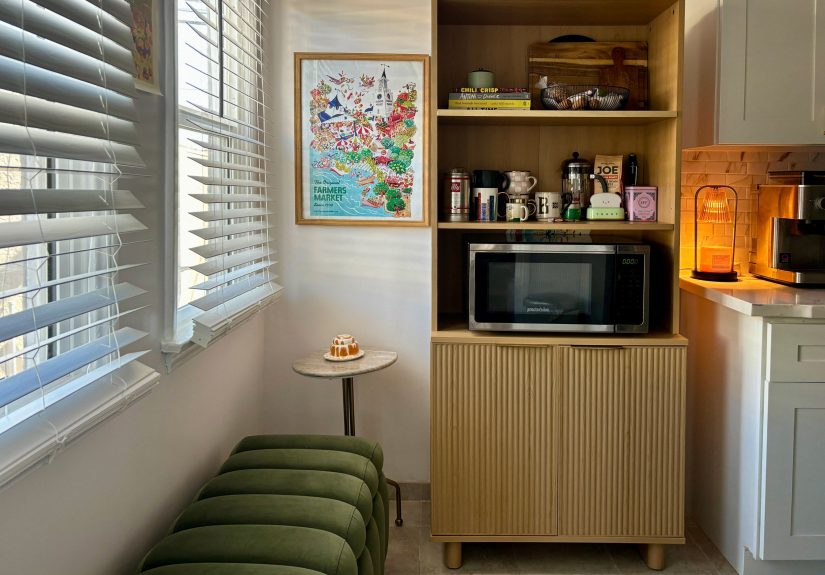
Using a bookcase in a breakfast nook sounds unconventional only until you realize how versatile shelves actually are. Open shelves can display bowls, glassware, cookbooks, baskets, and art. Closed lower storage can hide the less glamorous stuff. A sturdy middle shelf can hold a microwave, coffee station, or bread box. Suddenly, one vertical piece of furniture is doing the work of a pantry cabinet, buffet, display shelf, and clutter bouncer.
That is why this idea is so effective for apartment kitchens and small homes. When floor space is tight, vertical storage matters more. A bookcase uses wall height rather than precious walking space, and when styled thoughtfully, it helps the nook feel layered and finished instead of improvised.
How I Styled the Bookcase Without Making It Look Busy
The trick was balance. I did not want the bookcase to look like a garage sale with better lighting. So I mixed practical items with a few decorative pieces. Baskets hid the messy categories. A stack of cookbooks added warmth. A framed print and a candle kept the nook from feeling too utilitarian. The lower area handled the hardworking items, while the eye-level shelves got the prettier pieces.
That mix matters in a breakfast nook design. If everything is functional, the area can look stiff. If everything is decorative, you have built yourself a very charming storage failure. The sweet spot is a bookcase that works hard but still feels like part of the room’s personality.
Design Tips That Make the Nook Feel Bigger and Better
One reason breakfast nooks are so beloved is that they can transform a leftover corner into a destination. But the styling needs to support the function. I kept the palette warm and cohesive so the bench and bookcase looked connected rather than randomly introduced at a party. Repeating a wood tone, upholstery color, or metal finish helps everything feel intentional.
Lighting also matters more than people think. A nook feels special when it has its own visual identity, and a small pendant, sconce, or nearby lamp can create that. If your nook sits near a window, even better. Natural light makes a breakfast nook feel welcoming and helps define it as its own zone.
Soft touches go a long way too. Seat cushions, throw pillows, textured baskets, and art make the space feel lived-in and comfortable. But do not overstuff the bench with pillows unless your goal is to have your coffee on one side of the room and your lumbar support on the other.
Mistakes to Avoid When Creating a Small Breakfast Nook
The first mistake is picking a bench that is too deep or too bulky for the space. In a compact kitchen, slim proportions usually win. The second is forgetting circulation. A nook should feel cozy, not like a puzzle you have to solve every time you sit down.
Another common misstep is treating the bookcase like a dumping ground. Storage works best when it is edited. Use baskets, trays, and zones so the shelves feel calm rather than chaotic. And do not ignore the wall. A simple piece of art, a mirror, or a small shelf can help anchor the nook and make it feel complete.
Finally, avoid assuming you need a full built-in banquette to get the look. Built-ins are lovely, but freestanding solutions can be just as charming and often much easier to change later. That flexibility is part of the appeal. If your needs shift, the bench and bookcase can move with you, which is more than most custom cabinetry can say.
Why This Breakfast Nook Changed the Way I Use My Kitchen
Before this setup, my kitchen was a place I passed through. I made coffee, hunted for a clear patch of counter, and left. After the bench and bookcase moved in, the room started behaving differently. It became a place to pause. Breakfast stopped feeling like an errand. The nook gave the kitchen a center of gravity, even though it took up very little room.
That is the real value of a storage-saving breakfast nook. It is not just about gaining a seat or finding a home for your microwave. It is about making a small space feel more generous, more organized, and more enjoyable to live in every day. Good design does not always mean adding more. Sometimes it means asking a bench and a bookcase to pull off a tiny miracle and then standing back while they absolutely nail it.
Final Thoughts
If you have been waiting for permission to create a breakfast nook without tearing out walls or commissioning custom millwork, this is it. A bench and a bookcase are enough to build a nook that feels cozy, practical, and surprisingly polished. It can hold breakfast essentials, clear clutter, add seating, and turn an ignored corner into one of the best spots in the house.
And honestly, that is what makes this idea so satisfying. It is affordable compared with a renovation, flexible enough for renters and small homes, and stylish enough that nobody will suspect the whole thing began with a simple question: what if I stopped thinking like a kitchen and started thinking like a very determined storage strategist?
My Real-Life Experience With the Bench-and-Bookcase Nook
Living with this breakfast nook has been the most convincing part of the whole experiment. At first, I thought I was creating a prettier place to drink coffee and maybe eat a piece of toast while pretending I had my life together. What actually happened was bigger. The nook changed the rhythm of the room. It made the kitchen feel less temporary and more personal, like it finally had a spot designed for lingering instead of just cooking and cleaning.
The bench became my favorite kind of practical luxury. It is compact, but it does not feel skimpy. It gives me a place to sit while my coffee brews, sort groceries, answer messages, or simply stare into space before the day starts demanding adult behavior. On busy mornings, that seat matters more than I expected. It turns a rushed routine into something calmer, even if breakfast is still just yogurt and a banana eaten with the emotional intensity of a hostage negotiation.
The bookcase made an even bigger difference than I expected. Before, my counters were constantly crowded with appliances, mugs, jars, and those random kitchen extras that multiply at night. Once the bookcase was in place, everything suddenly had a home. The lower shelves handled the bulky items. The middle section became a perfect zone for everyday essentials. The upper shelves gave me room for the things that make a kitchen feel human rather than purely functional, like a framed print, a candle, and a small stack of cookbooks I genuinely use and not just the ones I keep to look aspirational.
What surprised me most was how often I use the nook for things that have nothing to do with breakfast. It has become a lunch spot, a work perch, a reading corner, and the place where I unload my brain for ten quiet minutes at the end of the day. Sometimes I sit there with coffee. Sometimes I sit there with leftovers. Sometimes I sit there with absolutely no plan except to enjoy the fact that one small corner of my home finally works harder than I do.
I also learned that storage feels different when it is built around your habits instead of generic categories. I do not need a formal dining room system. I need easy access to placemats, napkins, tea, candles, and the things I reach for all the time. Once those items were close by, the entire kitchen ran better. Less shuffling. Less visual noise. Less opening three cabinets to find one thing that should have had a proper place all along.
If I were doing it again, I would still choose the same formula: one comfortable bench, one hardworking bookcase, and a little restraint when styling it. That combination gave me the coziness of a breakfast nook, the efficiency of extra storage, and the flexibility of furniture I can move or rework later. For a project that looked simple on the surface, it ended up improving the room in ways that feel surprisingly big. Not bad for two pieces of furniture and a dream that started with nowhere to put my coffee.