Table of Contents >> Show >> Hide
- Why a Wood Privacy Screen Is Such a Smart DIY Project
- Before You Build: Plan Like a Calm Genius, Not a Panicked Weekend Warrior
- Best Materials for DIY Wood Privacy Screens
- Tools You Will Likely Need
- How to Build Homemade Wood Privacy Screens DIY: Step by Step
- Design Ideas That Make a Basic Screen Look Custom
- Common DIY Mistakes to Avoid
- How to Keep Your DIY Wood Privacy Screen Looking Good
- What the Experience of Building One Is Really Like
- Final Thoughts
If your backyard feels less like a retreat and more like a stage, a homemade wood privacy screen can fix that fast. Whether you want to block a nosy neighbor’s second-story view, hide an ugly air-conditioning unit, frame a hot tub, or create a calmer patio corner, a DIY wood privacy screen is one of the smartest weekend-upgrade projects you can build. It gives you privacy without making your yard feel boxed in, and it looks far more intentional than dragging random planters around and hoping for the best.
The beauty of this project is that it can be customized for almost any outdoor space. You can build a freestanding screen for a patio, a deck-mounted panel for a seating area, or a screen with planters attached for a softer, greener look. You can also choose between tight horizontal slats for a modern vibe, wider boards for a bold architectural look, or lattice-style inserts if you want airflow and filtered light. In other words, this is not a one-size-fits-all fence impersonator. It is a flexible, stylish backyard upgrade that can be as simple or as polished as your skills and budget allow.
In this guide, you will learn how to build homemade wood privacy screens DIY-style, from planning and materials to assembly, finishing, and real-world lessons that can save you time, money, and one deeply regrettable extra trip to the hardware store.
Why a Wood Privacy Screen Is Such a Smart DIY Project
A full privacy fence is great, but it is also a bigger commitment in cost, labor, and rules. A wood privacy screen is smaller, more flexible, and usually easier to get right. It works especially well when you only need privacy in one specific zone, like next to a grill station, behind a lounge chair setup, beside a deck, or around an outdoor shower.
Wood also has a warmth that metal and vinyl often lack. Cedar and redwood bring natural character, pressure-treated lumber is budget-friendly, and slatted designs look clean without feeling harsh. Unlike a solid wall, a slat screen can filter views while still letting in breeze and light. That balance matters. Total privacy is nice, but so is not accidentally creating a giant wind trap that turns your patio umbrella into a weather event.
Another reason this project is popular: it scales well. You can build one narrow panel in an afternoon or create a full backyard privacy zone by repeating the same design across multiple sections. Once you understand the basic structure, the rest becomes a copy-and-improve process.
Before You Build: Plan Like a Calm Genius, Not a Panicked Weekend Warrior
Before cutting lumber, decide exactly what your privacy screen needs to do. Is it meant to block a direct sightline from one side? Create a backdrop? Hide mechanical equipment? Add shade as well as privacy? Your answer affects the height, width, spacing, and location.
Choose the right location
Stand or sit where you normally use the space, then look outward. That is the view you need to interrupt. Many people install a screen where it looks nice from the driveway, only to discover it does almost nothing from the actual patio chair. Always design from the user’s eye level, not just from the property line.
Check local rules first
Even a small privacy structure can run into local restrictions. Check city or county rules, HOA requirements, easements, and setback limits before building. If your screen is tall, anchored into the ground, or close to a shared boundary, confirm what is allowed before you buy materials. This step feels boring until it saves you from rebuilding something after a complaint. Suddenly it becomes thrilling.
Think about wind and drainage
An outdoor screen catches wind. That means posts and connections matter. If your area gets strong gusts, avoid making the panel too broad without support. Slatted designs with small gaps are often smarter than solid panels because they reduce wind load and help the structure stay stable. Also make sure the base area drains well. Wood lasts longer when it is not sitting in constant dampness or surrounded by splashing soil.
Best Materials for DIY Wood Privacy Screens
The best homemade wood privacy screens start with materials that can handle weather. Outdoor projects fail early when builders choose indoor-grade lumber, cheap hardware, or finishes that look good for six weeks and then begin their dramatic peeling era.
Best wood options
- Cedar: A favorite for outdoor screens because it is naturally resistant to decay and insects, lightweight, stable, and attractive.
- Redwood: Also naturally rot-resistant and beautiful, though often more expensive and less available depending on region.
- Pressure-treated pine: A cost-effective option for posts and framing. It is practical, durable, and widely available, though it can be wetter and more prone to movement as it dries.
A common strategy is to use pressure-treated lumber for the structural posts and frame, then cedar boards for the visible slats. That combination gives you strength where it matters and good looks where people actually stare.
Fasteners and hardware
Use exterior-grade screws, not bargain-bin interior screws pretending to be helpful. For cedar and redwood, stainless steel or quality coated fasteners are a strong choice because they resist corrosion and staining. For pressure-treated lumber, use fasteners rated for treated wood. Galvanized or ACQ-compatible hardware is usually the safe move. This is not the place to get adventurous with mystery screws from the garage coffee can.
Finish products
If you want the wood to keep its color longer, apply an exterior-grade stain or sealer made for outdoor wood. Semi-transparent stains are especially popular because they protect against moisture and sun while still showing the grain. You can leave cedar unfinished if you like the weathered gray look, but do not expect it to stay honey-gold out of pure optimism.
Tools You Will Likely Need
- Tape measure
- Speed square
- Level
- Circular saw or miter saw
- Drill/driver
- Clamps
- Post hole digger or auger if setting posts in ground
- Shovel
- Concrete mix if installing freestanding posts
- Sander or sanding block
- Paintbrush, stain pad, or sprayer for finish
How to Build Homemade Wood Privacy Screens DIY: Step by Step
Here is a straightforward method for building a classic slatted wood privacy screen that works in most backyards.
Step 1: Decide on your dimensions
A common size is about 6 feet tall, with panel widths between 3 and 4 feet. That size feels substantial without becoming awkward to handle. If you need more coverage, build multiple panels rather than one oversized panel that behaves like a sail during storms.
Step 2: Build or set the support structure
You have two main choices: freestanding or attached. For a freestanding screen, set sturdy posts in the ground with concrete, keeping them plumb and evenly spaced. For a deck-mounted or patio-adjacent version, attach the posts to a solid structural surface using approved bases or brackets. The important thing is stability. A privacy screen should say “peaceful backyard retreat,” not “experimental sculpture leaning 12 degrees west.”
Step 3: Build the frame
Create a rectangular frame using exterior-rated framing lumber. Check for square by measuring diagonally from corner to corner. If both diagonal measurements match, the frame is square. If not, adjust before fastening. This is one of those moments that separates a crisp-looking project from one that slowly reveals chaos with every added board.
Step 4: Cut and prep the slats
Cut your slats to equal length. Sand rough edges, especially on visible faces and cut ends. If you are staining the wood, many DIYers prefer to prefinish boards before final assembly. That can save time and help you reach the edges between slats later.
Step 5: Attach the slats evenly
Install the slats horizontally or vertically, depending on your design. Use a spacer block so the gaps remain consistent. Small gaps help with airflow, add visual rhythm, and keep the structure from feeling heavy. Horizontal slats tend to look modern, while vertical boards feel more classic. There is no wrong answer here unless you eyeball spacing and end up with gaps that tell a sad little geometry story.
Step 6: Reinforce as needed
If the panel is wide or exposed to wind, add a center support or additional rails. Reinforcement is not glamorous, but it is the difference between “still looks great in two years” and “remember that screen we used to have?”
Step 7: Finish and protect
Once assembled, apply your exterior finish according to the product instructions. Coat the end grain well, because those cut ends absorb moisture quickly. Let everything dry completely before decorating the area with planters, lighting, or outdoor furniture.
Design Ideas That Make a Basic Screen Look Custom
A homemade wood privacy screen does not have to look like a plain barrier. Small design choices can make it feel built-in and intentional.
Modern horizontal slats
This is one of the most popular looks for patios and decks. Pair cedar slats with black hardware for a clean, contemporary feel.
Screen with planter boxes
Attach or place planter boxes at the base to soften the structure. Climbing plants can also add seasonal privacy and reduce the “wall” feeling.
Lattice top section
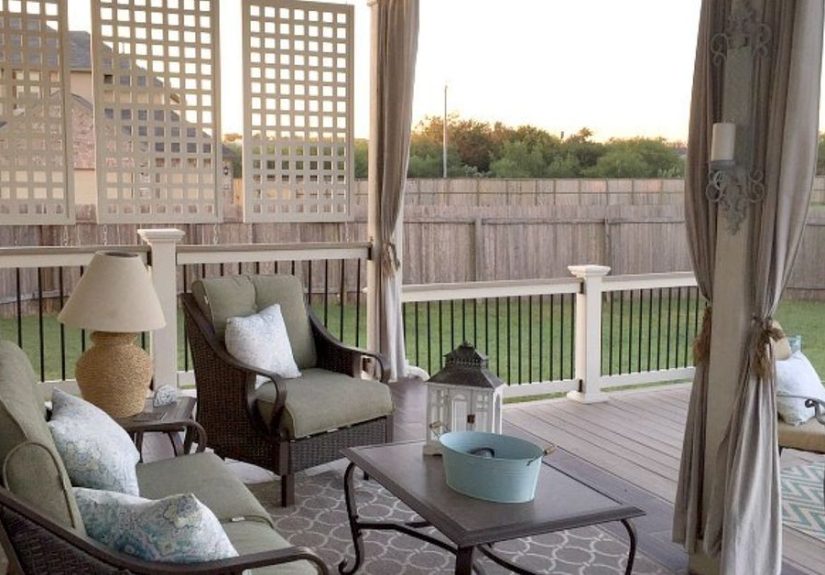
If you want privacy without a heavy look, use solid slats in the lower portion and lattice above. It blocks sightlines where you need them while keeping the top visually lighter.
Mixed-width boards
Alternating wider and narrower slats creates a designer feel without a complicated build. It is a simple visual trick that makes a budget project look more custom.
Corner screen
Two panels joined at a right angle can create a private nook for a bistro set, reading chair, or outdoor shower area. This works especially well in smaller yards.
Common DIY Mistakes to Avoid
- Using the wrong fasteners: Outdoor wood and moisture will expose cheap hardware fast.
- Skipping the finish: Even rot-resistant wood benefits from protection, especially in harsh sun or wet climates.
- Making the panel too wide: Large unsupported spans are more likely to sag or wobble.
- Ignoring the view from inside the space: The screen should work where you sit, not just where you stand while admiring your own effort.
- Forgetting maintenance: Outdoor wood looks better and lasts longer when it is cleaned and recoated on schedule.
How to Keep Your DIY Wood Privacy Screen Looking Good
Maintenance is simple but important. Clean the screen once or twice a year to remove dirt, pollen, and mildew. Check screws, brackets, and post movement at the start of each season. Reapply stain or sealer as needed based on the product and climate. If one board gets damaged, replace it early before moisture spreads trouble to the rest of the structure.
Also keep sprinklers from soaking the screen every day if possible. Constant water is rough on wood, and a privacy screen should not have to live like it is in a car wash.
What the Experience of Building One Is Really Like
There is a very specific kind of satisfaction that comes with building a homemade wood privacy screen. It is not the flashy kind you get from installing a giant patio or pouring a whole new walkway. It is quieter than that. You build it, step back, and suddenly one corner of your yard feels finished. Protected. Intentional. Like it has finally decided what it wants to be when it grows up.
For many DIYers, the first surprise is how quickly the space changes. Before the screen goes up, a patio can feel exposed even when the furniture is nice and the landscaping is decent. After the screen is in place, the same patio often feels like an outdoor room. The grill area looks cleaner. The chairs feel more tucked in. Even the sound seems slightly calmer, because visual privacy changes how you experience the whole yard.
The second surprise is that this project teaches patience fast. On paper, it sounds simple: cut boards, screw them on, enjoy privacy. In reality, the process is full of tiny decisions. Which side of the board looks best? Is the spacing exactly right? Is the post truly plumb, or are you just hoping it is? Did that screw go in straight, or are we all pretending not to notice? The project is forgiving enough for beginners, but it still rewards careful work. That is part of its charm.
Another common experience is discovering that outdoor projects behave differently from indoor ones. Lumber may not be perfectly straight. Ground may not be perfectly level. Sunlight shifts your sense of alignment. Wind suddenly appears the moment you try to hold a long board in place alone. If you build the screen over a weekend, chances are high that at least one board will make you pause, sigh, and mutter something deeply philosophical like, “Why are you like this?” That moment is normal. It is practically part of the instructions.
Many people also find that the design becomes more personal as they build. What begins as “I need privacy” quickly turns into “Maybe I should add a planter here,” or “This would look amazing with warm string lights,” or “What if I build a matching bench next month?” A wood privacy screen tends to start a chain reaction of backyard improvement ideas. It is the gateway project of outdoor living. Today it is slats and screws. Tomorrow you are pricing cushions and debating whether a citronella candle can be considered a design element.
The emotional payoff is real, too. A well-placed privacy screen changes how people use their homes. Morning coffee feels better when you are not staring directly into a neighbor’s driveway. Dinner outside feels more relaxed when the space has a little visual shelter. A hot tub or lounge chair area becomes more comfortable and less exposed. Even if the screen is simple, the effect is bigger than the lumber list suggests.
And perhaps the best part is this: unlike some DIY projects that disappear into the background, this one earns its keep every single day. It gives privacy, structure, style, and a sense of separation from the outside world. That is a lot of value from a project made of boards, screws, and a strong desire to stop waving awkwardly at people every time you step onto the patio.
Final Thoughts
If you want a backyard upgrade that is practical, attractive, and completely doable for a hands-on homeowner, a DIY wood privacy screen is hard to beat. With the right wood, weather-resistant hardware, smart placement, and a clean design, you can create a custom feature that adds both beauty and comfort to your outdoor space. Start with a simple panel, build it well, and let the project grow from there. The result is not just a screen. It is a better backyard experience.