Table of Contents >> Show >> Hide
- The Golden Rule: Turkey Is Done by Temperature, Not the Clock
- Quick Answer: Turkey Cooking Times at 325°F (Most Common Roast Temp)
- Why Turkey Cook Time Changes (Even When the Weight Doesn’t)
- Timing by Method: Pick Your Turkey Adventure
- How to Build a Turkey Schedule That Actually Works
- Where to Put the Thermometer (So You Don’t Get Fooled)
- Stuffed Turkey: Why It Takes Longer (and What’s Easier)
- Juicy Turkey Tips That Don’t Require Weird Turkey Gymnastics
- Common Mistakes That Make Turkey Take Longer (or Turn Dry)
- Wrapping It Up: The Smart Way to Nail Turkey Timing
- Experience Notes: of “What People Learn After Cooking a Few Turkeys”
- 1) The turkey is rarely “late.” The schedule is just… optimistic.
- 2) The first thermometer check is always emotionally dramatic.
- 3) “Just one more peek” is how cook times quietly grow.
- 4) Stuffing the bird sounds cozyuntil you try to time it.
- 5) Resting feels like waiting… until you taste the difference.
- 6) The best “juicy turkey” feeling is calm, not complicated.
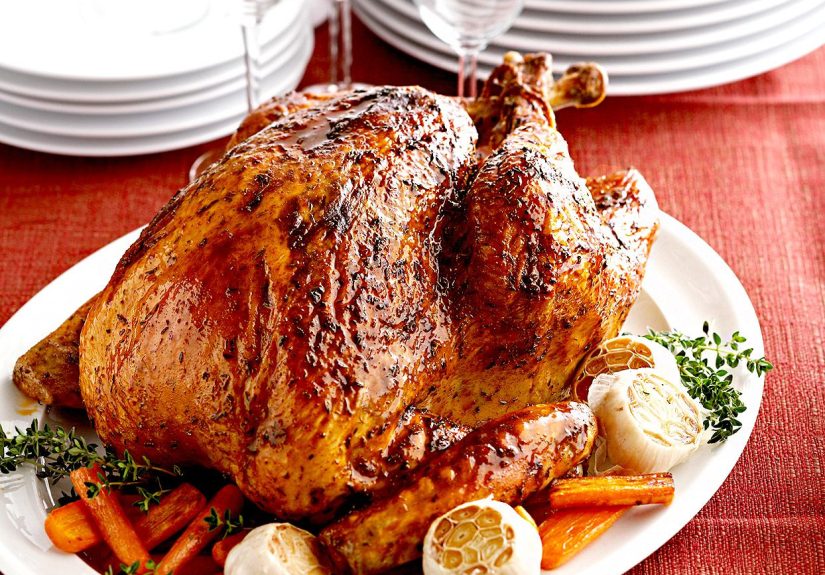
Cooking a turkey is basically a time-travel problem: you want juicy meat and everyone to eat at the hour you promised.
The good news? You don’t need mystical turkey powers. You need a reliable timing range, a thermometer, and the confidence to
ignore your cousin who says, “My grandma just vibes it out.”
This guide gives you turkey cooking times for any size, explains why those times change (stuffed vs. unstuffed, convection vs. conventional),
and shows you how to build a realistic schedule so your bird is done on timewithout turning into turkey jerky.
The Golden Rule: Turkey Is Done by Temperature, Not the Clock
Let’s clear up the biggest myth: “X minutes per pound” is a planning tool, not a guarantee.
Two turkeys with the same weight can cook differently depending on starting temperature, how evenly your oven heats,
whether the turkey is stuffed, and even how often the oven door gets opened for “just a quick peek.”
For food safety, your goal is a safe internal temperature of 165°F in the thickest parts of the meat.
If you cook stuffing inside the bird, the stuffing must also reach 165°F. (Yes, stuffing has demands. It’s the diva of side dishes.)
Quick Answer: Turkey Cooking Times at 325°F (Most Common Roast Temp)
If you’re roasting a fully thawed turkey in a regular oven at 325°F, use the chart below to plan your cook time.
These are rangesstart checking early with a thermometer.
Turkey Cooking Time Chart (325°F)
| Turkey Size | Unstuffed Cook Time | Stuffed Cook Time |
|---|---|---|
| 4–8 lb (breast only) | 1½–3¼ hours | |
| 8–12 lb | 2¾–3 hours | 3–3½ hours |
| 12–14 lb | 3–3¾ hours | 3½–4 hours |
| 14–18 lb | 3¾–4¼ hours | 4–4¼ hours |
| 18–20 lb | 4¼–4½ hours | 4½–4¾ hours |
| 20–24 lb | 4½–5 hours | 5–5½ hours |
Rule-of-thumb planning math: at 325°F, many cooks estimate roughly 13–15 minutes per pound for an unstuffed turkey.
If it’s stuffed, plan longer. But againyour thermometer has the final vote.
Why Turkey Cook Time Changes (Even When the Weight Doesn’t)
If turkey timing feels slippery, it’s because it is. Here are the big variables that change the schedule:
- Stuffed vs. unstuffed: stuffing slows heat transfer and needs to reach 165°F too.
- Oven type: convection usually cooks faster because it moves hot air more efficiently.
- Turkey shape: a compact bird takes longer than a flattened (spatchcocked) bird.
- Starting temperature: a turkey that’s still icy in the cavity is basically wearing a winter coat to the oven.
- Pan and rack setup: good airflow around the bird helps it cook more evenly.
Timing by Method: Pick Your Turkey Adventure
1) Classic Roast in a Conventional Oven (325°F)
This is the “Thanksgiving default” method. It’s predictable, forgiving, and doesn’t require special equipment.
Roast at 325°F and use the chart above as your planning range.
When to start checking: Begin checking temperature about 45–60 minutes before the low end of your time range.
That’s not pessimismthat’s preparedness.
2) Convection Oven Roast (Usually Faster)
Convection ovens often reduce cook time compared with conventional ovens. Many turkey hotlines and cooking guides advise
using a shorter range and still relying on a thermometer. If you’re new to convection turkey, plan like this:
- Use your usual weight-based estimate, then start checking early (convection can surprise you).
- Expect the turkey to finish somewhat sooner than a regular oven at the same temperature.
3) Spatchcock (Butterflied) Turkey (Often 30–40% Faster)
Spatchcocking is what happens when a turkey gives up its 3D privileges and becomes flatter. The payoff is big:
more even cooking, better skin coverage, and a shorter cook time.
Because the bird is flattened, heat hits it more evenly, so you’re less likely to have dry breast and underdone thighs.
If you want juicy results and a calmer schedule, this method is a serious contender.
4) Turkey Breast Only
Turkey breast cooks faster than a whole turkey because there’s no dark meat lagging behind.
The trade-off is you don’t get the “whole bird on a platter” momentbut your oven (and your sanity) may thank you.
5) Roasting in an Oven Bag (Often Quicker at 350°F)
Oven bags can speed up cooking and help retain moisture. If you use one, follow bag directions and use a thermometer
to confirm doneness. Many cooks choose this method when they want juicy meat and a shorter roasting window.
6) Cooking from Frozen (Not Ideal, But It Happens)
Life is chaotic. Sometimes the turkey is still frozen. Many reputable turkey resources note that cooking from frozen can take
significantly longerthink roughly about 50% more timeand you still must verify safe internal temperature.
The downside: the timing is less predictable, seasoning is harder, and you may miss out on your preferred skin texture.
If you can thaw safely ahead of time, do it.
How to Build a Turkey Schedule That Actually Works
Here’s the scheduling trick that makes you look like you have your life together:
work backward from when you want to serve.
Step 1: Decide your serving time
Example: dinner is at 4:00 p.m.
Step 2: Reserve time for resting (non-negotiable)
Plan 30–45 minutes for resting. Resting helps juices redistribute and makes carving less messy.
(Also, it gives you time to pretend you’re calm.)
Step 3: Add carving time
Add 15–25 minutes to carve and arrange. If you’re serving a crowd, assume someone will ask,
“Do you have more dark meat?” mid-carve. That adds five minutes.
Step 4: Add your estimated oven time + a buffer
Let’s say you have a 16-pound unstuffed turkey at 325°F. Your planning range might be roughly
3¾ to 4¼ hours. Choose the middle as a starting plan, then add a cushion.
A workable timeline for a 4:00 p.m. dinner might look like this:
- 4:00 p.m. Serve
- 3:15 p.m. Finish carving / platter
- 2:30 p.m. Turkey rests (tent loosely with foil if desired)
- 10:00 a.m.–10:30 a.m. Turkey goes in the oven (depending on your estimate and cushion)
- 1:45 p.m. Start checking temperature if you haven’t already
Notice the hidden superpower here: you don’t need the turkey to finish at the exact second you planned.
If it finishes a bit early, resting time can stretch. If it finishes late, your sides can stay warm.
Where to Put the Thermometer (So You Don’t Get Fooled)
A turkey can look “done” and still not be done. The skin browns, juices run, the pop-up timer pops like it’s auditioning for a role…
and the center is still under temperature. Use a food thermometer.
Best places to check
- Breast: thickest part of the breast, avoiding bone
- Thigh: thickest part of the thigh, also avoiding bone
- Stuffing (if used): center of the stuffing must reach 165°F
What temperatures to aim for
For safety, make sure the turkey reaches 165°F.
For eating quality, many cooks prefer dark meat higher (it becomes more tender as it climbs above that mark).
Practically speaking, you want both safety and great textureso check multiple spots and let the bird rest before carving.
Stuffed Turkey: Why It Takes Longer (and What’s Easier)
Stuffing inside the turkey slows down cooking because you’ve filled the cavity with a dense, moist mixture.
The turkey meat can reach its ideal texture before the stuffing hits 165°Fmeaning you either undercook the stuffing (not safe)
or overcook the turkey (not juicy).
If you love stuffing, consider baking it separately in a casserole dish. You’ll get better texture (crispy top!)
and simpler temperature managementplus you can still drizzle flavorful pan juices over it for that “cooked-with-the-bird” vibe.
Juicy Turkey Tips That Don’t Require Weird Turkey Gymnastics
If “juicy results” is the goal, time is only half the story. These techniques help you win the moisture game:
Dry-brine for flavor and moisture retention
Salting the turkey ahead of time (even just overnight) helps season the meat and can improve juiciness.
It’s like giving your turkey a head startwithout the drama of a wet brine bucket in the fridge.
Don’t roast at a too-low temperature
Very low oven temps can extend cooking time and increase the window for uneven doneness. A steady roast temp (commonly 325°F or higher)
is a popular standard for a reason.
Skip constant basting
Opening the oven repeatedly drops the temperature and stretches cook time. If you want to baste, do it sparinglythen let the oven do its job.
Rest like you mean it
Resting isn’t optional; it’s part of the process. Think of it as the turkey’s “cooldown lap” before it becomes dinner.
Common Mistakes That Make Turkey Take Longer (or Turn Dry)
- Not fully thawing: a turkey that’s icy inside cooks unevenly and unpredictably.
- Relying on time alone: minutes-per-pound is a guide, not a guarantee.
- Opening the oven too often: every peek steals heat and adds minutes.
- Only checking one spot: the breast and thigh can be at different stages.
- Skipping the rest: carving immediately sends juices running away like they have somewhere better to be.
Wrapping It Up: The Smart Way to Nail Turkey Timing
If you remember nothing else, remember this:
Plan with a time range, finish with a thermometer, and protect your rest time.
That’s how you get juicy turkey whether it’s a tiny breast-only bird or a full-size holiday centerpiece.
Use the chart, start checking early, and give yourself a buffer. The goal isn’t to prove you can roast a turkey with the precision of a Swiss train schedule.
The goal is tender slices, happy guests, and no one whispering, “It’s kinda dry,” into the cranberry sauce.
Experience Notes: of “What People Learn After Cooking a Few Turkeys”
The best turkey advice often comes from the very specific moment a home cook realizes they have created either (1) a glorious masterpiece or (2) edible evidence
that timing is not a personality trait. Here are common experience-based lessons cooks share after doing this a few timesespecially when chasing juicy results.
1) The turkey is rarely “late.” The schedule is just… optimistic.
Many cooks plan the turkey cook time down to the minute, then forget the invisible extras: the oven takes longer to recover heat after the door opens, the bird rests,
and carving takes more than five seconds unless you’re secretly a deli slicer. The experienced move is building in a cushion and treating “done early” as a gift.
Resting can stretch, and nobody complains about turkey being ready while sides finish up.
2) The first thermometer check is always emotionally dramatic.
The turkey has been roasting for hours. It looks gorgeous. It smells like holidays. You check the temperature… and it’s not there yet.
This moment has humbled many confident adults. The cure is simple: start checking earlier than you think, accept that the oven is in charge,
and check again after 10–15 minutes. Panic is not a seasoning.
3) “Just one more peek” is how cook times quietly grow.
People love opening the oven door because it feels productive. Unfortunately, the oven feels differently.
Frequent peeking drops the temperature and adds time, which can lead to overcooking later if you try to “make up for it”
with higher heat or extended roasting. Veteran turkey-roasters use the oven light, trust their probe, and open the door with purpose.
4) Stuffing the bird sounds cozyuntil you try to time it.
Plenty of cooks have a sentimental attachment to stuffing inside the turkey. But many also have a memory of the trade-off:
the stuffing needs 165°F, and that requirement can push the turkey past its juiciest moment. A common compromise is baking stuffing separately,
then enriching it with drippings. You get the flavor without turning the turkey’s timeline into a suspense movie.
5) Resting feels like waiting… until you taste the difference.
Newer cooks sometimes carve immediately because everyone is hungry and the turkey is “done.” More experienced cooks treat resting as sacred.
After resting, the slices tend to look better, feel more tender, and stay moister on the platter. Resting also gives you time to finish gravy,
warm rolls, and accept compliments like you didn’t just spend the last hour staring through an oven window.
6) The best “juicy turkey” feeling is calm, not complicated.
People often chase juicy turkey with a dozen fancy steps, then realize the biggest improvements came from basics:
seasoning ahead of time, roasting at a steady temperature, checking multiple spots with a thermometer, and pulling the turkey at the right moment.
The most confident turkey cooks aren’t the ones with the most tricksthey’re the ones with the best plan.