Table of Contents >> Show >> Hide
- Why This Story Hit Such a Nerve
- The Deal That Launched a Thousand Hot Takes
- Why A 1952 Telecaster Is Not Just “Some Old Fender”
- Scam, Steal, or Just a Ruthless Marketplace Win?
- The Ethics Debate Is Where The Story Really Lives
- Why Viral Stories Like This Never Really Die
- What Sellers, Buyers, and Collectors Should Actually Learn From It
- Related Experiences: What These Deals Feel Like In Real Life
- Final Thoughts
Note: This article is a reported commentary piece based on a widely shared online account and broader vintage-guitar, contract, and resale-market context.
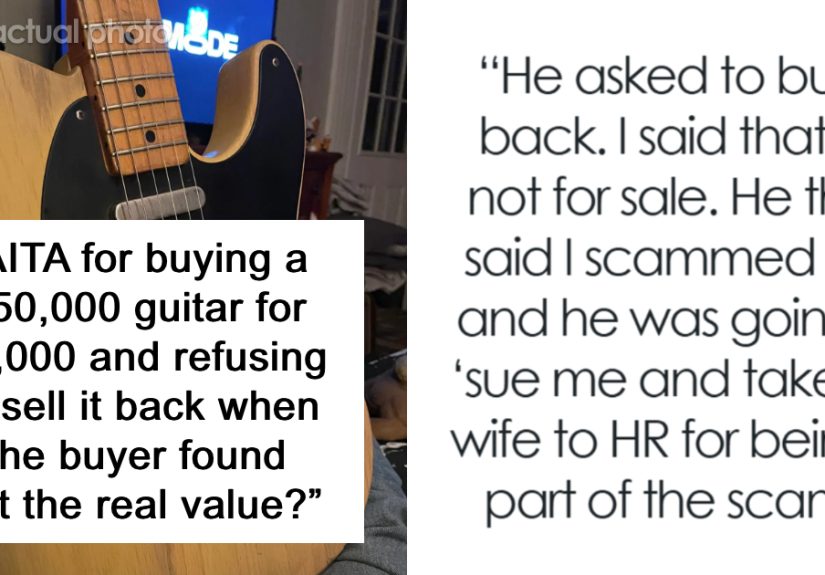
Every so often, the internet serves up a story so perfectly chaotic that it feels like it was engineered in a lab by a team of economists, gear nerds, and people who enjoy watching comment sections burst into flames. This is one of those stories. A man reportedly bought a vintage Fender guitar worth around $50,000 for just $4,000. Then, after the seller realized what he had actually handed over, the whole thing spiraled into accusations, workplace drama, and a moral debate juicier than a pawn shop reality show marathon.
On the surface, the story looks simple: one guy got the deal of a lifetime, another guy suffered a spectacular case of seller’s remorse, and the internet did what the internet does bestsplit into teams and start throwing digital tomatoes. But the reason this story stuck is that it lands at the intersection of three things people never stop arguing about: money, fairness, and whether knowledge counts as a superpower.
Because let’s be honest: most people are not fighting over a sandwich toaster on Facebook Marketplace. They are fighting over an object with lore. And in the world of collectible guitars, lore is basically a second currency.
Why This Story Hit Such a Nerve
The viral account centers on a 1952 Fender Telecaster, one of the most iconic electric guitars ever made. To non-players, that may sound like “an old guitar.” To guitar people, however, that description is like calling a Shelby Cobra “an older car” or calling first-edition Pokémon cards “some cardboard.” A genuine early Telecaster is part instrument, part artifact, part financial plot twist.
That is what made the story feel so combustible. The buyer reportedly knew exactly what he was looking at. The seller, by contrast, seems to have done the kind of research people do when they are trying to get rid of a treadmill: a fast search, a rough guess, and a deep trust in vibes. Those vibes turned out to be worth about $46,000 less than the market.
In classic viral-story fashion, the conflict did not end with the sale. Once the seller learned the guitar’s likely value, he allegedly demanded it back, accused the buyer of scamming him, and escalated the matter to the buyer’s wife’s workplace. At that point, the story stopped being about a lucky purchase and became a referendum on opportunism, ethics, and how much responsibility a seller has to understand what they are selling before they name a price.
The Deal That Launched a Thousand Hot Takes
According to the widely shared account, the seller offered the guitar at $4,000 after deciding that seemed fair. The buyer, who knew vintage-guitar values well, accepted immediately. That part matters. He did not reportedly lowball the seller down from $20,000 to $4,000. He did not invent a fake defect. He did not claim the instrument was worthless. He simply said yes to the price that had already been set.
Legally, that difference matters. Morally, that is where the brawl begins.
One camp sees the transaction as clean and brutal: a seller named a number, a buyer accepted it, end of story. In that view, the buyer was lucky, not crooked. If you list a rare baseball card for garage-sale money, nobody expects the buyer to pause the deal, sit you down, and gently suggest you call Sotheby’s.
The other camp sees the buyer’s silence as the whole problem. If he knew he was getting an absurd bargain and still moved ahead without a word, then yes, the paperwork may be cleanbut the conscience might be a little dusty. That is the kind of scenario that makes people say, “Sure, it was legal, but was it decent?”
And that is why this story took off. It is not really about the guitar. It is about whether knowledge creates an ethical duty.
Why A 1952 Telecaster Is Not Just “Some Old Fender”
The Telecaster is not merely a famous guitar. It is one of the foundational objects of modern electric music. Early-1950s examples, especially those from the so-called blackguard era, are intensely collectible because they sit near the beginning of Fender’s commercial solid-body revolution. They are beloved for their ash bodies, maple necks, brass-saddle twang, and the kind of no-nonsense design that made them workhorses for country, rock, blues, and everything that came after.
That history helps explain the valuation. Vintage-guitar prices are not determined by age alone. Originality, condition, finish, replaced parts, neck work, provenance, and included paperwork all matter. A rough, modified old guitar may be interesting. A clean, early, documented one can become a bank account with strings.
In other words, the alleged $50,000 estimate was not internet fantasy. It sits comfortably within the real-world range collectors associate with strong vintage Telecaster examples. The exact number can move up or down depending on originality and condition, but the broader point remains: this was not a four-grand instrument wearing a nice story. It was a serious collectible whose value could make even seasoned resellers sit up straight.
That also explains why guitar players reacted so intensely. To them, this was not just a bargain. It was like watching someone buy a Picasso at yard-sale pricing because the seller thought it matched the curtains.
Scam, Steal, or Just a Ruthless Marketplace Win?
The word “scam” gets tossed around online so often it has started doing cardio. But a scam usually involves deception, manipulation, false claims, or concealment of some material fact in a way designed to induce the other party into a bad deal. That is a much heavier accusation than “you knew more than the other person.”
And this is where the story becomes fascinating. Information asymmetry is everywhere in resale markets. Antique dealers know what casual sellers do not. Sneaker collectors know what parents cleaning closets do not. Comic-book buyers know what estate-sale organizers definitely do not. Entire secondhand economies run on the simple reality that one person spots value before another person does.
That does not automatically make every bargain a scam. Sometimes it just means one person prepared and the other person guessed.
Still, people resist that conclusion because this was not a random flea-market encounter between strangers. The seller was connected to the buyer through the buyer’s wife’s workplace. That social proximity changes how the story feels. In a purely anonymous marketplace, sharp buying is often treated as fair game. In a semi-social setting, people expect more transparency, or at least a little humanity before somebody walks away with an asset the size of a down payment.
The Legal-ish Angle, Without Turning This Into “Law & Order: Special Vintage Unit”
In general, a sale of goods becomes a contract when there is agreement, acceptance, and value exchanged. That does not mean every awkward or regretted deal becomes undoable. Seller’s remorse is not a magic legal wand. Courts usually care about whether there was fraud, misrepresentation, duress, or a substantial mistake of factnot just a painful realization that the market value was much higher than expected.
That is an important distinction. Being wrong about value is not always the same as being wrong about what the item is. If both parties thought they were dealing with a replica and later discovered it was original, that is a different species of problem. But if one person owned a real vintage Telecaster and simply priced it badly, that tends to look less like a broken contract and more like a terrible sales strategy.
That is also why the workplace escalation in the story feels so off. Once the deal was done, the seller’s real complaint was not “I was tricked about what the guitar is.” It was “I wish I had asked for more.” Those are emotionally similar, but legally they are not twins.
The Ethics Debate Is Where The Story Really Lives
If the law asks whether a deal was valid, ethics asks whether it was honorable. That answer is messier, squishier, and far more fun for the internet.
People defending the buyer usually make a straightforward argument: adults are responsible for researching their own property. The seller was not forced into a fast cash emergency. He set the price. He accepted the exchange. He had every opportunity to get a second opinion. Why should a knowledgeable buyer be punished for knowing what something is worth?
People criticizing the buyer focus on intent. If he knew the seller was making a catastrophic mistake and consciously let it happen, then the deal may have been technically valid while still feeling socially grubby. This camp tends to believe that expertise carries an ethical burden, especially when the other party is obviously outmatched.
Both sides have a point, which is exactly why the story keeps circulating. It is a perfect example of how “fair” and “allowed” can overlap without fully becoming the same thing.
Personally, the most revealing detail is not the low price. It is what happened after. Once the seller allegedly shifted from regret to threats, harassment, and retaliation, a lot of sympathy vanished. Seller’s remorse is human. Going full vendetta because your own pricing blew up in your face is where the moral scales start tilting hard in the other direction.
Why Viral Stories Like This Never Really Die
The internet loves stories about hidden value because they flatter our fantasies. Everybody wants to believe they might one day spot the treasure nobody else recognized: the rare watch in a junk drawer, the first-edition novel in a thrift bin, the holy-grail guitar hiding behind old holiday decorations in a garage.
But these stories also soothe and terrify us at the same time. They soothe us because they reward knowledge. Learn enough, pay attention, and you might win big. They terrify us because they expose how easy it is to be the person on the other side of that deal. One lazy search, one rushed decision, one “eh, that seems fair,” and suddenly you are the lead character in a cautionary tale.
That is why the comment sections become battlegrounds. Most people are not judging the specific buyer and seller. They are secretly asking which role they would rather play: the informed opportunist or the uninformed loser. Nobody enjoys admitting the second option feels more realistic.
What Sellers, Buyers, and Collectors Should Actually Learn From It
For Sellers
If you own anything old, niche, branded, mechanical, or suspiciously heavy, do not rely on one quick search and the confidence of a man holding a coffee mug in his driveway. Get multiple opinions. Check comparable sales. Look at condition carefully. Ask a specialist. Yes, it is annoying. It is less annoying than discovering your “nice little sale” was actually a liquidation event for your own ignorance.
For Buyers
Know the difference between finding value and manufacturing it. Spotting an underpriced item is one thing. Lying, pressuring, or hiding material facts is another. A good deal should still let you sleep at night. If the story you tell yourself requires Olympic-level mental gymnastics, it may not be as clean as you want it to sound.
For Everyone On Marketplace
Use receipts, messages, photos, and clear written terms. The less ambiguity, the less chaos later. Also, if you are selling a vintage instrument, maybe do not announce a number after five minutes of online searching and a burst of false confidence. That is not pricing. That is improv.
Related Experiences: What These Deals Feel Like In Real Life
Anyone who has spent time around collectibles, instruments, estate sales, or secondhand marketplaces knows this story feels dramatic only because the dollar figure is dramatic. The pattern itself is common. A family member inherits something they do not understand. An owner is emotionally detached from an item but financially attached to the idea of “quick cash.” A collector spots it immediately. Then reality arrives late, loud, and extremely upset.
Sometimes the experience is harmless and even funny. A weekend picker finds an old amp at a garage sale for the price of dinner, takes it home, cleans it up, and realizes it is worth ten times more. The seller shrugs, says they were happy to get rid of it, and life goes on. That is the fairy-tale version. Everybody wins, nobody calls HR, and the amp gets a second life instead of sitting under Christmas lights in a damp basement.
Other times, it gets awkward fast. A buyer picks up a vintage watch, camera, or guitar pedal from a local listing, then receives the dreaded message three hours later: “Hey, I just checked with my cousin and it’s actually worth way more. Can I have it back?” That message almost never arrives politely. It usually comes with guilt, urgency, and the kind of punctuation that suggests someone is typing while pacing. The buyer is then forced into a weird moral side quest: honor the original deal, renegotiate, or return the item and sacrifice the thrill of the find.
Collectors will tell you these moments are rarely about the object alone. They are about embarrassment. The seller is not just upset about money; they are upset about feeling fooled, even when nobody technically fooled them. That embarrassment can mutate into anger because anger feels stronger than “I made a bad decision.” It is easier to accuse the other person of being shady than to admit you sold a treasure for the price of a new laptop because you did not do your homework.
There is also a social layer people underestimate. Deals between strangers can go cold without much fallout. Deals between coworkers, neighbors, cousins, church friends, or parents at the same school pickup line can become miniature civil wars. Suddenly, the transaction is not just about an item. It is about loyalty, trust, community reputation, and who gets labeled “the jerk” in group chats for the next six months. That is why even a legally clean sale can become emotionally radioactive.
The smartest buyers in these situations usually have one thing in common: they document everything and stay calm. The smartest sellers do even better: they slow down before naming a price. That pauseone extra day, one expert opinion, one serious searchis often the difference between a satisfying sale and a lifelong story that begins with, “You are never going to believe what I let go for…”
And that, really, is the lasting appeal of this guitar saga. It feels extreme, but it also feels familiar. Most people have either sold something too cheaply, nearly bought something suspiciously underpriced, or watched a friend realize way too late that the dusty object in the closet was not junk at all. The details change. The emotion does not. First comes confidence. Then comes discovery. Then comes chaos.
Final Thoughts
The internet keeps trying to turn this story into a simple verdict: hero or villain, scam or score, genius or jerk. But the truth is more interesting. It was probably a valid sale. It was definitely an extraordinary bargain. Ethically, it lives in that uncomfortable gray zone where expertise and silence shake hands and try not to make eye contact.
What makes the story unforgettable is not just the price gap. It is the emotional whiplash. One person thought he was unloading an old guitar for decent money. Another knew he was acquiring a small museum piece at discount-bin pricing. After that, the argument was inevitable.
So no, this was not just a story about a guitar. It was a story about knowledge, timing, pride, and the painful cost of not knowing what is sitting in your own hands. Also, it was a reminder that before you sell anything old and weird online, you should probably do a little more research than “I looked it up and this sounds about right.” Famous last words, meet maple neck.