Table of Contents >> Show >> Hide
- Why Falcon Heavy Was Such a Big Deal
- How Falcon Heavy Works Without Falling Apart in the Most Embarrassing Way Possible
- The First Launch: A Test Flight That Refused to Be Boring
- Why Falcon Heavy Changed the Space Business
- From Showpiece to Workhorse: Missions That Proved Falcon Heavy Was the Real Deal
- The Fine Print: Falcon Heavy’s Crown Came With an Asterisk and a Timestamp
- What It Feels Like When Falcon Heavy Actually Launches
- Conclusion
Note: This title is used in its historical sense. When Falcon Heavy launched in 2018, it became the most powerful operational rocket in the world at that moment, even though it was not the most powerful rocket ever built.
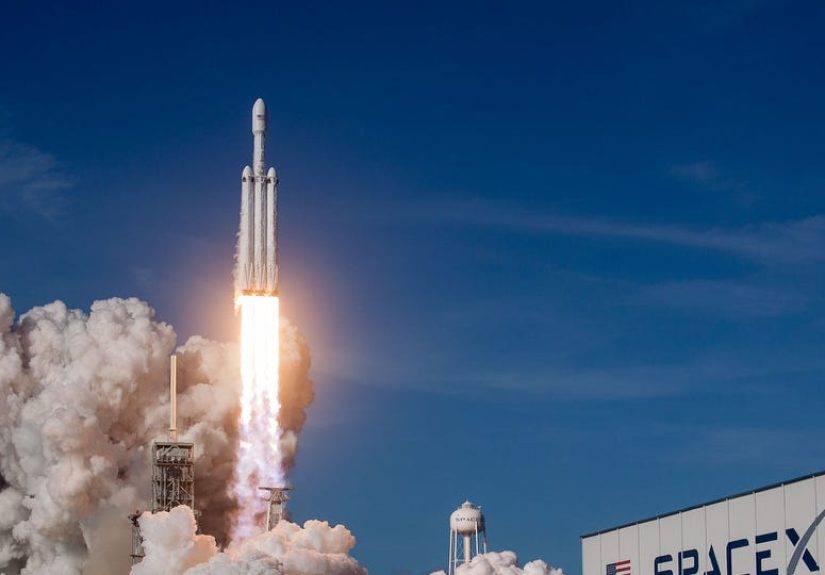
There are rocket launches, and then there are rocket launches that make the entire internet briefly forget how to argue about everything else. Falcon Heavy’s debut was definitely the second kind. When SpaceX finally lit all 27 Merlin engines and sent the massive rocket clawing into the Florida sky, it did more than launch a payload. It launched a new chapter in commercial spaceflight, a new expectation for what private companies could build, and at least a few million dropped jaws.
The appeal was obvious. Falcon Heavy looked like a machine designed by someone who saw a Falcon 9 and thought, “What if we made it angrier?” Its architecture was simple in concept but wild in execution: three Falcon 9-style cores strapped together, 27 engines firing at liftoff, and enough thrust to remind people that space is still very much a brute-force business. For years, heavy-lift capability had been associated with government prestige, huge budgets, and long timelines. Falcon Heavy showed that the old rules were wobbling.
That mattered because space had changed. Satellites were getting more capable, military and intelligence payloads still needed powerful launch vehicles, and deep-space missions demanded extra performance. Falcon Heavy arrived as a bridge between classic heavy-lift ambition and a more cost-conscious commercial era. It was part engineering milestone, part public spectacle, and part message to the industry: the future of launch would not be quiet, cheap-looking, or modest.
Why Falcon Heavy Was Such a Big Deal
At the time of its first flight, Falcon Heavy became the most powerful operational rocket in the world. That phrase did a lot of heavy lifting all by itself. It meant the vehicle offered more liftoff thrust than any rocket then flying regularly, even if historic giants like Saturn V still held legendary status in the record books. In plain English: this thing was not the biggest rocket ever, but it was the strongest one currently available for missions that actually needed a ride.
That distinction gave Falcon Heavy immediate relevance. Space agencies, commercial satellite operators, and national security customers all care about one simple question: can the rocket get my expensive hardware where it needs to go? Falcon Heavy’s answer was a loud, smoky, flame-colored “yes.” Its ability to lift very large payloads, especially to demanding orbits, placed it in a rare class of launch vehicles. Suddenly, the heavy-lift market had a flashy new contender with a very modern trick up its sleeve: partial reusability.
And that reusability was the real plot twist. For decades, powerful rockets were treated like extraordinarily expensive fireworks. You lit them once, admired the view, and then watched the pieces disappear into the ocean or the atmosphere. SpaceX had already changed expectations with Falcon 9 booster landings. Falcon Heavy extended that idea into the heavy-lift category. It suggested that high performance and hardware recovery did not have to be enemies. In the launch business, that is not just cool. That is disruptive.
How Falcon Heavy Works Without Falling Apart in the Most Embarrassing Way Possible
Falcon Heavy is built around a straightforward but challenging concept: take three Falcon 9-derived first-stage cores, connect them into one launch vehicle, and top them with a second stage and payload fairing. In theory, that sounds delightfully practical. In reality, synchronizing 27 engines, managing complex loads across multiple connected boosters, and handling separation events without drama is the sort of problem that keeps aerospace engineers awake at night and speaking in very careful sentences.
The side boosters and center core ignite together at liftoff, producing more than 5 million pounds of thrust. That is why Falcon Heavy looks so commanding on the pad. It is not just tall or broad. It is dense with intent. Those 27 engines create the raw force needed to send large spacecraft into orbit, push payloads toward geostationary destinations, or give interplanetary missions the energy they need to begin long journeys across the solar system.
Its design also gives operators flexibility. Falcon Heavy can fly missions that prioritize performance, missions that prioritize booster recovery, and missions that split the difference. That matters because not every payload needs the same trajectory. Some spacecraft are hefty. Some need long upper-stage coast phases. Some must be delivered with extreme precision. Falcon Heavy’s value is not just power. It is power that can be shaped to fit different mission profiles.
In practical terms, this made the rocket especially attractive for large communications satellites, national security payloads, and later, major NASA science missions. It was not built to replace every launcher on Earth. It was built to cover a powerful niche that smaller rockets could not reach as efficiently. Think of it as the pickup truck of orbital launch vehiclesif pickup trucks came with synchronized booster landings and enough thrust to shake your ribs.
The First Launch: A Test Flight That Refused to Be Boring
Falcon Heavy’s demonstration flight in February 2018 had all the ingredients of an all-time spaceflight spectacle. It launched from historic Launch Complex 39A at NASA’s Kennedy Space Center, the same pad tied to Apollo and shuttle history. That heritage alone gave the event extra gravity. Then SpaceX added its own flavor by choosing an unusual test payload: Elon Musk’s red Tesla Roadster, complete with a mannequin nicknamed “Starman.” In a field famous for gray boxes and earnest acronyms, Falcon Heavy showed up wearing sunglasses.
But beneath the spectacle was a serious engineering test. The mission needed to prove the rocket could survive ascent, separate cleanly, place its upper stage on the right path, and recover hardware. It mostly did. The launch succeeded. The Roadster was sent into a heliocentric orbit extending out toward Mars. Most memorably, the two side boosters returned and landed nearly in unison at Cape Canaveral, creating one of the most iconic images in modern aerospace. The center core, however, missed its drone ship landing after an ignition issue during descent. In rocket terms, that still counts as a pretty good day.
Public reaction was enormous because Falcon Heavy offered something rare: a major technical milestone that ordinary people could understand instantly. More engines. More thrust. Bigger rocket. Car in space. Twin booster landing. No advanced degree required. It was engineering translated into theater, and theater translated back into engineering value. Suddenly, launch vehicles were dinner-table conversation again.
Critics rolled their eyes at the Tesla stunt, but the move served a purpose. Demo flights often use dummy payloads, and this one turned a standard practice into a masterclass in public attention. More importantly, it did not distract from the underlying achievement. Falcon Heavy had flown. It had worked. And it had announced that heavy-lift capability was no longer the exclusive domain of old-school government programs and ultra-premium military launch systems.
Why Falcon Heavy Changed the Space Business
Falcon Heavy did not just break through as a cool rocket. It mattered because it changed how people talked about access to orbit. Traditionally, very powerful rockets came with very painful price tags. Falcon Heavy entered that conversation with a lower-cost commercial mindset, building on technologies and operational lessons developed through Falcon 9. Reusing hardware did not merely look futuristic on livestreams. It created the possibility of lowering launch costs for customers that needed serious performance.
That mattered especially in competition-heavy sectors. Commercial satellite operators care about reliability, schedule, and price. Governments care about those things too, just with more paperwork and fewer emojis. A rocket that could deliver big payloads while pressuring legacy pricing models had strategic value. Falcon Heavy was not simply another rocket on the menu. It was a bargaining chip, a proof point, and a market shove all at once.
It also filled an awkward gap in the industry. Many missions are too demanding for medium-lift rockets, but they do not require a giant moonshot-class super-vehicle. Falcon Heavy fit that in-between zone. It gave launch customers a credible option for high-energy missions without forcing them into an all-or-nothing choice. In business terms, that is called product fit. In rocket terms, it is called “your spacecraft actually gets where it needs to go.”
The rocket’s influence extended beyond commercial logic. It also helped normalize the idea that private companies could support deep-space science and sensitive government launches, not just low Earth orbit cargo runs. That psychological shift was huge. Before Falcon Heavy, many people still treated commercial launch providers as impressive upstarts. After Falcon Heavy, the conversation sounded more like this: maybe the upstarts are running the room now.
From Showpiece to Workhorse: Missions That Proved Falcon Heavy Was the Real Deal
A flashy debut can win headlines, but only follow-up missions can build trust. Falcon Heavy managed that transition. In 2019, it flew its first commercial mission, launching Arabsat-6A and demonstrating a fully successful triple-booster landing sequence, though the center core was later lost at sea during return. That mission mattered because it proved Falcon Heavy was not just a one-time publicity miracle. It could fly real customer payloads under real mission demands.
Later missions broadened the rocket’s résumé. Falcon Heavy went on to support U.S. national security launches, including missions for the U.S. Space Force. That was a major endorsement. Military and intelligence payloads do not hand out trust like Halloween candy. They demand performance, consistency, and careful mission integration. Falcon Heavy entering that world showed that the rocket had matured from spectacular debutant to serious strategic asset.
NASA science missions added another layer to the story. The Psyche mission launched on Falcon Heavy in 2023, using the vehicle to begin a journey to a metallic asteroid. In 2024, Falcon Heavy launched NOAA’s GOES-U weather satellite, which later became GOES-19, and then sent NASA’s Europa Clipper on its long voyage toward Jupiter’s ocean moon. Those are not side quests. They are flagship-class examples of the kind of work that demands trustworthy heavy-lift capability.
By that point, the rocket’s identity had sharpened. Falcon Heavy was not a gimmick machine. It was a specialized launch system with a clear role in the modern fleet: missions too demanding for a standard Falcon 9, but well served by a powerful launcher with commercial discipline and partial reusability. In other words, the giant had found its job description.
The Fine Print: Falcon Heavy’s Crown Came With an Asterisk and a Timestamp
To keep the history accurate, it is worth saying out loud that Falcon Heavy’s “most powerful rocket in the world” status was always tied to timing. It was the most powerful operational rocket when it debuted. That did not erase Saturn V from the history books, and later vehicles would surpass Falcon Heavy in raw power. But none of that diminishes the achievement. If anything, it explains why the launch felt so important. Falcon Heavy was a bridge between the heroic age of giant rockets and a new commercial age that wanted performance without pretending budgets were made of moon dust.
It also was never meant to fly every week. The heavy-lift market is naturally smaller than the market for medium-lift launches. Many satellites simply do not need that much rocket. Falcon 9 remains the workhorse because it is well matched to a huge share of the world’s launch demand. Falcon Heavy exists for the missions that require more muscle, more energy, or a more specialized trajectory. That makes it less common, but not less important.
In some ways, rarity adds to its mystique. Each Falcon Heavy launch feels like an event because it usually is. The rocket appears when the payload is big, the orbit is challenging, the national-security stakes are high, or the science goal is far from home. It is not the everyday sedan of launch. It is the heavy hauler you call when the job involves a mountain, a deadline, and possibly Jupiter.
What It Feels Like When Falcon Heavy Actually Launches
Watching a Falcon Heavy launch is not like watching a normal vehicle departure. No one sees a family SUV back out of the driveway and thinks, “I hope that rattles my skeleton.” With Falcon Heavy, that is part of the package. People who gather along Florida’s Space Coast for one of these launches do not just want to see it. They want to feel it in their chests, in the boardwalk railings, in the air pressure against their skin, and maybe a little in their life choices.
The experience starts long before liftoff. Hours ahead of launch, causeways, beaches, rooftops, parking lots, and random patches of legal grass begin filling with space fans, local families, photographers carrying enough gear to survive a minor expedition, and curious travelers who mostly came for vacation but are about to accidentally become rocket people. Everyone keeps glancing at the countdown and the weather because Florida enjoys treating launch windows like dramatic tension is a public service.
Then the clock gets close. Conversations shrink. People stop fiddling with coolers and cameras. The rocket, which looked almost serene against the pad a few minutes earlier, suddenly seems less like a structure and more like a coiled decision. When the engines ignite, there is that unmistakable moment of brightness under the corewhite, gold, and violentfollowed by the slow-motion magic trick of a machine that should not be able to rise doing exactly that. Falcon Heavy does not leap. It commits.
From a distance, the first impression is visual overload. The flame plume blooms under all three cores, exhaust billows outward, and the vehicle begins to climb with a kind of deliberate menace. Then the sound arrives. Not instantly, because physics enjoys suspense. Spectators often describe the delay as surreal: you see the rocket already moving skyward, and only after a few seconds does the noise hit. When it does, it is not just loud. It is layered. It rolls over you in waves, a deep industrial thunder mixed with crackling violence and an almost physical pressure you can feel more than hear.
That is when people laugh, shout, or go totally silent. Some watch through phone screens for approximately three seconds before realizing that this is one of the worst possible times to experience life as a tiny rectangle. Others point upward as if the rocket might have gotten lost without assistance. Kids grin like they have just discovered science is cooler than cartoons. Even seasoned launch viewers tend to look a little humbled. Falcon Heavy has that effect. It is big enough to override cynicism.
And then there is the booster return. If you are lucky enough to witness one of the missions where the side boosters come back to land, the whole event becomes a two-act performance. The crowd tracks the main ascent, then reorients, waiting for two bright descending shapes to come back from the edge of impossible. The synchronized landings are the kind of sight that scrambles your mental timeline. They look futuristic, but you are watching them in real time, standing on warm pavement, probably holding a bottle of water and forgetting to blink.
Afterward, the crowd does that wonderful human thing where everyone tries to explain something too big for ordinary language. People say it was insane, unreal, unbelievable, like thunder, like an earthquake, like a movie, like the future. None of those descriptions are perfect, but together they get close. Falcon Heavy launches are not just transportation events. They are public encounters with scale, force, and ambition. For a few minutes, you are reminded that civilization still builds things whose entire purpose is to leave the planet. And honestly, that never stops being a little glorious.
Conclusion
Falcon Heavy earned its place in space history because it combined spectacle with substance. It was not merely a big rocket built to grab attention. It was a real heavy-lift vehicle that arrived at a moment when the launch industry needed a new benchmark for performance, flexibility, and commercial competitiveness. Its first mission turned heads. Its later missions built credibility. Its legacy is not just that it flew with enormous power, but that it helped prove heavy-lift launch could belong to a new era.
That is why the 2018 launch still matters. Falcon Heavy did not just become the most powerful operational rocket in the world for a time. It changed expectations about who could build that kind of capability, how it could be used, and what modern launch systems could look like. In a field where every pound to orbit matters, Falcon Heavy did something even harder: it made the future feel loud, visible, and suddenly very real.