Table of Contents >> Show >> Hide
- The Fan Request That Made Daniel Radcliffe Panic in the Best Possible Way
- Why the Deathly Hallows Symbol Still Has a Death Grip on Pop Culture
- Daniel Radcliffe’s Funny, Practical Relationship With Tattoos
- When Fan Devotion Meets Permanent Ink
- The Symbol Means More Than It Used To
- Samara Weaving, Secondhand Potter Panic, and the Reality of Fan Ink
- Should Anyone Ever Get a Celebrity Doodle Tattooed?
- Extra Experiences Related to the Story: What Fandom Tattoos Actually Feel Like After the Hype
- Conclusion
There are celebrity encounters, there are fan encounters, and then there are fan encounters that take a hard left turn into permanent body art. Daniel Radcliffe recently found himself in exactly that kind of moment when a devoted fan asked him to draw the Deathly Hallows symbol for a tattoo. Radcliffe’s reaction was instant, panicked, and honestly pretty relatable: please, for the love of all things magical, do not put my rushed sidewalk doodle on your skin forever.
That tiny exchange was funny on the surface, but it also said a lot about modern fandom, tattoo culture, and the weirdly emotional power of a symbol that looks, at first glance, like geometry homework with a literary backstory. The Deathly Hallows mark has become one of the most recognizable Harry Potter tattoos in the world, and Radcliffe’s uncomfortable laugh was less “ew, fandom” and more “my guy, this is forever.” Which, to be fair, is exactly the correct energy to bring to a tattoo discussion.
What makes the story click is that it lands in the sweet spot between adorable and alarming. On one hand, it is undeniably charming that a fan wanted a one-of-a-kind design from the actor most associated with Harry Potter. On the other hand, asking a tired actor at a stage door to create tattoo art in real time is a bit like asking a pilot to decorate your wedding cake because they once successfully handled turbulence. Skill sets vary. Pens are not wands. Broadway sidewalks are not tattoo studios.
The Fan Request That Made Daniel Radcliffe Panic in the Best Possible Way
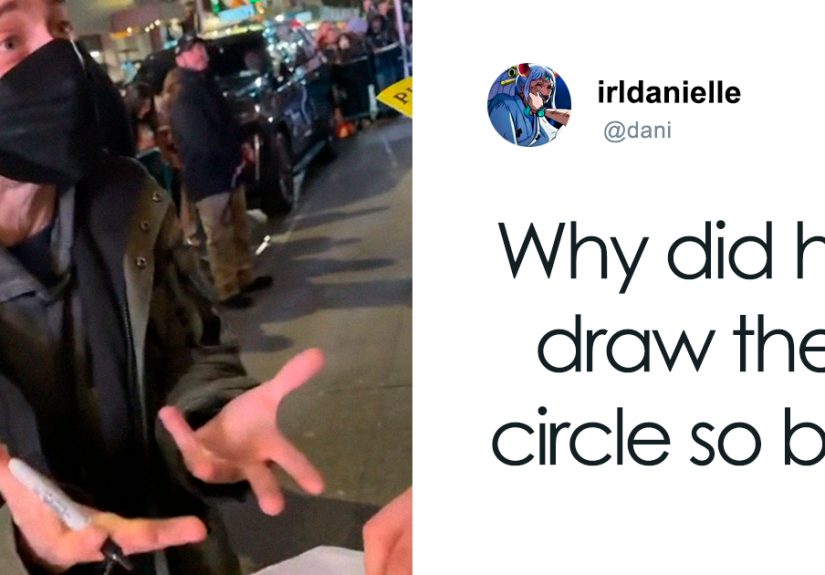
The now-famous interaction happened outside Merrily We Roll Along during Radcliffe’s Broadway run, where he was greeting fans after the show. That detail matters because stage-door culture is already a high-energy blend of gratitude, adrenaline, selfies, playbills, and people trying very hard not to say something strange. Sometimes they succeed. Sometimes they ask Daniel Radcliffe to design a tattoo.
According to widely circulated coverage and the fan video itself, the fan asked Radcliffe if he could draw the Deathly Hallows tattoo symbol for an eventual inking. Radcliffe’s response was immediate concern. He warned that his drawing was bad, his handwriting was bad, and the resulting image was not exactly tattoo-parlor gold. He essentially gave the verbal equivalent of a hazard sign. Yet the fan kept insisting. Radcliffe, being Radcliffe, eventually gave in and sketched the symbol anyway while continuing to argue against its future as body art.
That is what made the moment go viral. He was not offended. He was not rude. He was not acting precious about fandom. He was just hilariously, deeply aware that tattoos last longer than stage-door small talk. In an era when celebrity interactions are often polished into PR oatmeal, this one felt gloriously human. He looked like a man realizing, in real time, that a sloppy triangle could become a forever decision on somebody else’s calf.
Why the Deathly Hallows Symbol Still Has a Death Grip on Pop Culture
The Deathly Hallows symbol is one of the cleanest examples of pop culture iconography doing the absolute most with the absolute least. It is just a triangle, a circle, and a straight line. That is it. Minimalist. Mysterious. Easy to sketch. Easy to recognize. Easy to regret if your artist has the hand stability of a caffeinated squirrel.
Inside the Harry Potter universe, the symbol represents the Elder Wand, the Resurrection Stone, and the Cloak of Invisibility. Outside that universe, it has become shorthand for devotion to the series, especially among fans who came of age during the books-and-films era. For years, the symbol functioned almost like a secret handshake in ink form. You did not need a full portrait of Harry, a detailed Hogwarts castle, and a quote in curly script. You just needed the triangle-circle-line combo, and another fan would instantly know what team you were on.
That is also why the fan asked for this specific image. It is simple enough to request quickly, iconic enough to matter, and emotionally loaded enough to turn a casual autograph moment into a memory with gravity. This was not just “draw me something random.” It was “give me a version of a symbol that already means a lot to me, and make it yours too.” That is sweet. It is also exactly how people end up overexplaining tattoos at parties for the next 30 years.
Daniel Radcliffe’s Funny, Practical Relationship With Tattoos
Here is where the story gets even better: Radcliffe himself has spoken before about not having tattoos, even though he likes them. His reasoning is not anti-tattoo snobbery. It is wonderfully practical. He has joked that makeup artists would hate having to cover them for roles. In other words, the man who was asked to create a tattoo design is, in classic Daniel Radcliffe fashion, also the man who has long treated tattoos as a logistical production headache.
That gives the moment an extra layer of comedy. Of all the celebrities to request a spontaneous tattoo sketch from, this was a man who has publicly acknowledged both the appeal and the inconvenience of tattoos. He is not against them. He is just painfully aware that every cool impulse eventually meets the fluorescent reality of cleanup, maintenance, scheduling, and someone muttering in a makeup chair.
Which makes his “don’t get this tattoo” plea sound less like a rejection and more like public service. He knows enough about tattoos to respect them. He also knows enough about his own drawing skills to say, with admirable honesty, “Maybe not from me.” In a world addicted to fake confidence, that level of self-awareness is almost refreshing enough to deserve its own tattoo. Almost.
When Fan Devotion Meets Permanent Ink
Celebrity tattoos are not new. Fans have gotten signatures, quotes, dates, logos, and portraits inked for decades. What changes is the meaning attached to them. Sometimes the tattoo is about the celebrity. Sometimes it is about who you were when their work found you. Sometimes it is about surviving a rough season of life with one fictional universe as your emotional life raft and a wand-shaped coping mechanism.
That is why fandom tattoos are tricky to mock. Sure, some of them are objectively chaotic. Yes, some look like they were designed by sleep deprivation itself. But many come from real attachment, real comfort, and real memory. Harry Potter in particular became a coming-of-age framework for millions of readers and viewers. For a lot of people, a Harry Potter tattoo is not just merch that got too committed. It is a marker of adolescence, friendship, imagination, and identity.
Still, Radcliffe’s reaction highlighted the one question tattoo artists and dermatologists have been begging people to ask before they get inked: do you love the meaning, or do you love the adrenaline of the moment? Because those are very different kinds of love, and only one of them tends to age well.
Why Imperfect Tattoos Can Still Matter
To be fair, not every meaningful tattoo needs to be technically perfect. Sometimes the imperfection is the point. A crooked line drawn by a person you admire can feel more intimate than a flawless version pulled from the internet. The value comes from the story. “Daniel Radcliffe drew this and begged me not to get it tattooed” is, as tattoo backstories go, extremely hard to beat.
But there is a difference between sentimental imperfection and permanent confusion. A slightly wonky symbol can be endearing. A badly proportioned design done without proper adaptation for body placement can become the sort of thing you explain with your shoulders up and your voice half an octave too high. That is why a good tattoo artist matters: they can preserve the spirit of a doodle without copying its every accidental disaster.
The Symbol Means More Than It Used To
There is another reason this story resonates: the meaning of Harry Potter tattoos has become more complicated over time. In past years, coverage has shown some fans choosing to remove or cover their Harry Potter tattoos because their feelings about the franchise changed. Others kept the ink but reframed it as a tribute to the community, the characters, or the era of their lives rather than to the brand itself.
That emotional complexity makes the Deathly Hallows symbol especially interesting. It is simple, but it carries baggage. It can represent wonder, childhood nostalgia, fandom identity, contradiction, or all of the above at once. It can also trigger instant recognition, which is exactly why some tattoo artists have said they are tired of inking it. The symbol is iconic, yes, but also common enough to make artists sigh into their stencil paper.
Even so, it remains wildly popular because it is elegant and loaded with meaning. It is basically the black turtleneck of fandom tattoos: minimalist, expressive, and impossible to separate from its cultural moment.
Samara Weaving, Secondhand Potter Panic, and the Reality of Fan Ink
One reason Radcliffe’s stage-door reaction felt so believable is that this was not his first brush with a fan tattoo. Years ago, actress Samara Weaving told MTV News that she felt awkward about Radcliffe spotting her own Deathly Hallows tattoo when they worked together on Guns Akimbo. She reportedly tried to hide it before eventually getting caught by the simple fact that tattoos are not, in fact, detachable accessories.
Radcliffe’s reaction in that case was relaxed and kind. He was not weirded out. He did not turn it into a giant joke at her expense. That context matters because it shows his discomfort with the stage-door doodle was not about fans having tattoos at all. It was about being the one responsible for the design. There is a huge difference between noticing someone has a fandom tattoo and feeling like your shaky marker lines might become one.
And honestly, that distinction deserves applause. It is thoughtful. It is respectful. It is also the exact sort of common sense that deserts people the moment they meet someone famous and suddenly decide their upper arm should become a collaborative art project.
Should Anyone Ever Get a Celebrity Doodle Tattooed?
The funny answer is no. The serious answer is: only if you actually want the story more than the image.
Tattoo guidance from beauty and health publications has been consistent for years. Think carefully. Research your artist. Consider placement. Give the idea time. Understand that simple symbols still require strong line work. Know that fine-line tattoos may look effortless, but “effortless” is often just code for “done by someone who really knows what they are doing.” A rushed sketch on a sidewalk may be charming, but charm is not a substitute for design planning.
So if someone truly wanted Radcliffe’s drawing tattooed, the smart move would not be copying every wobble exactly out of loyalty to chaos. The smart move would be taking the sketch to a reputable tattoo artist and saying, “Please preserve the personality, not the panic.” That is the sweet spot. Keep the memory. Lose the accidental geometry crime scene.
In that sense, Radcliffe may have given the fan something even more valuable than a clean design. He gave him a story with built-in caution tape. A memory, a doodle, a warning, and a laugh. That is a very Daniel Radcliffe package, really: self-deprecating, sincere, and weirdly responsible.
Extra Experiences Related to the Story: What Fandom Tattoos Actually Feel Like After the Hype
One of the most revealing things about stories like this is what they say about the experience of fandom after the adrenaline fades. In interview clips, fan anecdotes, tattoo advice columns, and entertainment coverage, the same emotional arc appears again and again. First comes the rush: you meet someone whose work shaped your childhood, your teenage years, or some rough chapter you barely made it through. Your brain stops filing rational paperwork. Suddenly, getting a signature on a program feels too ordinary. A selfie feels too temporary. You want proof that this happened. Better yet, you want proof that it mattered.
That is where tattoo thinking sneaks in. Not because every fan is reckless, but because tattoos can feel like emotional cement. They say, “This moment is part of me now.” For some people, that turns into a cherished keepsake. An imperfect symbol becomes a private joke. A celebrity scribble becomes less about visual beauty and more about preserving the absurdity of an unforgettable night. Years later, people may still laugh at the crooked line, but they also remember the weather, the crowd, the shaking hands, the sentence they forgot to say, and the actor who was kinder than expected.
But there is another side to these experiences, and it is just as real. Some fans later realize they were tattooing a mood, not a value. They loved the heat of the encounter more than the design itself. Once the excitement passes, they are left with something that no longer reflects their taste, their identity, or their relationship to the franchise. That does not always mean regret in a dramatic sense. Sometimes it is softer than regret. Sometimes it is just a shrug and a long-sleeved shirt. Sometimes it is the beginning of a cover-up plan.
What makes the Daniel Radcliffe moment so compelling is that he seemed to understand both outcomes at once. He understood the fan’s excitement, and he also understood the cold, permanent reality waiting on the other side of that excitement. That is why his reaction felt funny instead of dismissive. He was basically saying, “I appreciate the sentiment, but I do not want to accidentally become your lifelong design problem.”
And maybe that is the real lesson hidden inside the whole story. The best fan experiences are not always the ones that leave a mark on your skin. Sometimes they leave a mark on your memory, your sense of humor, or your personal mythology. A celebrity encounter can still be meaningful without turning your body into a live-action scrapbook. If a tattoo grows from that memory after thought, reflection, and a good artist consultation, great. If the memory alone is enough, that is great too. Not every magical moment needs a needle to prove it happened.
Conclusion
Daniel Radcliffe’s plea to a fan not to get his Deathly Hallows doodle tattooed was hilarious, but it was also surprisingly wise. The moment worked because it combined affection, awkwardness, fandom history, and just enough panic to feel authentic. It reminded people why Daniel Radcliffe tattoo headlines travel fast, why the Deathly Hallows tattoo remains a pop-culture staple, and why the difference between a great story and a great tattoo is not always the same thing.
In the end, the story is less about whether that fan should have gotten the tattoo and more about why he wanted it in the first place. Fandom is emotional. Tattoos are emotional. Put them together outside a Broadway theater and you get a moment that is funny, messy, strangely touching, and very online. Radcliffe handled it with the exact combination of humility and comic dread the situation deserved. And if nothing else, he gave the internet a useful guideline: admire the wizard, cherish the memory, and maybe let an actual tattoo artist draw the lines.