Table of Contents >> Show >> Hide
- Why This Amateur Bathroom Won So Much Love
- The Backstory: An 1800s Hudson Valley Farmhouse With Problems to Solve
- The Design Choices That Make the Room Feel So Good
- 1. Brass fixtures bring warmth without turning the room into a costume drama
- 2. Hardwood floors make the bath feel connected to the house
- 3. A pedestal sink and furniture pieces keep the room light
- 4. Art in the bathroom is the secret sauce
- 5. The shower tile choice proves budget cuts can still be stylish
- What Homeowners Can Learn From This Farmhouse Bathroom Remodel
- Common Mistakes to Avoid If You Want This Look
- What Makes This Bathroom Feel Timeless in 2026 and Beyond
- The Experience of a Bathroom Like This: Why It Stays With You
- Conclusion
Some bathrooms are nice. Some are expensive. And some are so charming they make you question every rushed decision you have ever made in a tile aisle while holding a lukewarm coffee and whispering, “This beige seems safe.” Juliet Feehan’s Hudson Valley farmhouse bath belongs in the third category. It is the kind of room that feels quietly confident: not flashy, not sterile, and definitely not trying to audition for a luxury hotel in Miami. Instead, it leans into something much harder to fakeauthentic character.
That authenticity is exactly why Feehan’s space stands out. Her bath, part of an 1800s farmhouse renovation in Accord, New York, won Remodelista’s 2017 Considered Design Award for Best Amateur Bathroom. The praise from judge Sheila Bridges says a lot in very few words: warmth, brass details, hardwood floors, furniture pieces, and art that make the room feel personal. That formula may sound simple, but in bathroom design, simple is often where the magic and the mistakes both happen.
This room works because it doesn’t chase farmhouse style as a trend. It uses the language of an old house naturally. The bath feels like it belongs to the farmhouse rather than having been dropped in by a catalog with aggressive opinions. For homeowners dreaming of a rustic bathroom remodel, vintage bathroom ideas, or a farmhouse bathroom with real soul, Feehan’s project is packed with lessons worth stealingrespectfully, of course.
Why This Amateur Bathroom Won So Much Love
Juliet Feehan’s stated goal was practical and poetic at the same time: she wanted a bathroom with functional plumbing and fixtures that looked as if they had always been there. That may be the smartest sentence ever written about renovating an old house. Historic homes don’t need rooms that scream “brand-new remodel.” They need rooms that whisper, “Yes, I’ve always been fabulous. Thanks for noticing.”
That approach shaped every important decision in the space. Rather than strip away the farmhouse’s age, the room honors it. Hardwood floors remain. Furniture and art are not treated as illegal contraband to be banned from damp spaces. The fixtures make a statement, but they do so in a way that supports the room’s story instead of hijacking it. The result is a bathroom that feels layered, lived-in, and deeply human.
That “assembled over time” feeling is one of the biggest reasons farmhouse bathrooms succeed when they do. The best ones avoid looking too matchy-matchy. They combine old and new, polished and worn, useful and beautiful. Feehan’s bath has that balance. It doesn’t feel over-decorated, but it also doesn’t fall into the trap of being so minimal that it loses its pulse.
The Backstory: An 1800s Hudson Valley Farmhouse With Problems to Solve
Let’s be honest: old houses are adorable right up until the plumbing starts making choices. Feehan described her home as having been “Frankenstein-ed” together over the course of the 19th century. Some areas kept their original country charm; this bathroom was not one of them. That matters, because the project was not simply about decoration. It was about repairing a weak link in the house and giving it the same integrity as the rest of the home.
The bathroom was tiny, and small bathrooms are notorious for forcing a homeowner to choose between function and grace. Feehan found a clever solution by breaking through an old closet behind the wall and opening up the ceiling and shower area. That move created a more spacious shower in what had once been a cramped little cubicle. It also made the room feel noticeably more open and, in her words, more luxurious.
This is one of the most useful takeaways from the project. Great bathroom design is not only about what you put in the room. It is often about what you remove, reclaim, or reconfigure. Sometimes the difference between claustrophobic and comfortable is a smart layout shift, not a more expensive faucet.
The Design Choices That Make the Room Feel So Good
1. Brass fixtures bring warmth without turning the room into a costume drama
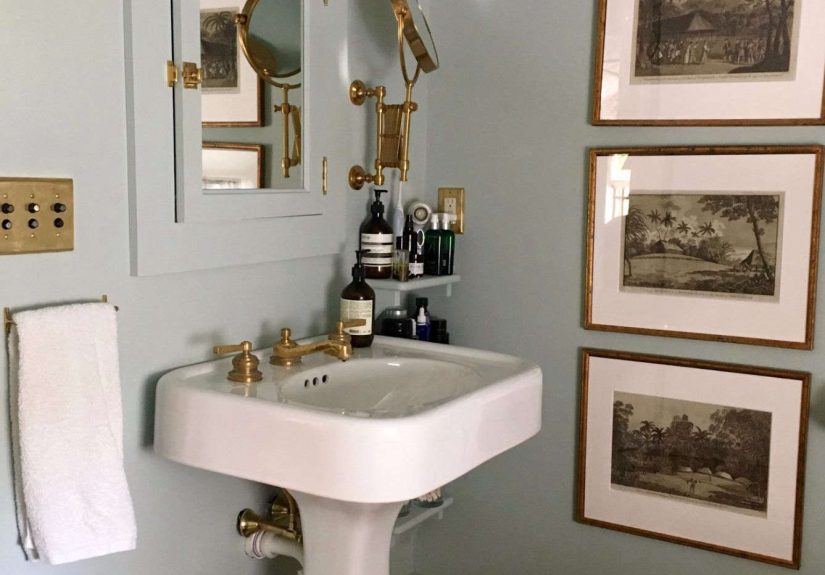
One of Feehan’s biggest splurges was the bath fixtures. Smart move. In a restrained room, hardware does heavy lifting. Brass is especially effective because it adds warmth, depth, and a sense of age. Fresh brass can look a little too shiny at firstFeehan joked that hers briefly resembled something from “Donald Trump’s gold latrine”but the finish developed patina over time. That aging process is part of the appeal. A farmhouse bathroom should not look afraid of time.
In design terms, brass acts like jewelry. Used thoughtfully, it gives the room spark. Used carelessly, it can wander into costume territory. Here, it works because the rest of the space is grounded. The fixtures do not have to scream because the room already knows who it is.
2. Hardwood floors make the bath feel connected to the house
Bathrooms are often treated as design islands, sealed off from the personality of the rest of the home. Feehan’s bath does the opposite. Keeping the hardwood floors helps the room feel like part of the farmhouse instead of a random tiled interruption. That one decision adds warmth underfoot, visual continuity, and a sense of history that ceramic alone rarely delivers.
Hardwood in a bathroom can make some people nervous, and fair enoughmoisture is nobody’s best friend. But when it is thoughtfully maintained and paired with proper ventilation, wood can be a powerful way to soften a utilitarian room. It also pairs beautifully with brass, painted walls, antique furniture, and artwork, all of which thrive on texture.
3. A pedestal sink and furniture pieces keep the room light
One of the reasons the bath feels airy is that it resists the urge to cram in a hulking vanity just because the bathroom industry seems emotionally attached to them. A pedestal sink has a lighter visual footprint, which is especially valuable in a small farmhouse bathroom. It leaves breathing room around the plumbing, keeps sightlines open, and reinforces that old-house sensibility.
Feehan also brings in furniture pieces, including a stool she uses for towels, soap, and books. That sounds minor, but it is part of what makes the room feel personal rather than staged. A bathroom with a stool, art, and useful surfaces feels like a room-room, not a machine room for teeth brushing.
4. Art in the bathroom is the secret sauce
Judge Sheila Bridges specifically called out the furniture and art, and she was right to. Art is often the difference between a good bathroom and a memorable one. It adds narrative. It says the homeowner sees the bathroom as part of daily life, not just an engineering zone with towels.
In farmhouse and vintage-inspired bathrooms, art also helps prevent the room from feeling too literal. Without it, rustic spaces can tumble into clichés: barn doors, signs about bubbles, and enough mason jars to start a jam company. Art introduces personality and unpredictability. It keeps the room from becoming a theme park attraction called “Ye Olde Powder Room.”
5. The shower tile choice proves budget cuts can still be stylish
Feehan had originally sourced beautiful handcrafted shower tile, but it fell outside the budget. Instead, she found an inexpensive substitute: a thinner tile with a crackled appearance. Once grouted, the darker grout deepened those crackled areas and gave the shower a slightly aged, old-subway-tile feel. That is one of the savviest parts of the whole project.
Too many remodels assume that a smaller budget means a blander result. Not true. Often, budget constraints force better thinking. The substitute tile was not a sad compromise; it became part of the room’s character. The lesson is clear: splurge where the room most needs authenticity, then get creative everywhere else.
What Homeowners Can Learn From This Farmhouse Bathroom Remodel
Feehan’s bathroom is inspiring because it is beautiful, but it is useful because it is realistic. It was not built from infinite money and a mood board floating in outer space. It came out of an actual old house with actual limitations. That gives the project weight.
First, pick one guiding principle before you pick products. In this case, the principle was simple: make the room feel original to the house. Every decision flowed from that. If your own guiding principle is “warm but practical,” “vintage but not fussy,” or “small but luxurious,” great. Just have one. Otherwise, your bathroom will end up looking like five Pinterest boards got into an argument and nobody won.
Second, invest in layout before decor. Expanding the shower and opening the ceiling made the room more functional and more inviting. No amount of beautiful hardware can rescue a bad layout. The bones matter.
Third, choose a hero detail. In Feehan’s bath, the brass fixtures play that role. In another space, it could be a clawfoot tub, antique mirror, reclaimed vanity, or dramatic sconce. A room with one strong focal point feels intentional. A room with seven “special moments” feels tired before you do.
Fourth, let imperfection do some work. Patina, crackle, worn wood, and slightly quirky furniture all add depth. Farmhouse design is at its best when it embraces softness, age, and irregularity. If everything is too perfect, the room starts to feel like it was assembled by a robot with very expensive taste.
Common Mistakes to Avoid If You Want This Look
Don’t over-theme the farmhouse idea. Real farmhouse charm comes from materials, proportion, and personalitynot from filling the room with signs, galvanized buckets, and decorative ladders that hold exactly one hand towel and a lot of regret.
Don’t ignore ventilation. A room with wood floors, textiles, and art needs moisture control. A good vent fan is not glamorous, but neither is mold. Proper ventilation protects every charming thing you worked so hard to bring into the room.
Don’t force modern perfection onto an old house. Historic homes often look best when renovated with respect. That does not mean you must live like it is 1887. It means new choices should feel compatible with the home’s age and architecture.
Don’t spend evenly. Bathrooms rarely reward equal-opportunity budgeting. Spend where authenticity showsfixtures, lighting, layout, or one beautiful vintage-style element. Save on the parts where a clever substitute can still deliver character.
What Makes This Bathroom Feel Timeless in 2026 and Beyond
Trends come and go. Some leave gracefully. Others leave like a reality show contestant flipping a table. Feehan’s bath endures because it is built on principles that age well: warmth, usability, proportion, and genuine personality. The room mixes vintage references with modern function. It honors the farmhouse without turning it into cosplay. It feels modest, but not plain; romantic, but not sugary; practical, but never dull.
That is the sweet spot many homeowners are chasing now, especially in bathroom remodels. People want spaces that feel restorative but still rooted in real life. They want rooms with character, not just polish. They want a bathroom that can handle wet towels and Tuesday mornings while still looking like it belongs in a magazine. Feehan’s bath proves that is possible.
The Experience of a Bathroom Like This: Why It Stays With You
Now for the part that photos can only hint at: the experience. A bathroom like Juliet Feehan’s does not impress you in one loud moment. It wins slowly, which is often the more lasting kind of victory. You can imagine stepping into it on a cold Hudson Valley morning when the rest of the farmhouse still feels a little sleepy and the floors give off that old-house hush. The brass catches the light in a muted waynot flashy, just quietly alive. The room doesn’t feel showroom-new. It feels settled, like it has already made peace with the day before you even brush your teeth.
That lived-in feeling matters. In many remodeled bathrooms, the mood is “please admire me from a distance and do not set down your toothbrush.” Here, the mood is gentler. A stool holds towels, soap, maybe a book. Art on the walls suggests that somebody wanted beauty here, not just utility. Even the imperfections feel intentional. The crackled tile does not pretend to be precious; it adds texture, like the room has stories and is not above telling a few of them.
And then there is the small-space luxury of it all. Not luxury in the giant-marble-echo-chamber sense. Luxury in the deeply satisfying sense of everything being where it should be. The shower is more open because a cramped closet gave up its former life for a better cause. The room breathes. In a small bathroom, that kind of breathing room feels downright heroic.
You can also imagine how the bath changes throughout the day. Morning light makes the room feel crisp and hopeful. Evening turns it moodier and softer, the brass warmer, the wood richer, the art more intimate. It becomes the kind of place where you linger for an extra ten minutesnot because you are avoiding responsibilities, obviously, but because the room has convinced you that a bath is a form of historical research.
What really resonates, though, is how personal the space feels. So many bathrooms aim for “universally appealing,” which often translates to “emotionally unavailable.” Feehan’s bathroom is the opposite. It has taste, but it also has a point of view. It does not try to flatter everyone. That is exactly why it works. The antiques, the furniture, the art, the patina, the practical fixestogether they create a room that feels owned, not merely decorated.
For homeowners, that may be the most useful lesson of all. A memorable bathroom is not built from the longest receipt. It is built from clear choices. The best spaces are usually the ones that know what they are trying to say. In this case, the message is something like this: old houses deserve respect, beauty should be useful, and a bathroom can absolutely have a soul. Also, a little brass never hurts.
That is why Juliet Feehan’s Hudson Valley farmhouse bath still feels relevant. It is charming without being cute, elevated without being stiff, and practical without being boring. It proves that an amateur bathroom can outperform plenty of professional-looking rooms simply by understanding the assignment: honor the house, solve the problem, and leave enough personality in the room that it actually feels like somebody wonderful lives there.
Conclusion
Juliet Feehan’s award-winning farmhouse bathroom is more than a lovely old-house renovation. It is a case study in how to make a small bathroom feel authentic, warm, and personal. By preserving hardwood floors, choosing statement brass fixtures, opening up the shower, using art and furniture, and balancing splurges with smart savings, she created a space that feels original to the home instead of imported from a trend cycle. For anyone planning a farmhouse bathroom remodel, the takeaway is refreshingly clear: aim for character, not gimmicks; function, not fuss; and details that age gracefully, not instantly. In other words, design the room so it feels better every yearnot just on reveal day.