Table of Contents >> Show >> Hide
- What a tie rack really is (and why it’s perfect for repurposing)
- The organizing secret sauce: why tie racks work
- 13 clever new uses for a tie rack (room-by-room ideas)
- 1) Jewelry organizer that actually prevents tangles
- 2) Headband and hair accessory station
- 3) Sunglasses and eyewear display (no more “where are my glasses?”)
- 4) The obvious upgrade: scarves, belts, and small bags
- 5) Kitchen towel, apron, and potholder hub (small kitchen hero)
- 6) Pantry helper: measuring cups, bag clips, and small tools
- 7) Cleaning closet control center
- 8) Craft room ribbon and tape organizer
- 9) Gift-wrap and gift-bag station (the holiday sanity saver)
- 10) Garage organizer for cords, bungees, and small hand tools
- 11) Entryway “grab-and-go” station for keys and leashes
- 12) Kids’ corner: medals, dress-up accessories, and art display
- 13) Cable and charging cord wrangler
- How to set up a tie rack for a “new use” (so it doesn’t become wall decor you ignore)
- Common mistakes (and how to avoid them)
- Conclusion: the tie rack glow-up you didn’t know you needed
- of real-life experiences with “new use for tie rack” ideas
A tie rack is one of those underappreciated closet sidekicksquiet, reliable, and usually only invited to the party when someone owns more than three neckties.
But here’s the plot twist: a tie rack is basically a compact, multi-hook storage system that just happens to be wearing a tuxedo.
And once you stop thinking “ties” and start thinking “tiny wall-mounted octopus,” the new use for a tie rack list gets fun fast.
In this guide, we’ll explore smart, practical, and slightly cheeky ways to repurpose a tie rack in your homecloset, kitchen, craft room, garage, entryway, and beyond.
You’ll get setup tips, real examples, and ideas that work whether you’re organizing a studio apartment or trying to tame the “miscellaneous drawer” that has become a lifestyle.
What a tie rack really is (and why it’s perfect for repurposing)
Most tie racks share three features that make them ideal for upcycling: multiple hooks or arms, vertical storage, and easy access.
The common styles include:
- Wall-mounted swing-out racks (arms fold flat, swing out when you need them)
- Over-the-door racks (great for renters and commitment-phobes)
- Hanging/rotating tie hangers (spin to find what you wantlike a lazy Susan for accessories)
That designmany small hanging points in a compact footprintis exactly what you want for items that tangle, disappear, or pile up into a guilt mountain.
So yes, your tie rack can absolutely graduate from “formalwear support staff” to “whole-house organizing MVP.”
The organizing secret sauce: why tie racks work
Professional organizing advice tends to circle the same principles: keep frequently used items visible, store vertically when possible, and separate items so they don’t become a knotted mess.
A tie rack does all threewithout requiring a weekend, a power saw, or a motivational speech.
Think of it as a micro “zone” creator. One rack = one category = fewer piles.
And fewer piles means fewer moments of whispering, “I swear I own an oven mitt,” while holding a hot pan with a folded paper towel like it’s 1842.
13 clever new uses for a tie rack (room-by-room ideas)
1) Jewelry organizer that actually prevents tangles
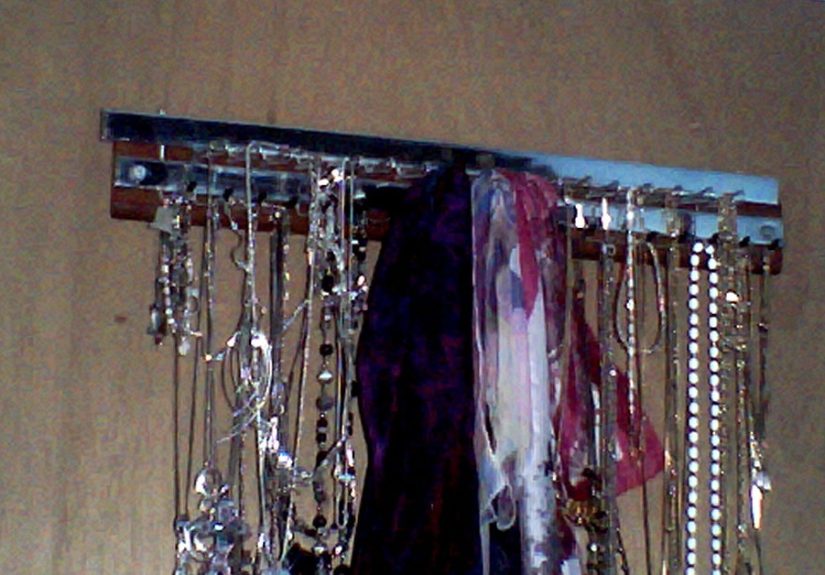
Necklaces and bracelets are basically professional escape artists. Hang them individually on tie rack hooks to stop chain knots and keep your favorites visible.
If your rack has thin metal hooks, add small rubber tips (or a wrap of washi tape) to reduce snagging.
Pro move: Sort by lengthshort chains on top hooks, longer pieces belowso they don’t overlap and form a friendship bracelet you did not consent to.
2) Headband and hair accessory station
Tie racks are perfect for headbands, scrunchies, claw clips, and hair tiesespecially in bathrooms where drawer space is limited.
Hang headbands by shape, clip claw clips directly onto hooks, and corral hair ties on small rings (like key rings) that hang from one hook.
3) Sunglasses and eyewear display (no more “where are my glasses?”)
Use a tie rack near your closet or entryway to hang sunglasses by the arms. It keeps lenses from getting scratched in a drawer pile,
and it makes picking a pair feel weirdly luxuriouslike you’re shopping your own life.
Tip: Add a soft adhesive felt dot on the wall behind the rack if frames bump the surface.
4) The obvious upgrade: scarves, belts, and small bags
Yes, tie racks already “know” accessoriesbut most people underuse them. Loop belts through hooks, drape scarves loosely to prevent creasing,
and hang small clutches or mini crossbody bags by their straps.
This is a great closet organization win for small spaces because it replaces bulky bins with slim vertical storage.
5) Kitchen towel, apron, and potholder hub (small kitchen hero)
A wall-mounted or rotating tie rack works beautifully for kitchen textilesdish towels, aprons, oven mitts, pot holders, and reusable produce bags.
Put it inside a pantry door, on a cabinet side panel, or in the laundry area right off the kitchen.
Why it works: These items are lightweight, used constantly, and love to migrate to countertops. A tie rack gives them a home base.
6) Pantry helper: measuring cups, bag clips, and small tools
If your tie rack hooks are sturdy, hang measuring cups and spoons (especially sets with loops), lightweight strainers, or small funnels.
Use a few hooks for chip clips or binder clips holding snack bags closed.
Keep it near where you use itpantry door or inside a cabinetso it’s functional, not just “organized for photos.”
7) Cleaning closet control center
The cleaning closet is where good intentions go to wrestle with a mop. Mount a tie rack inside the closet door to hang:
- Microfiber cloths (folded)
- Rubber gloves (by the cuffs)
- Small dusters
- Refillable spray bottle triggers (if your hooks can support it)
Bonus: Assign one hook per “job” (glass, bathroom, kitchen) so supplies stay grouped.
8) Craft room ribbon and tape organizer
Crafters know: ribbon spools multiply when you’re not looking. Slide ribbon spools onto hooks (or hang them using a short dowel attached to the rack arms).
Washi tape can be stacked on a small ring and hung like a charming little donut of good decisions.
Add labels on the wall next to hooks (“holiday,” “birthday,” “fabric tape”) and suddenly you’re the kind of person who has a system.
9) Gift-wrap and gift-bag station (the holiday sanity saver)
Put a tie rack in a closet or near your wrapping supplies to hang:
- Ribbon spools
- Gift tags on rings
- Mini scissors
- Twine
- Gift bags by handles
This keeps fragile stuff off the floor and prevents the classic “I bought tags… in 2019… where are they?” spiral.
10) Garage organizer for cords, bungees, and small hand tools
A tie rack can be a surprisingly useful garage tool organizer when mounted to a stud or solid backing.
Hang safety glasses, lightweight tape measures, bungee cords, short extension cords, and small hand tools with loops (like trowels or mini pruners).
Safety note: Keep heavy power tools on proper wall hooks or shelves. The tie rack is for light-to-medium itemsthink “handy,” not “hazard.”
11) Entryway “grab-and-go” station for keys and leashes
If your entryway is where time goes to die, give it a tie rack. Assign hooks for keys, dog leashes, hats, tote bags, and reusable shopping bags.
One hook can hold a small pouch for earbuds or transit cards.
This is especially helpful for families: each person gets a hook, and nobody can claim they “didn’t see” their stuff. It’s right there. Looking at them.
12) Kids’ corner: medals, dress-up accessories, and art display
Tie racks are great for kids’ rooms because they’re low-profile and easy to use.
Hang costume jewelry, dress-up ties and scarves, sports medals, and even small artwork using clips.
Tip: Mount it at kid height so they can actually put things away (which increases the odds of “putting things away” happening at all).
13) Cable and charging cord wrangler
The modern household has two types of cords: the one you need and the seventeen you can’t identify.
A tie rack near a desk or charging station lets you hang cords individually, label them, and stop the dreaded “spaghetti drawer” situation.
Use small Velcro straps to coil cords, then hang the bundle on a hook. One hook = one device. Peace returns to the land.
How to set up a tie rack for a “new use” (so it doesn’t become wall decor you ignore)
Choose the right location
Put the rack where you’ll use it. That sounds obviousuntil you realize most clutter happens because “putting it away” requires a small hike.
For frequently used items, aim for arm-level reach. For seasonal or occasional items, higher placement is fine.
Mount it safely (and renter-friendly if needed)
- Wall-mounted racks: Use studs when possible; otherwise, use appropriate wall anchors for your wall type.
- Over-the-door racks: Great for closets, pantries, and laundry rooms. Add felt pads to protect doors.
- Hanging racks: Best for closets and wardrobes; choose sturdy hangers if you’ll load multiple items.
If you’re storing items in a humid room (like a bathroom), choose a rack with rust-resistant metal or a sealed finish.
Prevent slipping and snagging
Smooth metal hooks can let silky scarves slide off, and rough edges can snag delicate fabric.
Quick fixes: rubber tips, a wrap of tape, or small adhesive heat-shrink tubing on hook ends.
Common mistakes (and how to avoid them)
- Overloading: A tie rack isn’t a shelving unit. If the rack bends, you’ve found its emotional limit.
- No categories: Mixing unrelated items (“keys + ribbons + potholders”) turns a rack into a confusing museum exhibit.
- Too hidden: If you can’t see it, you’ll forget it exists. Visibility is half the magic.
- Wrong rack style: Rotating racks shine for lots of lightweight items; swing-out racks are great for quick access in tight spaces.
Conclusion: the tie rack glow-up you didn’t know you needed
The best organizing tools aren’t always the fanciest. Sometimes it’s a humble tie rackreborn as a scarf holder, jewelry organizer, kitchen textile station,
craft supply hero, or entryway command center.
If you want a low-cost, high-impact upgrade, start with one problem zone (tangled necklaces, runaway dish towels, chaotic cords).
Give your tie rack a new job title, and watch clutter lose its favorite hiding spots.
That’s the real new use for a tie rack: turning “Where is it?” into “Oh. There it is.”
of real-life experiences with “new use for tie rack” ideas
Let’s talk about what these tie rack upgrades feel like in real homesbecause the difference isn’t just visual, it’s emotional.
(Yes, organizing has feelings. Mostly relief, occasionally betrayal when you discover twelve duplicate phone chargers.)
Scenario 1: The small kitchen towel takeover. In a compact kitchen, dish towels often end up draped over the oven handle, piled on the counter,
or stuffed into a drawer that turns into a linen avalanche. Adding a tie rack inside a pantry door changes the daily rhythm. Instead of hunting for a clean towel,
you grab one from a hook, and when it’s time to wash, you replace it with a fresh one in seconds. The surprising benefit is that towels dry better when they’re spaced out,
and your counters stop looking like they’re wearing a bathrobe. It’s one of those tiny changes that makes cooking feel calmerlike your kitchen is cooperating.
Scenario 2: The jewelry knot problem that steals your mornings. If you’ve ever tried to untangle necklaces while already running late,
you know it’s not a “small inconvenience,” it’s a full-body time warp. People who switch to a tie rack jewelry organizer often describe the same moment:
they pick a necklace in five seconds and suddenly feel like a functioning adult. Hanging pieces separatelyespecially by lengthremoves friction from getting ready.
It also makes you wear more of what you own, because you can actually see it. The rack becomes part storage, part display, part “I have my life together” illusion
(which, honestly, is still a win).
Scenario 3: The craft corner that used to explode. Ribbon, tape, and small tools tend to drift into piles because they’re awkward to store.
A tie rack turns those supplies into a neat visual menu: ribbon spools lined up, scissors in the same spot every time, twine not escaping into the void.
Crafters often notice they waste lessbecause they can see what they already haveand they spend less time setting up and cleaning up. The result isn’t just a tidier shelf;
it’s more actual crafting, because the barrier to starting is lower. And that’s the real goal: storage that supports the hobby instead of nagging it.
Scenario 4: The entryway “launch pad” for busy households. Keys and dog leashes are classic disappearing acts.
A tie rack by the door creates a predictable routine: everyone gets a hook, and the leash has a home that isn’t “somewhere near the couch.”
Families often find mornings run smoother because the rack removes micro-decisions (“Where did I put it?”) that add up fast.
It’s not glamorous, but it’s powerfulthe kind of organization that quietly saves time every day.
In all these experiences, the tie rack isn’t just holding itemsit’s reducing friction.
And when your home has less friction, you spend less time managing stuff and more time living your actual life.
Which is, frankly, what every humble little rack deserves to brag about.