Table of Contents >> Show >> Hide
- Why Copenhagen Keeps Winning the “Best Light” Award
- The Copenhagen Formula: Craft + Engineering + Calm
- Iconic Copenhagen Lighting Styles (and Where They Shine)
- Hardware: The Tiny Details That Make Copenhagen Rooms Look Expensive
- How to Mix Fixtures and Hardware Like a Dane (Without Becoming a Minimalist Monk)
- Shopping Copenhagen Design in the U.S.: What to Check Before You Click “Add to Cart”
- Care, Patina, and the Joy of Things That Age Gracefully
- Conclusion: Bring Home the Copenhagen Glow
- Extra: of Copenhagen Lighting & Hardware Experiences
Copenhagen has a talent for making everyday objects feel quietly legendary. A chair becomes “an heirloom,” a door handle becomes “jewelry,” and a lamp becomes
“a mood,” “a sculpture,” and “the reason your guests suddenly want to eat dinner at your house every night.” If that sounds dramatic, it’s because lighting is
dramatic. It literally controls what you can see and how good you look while seeing it. Copenhagen designers simply decided to treat that power with respectand
a little bit of style.
This guide goes deep on artisan-designed light fixtures and architectural hardware that trace their DNA to Copenhagen’s design culture: glare-free engineering,
warm materials, honest construction, and details that feel better every time you touch them. We’ll cover why Copenhagen design looks so “effortless” (spoiler:
it’s not effortless), what to buy, how to combine finishes, and how to pull off that Danish glow without turning your home into a minimalist museum where nobody’s
allowed to sit.
Why Copenhagen Keeps Winning the “Best Light” Award
Copenhagen sits at the intersection of craft tradition and modern industrial design. It’s also a city that understands darknesslong winters, low-angle daylight,
and that particular Northern European “blue hour” that makes you want to light a candle and rethink your entire life plan. In this context, good lighting isn’t an
accessory; it’s infrastructure.
The Copenhagen approach tends to follow three principles:
- Light should be comfortable. If a fixture creates glare, it’s not “dramatic”it’s rude.
- Materials should be honest. Brass looks like brass, glass looks like glass, and wood is allowed to be wood.
- Objects should age well. Patina isn’t damage; it’s a receipt for a life well-lived.
The Copenhagen Formula: Craft + Engineering + Calm
1) Glare-free science (yes, the math is part of the charm)
Some of Copenhagen’s most influential lighting comes from a simple obsession: eliminating glare while keeping spaces bright and flattering. That’s why layered-shade
systems became iconic. Instead of blasting a bulb into your eyeballs, these fixtures use precisely shaped reflectors to distribute light downward and outward, creating
a soft “wrap” that makes rooms feel welcomingand makes everyone at the table look like they slept eight hours.
A classic example is the multi-shade pendant tradition associated with Poul Henningsen’s workfixtures that combine multiple tiers to control angles and bounce light
where it’s needed. The result isn’t just prettier; it’s more usable for dining, reading, and general living without harsh hotspots.
2) Sculptural icons that still behave like lighting
Copenhagen design also embraces the idea that a light fixture can be sculptural even when it’s turned off. The best pieces don’t become “dead objects” when the room
is dark; they keep a presencelike art that also happens to illuminate your hallway without making it feel like an airport terminal.
Look for designs that hide the light source, diffuse brightness through layered elements, and keep the fixture visually balanced from multiple angles. In Copenhagen
interiors, you’ll often see pendants that read as geometry first, then light seconduntil you flip the switch and everything becomes warm and dimensional.
3) Soft materials that glow, not glare
Not every Copenhagen-adjacent fixture is metal and math. Some of the most beloved designs use pleated shades, textile cylinders, and opal glass to produce a calm,
atmospheric glow. This is where artisan craft becomes obvious: folded shades, carefully stitched textiles, and subtle translucency that turns “a lamp” into “a room’s
personality.”
Hand-folded shade traditions are especially notablepleats that aren’t just decorative, but functional, shaping how light blooms through the material. The folds create
gentle gradients: brighter near inner curves, softer at outer edges. It’s the lighting equivalent of a good filterexcept it’s physical, not digital, and it doesn’t
accidentally turn your face into a wax statue.
Iconic Copenhagen Lighting Styles (and Where They Shine)
Pendants for dining tables: the “center of gravity” move
Copenhagen interiors love pendants because they anchor a room without eating floor space. Over a dining table, a pendant becomes a social tool: it pulls attention
inward, makes food look better, and creates that cozy “everyone stay another hour” vibe.
- Best for: dining rooms, kitchen islands, breakfast nooks
- Design tip: choose a shape that shields the bulb from seated eye level; layered shades and deep cones help
- Practical tip: dimming is non-negotiable; you want bright prep light and soft dinner light
Wall lights and sconces: the secret to “expensive” rooms
If you want a room to feel designed (not just furnished), add wall lights. Copenhagen-style wall fixtures often provide indirect glowupwash, downwash, or bothso your
walls gain depth. Depth reads as luxury because it mimics natural light and reduces harsh contrast.
- Best for: hallways, bedside lighting, bathrooms (when rated for damp locations)
- Design tip: use pairs to create rhythm; symmetry can feel calm and intentional
Portable lamps: Copenhagen’s “move the mood” habit
Copenhagen design loves flexible lightingtable lamps, portable lamps, small floor lampsbecause they let you adjust a space without renovating your entire life.
Portable lamps are especially good for renters or anyone who wants the “candlelight vibe” without living in a permanent wax museum.
Soft-glow shades: pleats, textiles, and opal glass
For living rooms and bedrooms, soft-shade fixtures are the shortcut to calm. Pleated shades and textiles spread light broadly, avoiding harsh shadows. Opal glass does a
similar job, turning point-source brightness into an even, milky glow.
Hardware: The Tiny Details That Make Copenhagen Rooms Look Expensive
Here’s the Copenhagen hardware philosophy: you touch handles and knobs more often than you touch your sofa, so they should feel good. Hardware is also the easiest
“high-impact, low-chaos” upgradeespecially in kitchens, bathrooms, and entryways.
Brass done right: weight, warmth, and patina
Solid brass hardware is popular in Copenhagen-influenced interiors because it reads warm against pale woods, neutral walls, and stone surfaces. It also ages. Over time,
brass develops patinasubtle darkening and variationso the hardware gains character instead of looking tired.
If you prefer a consistent shine, choose finishes designed to resist patina (often lacquered). If you want the “lived-in Danish apartment” vibe, let raw brass evolve.
Either way, you’re choosing a finish with a timelineand that’s a very Copenhagen way to think about design.
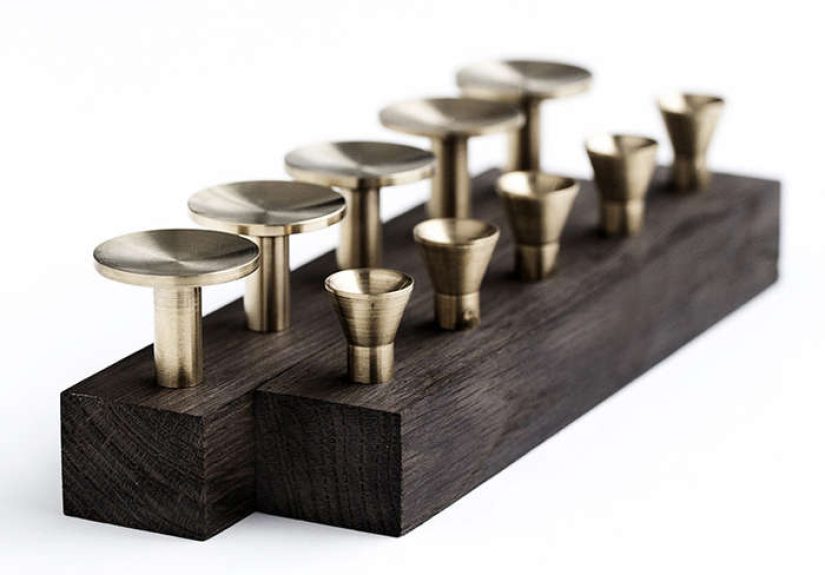
Hooks and knobs that act like mini-sculptures
Copenhagen design doesn’t waste an opportunity for playful function. Coat hooks become rounded “dots,” knobs become geometric forms, and suddenly a hallway wall becomes
both storage and composition.
- Entryway: cluster hooks at different heights for adults, kids, and bags
- Kitchen: add small hooks near the stove for towels (and to reduce the “where is the towel?” panic)
- Bathroom: use brass or coated metal for longevity; keep spacing generous so towels actually dry
Cabinet pulls and handles: the “quiet facelift”
Copenhagen-style pulls tend to be simple, linear, and easy to grip. Think rounded edges, comfortable proportions, and finishes that coordinate with lightingbecause
when your pendant is brass and your pulls are chrome, the room doesn’t look eclectic; it looks indecisive.
How to Mix Fixtures and Hardware Like a Dane (Without Becoming a Minimalist Monk)
Step 1: Pick your finish “family”
Choose one dominant finish and one supporting finish. Examples:
- Warm family: brass + walnut + warm white paint
- Cool family: brushed stainless + pale oak + crisp whites
- Graphic family: matte black + light wood + linen textures
Your lighting and hardware don’t need to match perfectly, but they should speak the same language. If one is shiny and glamorous while the other is raw and industrial,
the room can feel like two conversations happening at once.
Step 2: Layer the light (ambient, task, accent)
Copenhagen spaces often feel good because they avoid relying on one overhead fixture to do everything. Use:
- Ambient: pendants, ceiling fixtures, or soft floor lamps
- Task: reading lamps, under-cabinet lighting, focused desk lights
- Accent: wall sconces, small table lamps, art lighting
When you layer light, you can tune the room: bright for cleaning, softer for dinner, cozy for late-night scrolling you’ll pretend was “reading.”
Step 3: Use scale like it’s a design tool (because it is)
Copenhagen fixtures are often bold in scale but calm in detail. A large pendant with a simple form can look more refined than a small chandelier with a thousand
sparkly extras. For hardware, the same rule applies: slightly oversized pulls can feel more luxurious and ergonomic.
Step 4: Keep color intentional
Copenhagen lighting ranges from classic neutrals to playful modern palettes. If you’re adding color, decide whether the fixture is:
- The statement: one bold pendant in a calm room
- The chorus: repeated smaller fixtures in coordinated shades
- The whisper: subtle interior colors that influence warmth without screaming “look at me!”
Shopping Copenhagen Design in the U.S.: What to Check Before You Click “Add to Cart”
The good news: you don’t have to fly to Denmark and pretend you “just happened to pop into a showroom” (unless you want to, in which case: excellent life choice).
Copenhagen-origin lighting and hardware is widely available through established U.S. retailers and museum shops.
Checklist for light fixtures
- Certification: look for UL listing or appropriate safety certification for your market
- Dimming compatibility: confirm your dimmer type matches the lamp/driver requirements
- Bulb base & wattage: confirm socket type and recommended LED equivalents
- Finish reality check: “brass” can mean plated, lacquered, or solid; read materials carefully
- Lead time: artisan and premium fixtures may ship slowerplan around renovations
Checklist for hardware
- Center-to-center measurement: especially for pullsmatch existing drill holes if you’re swapping
- Door thickness: verify the screws fit your cabinet/door depth
- Finish durability: kitchens and bathrooms demand tougher coatings (or a willingness to embrace patina)
- Comfort test: choose shapes that feel good in your hand; sharp edges look cool until Monday morning
Care, Patina, and the Joy of Things That Age Gracefully
Copenhagen design is famously “low drama,” but the materials do have opinions. Here’s how to keep them happy:
- Metal shades: dust regularly; clean gently with a soft cloth to avoid micro-scratches
- Glass diffusers: remove and wash carefully; fingerprints can kill the softness of light
- Brass hardware: expect patina on unlacquered brass; polish only if you want a brighter look
- Textile/pleated shades: use a soft brush or low-suction vacuum attachment; avoid moisture
The bigger lesson: don’t fight aging materials unless you truly want a “forever-new” aesthetic. Copenhagen design often looks better with time because it’s built to
hold upphysically and visually.
Conclusion: Bring Home the Copenhagen Glow
Artisan-designed light fixtures and hardware from Copenhagen aren’t just “Scandinavian style” décorthey’re problem-solvers. They reduce glare, shape rooms, and make
everyday actions (opening a cabinet, hanging a coat, sitting down to dinner) feel smoother and more intentional.
Start with one hero piece: a glare-free pendant over the dining table, or a set of solid brass hooks in your entry. Then build outward: add layers of soft lighting,
unify finishes, and choose hardware that feels as good as it looks. The Copenhagen effect isn’t about having fewer thingsit’s about having better things, placed with
purpose. And yes, that purpose can include “making my kitchen look like it belongs in a design magazine,” because that is a valid emotional need.
Extra: of Copenhagen Lighting & Hardware Experiences
If you ever visit Copenhagen with “just looking” energy, the city will politely ignore your intentions and convert you into a lighting person. It starts subtly:
you notice how cafés layer light like a playlistpendants over tables, warm wall glow along textured plaster, and a portable lamp on a shelf doing absolutely nothing
practical except making the room feel human. You don’t realize you’re being educated until you return home and start judging your ceiling fixture like it owes you money.
Wander through a design district or showroom row and you’ll see the Copenhagen trick in real time: the fixtures are arranged not as products, but as atmospheres.
A single pendant is never shown alone; it’s paired with a chair, a tabletop, a vase, and a wall color that makes the light look extra delicious. It’s a reminder that
lighting is not a “thing,” it’s a relationship between materials, surfaces, and the people who live there.
In the evening, the city’s windows become little galleries. You’ll catch glimpses of pleated shades glowing like paper lanterns, metal pendants hovering over dinner
conversations, and floor lamps tucked behind sofas like they’re shybut still doing all the emotional heavy lifting. That’s the Copenhagen vibe: the lighting doesn’t
perform for attention; it supports the scene so the people can be the main characters.
Hardware shows up in these moments too, especially in older apartments and renovated townhouses. Door handles feel substantialcool metal, smooth edges, no wobble.
Cabinet pulls look simple until you touch them and realize someone obsessed over the radius, the grip, the way the finish reflects light. In Copenhagen, a handle isn’t
“just a handle.” It’s an invitation to use the space with ease.
If you time your visit with a design festival, you’ll see prototypes, limited finishes, and installations that treat light like architecture. Courtyards become glowing
rooms. Stairwells turn into quiet theaters. You’ll overhear conversations where people casually debate color temperature and beam spread the way other cities debate sports.
It sounds nerdyuntil you experience how much better a room feels when the light isn’t fighting your eyes.
Bring that experience home by copying the behavior, not the postcard. Add a small lamp where you normally rely on overhead light. Put a sconce in a hallway that feels
flat. Swap one set of builder-grade pulls for hardware with real weight. Copenhagen design isn’t about perfection; it’s about comfort that’s been engineered, crafted,
and then made to look easy. The best part: once you start paying attention, you’ll find that “Copenhagen glow” is less a style and more a habitone you can build
room by room.