Table of Contents >> Show >> Hide
- The Stylist Who Saw a Museum in a Shampoo Bowl
- Why Classic Art Works So Well in Hair
- From Salon Technique to Gallery-Level Illusion
- More Than a Viral Moment: Hair Has Always Belonged to Art
- Why the Internet Could Not Scroll Past It
- What Beauty Creatives Can Learn From This Story
- The Experience of Wearing a Masterpiece
- Conclusion
Most people walk into a salon hoping for shinier layers, a smarter bob, or maybe a color refresh that says, “I have my life together,” even if their group chat would strongly disagree. But every once in a while, a stylist does something that completely resets the imagination. Hair stops being just a beauty service and starts acting like a canvas. That is exactly why the story behind “Hairstylist Turns Hair Into Classic Art” hits such a sweet spot online: it combines technical skill, pop accessibility, and the kind of visual surprise that makes people do a double take and then immediately send the photo to a friend.
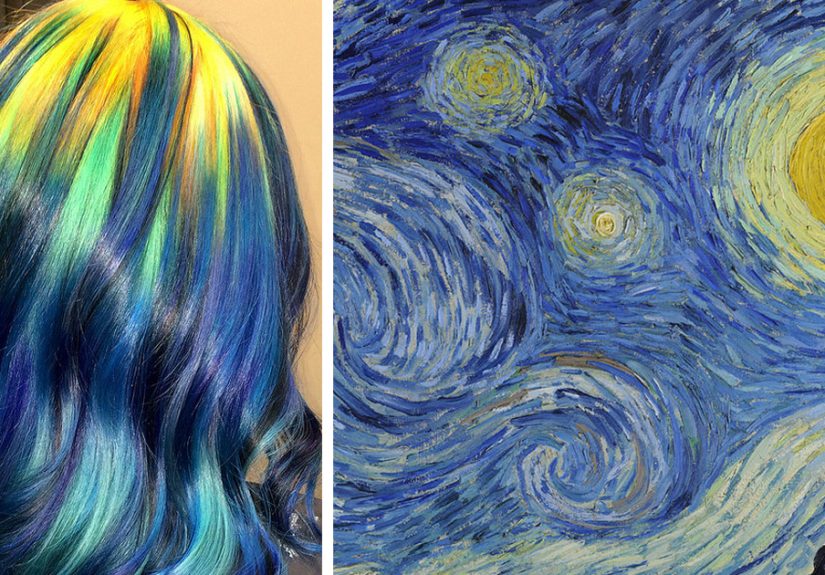
At the center of this fascination is the now-famous work of Kansas colorist Ursula Goff, whose art-inspired hair creations helped turn a niche salon idea into a full-blown visual conversation. Instead of treating hair color like a simple before-and-after service, she treated it like painting. Famous works such as Starry Night, The Scream, Water Lilies, and Girl With a Pearl Earring became starting points for color placement, mood, and movement. The result was not just pretty hair. It was hair that looked like it had spent a semester abroad in an art museum and came back with opinions.
What makes this topic so compelling is not only the viral image factor. It also says something bigger about beauty right now. We are living in an era when stylists, colorists, and hair artists are no longer boxed into the role of “service providers” alone. Increasingly, they are seen as image-makers, designers, collaborators, and cultural interpreters. In that context, turning hair into classic art does not feel like a gimmick. It feels like the logical next step.
The Stylist Who Saw a Museum in a Shampoo Bowl
One reason Ursula Goff’s work resonated so widely is that the idea behind it was both simple and unexpectedly brilliant. She had already built attention around a Fine Art series that drew from the color palettes of famous paintings. Then the concept evolved. Instead of merely borrowing tones from masterpieces, she began painting directly onto hair extensions to create images that more closely echoed the original works.
That shift matters. Lots of stylists talk about “inspiration.” Far fewer are willing to test whether hair can handle the same compositional thinking as canvas. Goff reportedly used diluted vivid dyes, worked freehand, avoided stencils, and even placed sketches beneath the hair as guides. In other words, this was not a lazy color melt with an artsy caption slapped on top. It was a painstaking process that demanded brush control, color theory, patience, and the nerve to redo sections when they did not meet the standard.
The technical challenge alone makes the story worth attention. Hair is not a flat surface. It moves, separates, reflects light differently by angle, and has a texture that actively resists tiny painterly details. Reproducing recognizable brushwork from a classic painting on something as unruly as hair is a bit like trying to recreate the ceiling of the Sistine Chapel on a windsock. Possible, maybe, but not exactly relaxing.
And yet that difficulty is part of the magic. The more you understand the process, the more impressive the final images become. A famous painting already carries emotional weight. When the same palette and spirit are translated into hair, the viewer experiences a second surprise: not only do they recognize the artwork, but they recognize it in a medium that seems totally unsuited to it. That tension is what makes the work memorable.
Why Classic Art Works So Well in Hair
Color palettes already tell a story
Classic paintings tend to have strong emotional identities. Van Gogh’s blues and yellows feel electric. Monet’s soft greens and watery purples feel dreamy and atmospheric. Klimt’s golds feel intimate and luxurious. Warhol’s pop colors feel graphic, bold, and deliberately artificial. These palettes are instantly recognizable, even when they are not copied line for line.
Hair color, at its best, also works emotionally. A shade can feel icy, rebellious, romantic, playful, expensive, nostalgic, or theatrical. So when a stylist borrows from famous art, the result lands quickly because the viewer is not just seeing color. They are feeling an art-historical mood translated into beauty language.
Hair already has movement built in
Paintings have to fake motion. Hair comes with it. Waves, bends, layers, and texture naturally create visual rhythm. That is why paintings with swirling skies, melting color transitions, or dramatic contrast map so beautifully onto strands. A static masterpiece becomes dynamic the second a client turns their head, steps into sunlight, or flips their hair in a way that says, “Yes, I know this is fabulous.”
In some ways, hair can even intensify the source material. A painting on a wall stays still. A painting translated into hair keeps changing. It catches light. It reveals different sections at different moments. It performs.
Beauty makes old art feel newly reachable
One reason these looks spread so fast online is that they make “classic art” feel less intimidating. Not everybody will read a museum catalog essay. Plenty of people, however, will stop mid-scroll for a vivid blue-and-gold hair transformation inspired by Starry Night. Beauty becomes the doorway. Art history sneaks in through the side entrance, wearing fabulous toner.
From Salon Technique to Gallery-Level Illusion
To understand why these art-inspired looks feel so special, it helps to look at the overlap between standard salon practice and experimental hair painting. Traditional hair painting and balayage already rely on freehand placement, saturation control, and visual softness. The stylist has to judge where to place color, how heavily to apply it, and how the design will read once the hair falls naturally. That is skilled work on its own.
Art-inspired hair pushes those same instincts much further. Now the stylist is not simply creating dimension. They are creating imagery. They have to think about proportion, contrast, negative space, directionality, and how a design will hold together visually after rinsing, drying, styling, and movement. It is part chemistry, part painting, part optical problem-solving.
This is also why many of the most detailed designs are executed on extensions, buzzcuts, wigs, or specially prepared sections rather than on long natural hair hanging normally from the scalp. The more control the artist has over placement and angle, the more precise the work can become. That is not cheating. That is respecting the medium.
In fact, one of the smartest things about this kind of work is that it does not pretend hair is canvas. It adapts painting logic to hair’s limitations. The best stylists in this lane understand that they are not copying art in a museum-perfect sense. They are translating it. And translation is its own art form.
More Than a Viral Moment: Hair Has Always Belonged to Art
The phrase “hair as art” can sound trendy, but the concept is much older than social media. Art historians and cultural writers have increasingly emphasized that hair has long carried meaning in portraiture, identity, status, race, ritual, and self-presentation. Hairstyles are not decorative footnotes. They are often central to how a figure is read.
That broader history helps explain why a story like this feels bigger than a one-off internet stunt. Hair has always been tied to visual culture. In portraits, sculpture, photography, and fashion imagery, hair signals era, class, rebellion, conformity, seduction, spirituality, or power. It frames the face, but it also frames the narrative.
Consider the work of Janet Stephens, the Baltimore hairdresser known for recreating ancient Roman hairstyles. Her research-driven reconstructions helped show that elaborate classical styles were not necessarily wigs but highly engineered arrangements of real hair. That idea alone should make modern readers rethink how sophisticated historic hair work actually was. The old masters may not have had ring lights, but they absolutely understood drama.
More recent artists and stylists have expanded this conversation in different directions. Some treat short hair and buzzcuts as literal painted surfaces. Others create sculptural braid work that communicates politics, memory, and cultural pride. Black hair shows and editorial projects have pushed sculpted styles, floral constructions, gravity-defying shapes, and conceptual hair design into center stage, proving that hair can function as performance, commentary, and installation all at once.
Even outside the salon, contemporary art has repeatedly returned to hair as a site of identity and imagination. In collage, photography, and mixed media, hair often becomes abstraction, weather, architecture, or symbolism. That matters because it means Ursula Goff’s art-inspired looks are not an isolated novelty. They belong to a larger lineage in which hair is not merely styled. It is authored.
Why the Internet Could Not Scroll Past It
There is another reason “Hairstylist Turns Hair Into Classic Art” performs so well as a story: it solves the internet’s favorite puzzle. It is both familiar and strange. People recognize the source painting. They also recognize hair. But putting the two together creates enough friction to feel new.
That surprise has only become more valuable in an era flooded with synthetic inspiration and over-polished visual content. When audiences see a real artist make something difficult by hand, the response tends to be immediate. A meticulous hair painting feels tactile. It has labor in it. You can sense the hours, the corrections, the concentration, the mess, and the nerve. It looks earned.
That authenticity is a major reason these images hold attention. They are not just bright. They are specific. They reflect a point of view. And in a beauty culture full of copied reference photos and algorithm-friendly sameness, specificity is gold. Or in Klimt terms, leafed and luminous.
What Beauty Creatives Can Learn From This Story
The success of art-inspired hair offers a few useful lessons for stylists, beauty editors, and brands. First, audiences respond to concept, not just technique. Plenty of people can execute vivid color. Fewer can give that color a narrative hook strong enough to travel.
Second, references matter. Borrowing from art history gives a look depth and instant emotional texture. It tells viewers that the finished result belongs to a bigger visual conversation. That does not mean every salon needs to become a mini Louvre. It simply means beauty gets stronger when it knows what it is in dialogue with.
Third, craftsmanship still cuts through the noise. The internet may love speed, but it respects obsession. A style that clearly took vision and discipline will almost always outperform something that feels trendy but generic. People can spot the difference, even when they cannot explain it in technical terms.
Finally, this story reminds us that beauty does not have to choose between wearability and imagination. The best creative hair lives somewhere between the two. It can be editorial without being alienating, artistic without becoming absurd, and clever without feeling cold. That balance is hard to hit. When a stylist finds it, people remember.
The Experience of Wearing a Masterpiece
Imagine sitting in the chair for a look like this. Not a routine appointment, not a trim-and-go, but the kind of session where the stylist starts talking about color palettes the way a curator talks about lighting. The cape goes on. The consultation begins. Suddenly the conversation is not just “How blonde do you want to go?” It is “Do you want the dreamy blur of Monet, the electric tension of Van Gogh, or the graphic punch of pop art?” At that point, you are no longer just booking beauty maintenance. You are joining a creative project.
There is a different kind of energy in the room when hair becomes art. The pace slows down. Every section matters. Every placement decision feels deliberate. You watch bowls of dye turn into a painter’s palette. Blues are no longer just blue. They are midnight, cobalt, cloud-shadow, and that impossible in-between color that only exists when a storm is about to become pretty. Gold is not just gold. It is leaf, halo, antique frame, late sunlight. Even the tools start to look different. Brushes stop feeling clinical and start feeling expressive.
As the work develops, there is a strange thrill in realizing you cannot fully predict the ending. That is one of the pleasures of artful hair: it is collaborative, but it is also interpretive. You may arrive with a reference point, yet what appears on the hair is a translation, not a photocopy. The stylist is making judgment calls in real time, responding to texture, lightness, porosity, movement, and the way your particular hair accepts color. It becomes personal almost by accident.
Then comes the reveal, which is never really one reveal. It happens in stages. Wet hair looks one way. Towel-dried hair looks another. Once it is blown out, shaped, or waved, new details appear. A streak that seemed subtle at the bowl suddenly reads like a brushstroke. A shadowed panel turns luminous in natural light. The masterpiece is not frozen. It comes alive gradually, which makes the whole thing feel closer to theater than routine grooming.
There is also something emotionally different about wearing a look inspired by classic art. Even if the reference is playful, the effect can feel oddly powerful. People do not just compliment the color. They study it. They tilt their heads. They ask questions. They look again. The hair becomes a conversation starter, a mood setter, a signal that creativity is not being saved for special occasions. It is being worn out into ordinary life, to coffee shops, sidewalks, elevators, awkward family dinners, and maybe a grocery store where someone in the cereal aisle suddenly says, “Wait, is that Starry Night?”
That may be the real magic of this whole phenomenon. It lets a person carry art with them in a way that feels lived-in rather than precious. No velvet rope. No museum hush. No guard silently judging your shoes. Just color, craft, movement, and the delight of turning your head and remembering that beauty can still surprise you.
Conclusion
“Hairstylist Turns Hair Into Classic Art” works as a headline because it promises novelty. It works as a story because the idea holds up under scrutiny. Ursula Goff’s art-inspired looks did more than go viral. They highlighted the deep connection between beauty and visual culture, proved that technical salon work can operate like fine art, and gave audiences a fresh way to encounter familiar masterpieces.
More broadly, this story reminds us that hair has always done more than decorate. It communicates. It performs. It preserves memory, signals identity, and turns the body into a site of design. When a stylist borrows from classic art, they are not just making hair look interesting. They are collapsing the distance between museum culture and everyday self-expression.
That is why the best version of this trend feels bigger than internet spectacle. It respects the source material, respects the medium, and respects the viewer enough to offer something original. In a crowded beauty landscape, that combination is rare. And when it appears, it deserves the longest look in the room.