Table of Contents >> Show >> Hide
Puppies and kittens get all the spotlight, but the wildlife world is packed with babies that look like they were designed by a very creative committee at 2 a.m.
Think tiny “forest giraffes,” jellybean-sized egg-laying mammals, and ocean newborns that look like floating confetti. In this guide, you’ll meet 40 rare animal babies
that most people never see in real lifefrom elusive rainforest calves to fragile hatchlings racing for the sea.
This article blends real conservation facts with a fun, readable style so you can enjoy the “aww” factor and understand the stakes.
Many of these species are endangered, difficult to breed, or naturally secretive, which makes every healthy birth a big deal for wildlife teams.
If you love unusual baby animals, rare species, and behind-the-scenes conservation wins, you’re in the right place.
Why Rare Animal Babies Look So Different From Adults
Rare animal babies aren’t just cute mini versions of their parents. Many are born with camouflage, oversized features, or temporary coats that help them survive the first risky months.
Some stay hidden in dens or burrows (because the outside world is basically a survival game on hard mode), while others need immediate mobility to avoid predators.
In marine species, newborn behavior can be especially dramatic: synchronized hatching, rapid swimming, or intense bonding with mothers.
There’s also a conservation angle: when populations are small, each baby can matter at the species level.
A single healthy chick, pup, or calf may represent years of habitat protection, veterinary monitoring, and coordinated breeding programs.
In short, these babies are not only adorablethey’re ecological headline news.
40 Rare Animal Babies You’ve Probably Never Seen Before
Mammals
- Okapi Calf Born in Central African forests, okapi calves are surprisingly still and quiet in their first weeks, an anti-predator strategy that makes them hard to spot.
- Vaquita Calf These tiny porpoise calves are among the rarest baby marine mammals on Earth, born into one of the most critically threatened populations.
- Black-Footed Ferret Kit Born underground and completely helpless, ferret kits rely fully on mom before eventually emerging above prairie dog burrows.
- Echidna Puggle Yes, “puggle” is real. This baby hatches from an egg in mom’s pouch, then feeds on milk secretions before growing tiny spines.
- Clouded Leopard Cub At birth, cubs are blind and toothless; within weeks they transform into tiny climbers with oversized paws and serious jungle-cat energy.
- Red Panda Cub Born in secluded dens, red panda cubs are fluffy, fragile, and slow to exploreuntil curiosity kicks in and the adventure begins.
- Addax Calf This desert antelope’s babies are precious in conservation programs because wild populations are extremely small.
- Saiga Calf Saiga babies can stand quickly after birth, and many females give birth to twins, a survival boost in open grassland ecosystems.
- Binturong “Bintlet” These rainforest babies are born with sealed eyes and stay tucked in their mother’s fur before becoming expert climbers.
- Babirusa Piglet Baby babirusas look gentle and delicate, which is ironic considering the adults look like fantasy boars with dramatic tusks.
- Aye-Aye Infant Slow-reproducing and highly specialized, aye-aye babies are rarely seen and usually stay close to mom for long learning periods.
- Fossa Cub Madagascar’s top predator starts life as a soft, spotted cub that could easily be mistaken for a playful house cat.
- Golden Lion Tamarin Infant Tiny and bright, these babies often ride on parents’ backs as family groups coordinate all-day childcare.
- Cotton-Top Tamarin Infant Often born as twins, these babies depend on cooperative parenting in one of the most social primate nurseries around.
- Pallas’s Cat Kitten Born in rocky dens, these fluffy kittens look permanently surprised and incredibly round, like tiny wild snow-clouds.
- Maned Wolf Pup Dark-coated at birth, pups later grow into long-legged adults that look like foxes on stilts.
- Przewalski’s Horse Foal These foals are a symbol of rewilding success, often standing soon after birth in open steppe habitats.
- Bongo Calf Forest antelope calves are born with striping and excellent hiding behavior, staying concealed while mothers forage.
- Giant Anteater Pup This baby often rides on mom’s back, where its stripe pattern blends with her coat like built-in camouflage.
- Aardvark Calf Born in burrows, aardvark babies are among the least-seen zoo and wildlife youngsters, and each birth draws huge attention.
Birds
- California Condor Chick Every healthy chick is a major conservation win for one of North America’s rarest birds.
- Whooping Crane Colt Yes, crane chicks are called colts. They hatch into a careful world where survival depends on habitat and migration safety.
- Sihek (Guam Kingfisher) Chick Extinct in the wild for decades, these chicks are central to ambitious reintroduction work.
- Shoebill Chick Gangly, gray, and prehistoric-looking, shoebill chicks seem like they time-traveled from another era.
- Harpy Eagle Chick One of the rainforest’s most powerful raptors begins as a fluffy white chick in a giant canopy nest.
- Kākāpō Chick These nocturnal parrot chicks are intensely monitored because every individual matters in recovery efforts.
- Kagu Chick Rare and secretive, this New Caledonian bird’s chicks are infrequently observed even by dedicated birders.
- Secretary Bird Chick Born in high stick nests, these chicks become long-legged hunters in one of Africa’s strangest bird lineages.
Reptiles & Amphibians
- Green Sea Turtle Hatchling Tiny hatchlings burst from sandy nests and sprint toward the brightest ocean horizon.
- Kemp’s Ridley Hatchling One of the rarest sea turtles in the world, with babies facing immediate survival pressure on beaches.
- Leatherback Hatchling Born from huge nests, these babies begin life as ocean voyagers in a predator-heavy world.
- Eastern Hellbender Larva A little river dragon: larval hellbenders are rarely seen and depend on clean, oxygen-rich streams.
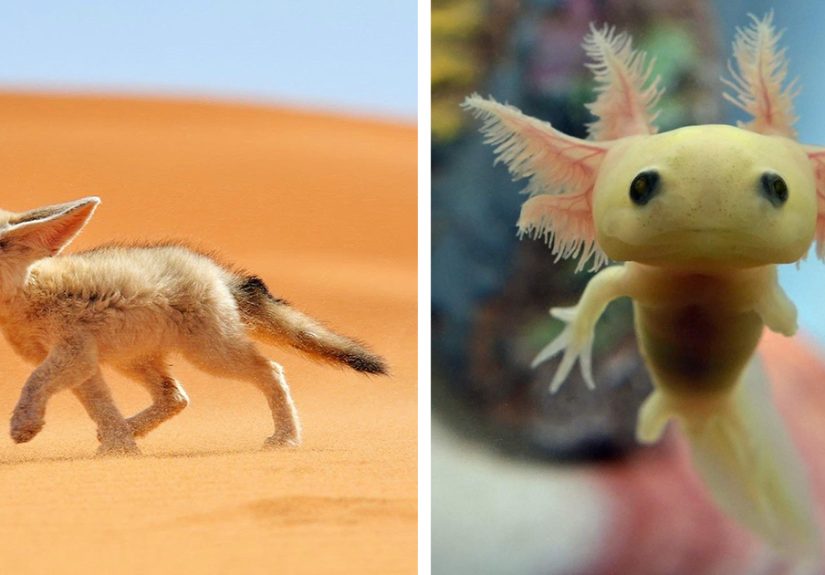
- Axolotl Larva Critically threatened in the wild, axolotl babies are icons of amphibian conservation and developmental biology.
- Gharial Hatchling Slender-snouted crocodilian babies hatch into vulnerable river systems shaped by water quality and fishing pressure.
Ocean Oddballs
- Hawaiian Monk Seal Pup Born on remote beaches, these pups are vital to one of the world’s most endangered seal species.
- Sea Otter Pup Extra fluffy and buoyant, otter pups need constant grooming and maternal care to stay warm and afloat.
- Beluga Calf These pale-gray babies nurse frequently and stay close to mothers while learning social and acoustic behavior.
- Seahorse Fry Delivered by dad, not mom. Male seahorses carry and release live young in one of nature’s wildest parenting setups.
- Leafy Seadragon Hatchling Tiny drifting replicas of adults, these hatchlings look like floating seaweed ornaments with ambition.
- Moon Jelly Ephyra Baby jellyfish begin as tiny star-like forms before growing into the pulsing adults seen in aquariums.
What These Babies Teach Us About Wildlife Conservation
Rare animal babies are adorable, but they’re also data points in a global conservation story.
For some species, births are linked to targeted recovery plans, captive breeding, and habitat management.
California condors are a powerful example: from catastrophic lows in the 1980s to ongoing chick production through coordinated programs.
Black-footed ferret kits, whooping crane chicks, and monk seal pups all represent similar “every baby counts” realities.
Modern conservation also relies on collaboration. Zoos, aquariums, wildlife agencies, and field scientists use shared genetics, behavioral monitoring, and long-term care protocols.
In many cases, newborn survival depends on boring-sounding but essential work: clean nesting beaches, predator management, reduced fishing entanglement, and protected nursery habitat.
Translation: the cutest photos usually sit on top of years of planning, funding, and patient science.
If there’s one takeaway, it’s this: baby animals are not just “future adults.”
They are a critical life stage where species are either lostor given a real chance to rebound.
Extra Section: of Real-World Experiences With Rare Animal Babies
Ask wildlife staff what it feels like to witness a rare birth, and the first answer is usually not “exciting.” It’s “quiet.”
The room gets quieter, the radios get quieter, and everyone suddenly moves like they’re trying not to wake a sleeping toddler.
Whether it’s a condor chick in a nest box, a sea otter pup wrapped in towels after rescue, or a tiny echidna puggle tucked in a pouch, the emotional tone is the same: protect first, celebrate later.
Visitors who happen to catch these moments often describe a strange mix of joy and disbelief.
A red panda cub peeking out of a den for the first time can stop an entire crowd mid-conversation.
People whisper. Phones go up. Someone inevitably says, “Wait, that’s real?”
And for a few minutes, the usual zoo chatter disappears.
Rare baby sightings feel intimate, like seeing a private chapter of nature that usually happens out of view.
Field teams on sea turtle beaches describe a different kind of drama: controlled chaos.
Hatchlings erupt from sand almost in unison, and suddenly hundreds of tiny lives are moving at once.
The scene looks magical, but the work around it is technicallight management, predator pressure, public distance rules, nest tracking.
People who witness it in person often say it changes how they think about coastlines.
A beach stops being “just a beach” and becomes a nursery that needs protection.
Marine mammal rescue staff tell similar stories about baby sea otters.
The public sees a fuzzy face; caretakers see a full-time schedule: feeding windows, temperature checks, fur maintenance, and behavioral conditioning that teaches survival skills.
One common lesson from rehabilitation teams is that cuteness can be misleading.
The babies that look most helpless often require the most precise routines, and small mistakes can snowball quickly.
Behind every heartwarming update is a disciplined protocol.
Bird conservation programs bring another perspective: patience measured in years.
For species like condors or cranes, a single chick can carry massive hope.
Staff may track egg fertility, chick growth, and social behavior before that bird is ever considered for release or breeding contribution.
People who work these programs often describe a “long game mindset”you celebrate small wins, but you’re always thinking one generation ahead.
The most memorable experience people report is not just seeing the baby itself, but understanding the context.
A monk seal pup on a Hawaiian beach is suddenly not just “cute seal content”; it becomes a reminder that fewer individuals exist than most people imagine.
A black-footed ferret kit becomes a symbol of a species once thought gone.
An odd little puggle becomes evidence that evolutionary weirdness is still alive and worth defending.
That shiftfrom passive admiration to active careis what turns a quick wildlife moment into a lasting conservation memory.
Final Thoughts
Rare animal babies are nature’s best combination of wonder and urgency.
They’re funny-looking, unbelievably cute, sometimes awkward, and often born into complicated odds.
But when they survive, they can reshape the future of their species.
If this list made you smile, great. If it also made you care about habitat, recovery programs, and responsible wildlife tourism, even better.
The world doesn’t just need more baby-animal videosit needs more people rooting for these babies to grow up.