Table of Contents >> Show >> Hide
- Start With a Closet Plan That Fits Real Life
- 34 Closet Organization Ideas for Clutter-Free Spaces
- Empty the closet completely (yes, all of it)
- Do a fast “keep, donate, repair, recycle” sort
- Set a donation station inside or near the closet
- Pick one “closet rule” you’ll actually follow
- Group clothes by category first, then by color
- Use matching slim hangers to instantly create space
- Add hanging rod dividers (the “traffic cones” of your closet)
- Create a “today and tomorrow” mini zone
- Try double-hanging rods for short items
- Reserve long-hang space for dresses and coats
- Install a top shelf “seasonal library”
- Use clear bins for accessories you forget you own
- Add shelf dividers to stop folded stacks from avalanching
- Use bins as “drawers” on deep shelves
- Label containers in plain language
- Make a dedicated shoe zone (no more floor sprawl)
- Store shoes by frequency, not by “what looks pretty”
- Use over-the-door organizers for small items
- Add hooks for bags, hats, and belts
- Use a hanging organizer for sweaters or tees
- Fold items vertically in drawers or bins
- Use a “one-in, one-out” rule for basics
- Store purses stuffed and upright
- Use small boxes for jewelry and watches
- Try a belt hanger or ring organizer
- Use clear, stackable boxes for specialty items
- Protect delicate items with garment bags
- Add a small light inside the closet
- Use a mirror (or mirrored door) to expand the feel
- Keep a lint roller and steamer-friendly zone
- Create a “capsule” section for busy weeks
- Rotate seasonal items with a simple swap box system
- Store “rarely used” items somewhere else
- Schedule a 10-minute weekly reset
- How to Maintain a Clutter-Free Closet Without Becoming a Full-Time Organizer
- Real-World Experiences: What Actually Happens When People Organize Their Closets (and What They Learn)
- Conclusion
- SEO Tags
Closets are basically tiny apartments for your stuff. And just like a tiny apartment, they can feel calm and functional… or
like a sitcom set where sweaters leap off shelves and shoes mysteriously multiply at night.
The good news: you don’t need a massive walk-in closet or a custom renovation to get a clutter-free space. You need a
system that reduces friction (so you’ll actually use it), makes categories obvious (so things don’t drift), and gives every
frequent-use item an easy “home.” The best closet organization ideas do three things at once: they create visibility, they
create boundaries, and they create habits you can maintain without needing a weekend retreat and a motivational playlist.
Start With a Closet Plan That Fits Real Life
Before you buy bins, hooks, and a suspicious number of matching hangers, do a quick “closet audit.” The goal isn’t
perfectionit’s alignment. Your closet should match how you get dressed, not how a catalog model pretends to get dressed
(with zero hoodies and no emotional-support leggings).
Use the “Prime Real Estate” rule
The most reachable spotsfront and center at eye levelshould hold the items you wear weekly. The top shelf and deep
corners are for seasonal or occasional items. If you keep formalwear in the easiest spot and your everyday jeans behind
it, you’ll reorganize your closet every morning… with your elbows.
Decide your closet zones
Think in zones: hanging clothes, folded clothes, shoes, accessories, bags, and “life admin” items (like lint rollers,
garment bags, and backup buttons). Zones prevent the slow creep of randomness that turns a closet into a “stuff museum.”
34 Closet Organization Ideas for Clutter-Free Spaces
-
Empty the closet completely (yes, all of it)
Taking everything out gives you a clean slateand reveals what you actually own. It’s the organizing version of
turning on the lights at the end of a party: suddenly you see what’s really going on. -
Do a fast “keep, donate, repair, recycle” sort
Keep only what fits, feels good, and matches your current life. Create separate piles so “I’ll fix it someday” doesn’t
quietly move back onto the hanger and become “I’ll fix it never.” -
Set a donation station inside or near the closet
A small bin or bag for donations makes decluttering ongoing instead of dramatic. When something doesn’t work, it goes
straight into the binno negotiations. -
Pick one “closet rule” you’ll actually follow
Try: “If it’s not on a hanger or in a bin, it doesn’t live here.” Or: “No mystery piles.” One clear rule beats twelve
complicated ones you’ll forget by Tuesday. -
Group clothes by category first, then by color
Categories make items easy to find; color makes it fast. Example: jackets together, then arranged light-to-dark. Your
brain loves patternsuse that to your advantage. -
Use matching slim hangers to instantly create space
Bulky mismatched hangers steal room and cause clothing to slide off. Slim, consistent hangers reduce visual clutter and
help your closet look tidy even when life isn’t. -
Add hanging rod dividers (the “traffic cones” of your closet)
Dividers stop categories from drifting. One for work shirts, one for casual tops, one for dresses. They’re also a
gentle reminder that “all black hoodies” is not a category you need in triplicate. -
Create a “today and tomorrow” mini zone
Use a hook, valet rod, or a small section of hanging space for your next outfit (or gym clothes). It reduces morning
chaos and prevents the “chair pile” from becoming a second closet. -
Try double-hanging rods for short items
Shirts, blouses, and folded-over pants don’t need full-length hanging space. A second rod below can nearly double your
hanging capacity without feeling cramped. -
Reserve long-hang space for dresses and coats
Keep one section for long items so they don’t drag on shoes or get wrinkled over a shelf edge. Bonus: it becomes the
obvious “special occasion” zone. -
Install a top shelf “seasonal library”
Put off-season items up high in labeled bins (sweaters in summer, swimwear in winter). If you can’t see it, you won’t
overstuff your daily zones. -
Use clear bins for accessories you forget you own
Clear bins are like transparency for your future self. Scarves, belts, clutchesif they disappear, you’ll buy
duplicates. Visibility saves money and sanity. -
Add shelf dividers to stop folded stacks from avalanching
Shelf dividers create laneslike tiny closet guardrails. They keep jeans from sliding into sweaters and prevent that
moment where one pulled T-shirt turns into a fabric landslide. -
Use bins as “drawers” on deep shelves
If your shelves are deep, stuff gets lost behind the front row. Slide-out bins let you pull everything forward without
disassembling your closet like a Jenga tower. -
Label containers in plain language
Labels should match how you think. “Cold-weather accessories” beats “Winter Misc.” The more specific the label, the
easier it is to put things back where they belong. -
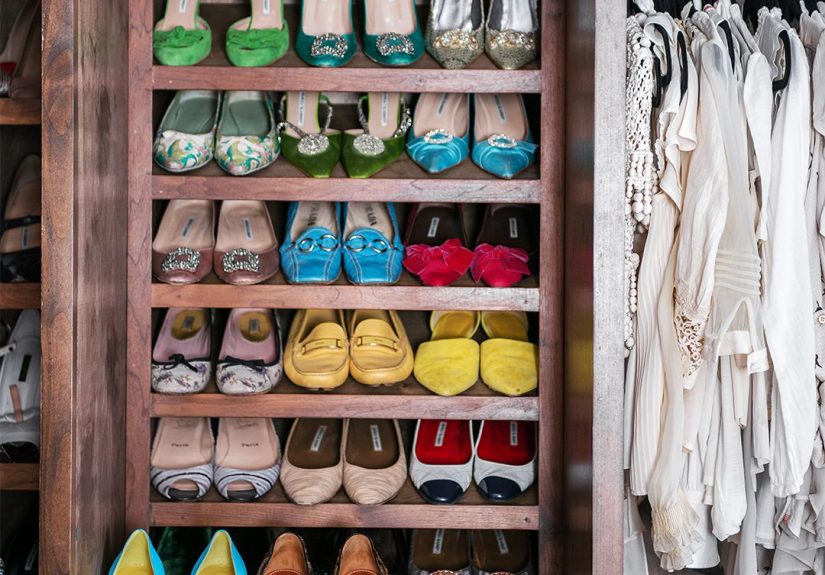
Make a dedicated shoe zone (no more floor sprawl)
Use a rack, cubbies, or clear shoe boxes. The key is one consistent spot. When shoes don’t have a home, they become
tripping hazards with good intentions. -
Store shoes by frequency, not by “what looks pretty”
Daily shoes at the most accessible level. Occasion shoes higher up. If your most-worn sneakers are behind holiday
heels, you’ll get annoyedand then you’ll stop using the system. -
Use over-the-door organizers for small items
The back of the door is premium vertical space. Great for sandals, scarves, hair tools, or workout accessoriesanything
that tends to become a “random pile” otherwise. -
Add hooks for bags, hats, and belts
Hooks create instant storage without consuming shelf space. Put them at eye level so you remember to use them (and so
your bags stop lounging on the floor like they pay rent). -
Use a hanging organizer for sweaters or tees
Hanging shelves turn vertical space into “soft drawers.” This is helpful if you don’t have built-in shelving and need
an easy add-on for folded items. -
Fold items vertically in drawers or bins
Vertical folding keeps everything visible, so you don’t forget what’s underneath. It’s especially great for T-shirts,
leggings, and workout gear. -
Use a “one-in, one-out” rule for basics
Socks, undershirts, white teesthese multiply quietly. When you add a new pack, donate or recycle the most worn-out
ones. Your drawer shouldn’t need compression technology. -
Store purses stuffed and upright
Keep bags shaped with soft fillers (like scarves) and store them upright on a shelf. This prevents slumping and keeps
straps from tangling into a confusing knot. -
Use small boxes for jewelry and watches
A compartmented tray or small lidded box keeps accessories from turning into a noisy pile. Bonus: it speeds up getting
ready because you can see your options. -
Try a belt hanger or ring organizer
Belts are notorious for getting lost. A dedicated hanger (or even sturdy shower-curtain rings on a hanger) keeps them
visible and prevents the “belt spaghetti” problem. -
Use clear, stackable boxes for specialty items
Think: fancy scarves, cosplay pieces, sentimental tees, or formal accessories. Stackable boxes create a stable system
that doesn’t collapse when you remove one item. -
Protect delicate items with garment bags
Use breathable garment bags for suits, dresses, or special fabrics. It keeps dust off and stops snagging from zippers
and hardware on neighboring items. -
Add a small light inside the closet
If you can’t see it, you can’t maintain it. Battery stick-on lights or LED strips make the closet easier to use and
prevent “I didn’t know that shirt existed” shopping mistakes. -
Use a mirror (or mirrored door) to expand the feel
Mirrors bounce light and help you check outfits without leaving a trail of clothes behind you. It’s a small upgrade
that makes the closet feel more like a dressing area and less like a storage cave. -
Keep a lint roller and steamer-friendly zone
Store a lint roller, stain remover pen, and a small hook for steaming. When quick fixes are easy, you’ll treat clothes
betterand avoid the “I can’t wear it” last-minute panic. -
Create a “capsule” section for busy weeks
Set aside 10–15 mix-and-match items you love for hectic weeks. This reduces decision fatigue and keeps you from tearing
through the whole closet when you’re short on time. -
Rotate seasonal items with a simple swap box system
Use two or three labeled bins (Winter / Summer / Event). When seasons shift, swap bins instead of re-organizing from
scratch. It’s quicker, cleaner, and far less dramatic. -
Store “rarely used” items somewhere else
If you wear something once a year, it shouldn’t take up daily space. Move it to high shelves, under-bed storage, or a
separate container. Your everyday closet should serve your everyday life. -
Schedule a 10-minute weekly reset
Set a timer. Re-hang strays, fold one shelf, return shoes, empty the donation bin if it’s full. Ten minutes prevents a
full closet meltdown laterlike flossing, but for sweaters.
How to Maintain a Clutter-Free Closet Without Becoming a Full-Time Organizer
Organization isn’t a one-time event; it’s a relationship. (Like houseplants, but less judgmental.) The trick is to make
“putting things away” easier than “dropping things wherever.”
Use the 5–5–5 micro-habit
Each day (or a few times a week), do one of these: hang 5 items, fold 5 items, and return 5 items to their zones. It’s
small enough to be doable, and it keeps your closet from sliding back into chaos.
Keep storage slightly under-filled
The most organized closets aren’t packed to the ceiling. Leave a little breathing room so you can actually put things back.
If every shelf is maxed out, your system is one rushed morning away from collapse.
Real-World Experiences: What Actually Happens When People Organize Their Closets (and What They Learn)
If you’ve ever organized your closet and then watched it unravel two weeks later, you’re not alone. In real homes, closets
don’t stay neat because people “lack discipline.” They get messy because the system doesn’t match real behaviorlike trying
to store daily shoes in a box you have to unstack like a puzzle. Here are a few common, very real-life scenarios and the
lessons they teach.
First, there’s the Sweater Avalanche experience: someone neatly stacks sweaters on an open shelf, feels
proud, and then pulls out one knit on a busy morning. The shelf collapses like a dramatic soap opera scene, and suddenly
there are sweaters everywhere. The fix isn’t “try harder.” The fix is adding shelf dividers or using bins that act like
drawersso you can remove one item without disturbing the entire ecosystem.
Next, there’s the Accessory Bermuda Triangle: belts, sunglasses, hair ties, and scarves disappear into a
single drawer or basket. When you can’t see options, you default to the same two items and assume you “don’t have
anything.” Then you buy duplicates. People often find that a simple compartmented tray, over-the-door organizer, or labeled
clear bin changes everythingbecause visibility turns “I forgot I owned this” into “Oh, I love this.”
Another common story is the “I Organized… Then I Went Shopping” loop. After decluttering, the closet feels
amazinguntil new items come in without a plan. The closet slowly re-fills, and the original categories blur. The most
successful closets usually adopt one tiny boundary: a donation station, a one-in-one-out rule for basics, or a “capsule
zone” that limits how much daily clothing can be in prime space. It’s not restrictive; it’s protectivelike putting a lid
on the cookie jar so you don’t accidentally eat the whole thing.
And then there’s the Shared Closet Negotiation, where two people share one space and both believe their
clothing deserves the better shelf. In practice, shared closets work best when zones are visibly separatedrod dividers,
dedicated shelves, and separate bins. People report that it reduces friction instantly because “your section” and “my
section” are no longer theoretical concepts; they’re physically obvious. Bonus: it prevents the mysterious migration of
sweaters across boundaries like they’re planning an escape.
Finally, many people discover the unexpected emotional side: organizing often reveals a closet full of “almost” items
almost fits, almost flattering, almost the person you used to be. The most satisfying closets usually come from choosing
the present. When people keep clothing that fits their current body and current routines, the closet stops being a guilt
trip and starts being a tool. And that’s the real win: fewer piles, faster mornings, and a space that feels supportive
instead of stressful.
Conclusion
A clutter-free closet isn’t about owning less for the sake of itit’s about making your space work for you. When you sort
by category, create zones, add simple boundaries (dividers, bins, hooks), and maintain the system with quick resets, you
get a closet that stays organized in real life. Start small, pick upgrades that reduce friction, and remember: the best
closet organization system is the one you can keep using even when you’re tired, busy, or running late with one sock on.