Table of Contents >> Show >> Hide
- The Headline Is Real. The Meaning Is Complicated.
- Why Russia Keeps Reaching for Older Tanks
- What “Back Into Service” Actually Means
- The Tanks Most Likely to Reappear
- Why Old Tanks Are Still Dangerous
- Why Old Tanks Are Also a Warning Sign for Moscow
- Can Russia Really Restore 3,000 More Tanks?
- What This Means for Ukraine and the West
- Final Take
- Related Experience: What the Battlefield and the Repair Yard Tell Us
On paper, the idea of Russia returning 3,000 older tanks into service sounds like a steel-thunder comeback story. It conjures up an image of endless armored columns, factory lights burning at midnight, and Soviet-era beasts rumbling back onto the battlefield like they never left. In reality, the story is less “unstoppable war machine” and more “desperate trip through the military junk drawer.”
That does not mean the threat is fake. Far from it. Old tanks can still kill people, support assaults, terrify infantry, and force defenders to spend precious drones, shells, and missiles. But the return of older Russian tanks says as much about Moscow’s losses, industrial limits, and wartime improvisation as it does about raw military power. If Russia is indeed preparing to return thousands of older tanks into serviceor continue a process that has already been underway in different forms for yearsthe key question is not simply, “How many?” It is, “In what condition, with which crews, for what missions, and at what strategic cost?”
The Headline Is Real. The Meaning Is Complicated.
The phrase “3,000 older tanks” has been attached to Russia before. Years before the full-scale invasion of Ukraine, reporting circulated that Moscow was considering refurbishing large numbers of mothballed T-80 tanks. Back then, the idea was framed as modernization on the cheap: instead of buying endless numbers of expensive next-generation platforms, Russia could haul older vehicles out of storage, upgrade them, and send them back into the force.
Then came the war in Ukraine, and the whole conversation changed. What once looked like a budget-minded force management choice started to look like battlefield necessity. Russia’s armored losses mounted. New tank production remained limited. Repair depots, storage yards, and refurbishment plants became just as important as headline-grabbing factories. Suddenly, the old tanks were no longer a side project. They were part of the plan.
So when people say Russia is preparing to return 3,000 older tanks into service, they are really describing a broader wartime reality: Moscow has leaned heavily on stored Soviet-era armor, and it may keep doing so as long as the war demands volume over elegance.
Why Russia Keeps Reaching for Older Tanks
Losses Changed the Math
The most important reason is the simplest one: tanks have been getting destroyed, abandoned, captured, and damaged at a brutal rate. Modern armored warfare in Ukraine has not looked like the parade-ground fantasy many militaries once imagined. Tanks face anti-tank missiles, loitering munitions, artillery corrected by drones, FPV drone attacks, mines, and precision strikes. A shiny tank is still a large metal object with a strong interest in not being seen from above, which is bad news in a battlefield filled with cameras, drones, and very motivated people holding explosives.
Russia’s early-war armor losses were especially severe. That forced the Kremlin to solve a hard problem fast: how do you keep armored units in the field when your best tanks are taking a beating and your industry cannot magically replace them overnight? One answer was to reopen the storage yards and start reviving old machines that had spent years, and sometimes decades, collecting rust and bad memories.
Storage Yards Became a Second Production Line
In wartime, “production” does not always mean building something from scratch. It can also mean dragging an old hull into a workshop, cannibalizing another vehicle for parts, installing a workable engine, adding armor blocks, swapping radios, fitting some improvised anti-drone cage, and declaring the result good enough for the front. Good enough is not glamorous, but it is a very common military standard in wars of attrition.
That helps explain why analysts often describe Russia’s output as a mix of new construction, deep overhaul, and regeneration from storage. In plain English: some of the tanks are fresh, many are refurbished, and a few probably come with the mechanical equivalent of crossed fingers.
What “Back Into Service” Actually Means
This is where the headline can mislead readers. Returning 3,000 older tanks into service does not mean 3,000 modern, fully upgraded, night-fighting, top-condition tanks are ready to roll out in perfect formation. It usually means a spectrum of outcomes.
At the better end, a tank may receive a meaningful overhaul, new communications gear, reactive armor, and at least some modernization that makes it tactically useful. In the middle, it may be serviceable but clearly outdated, useful for secondary sectors, defensive fire support, or training. At the ugly end, it may be an elderly vehicle pushed back into war because somethinganything with armor and a gunis needed more than perfection.
That distinction matters because quantity can help Russia sustain pressure, but declining quality changes how those tanks are used. A lower-quality force can still be dangerous. It just tends to fight differently.
The Tanks Most Likely to Reappear
If Russia continues to expand the use of older armor, several families of tanks are central to the story.
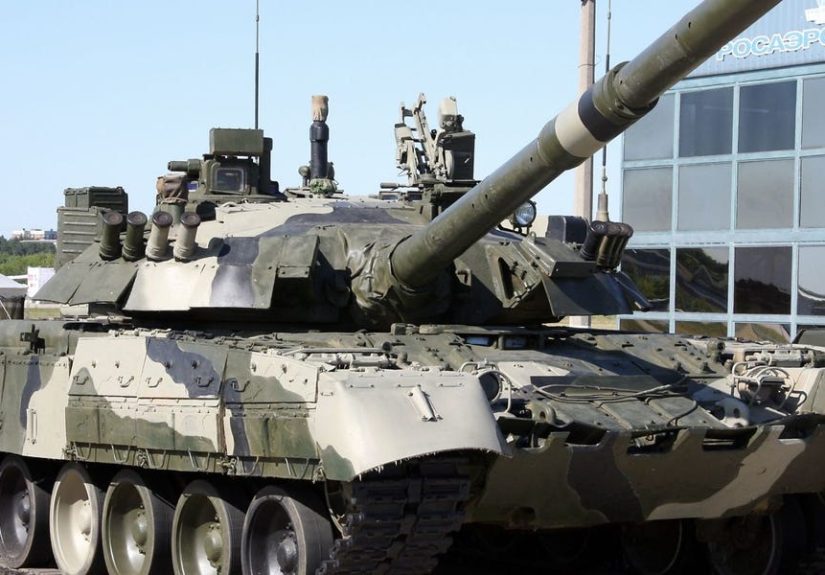
T-80 variants matter because they fit the older “return thousands to service” narrative. The T-80 was once one of the Soviet Union’s more advanced tanks, though its gas turbine engine gave it a reputation for being thirsty. Refurbished T-80s are more credible than museum-grade relics, but they are still part of a force increasingly reliant on reworked legacy platforms.
T-72 variants remain critical because the T-72 family has long formed the backbone of Russian armored power. Many of the vehicles coming back are not ancient curiosities from a military history channel; they are older T-72 types brought up to a usable standard. These matter more militarily than the viral, social-media-friendly images of ultra-old tanks on trains.
T-62s are the moment the story starts raising eyebrows. Designed in the early 1960s, the T-62 can still function in support roles, but its return is a clear sign that modern replacements are not keeping up with losses. It can fire, move, and provide protection, but it is no one’s idea of a dream matchup in a drone-saturated battlespace.
T-54 and T-55 tanks are the real headline magnets because they make modern war look like it wandered into a Cold War scrapyard. These tanks are old enough to make historians nostalgic and tank crews nervous. Yet even these antique platforms can serve as mobile guns, stationary fire points, or rough artillery substitutes. The fact that Russia has been associated with reviving such vehicles is remarkable not because old tanks are magically effective, but because it shows how deeply the war has reached into reserve inventories.
Why Old Tanks Are Still Dangerous
It is easy to laugh at a 1950s-era tank until it is firing at your trench. On the battlefield, old armor can still matter in several ways.
First, it can provide direct fire support. Infantry trying to attack a fortified position appreciates almost any vehicle that can deliver a large shell on demand. A tank gun hitting bunkers, tree lines, or buildings is still a serious problem, even if the tank itself is old.
Second, older tanks can be used in secondary missions. Not every vehicle has to spearhead a breakthrough. Some can guard rear areas, reinforce static defenses, escort support units, or hold quiet sectors while better equipment is concentrated elsewhere.
Third, they can function as ersatz artillery or mobile pillboxes. This is not an ideal use of a tank, but war has a long tradition of asking weapons to do jobs their designers did not intend. If the choice is between using an old tank awkwardly or not using armored fire support at all, many commanders will pick awkwardly and move on.
Fourth, old tanks create attritional pressure. Even a low-quality vehicle forces the other side to detect it, track it, and destroy it. That consumes drones, ammunition, anti-tank weapons, and time. In a long war, making the enemy spend more can be a strategy all by itself.
Why Old Tanks Are Also a Warning Sign for Moscow
Now for the less glamorous side of the garage revival.
Older tanks typically have worse optics, weaker fire-control systems, poorer night-fighting ability, less survivability, and more maintenance headaches than modernized platforms. Some lack the kind of sensors and thermal sights crews now badly need. Others may have armor and gun limitations that make them distinctly unhappy participants in 21st-century combat.
Then there is the logistics problem. Repairing old tanks is not just about having a hull. You need engines, transmissions, optics, electronics, tracks, trained labor, ammunition, and spare parts. Some vehicles are better used as donors than fighters. In other words, a storage yard may look full from space, but not every parked tank is a future combat vehicle. Some are future spare parts with turrets attached.
Crew quality also matters. A restored tank with a rushed crew is not a miracle weapon. Russia can put metal back into the field faster than it can always restore the full quality of prewar professional formations. And that means the tank fleet may be regenerating faster on paper than in real combat effectiveness.
Can Russia Really Restore 3,000 More Tanks?
The honest answer is: not all 3,000 would be equal, and not all would return quickly.
Russia clearly has shown an ability to regenerate armored strength through refurbishment and storage withdrawals. That is one reason predictions of immediate armored collapse have repeatedly aged poorly. Moscow has proved more resilient than many expected, especially in finding ways to keep lower-quality equipment in the fight.
But resilience is not the same as infinite depth. Analysts have increasingly argued that the easiest-to-restore inventory is shrinking. The most recoverable tanks tend to be used first. What remains later can be older, more degraded, harder to repair, or less worth the effort. That means a strategy based on restoring old tanks may still work for a while, but it probably becomes less efficient over time.
So yes, Russia may be able to return very large numbers of older tanks into service across several years if it keeps prioritizing volume. But the later waves are likely to be less impressive than the first. Think fewer “reborn steel fist” moments and more “this thing started on the third try, which counts as progress.”
What This Means for Ukraine and the West
For Ukraine, the lesson is straightforward: old tanks are still tanks. It would be a serious mistake to treat restored Soviet-era armor as harmless just because it lacks modern polish. A T-62 can still support infantry. A T-55 can still ruin someone’s afternoon in a trench. A refurbished T-80 can still be deadly if properly employed.
For Western planners, the larger lesson is about industrial endurance. Russia’s use of older tanks shows that wars are not won only by owning the newest platform. They are also shaped by repair capacity, storage depth, logistics, and the willingness to field “good enough” hardware at scale. That is not an argument for loving obsolete tanks. It is an argument for respecting the power of mass, adaptation, and ugly-but-functional wartime solutions.
It also says something sobering about the modern battlefield. The tank is not dead, but it is no longer the unquestioned king of movement. Tanks must now operate under the constant threat of drones and surveillance. The result is a weird hybrid age of warfare in which a decades-old armored hull may return to combat wearing improvised anti-drone armor and fighting under the watchful eye of cheap quadcopters. History is not repeating itself exactly. It is remixing itself in a very noisy workshop.
Final Take
“Russia preparing to return 3,000 older tanks into service” is one of those headlines that sounds simple until you open the hood. The reality is that Russia has long seen value in refurbishing old armor, and the war in Ukraine has made that approach more urgent and more visible. The country has lost enormous numbers of tanks, compensated by pulling older models from storage, and accepted a clear trade-off: quantity now, quality lateror maybe quality never.
That does not mean Russia is out of options. It does mean many of its options come with rust, compromise, and tactical limitations. Older tanks can still matter. They can still inflict damage. They can still help sustain a grinding war. But their return is not just a symbol of strength. It is also a signal that the Kremlin is digging deeper into its armored past to keep its war machine moving in the present.
And that may be the most important takeaway of all. When a major military power starts leaning hard on refurbished legacy armor, the message is not merely that it still has tanks. The message is that it needs every workable tank it can get.
Related Experience: What the Battlefield and the Repair Yard Tell Us
The most revealing “experience” tied to this topic is not a dramatic parade clip or a propaganda video from a factory floor. It is the lived battlefield experience of what older tanks do once they actually arrive. For infantry on either side, the age of the tank often matters less than whether it is firing. Soldiers in trenches do not pause to admire the historical lineage of a T-62 shell. They react to blast pressure, fragmentation, and the simple fact that armored supportold or newchanges the tempo of a fight.
That helps explain why older tanks keep coming back. The frontline experience of this war has shown that even outdated armor can still perform useful jobs when commanders stop asking it to be a breakthrough superweapon. An old tank can sit farther back and hammer defensive positions. It can support infantry in urban edges or treelines. It can serve as a shield, a morale prop, a mobile gun, or a decoy that forces the enemy to reveal a drone team or anti-tank position. In a war of attrition, usefulness is often judged in blunt, practical terms.
There is also the repair-yard experience, which is much less cinematic and much more important. Returning an old tank to service is a story of mechanics, welders, electricians, spare-parts hunters, and factory managers dealing with a question every war eventually asks: what can we salvage? Some tanks come back because they were preserved reasonably well. Others come back because another tank died so that they could live. One provides a transmission, another optics, another road wheels, another armor blocks. It is armored resurrection by committee.
Historically, Russia and the Soviet Union have long accepted ugly wartime compromises if those compromises kept combat power flowing. That experience matters here. Russian military culture has often shown a willingness to field imperfect systems in large numbers rather than wait for smaller numbers of ideal ones. The current tank story fits that pattern. It is not pretty, but it is familiar: keep the units supplied, keep the front moving, and let the accountants cry later.
At the same time, the battlefield experience of Ukraine has exposed the limits of that logic. Old tanks are easier to detect, easier to hit, and often easier to finish off once found. They may still be useful, but they are rarely efficient in a drone-heavy environment. Every time Russia reactivates another aging tank, it is making a wager that the vehicle will produce more battlefield value than the money, labor, parts, and crew time invested in it. Some will. Some absolutely will not. War has a cruel way of marking that answer in fire.
So the deeper experience behind this topic is one of contradiction. Old tanks are both dangerous and revealing. They prove Russia can adapt, improvise, and regenerate mass. They also reveal stress, depletion, and industrial friction. In that sense, every restored tank tells two stories at once: one about endurance, and one about exhaustion.