Table of Contents >> Show >> Hide
- What Makes a Fake Arm Cast Look Real?
- Method 1: Make a Quick Fake Arm Cast with Gauze and an Elastic Bandage
- Method 2: Make a More Realistic Fake Arm Cast with Plaster Cloth
- Method 3: Make a Lightweight Reusable Fake Arm Cast with a Foam Shell
- Common Mistakes That Make a Fake Arm Cast Look Fake
- of Real-World Experience with Fake Arm Casts
- Final Thoughts
- SEO Tags
If you need a fake arm cast for a costume, school play, photo shoot, haunted house, or comedy skit, the good news is that you do not need an orthopedic degree, a movie studio budget, or the patience of a saint. You just need the right materials, a believable shape, and enough restraint to avoid turning your forearm into a lumpy burrito. A convincing fake cast is less about “medical perfection” and more about visual cues: a white or off-white wrapped surface, a little bulk around the forearm, fingers left visible, and an arm position that looks supported rather than dramatically flung around like you are auditioning for a soap opera.
The best version for you depends on the job. Need something in ten minutes? Go with a soft bandage-style cast. Want a more realistic texture that actually looks like a cast from across the room? Plaster cloth is your friend. Need something lightweight, reusable, and comfortable enough to wear to a long event? A foam-shell version makes life much easier. Below, you will find three practical methods, what each one is best for, and the small details that make the difference between “Oh no, what happened?” and “Nice Halloween effort, Chad.”
Important: These ideas are for props, costumes, and entertainment only. Do not use a fake cast to avoid responsibilities, mislead teachers or employers, fake an insurance issue, or replace real medical care. If you think you may actually have an arm injury, see a licensed healthcare professional.
What Makes a Fake Arm Cast Look Real?
Before you start wrapping anything, it helps to know why real casts look believable in the first place. A real arm cast usually has structure, texture, and purpose. It does not hang off the arm like a loose sweater sleeve. It supports the wrist, forearm, or elbow; it keeps the arm fairly still; and it often pairs with a sling so the elbow stays bent instead of letting the hand droop toward the floor. Real casts also tend to leave the fingers visible. That detail matters more than people think. If the hand disappears completely, the prop starts looking less like a medical cast and more like a rogue mummification project.
Color matters too. Bright printer-paper white can work, but off-white or slightly matte white looks more natural. Texture helps sell the illusion: a lightly rough surface, overlapping wrap lines, and a little thickness around the wrist and forearm make the cast feel more authentic. You can also add “lived-in” details like a clean sling, a few fake signatures from friends, or a very light gray smudge here and there. Just do not overdo it. A fake cast covered in fifty names, six doodles, and enough fake dirt to qualify as archaeology starts to look theatrical in the wrong way.
Method 1: Make a Quick Fake Arm Cast with Gauze and an Elastic Bandage
This is the easiest and fastest option. It is soft, cheap, and works well for parties, school productions, or quick costume changes. It will not fool a doctor, but from a few feet away it absolutely reads as “injured arm” if you wear it properly.
What you need
- A white tube sock with the foot cut off, or a white long sleeve you do not mind sacrificing
- Rolled gauze or soft cotton batting
- A white elastic bandage or self-stick wrap
- Medical tape or safety pins
- A simple arm sling
- Optional: a marker for fake signatures
How to make it
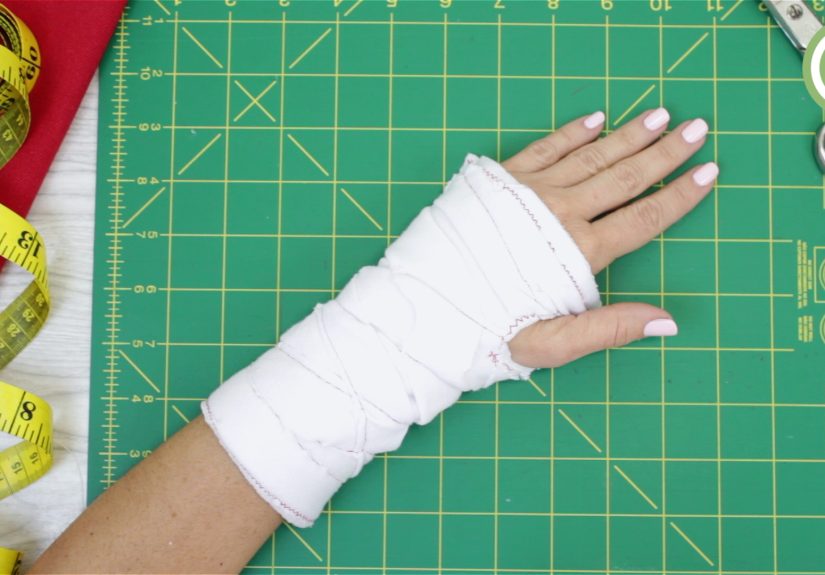
Start by sliding the cut sock or sleeve over your forearm. This creates a base layer so the wrap feels more comfortable and does not look patchy. Next, pad the forearm lightly with gauze or batting. You are not building a medieval shield here; the goal is gentle bulk, especially around the wrist and mid-forearm. Keep the palm and fingers free.
Once the padding is in place, wrap the elastic bandage around the arm in smooth, overlapping passes. Work from the wrist upward. Do not wrap too tightly, and do not cover the fingers. Slight overlap makes the wrap look neater and more cast-like. Secure the end with clips, tape, or a discreet safety pin. Then place the arm in a sling so the elbow is bent and the hand sits comfortably supported. That posture is what really sells the effect.
Why this method works
This version is quick, breathable, and removable. It is also surprisingly convincing in photos, especially if you keep your movements small and avoid wildly gesturing with the “injured” arm while holding a soda in the other hand. Because the bandage is soft, it is comfortable for kids and easier to adjust during long wear.
Best use case
Use this method for last-minute costumes, classroom performances, or any situation where comfort matters more than hyper-realism.
Watch out for this
If the bandage is too smooth and thin, it can look more like sports wrap than a cast. Add a little padding underneath to create volume. Also, make sure the wrap is neat. Wrinkles, gaps, and sagging ends make the illusion fall apart fast.
Method 2: Make a More Realistic Fake Arm Cast with Plaster Cloth
If you want that classic cast texture, plaster cloth is the star of the show. It is commonly sold in craft stores as plaster wrap or plaster cloth. It is basically gauze infused with plaster, and once it is dipped in warm water and layered, it hardens into a shell that looks dramatically more realistic than a soft bandage wrap.
What you need
- Plaster cloth or plaster wrap
- Warm water in a shallow bowl
- Petroleum jelly or a thin protective sleeve for skin comfort
- Scissors
- A drop cloth or old towel
- A sling
- Optional: fine sandpaper, acrylic paint, or marker for signatures
How to make it
First, protect your work area, because plaster cloth is not difficult, but it is definitely not what anyone would call “sparkling clean fun.” Cut the plaster cloth into manageable strips before you begin. Shorter strips are easier to control around the wrist and elbow. If you are applying it directly over the arm, use a thin sleeve or a light skin barrier underneath so removal is easier and more comfortable.
Dip one strip at a time into warm water, gently remove the excess, and lay it over the arm. Smooth it with wet fingers as you go. Build the cast in overlapping layers, concentrating on the forearm and wrist area while keeping the fingers uncovered. Two to four layers usually create a good prop shell, though you can add more if you want extra durability. Let each strip conform to the shape of the arm instead of forcing it flat. Slight contouring makes the final result look more like a real cast and less like a craft project wrapped around a baguette.
Once the layers are on, smooth the surface with damp fingers. Let the cast dry thoroughly before moving too much. If needed, lightly sand any sharp edges after it hardens. Then add the sling. You can leave the cast clean and clinical, or make it look a little more lived-in with a few signatures and dates. Keep the embellishments believable and minimal.
Why this method works
Plaster cloth creates the best visual realism for most people. It has thickness, a matte finish, and that classic cast texture people instantly recognize. It also photographs beautifully under indoor lighting, which is useful if your fake injury is headed for a stage, costume contest, or themed shoot.
Best use case
This is the best choice for theater, film props, Halloween, cosplay, or any event where appearance matters more than quick removal.
Watch out for this
Do not make it too thick or too long. A cast that runs halfway to the shoulder without reason starts looking cartoonish. Also, avoid wrapping the thumb and fingers into oblivion. A believable fake cast still allows the hand to be seen. And while plaster cloth is a craft material, it still needs common-sense handling: protect skin, work in a ventilated area, and do not trap the arm in something you cannot remove comfortably.
Method 3: Make a Lightweight Reusable Fake Arm Cast with a Foam Shell
If you need something you can wear for hours, take off easily, and use more than once, build a lightweight cast shell. This method is ideal for costume departments, repeat performances, conventions, or anyone who does not want to remake a prop every single time. The trick is to create the shape with foam, then finish it so it still looks medical rather than crafty.
What you need
- Thin craft foam, EVA foam, or flexible white foam sheet
- Cardboard or poster board for a simple pattern
- White gauze, self-stick wrap, or a few strips of plaster cloth
- Hot glue or strong craft glue
- Velcro dots or hook-and-loop tape
- White acrylic paint if needed
- A sling
How to make it
Wrap a sheet of paper or poster board loosely around your forearm and mark a simple curved rectangle that fits from just below the knuckles to just below the elbow. Cut and test the pattern until it cups the forearm comfortably. Transfer that shape to foam and cut it out. Form it into a curved sleeve, leaving a seam along the underside or side of the arm. Attach Velcro so you can open and close it easily.
At this stage, the shell will look more like a minimalist robot accessory than a cast, so now comes the disguise. Cover the shell with white gauze wrap, or add a few narrow strips of plaster cloth over the outside only. Overlap the strips and smooth them lightly to create realistic texture. If the surface is too shiny, knock it back with matte white paint. You want “hospital hallway” energy, not “space armor from a discount sci-fi set.”
Finally, wear the shell with a sling and keep the arm posture believable. Because this version opens and closes, it is great for long events, travel, and costume changes. It is also much more comfortable in hot weather than a fully rigid plaster build.
Why this method works
You get the visual payoff of a cast with much better comfort and reusability. It is also easier to pack, store, and repair. If you are creating props for a school drama club, haunted attraction, or recurring character costume, this is the practical winner.
Best use case
Choose this method for cosplay, stage productions, repeat photoshoots, and long events where you need to remove the cast between scenes.
Common Mistakes That Make a Fake Arm Cast Look Fake
- Covering the whole hand: Real casts usually leave fingers visible.
- No sling: Even a good cast can look unconvincing if the arm is swinging freely.
- Too-clean edges: A little texture looks more natural than razor-sharp perfection.
- Ridiculous thickness: More material does not always mean more realism.
- Bad acting: If you keep using the “injured” arm normally, the prop loses its effect instantly.
of Real-World Experience with Fake Arm Casts
People usually discover fake arm casts in one of three ways: Halloween, theater, or a very specific costume idea that sounded easy until the craft supplies came out. In real-world use, the biggest surprise is how much posture matters. A fake cast can look only mildly convincing sitting on the kitchen table, then suddenly become extremely believable once the person bends the elbow, relaxes the shoulder, and uses a simple sling. That arm position changes everything. It tells the eye, “This arm is being protected,” which is exactly what a real cast is trying to do.
For Halloween, the quick bandage method tends to win because it is comfortable and forgiving. People can snack, drive, or peel it off at the end of the night without needing a rescue team. Parents also like it because kids often decide, with great confidence, that they want an injury-themed costume at 6:42 p.m. on the day of the event. A sock sleeve, some gauze, and a sling can save the evening. It is not museum quality, but in dim porch light surrounded by capes and plastic fangs, it absolutely gets the point across.
For school plays and community theater, plaster cloth usually gets the best reaction. Under stage lights, the texture reads beautifully. It looks like a real cast from the audience, and it gives actors something physical to work with. They naturally move more carefully, which improves the performance. The downside is comfort. After an hour or two, a rigid prop can feel heavy, itchy, or just plain annoying. That is why many costume teams quietly switch to a reusable shell version after dress rehearsal. It keeps the look without the drama of remaking plaster every night.
Cosplayers and photo stylists often prefer the foam-shell route because it is easier to travel with and far less stressful if the prop cracks. A shell can be repaired with glue, repainted quickly, and stored flat or lightly curved. It also works better for conventions, where people are walking, eating, standing in lines, and trying not to overheat under ten layers of costume fabric. In those settings, comfort is not a luxury. It is survival with snacks.
One of the funniest recurring experiences with fake casts is how much people want to sign them. The second a cast looks believable, someone reaches for a marker like it is part of a social contract. That can actually help the prop if you keep the writing sparse and natural. A few signatures, one goofy doodle, and a date can make the cast look more lived-in. Too many notes, though, and it starts to resemble a yearbook wrapped around your forearm.
The final lesson from people who have actually worn fake casts is simple: less is often more. A believable shape, clean wrap job, visible fingers, and proper sling will outperform a giant overbuilt prop every time. Realism lives in the small choices. Also, maybe keep your good shirt away from wet plaster. That tip alone could save a friendship.
Final Thoughts
If you want speed, make the gauze-and-bandage version. If you want realism, choose plaster cloth. If you want comfort and repeat wear, build a reusable foam shell. No matter which route you take, remember that the most convincing fake arm cast is not the one with the most material. It is the one with the best shape, the cleanest wrap, the right arm position, and just enough detail to make people do a double take. Keep it practical, keep it comfortable, and keep it firmly in the world of props and costumes where it belongs.