Table of Contents >> Show >> Hide
- Why one product eventually hits a ceiling
- The real meaning of “second product”
- When should you add the second product?
- Why the path to $1B ARR usually favors multi-product companies
- What winning examples have in common
- How to build a second product without creating a second headache
- When a second product is a bad idea
- The bigger lesson: customers buy progress, not product counts
- Experience from the trenches: what teams usually learn the hard way
- Conclusion
- Note
Every SaaS founder starts with the same fantasy: build one beautiful product, watch customers fall in love, and ride that rocket all the way to the moon. Maybe Mars, if the quarter closes well.
And to be fair, one great product can take you surprisingly far. A strong wedge product can get you to product-market fit, early scale, and even a very respectable revenue number. It can build a category, attract a loyal customer base, and create the kind of internal confidence that makes slide decks glow. But when companies start chasing truly massive scale, especially the kind of growth that points toward $1 billion in ARR, one product often stops being enough.
Not because the first product failed. Quite the opposite. It usually worked so well that customers wanted more from the same vendor, the same data model, the same workflow, and the same trusted brand. That is where the second product stops being a distraction and starts becoming a growth engine.
The hard truth is this: one product can get you noticed, but a second product often helps you get unavoidable. And once your market expects a platform, a suite, or at least a more complete workflow, staying a one-trick pony starts to feel less like discipline and more like stubbornness in expensive shoes.
Why one product eventually hits a ceiling
There is usually a point in a SaaS company’s life when the first product begins bumping into natural limits. Sometimes the ceiling is pricing. Sometimes it is the size of the market. Sometimes it is the budget owner inside the customer account. And sometimes it is simpler than that: your customers love you, but they do not want to buy five other disconnected tools to solve the next five problems sitting right next to the first one.
That is the heart of the issue. Once a company has real traction, growth no longer comes only from new logos. It comes from getting more share of wallet, serving more teams, solving adjacent problems, and increasing how deeply the product is embedded in the customer’s daily operations. That is where a second product earns its keep.
In practical terms, the first product lands. The second product helps expand. The third product starts turning you into a platform. By the time a company dreams of nine-figure or ten-figure ARR, that motion becomes less optional and more structural.
It is not just about revenue math, either. A broader product footprint can improve retention, boost average contract value, strengthen switching costs, support bundling, and give sales teams more ways to win deals. In other words, a second product is not only another line item on a price sheet. It is often a moat with a login screen.
The real meaning of “second product”
When people hear “second product,” they sometimes picture a random side quest dreamed up after too much cold brew and one overly enthusiastic board meeting. That is not the idea. A real second product is not a shiny object. It is a strategic extension.
The best second products usually do one of a few things:
1. They solve the next obvious problem for the same customer
If your first product handles one painful step in a workflow, the next product often removes the headache immediately before or after it. This makes cross-sell feel natural instead of awkward. Customers do not think, “Why are they selling me this?” They think, “Honestly, I assumed you already had this.”
2. They raise expansion revenue inside existing accounts
A strong installed base is a beautiful thing. It is also an expensive thing to waste. A second product gives your customer success, sales, and product teams another way to grow revenue without starting from zero every time. New-customer acquisition is thrilling, but expansion revenue is where finance teams start smiling like they have a secret.
3. They deepen the data advantage
As SaaS becomes more data-rich and more AI-driven, product breadth matters even more. When multiple products share context, usage signals, workflow history, and operational data, the vendor becomes more valuable. The suite gets smarter. The recommendations get better. The AI becomes less “magical” and more useful, which is a nice upgrade for everyone involved.
4. They turn a point solution into a platform story
At scale, customers often prefer fewer vendors, better integration, and less operational chaos. A company that can say, “We solve this category,” often has more room to grow than one that says, “We solve this one sub-step very elegantly.” Elegant is lovely. Expandable is lucrative.
When should you add the second product?
There is no universal timer that dings the moment a company is ready. But there is a useful rule of thumb in the SaaS world: by the time you are approaching major scale, the second product should be more than a sketch on a whiteboard. It should be real, sold, and working in the market.
That timing matters because product expansion takes longer than founders hope and always longer than product managers claim on slides. A second product is not just code. It needs packaging, positioning, pricing, onboarding, support, sales enablement, analytics, and enough internal alignment to avoid causing company-wide emotional damage.
In low-ACV markets, the pressure may show up earlier because customers churn faster, pricing ceilings appear sooner, and you need more ways to grow account value. In enterprise markets, the second product may arrive a bit later, but once big customers start asking for adjacent capabilities, the window opens fast. If you wait until the first product has fully plateaued, you are late. By then, competitors are already pitching the platform story to your customers while you are still giving keynote speeches about focus.
Why the path to $1B ARR usually favors multi-product companies
Getting to $1 billion in ARR is not just a bigger version of getting to $10 million or even $100 million. The motion changes. At that level, you usually need one or more of the following: a giant market, strong expansion economics, multiple buyer personas, deep enterprise relevance, cross-functional use cases, or product breadth that creates compounding value.
That is why so many large software companies eventually lean into suites, modules, hubs, clouds, workflows, and platforms. Yes, some of those names sound like they were created by a committee trapped in an airport lounge. But the business logic is real. A broader product family can support a larger total addressable market while also making every customer relationship more valuable.
Consider how modern software leaders talk about growth. The language is not only about acquisition anymore. It is about expansion, adoption, unified data, connected workflows, cross-sell, and more ways to serve the same customer. That shift tells the story. Once companies get serious about enduring scale, the conversation moves from “How do we sell this product?” to “How do we become the operating layer, intelligence layer, or workflow layer for this customer?”
What winning examples have in common
Plenty of major software companies illustrate this pattern. HubSpot is a strong example of how one successful product line can become the blueprint for a broader product family. Its growth story increasingly centers on multi-hub adoption, not just single-product success. That is not accidental. It reflects the logic of serving more of the same go-to-market system rather than merely selling one tool at a time.
Atlassian has openly described expansion as a series of levers that increase share of wallet inside existing customers. That framing is helpful because it strips away the romance and reveals the machinery. Multi-product growth is not just visionary. It is operational. You pull more levers, create more value, and widen the revenue surface inside accounts.
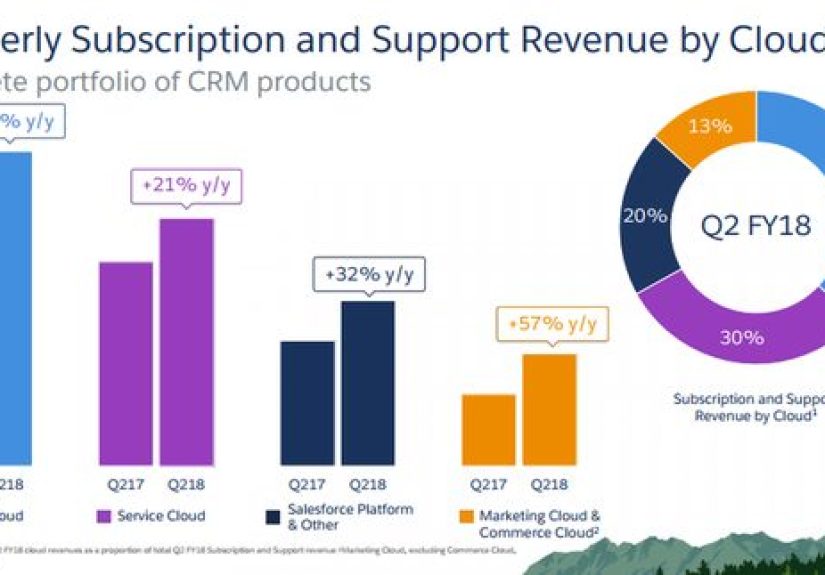
ServiceNow, Salesforce, Snowflake, Zendesk, and monday.com each tell a version of the same story from different angles. One emphasizes workflows. Another emphasizes unified data. Another emphasizes customer and employee service. Another emphasizes departmental products connected on one platform. The wording changes, but the playbook rhymes: solve one thing well, then expand into adjacent systems where context, data, and workflow continuity make the whole offer stronger.
Even in vertical SaaS and security, the same theme appears. Companies like Procore and Rubrik have demonstrated that massive scale rarely comes from staying frozen at the original use case. The road to very large ARR often involves multiple product curves, adjacent capabilities, and the evolution from tool to system.
How to build a second product without creating a second headache
Start with adjacency, not ambition theater
The best second product is close enough to the core that customers immediately understand why it exists. If your first product lives in the marketing workflow, your second product should not randomly become procurement software because someone once heard the phrase “large TAM.” Start where your credibility already lives.
Use the same customer truth
Great product expansion is built on repeated customer pain, not executive imagination. Ask what your best customers are duct-taping together around your product today. Ask what spreadsheets, manual workarounds, duplicate vendors, and recurring complaints show up right next to your current use case. Those signals are often more valuable than twelve strategy offsites and a mural of stickies.
Design for expansion from day one
If the second product cannot share identity, data, permissions, billing logic, reporting, and user experience with the first, you may be launching a sibling rivalry instead of a platform. Customers love innovation. They are less enthusiastic about Franken-software.
Choose bundling carefully
Bundling can be a smart accelerant for a second product, especially when attach rates are still low and adoption matters more than protecting a big standalone revenue stream. But bundling can also cannibalize healthy demand if customers were already willing to buy both products at full price. In other words, bundling is a scalpel, not a confetti cannon.
Keep the first product excellent
Nothing kills expansion faster than a core product that starts slipping because all the best talent got dragged into the new thing. The second product should increase customer confidence in the company, not make early customers feel like they funded a science experiment.
When a second product is a bad idea
Not every company should sprint into multi-product mode. Sometimes the right move is still focus. If retention is weak, churn is loud, onboarding is broken, or the first product has not truly earned love from the market, a second product can be a very expensive way to avoid facing the obvious.
A company with shaky product-market fit does not need a broader strategy. It needs a better first product. Expansion only works when the core earns trust. Without that trust, the second product feels like upsell theater. Customers can smell that from across the Zoom room.
There is also the org question. Multi-product companies need stronger packaging, clearer segmentation, more disciplined product leadership, and better coordination across sales, marketing, support, and finance. If the company cannot manage one product cleanly, two products will not create magic. They will create meetings.
The bigger lesson: customers buy progress, not product counts
The goal is not to collect products like trophies on a shelf. The goal is to help customers make more progress with less friction. Sometimes that means one extraordinary product. Often, once you aim for serious scale, it means multiple products working together in a way that feels coherent, connected, and economically compelling.
That is why the second product matters so much on the road to $1 billion in ARR. It is rarely just “more stuff.” At its best, it is the beginning of a broader value system: more use cases, more workflows, more users, more data, more expansion, and more reasons for the customer to stay.
One product can win attention. A second product can win the account. And once the account is truly won, very big revenue numbers stop looking mythical and start looking like math.
Experience from the trenches: what teams usually learn the hard way
Here is the part that rarely makes it into the polished conference talk: adding a second product is emotionally messy, even when it is strategically correct. Founders often feel torn between pride in the original product and fear of diluting what made it special. The first product is the hero. It paid the bills, won the early believers, and probably got mentioned in every investor update with borderline romantic language. So when the company starts talking about a second product, it can feel almost disloyal, like asking the lead singer to share the mic.
Then the customer conversations start piling up. Sales hears prospects say they love the core product but wish it handled the next workflow too. Customer success sees accounts using two or three other vendors to patch the gaps. Product teams notice that the real opportunity is not another clever feature inside the original product, but a neighboring capability with its own budget, buyer, and urgency. That is usually the moment the debate changes. The second product stops sounding like a nice-to-have and starts sounding like the obvious next chapter.
Operators who have lived through this phase often describe the same pattern. At first, the second product is sold as a simple extension. In reality, it quickly reveals hidden work everywhere. Pricing has to change. Packaging gets weird. The website navigation suddenly needs adult supervision. The sales team wants battle cards yesterday. Support asks whether this is one product or two. Finance wants to know how ARR is attributed. Leadership discovers that “just cross-sell it” is not a strategy, it is a wish wearing a blazer.
There is also a common surprise around adoption. Teams assume existing customers will buy the second product immediately because, well, they already like the brand. Some do. Many do not. Even warm accounts need a clear reason to care, a simple way to onboard, and a product that genuinely saves time or money. The lesson is humbling but useful: a second product may benefit from your reputation, but it still has to earn its own job.
The companies that handle this well tend to share a few habits. They keep the second product tightly connected to a known customer pain. They do not treat it like a random moonshot. They make sure the user experience, data model, and reporting feel connected, so customers feel they are buying a system, not a pile of licenses. And they train their go-to-market teams to talk about outcomes, not internal org charts. Customers do not care which GM owns the roadmap. They care whether the combined solution removes headaches.
There is one more lived experience worth noting: morale often improves when the second product starts working. Suddenly, sales has a bigger story. Customer success has more ways to help accounts grow. Product has a broader canvas. Leadership can talk about expansion with a straight face. The company begins to feel less like a startup protecting one beachhead and more like a serious software business building a category. That shift matters. Big ARR is not only about revenue mechanics. It is also about organizational belief. Once teams see real expansion motion, the company starts acting bigger before the revenue fully catches up.
Conclusion
If you want to build a solid SaaS business, one great product can do an awful lot of heavy lifting. If you want to build a truly massive one, the odds increasingly favor a broader strategy. Not an unfocused spree. Not a random product zoo. A thoughtful second product that expands value for the same customer, deepens the moat, and creates a more scalable revenue engine.
That is the key distinction. The second product should not exist because your board is bored or because your competitors launched something flashy. It should exist because your customers have adjacent problems, your data can make the combined offer better, and your path to very large ARR depends on becoming more than a single-use tool.
At that point, the second product is no longer a side project. It is the beginning of how companies go from successful to seriously big.
Note
This article is a synthesized analysis written for web publication. It intentionally excludes raw source links and citation artifacts, and it removes unnecessary publishing clutter such as contentReference placeholders.