Table of Contents >> Show >> Hide
- Why the ExoMars delay is more than just a date change
- Could NASA missions be next? Some already are
- Why these delays keep happening
- Which NASA missions are most at risk of delay?
- What ExoMars teaches NASA right now
- So, could NASA missions be next?
- Experiences from the Delay Era: What These Mission Slips Feel Like on the Ground
- Conclusion
Space agencies love a launch countdown. Engineers love a checklist. Mars, meanwhile, loves none of us equally.
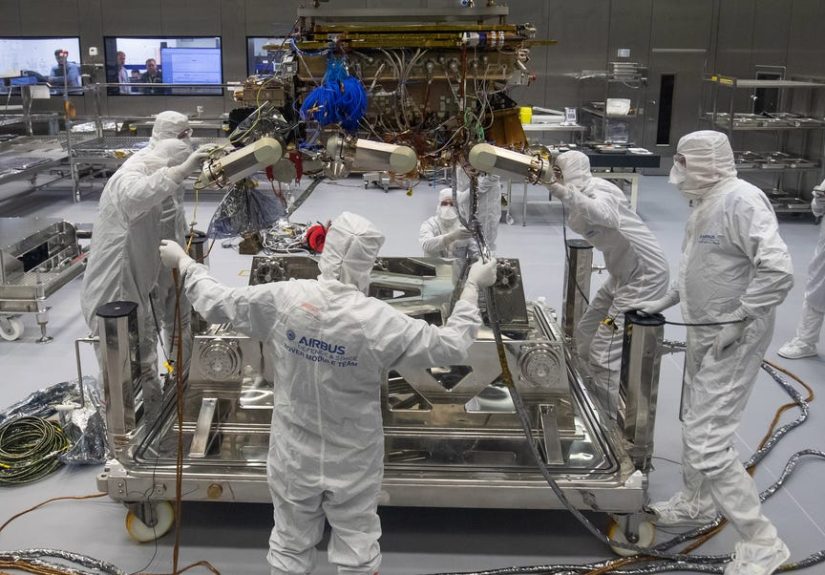
That is the mood hanging over ExoMars, Europe’s long-delayed Rosalind Franklin rover mission, which is now aiming for a 2028 launch and a 2030 landing after years of upheaval. The obvious question is whether this is a uniquely European headache or the kind of cosmic scheduling chaos that can spread across the wider space world. Put differently: if Europe’s Mars rover keeps slipping, could NASA missions be next?
The honest answer is both comforting and slightly terrifying. Yes, NASA missions could be next. In fact, some already are. But that does not mean every major mission is doomed to spend the next decade trapped in a PowerPoint timeline. It means the riskiest projects, especially the ones involving new hardware, multiple contractors, international partners, and tiny launch windows, are vulnerable in very familiar ways.
So let’s talk about what the ExoMars rover delay really means, what it reveals about the broader health of space exploration, and why NASA’s moon and Mars plans are already showing some of the same stress fractures.
Why the ExoMars delay is more than just a date change
On paper, ExoMars is a Mars mission. In practice, it is also a stress test for modern international exploration.
The Rosalind Franklin rover was designed to do something especially exciting: drill below the Martian surface in search of evidence of past or present life. That makes it different from the usual “take pretty pictures, zap a rock, post results online” stereotype that people casually attach to Mars missions. ExoMars is meant to dig deeper, literally and scientifically, into an environment that may preserve biosignatures shielded from the harsh radiation at the surface.
Then geopolitics barged in wearing muddy boots. After Russia’s invasion of Ukraine, the European Space Agency cut ties with Roscosmos on the mission. That meant Europe had to replace critical elements tied to Russian participation, including launch and landing components. In other words, ExoMars did not just miss a bus. It had to redesign the bus, hire a new driver, and confirm the wheels still matched.
That matters because Mars missions do not operate on a weekly airline schedule. Launch opportunities come only when Earth and Mars line up properly, which happens roughly every 26 months. Miss one window, and your mission does not move to “next Thursday.” It moves to “see you in two years, bring snacks.”
ExoMars also shows how space mission delays are rarely caused by one dramatic problem alone. They are usually a pileup of issues: politics, procurement, supply chains, engineering validation, budget realities, and the cruel physics of interplanetary timing. By the time the public hears “mission delayed,” the real story is usually a novel.
Why Rosalind Franklin still matters
The delay is frustrating because the science case remains excellent. Rosalind Franklin is built to explore a part of Mars where ancient water likely once existed, and its subsurface drill gives it a special advantage in the hunt for preserved chemical clues. Europe is not just trying to land a rover for prestige points. It is chasing one of planetary science’s biggest questions: was Mars ever habitable, and did anything microscopic ever call it home?
That scientific ambition is exactly why the mission’s delay gets attention far beyond Europe. ExoMars sits at the crossroads of astrobiology, international cooperation, and Mars strategy. When it slips, people notice, because it is not just another robot. It is one of the most important life-detection missions on the calendar.
Could NASA missions be next? Some already are
Now for the part where we stop pretending NASA is watching from the sidelines with a clipboard and a smug smile.
If the title asks whether NASA missions could be next, the answer is not “could.” The answer is “have been.” NASA’s recent record shows that even the world’s biggest space agency is vulnerable to delays, cost growth, redesigns, and the occasional crisis that sounds like it was written by a very nerdy disaster screenwriter.
Artemis has already entered the delay chat
The clearest example is Artemis, NASA’s flagship effort to return astronauts to the moon and build toward Mars. Artemis is ambitious, politically visible, and stuffed with interdependent hardware. That last part is where the trouble lives.
Artemis II, the first crewed mission of the program, has already faced schedule pressure tied to hardware concerns and launch readiness. Earlier official timelines slipped, and recent months brought more drama involving fueling issues, leak concerns, and broader questions about what comes next in the architecture. NASA has also reshaped portions of its Artemis roadmap, underscoring the reality that big exploration plans are not carved in lunar granite.
Then there is the human landing system. NASA’s inspector general recently warned of schedule delays and unresolved crew-safety risks tied to lunar landing development. That is not the kind of sentence you print on a commemorative poster.
The lesson is simple: if a mission depends on multiple giant pieces of hardware all maturing on time, then any delay in one piece can spread through the whole schedule. Moon rockets do not exist in isolation. Capsules, landers, launch infrastructure, upper stages, test campaigns, software, and contractor milestones all need to cooperate. As anyone who has ever tried to coordinate a family vacation knows, this is difficult even without cryogenic propellant.
Mars Sample Return is the giant warning label
If Artemis is NASA’s moon headache, Mars Sample Return is the agency’s neon-lit caution sign for the rest of planetary science.
The idea behind Mars Sample Return is magnificent: collect carefully chosen samples from Mars and bring them back to Earth, where scientists can study them with instruments far more capable than anything we can fit on a rover. In scientific value, it is hard to beat. In program complexity, it is also hard to beat, and not in the fun way.
The original architecture ran into fierce criticism over cost and timing. Estimates climbed into the multibillion-dollar range, and projected returns stretched painfully far into the future. NASA responded by rethinking the plan, looking for cheaper and faster alternatives, and effectively throwing the original structure into a prolonged identity crisis.
That matters for two reasons. First, Mars Sample Return is one of the most important science campaigns NASA has attempted. Second, when a mission that large starts absorbing too much money or slipping too far, it does not stay politely in its own lane. It begins squeezing other projects, delaying future competitions, and warping the priorities of an entire science division.
This is the nightmare scenario for planners: one flagship project becomes so expensive and slow that it starts eating the rest of the menu.
And it is not just moon and Mars missions
The pattern extends beyond the highest-profile headlines. NASA’s Dragonfly mission to Titan has seen schedule delays and major cost growth. VERITAS and DAVINCI, two important Venus missions, have also moved later than originally expected. These are not signs of a collapsing agency. They are signs of a system under pressure, where workforce limits, technical challenges, and funding choices ripple across the portfolio.
That is why the ExoMars story resonates so strongly in the United States. It does not feel foreign. It feels familiar.
Why these delays keep happening
Every delayed mission has its own backstory, but the pattern is surprisingly consistent. Space agencies are wrestling with the same handful of troublemakers over and over again.
1. First-of-a-kind engineering is expensive and rude
Space exploration is full of projects that have never been done before, or have never been done in quite this way. A lunar lander that must safely deliver astronauts near the moon’s south pole is not an off-the-shelf appliance. A campaign to launch a rocket from Mars and bring samples home is not something you order with free two-day shipping.
New systems create new failure modes. New failure modes create new tests. New tests create new delays. This is annoying, but it is also normal.
2. Launch windows do not care about your budget meeting
Interplanetary missions live and die by celestial timing. If a spacecraft misses a Mars window, the calendar penalty is brutal. That turns even a modest delay into a major slip. Projects that might recover on Earth by launching a few months later often cannot do that when another planet is involved.
3. Big missions are now webs, not single spacecraft
Older space-age narratives often focus on one heroic spacecraft. Modern exploration programs are more like ecosystems. Artemis is not one vehicle. Mars Sample Return is not one mission. ExoMars is not just a rover. They are linked systems with multiple organizations, contractors, facilities, and decision points. One shaky link can rattle everything else.
4. Budget turbulence turns manageable problems into strategic ones
A delay is painful. A delay during unstable funding is a whole different genre.
When budgets flatten or shrink, managers lose flexibility. Schedule reserves evaporate. Teams are stretched thin. Technical fixes that might have been annoying become existential. Suddenly the conversation is not “How do we solve this?” but “Which mission gets to keep breathing?”
5. International partnerships are powerful, but they add complexity
International cooperation is one of the best things about modern space exploration. It spreads costs, shares expertise, and makes major missions possible. It also means more coordination, more interfaces, more political exposure, and more vulnerability if one partner exits or changes course. ExoMars is the most vivid recent example, but it is hardly the only one.
Which NASA missions are most at risk of delay?
Not every NASA mission is equally fragile. The ones most likely to slip share a few traits.
First, they depend on major new hardware that has not yet proven itself in the relevant environment. Second, they rely on several organizations hitting hard milestones in sequence. Third, they are forced to operate within narrow planetary launch windows or high-visibility political deadlines. Fourth, they carry human-rating or sample-return requirements, which raise the cost of caution and the cost of failure at the same time.
That is why the riskiest NASA candidates tend to be the giant, beautiful, ambitious missions everyone loves to put on posters. The more history-making a mission sounds, the more likely its schedule includes some fine print.
By contrast, missions built around more mature spacecraft designs, more stable funding, or flexible launch dates are usually less vulnerable. They are not delay-proof, but they are less likely to suffer a full architectural meltdown.
What ExoMars teaches NASA right now
The ExoMars delay is not just Europe’s problem. It is a case study NASA should read with a highlighter.
Protect the science, even if the architecture changes
One of the smartest things agencies can do is preserve scientific goals while being willing to revise how they get there. ExoMars is still fundamentally about the search for life. The hardware path changed, but the mission purpose stayed intact. NASA has had to do something similar with Mars Sample Return: separate the scientific value from the architecture that got too heavy to carry.
Beware single-point dependency
When a mission leans too heavily on one partner, one contractor, one launch option, or one unproven system, any stumble becomes a crisis. Redundancy is expensive, but dependency can be even more expensive when it blows up a schedule.
Be honest about dates
Nothing in space ages worse than an overly optimistic launch date. Agencies love momentum. Politicians love milestones. The universe loves to humble both. Realistic schedules may be less glamorous, but they are usually cheaper than pretending physics is a motivational poster.
So, could NASA missions be next?
Yes, but the better framing is this: NASA missions are already living in the same delay-prone world as ExoMars.
That does not mean a blanket crisis is inevitable. NASA still has deep technical expertise, a broad mission portfolio, and the ability to adapt. Some programs will stay on track. Some will launch later than hoped but still succeed spectacularly. A delayed mission is not a failed mission. Space history is full of missions that flew late and delivered brilliantly.
But if you are looking for a warning sign, ExoMars is one. It shows how quickly a mission can be knocked sideways when geopolitics, hardware replacement, and unforgiving launch windows collide. NASA is not magically protected from those same forces. Artemis, Mars Sample Return, Dragonfly, VERITAS, and DAVINCI all show that the agency is already wrestling with them.
The real dividing line is not Europe versus NASA. It is complexity versus resilience. Missions with mature technology, clearer budgets, and fewer critical dependencies stand a better chance. Missions with novel hardware, tight windows, and sprawling partnerships should keep a very nervous eye on the calendar.
So yes, NASA missions could be next. Some already were. The more useful question is whether NASA can learn from these delays fast enough to keep the next generation of moon and Mars exploration from becoming an endless sequel called Coming Soon, Probably.
Experiences from the Delay Era: What These Mission Slips Feel Like on the Ground
For the public, a mission delay often looks like a simple headline update: launch moved, landing postponed, program reworked. For the people inside the system, it feels nothing like simple.
For engineers, a delay can be emotionally strange because it is both bad news and necessary news. Nobody wants years of work pushed back, but nobody wants to fly hardware that is not ready either. The emotional rhythm is exhausting. Teams spend months driving toward a milestone, only to watch the milestone move. Then they turn around and start again, usually with less money, less schedule margin, and more scrutiny. It is not dramatic in a Hollywood way. It is dramatic in a fluorescent-light, coffee-cooling-on-the-desk way.
Scientists experience delays differently. They think in decades already, so they are patient by profession. But patience is not the same as indifference. A Mars rover delay can mean postponed papers, stretched careers, delayed instrument validation, and a longer wait for the data that could define an entire field. Graduate students become postdocs; postdocs become faculty; some people retire before the mission they helped shape reaches its destination. Space science is glorious, but it is also a master class in deferred gratification.
Then there are the international partners. In missions like ExoMars, delay is not just a technical matter. It is a trust exercise. Teams across countries must keep working through political shifts, procurement changes, and different institutional cultures without losing the thread. The best collaborations grow stronger under that pressure. The weaker ones start to fray.
Astronaut offices feel the uncertainty too. Human spaceflight delays can reshape training cycles, family schedules, medical planning, and career timelines. When a mission like Artemis slides, it changes more than a press release. It changes who trains for what, when crews peak, and how long people stay in a state of high readiness. Even for professionals who know this is part of the job, uncertainty is a heavy backpack.
And the public? The public swings between awe and impatience. People cheer the ambition of returning samples from Mars or landing near the moon’s south pole, but patience thins when dates move over and over again. That frustration is understandable. Space agencies ask taxpayers to support missions that are expensive, long, and sometimes maddeningly slow. The challenge is to explain that caution is not waste when the alternative is failure.
Yet there is another side to the experience of delay: resilience. The teams who survive schedule slips often become better, tougher, and more creative. They redesign systems, sharpen priorities, and learn where the architecture was too brittle. When a delayed mission finally flies, it often carries the fingerprints of hard-earned realism. That does not make the waiting fun. It does make the success more meaningful.
In that sense, the ExoMars story and NASA’s own delays are not just tales of slipping dates. They are stories about endurance. Space exploration is a long game played by people who keep building, testing, fixing, and believing long after the easy optimism has burned off. Sometimes that is the real mission beneath the mission.
Conclusion
The delay of Europe’s ExoMars rover does not prove that NASA is doomed to repeat the same mistakes, but it does highlight a truth the space industry can no longer ignore: ambitious exploration missions are vulnerable when technical novelty, budget pressure, political change, and narrow launch windows all collide.
NASA’s recent experience shows the agency is already navigating those same storms. The future of NASA mission delays will depend less on wishful calendars and more on realistic architecture, stronger schedule margins, and disciplined funding. Space may reward boldness, but it still punishes fantasy planning.