Table of Contents >> Show >> Hide
- What Is the Wire Stool (VP11), Exactly?
- Verner Panton: The Brain Behind the Beautiful Weirdness
- Design Breakdown: Why a Bunch of Rings Feels So… Sophisticated
- How to Use a Verner Panton Wire Stool in Real Rooms
- Comfort: Do You Need the Seat Pad?
- Wire Stool vs. Panton Wire: Don’t Mix These Up
- Buying Guide: How to Shop Smart for a Verner Panton Wire Stool
- Care & Maintenance: Keeping the Shine Without Losing Your Weekend
- Why the Wire Stool Still Feels Relevant
- Experiences With the Wire Stool Verner Panton (Real-World, Lived-In, and Slightly Funny)
- Conclusion
Some furniture shows up loudlyshouting colors, curves, and “look at me!” energy. And then there’s the
Wire Stool by Verner Panton, which somehow manages to be both quiet and dramatic at the same time.
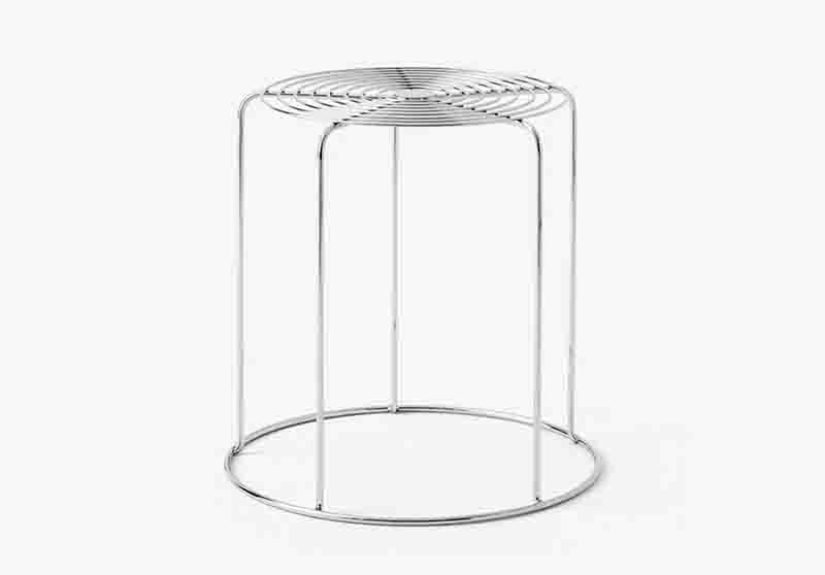
It’s basically a little drum of stainless-steel circles that catches the light, plays nice with modern interiors,
and still feels like it wandered out of a design museum gift shop (in the best way).
If you’ve seen the name “Wire Stool VP11,” that’s the one most people mean today: a compact, stackable stool
designed by Verner Panton and reissued for contemporary homes. It’s a seat, a side table, a “hold my jacket”
perch, and occasionally a conversation starter when someone asks, “Wait… is that made of rings?”
Yes. Yes it is. And that’s the point.
What Is the Wire Stool (VP11), Exactly?
The modern Wire Stool VP11 is a minimalist stool formed from stainless-steel wire bent into
circular shapes and welded together into a sturdy cylinder. The repeated rings create a geometric pattern that
feels airy and transparent, even though it’s stable enough to use as everyday seating. Many retailers also
position it as a side table, because the top surface is flat enough for a book, a mug, or a
small traybasically anything that doesn’t mind hanging out near shiny metal.
Key features people love (and why they matter)
- Mirror-polished stainless steel: bright, reflective, and a little glamorouslike jewelry for your living room.
- Magnetic seat-pad setup: a magnetic center plate allows a cushion to attach cleanly (no ties, no straps, no tragic Velcro situation).
- Stackable design: it can be stacked for storage, which is surprisingly useful for small homes or “we host sometimes” households.
- Compact size: commonly listed around 44 cm (17.3 in) diameter and 42 cm (16.5 in) tall, making it easy to tuck into tight spaces.
Think of it as a design-forward “extra seat” that doesn’t demand a full chair’s footprint. It’s also a great
example of Panton’s talent for turning simple geometry into something that feels alive.
Verner Panton: The Brain Behind the Beautiful Weirdness
Verner Panton (1926–1998) is one of the most recognizable names in 20th-century Danish designespecially if you
like your furniture with a side of experimentation. He’s famously associated with futuristic forms, new
materials, and interiors that treat color like a full-time job, not a weekend hobby.
Many people meet Panton through the iconic Panton Chair (that smooth S-curve of molded plastic), but his work
stretches far beyond one famous silhouette. Museums and design institutions have highlighted how deeply he cared
about the relationship between color, light, and spacenot just objects sitting politely in a room, but the
whole atmosphere of a room as an experience.
The Wire Stool is a fun counterpoint to his louder pieces: it’s restrained in color (mostly “hello, shiny steel”)
but still totally Panton in spiritgraphic, geometric, and a little hypnotic if you stare at the rings too long.
Design Breakdown: Why a Bunch of Rings Feels So… Sophisticated
Let’s talk about what your eyes are actually seeing. The Wire Stool’s repeated circles create rhythmlike a
visual beat. In design terms, repetition builds harmony. In real-life terms, it makes the stool look
intentionally designed rather than “I accidentally sat on a metal spring.”
1) The “airy but grounded” illusion
Because the structure is open, it doesn’t block sightlines. That matters in small rooms, where bulky furniture
can feel like it’s crowding you emotionally (and physically). The Wire Stool reads as lighteven when it’s doing
real work as seating.
2) Stainless steel that behaves like a mirror
Mirror-polished steel reflects its surroundings, which helps it blend into different styles. In a minimalist
space, it looks crisp and intentional. In a colorful space, it reflects the chaos and somehow looks like it’s
enjoying the drama. It’s the Switzerland of stools: neutral, but never boring.
3) A pattern that looks expensive (because geometry rarely lies)
Clean welds, consistent spacing, and a precise curve are the difference between “design classic” and “discount
patio furniture that squeaks when you look at it.” The Wire Stool’s appeal depends on craftsmanship and
proportionPanton’s signature move.
How to Use a Verner Panton Wire Stool in Real Rooms
The most underrated thing about the Wire Stool is how many jobs it can do without changing its personality.
It’s not trying to be a sofa. It’s not pretending to be a throne. It’s just… ready.
Entryway: the “shoe on, shoe off” hero
The Wire Stool is perfect by the door because it’s compact and easy to move. Add a magnetic seat pad if you want
comfort. Without a cushion, it still works as a quick perch for tying shoes or dropping a bag.
Living room: extra seat, side table, or both
Keep it near the sofa for guests, then slide it over as a side table when you’re solo. Place a small tray on top
if you’re worried about wobble from cups or candles. (The stool is stable, but your iced coffee deserves a calm life.)
Bedroom: a nightstand alternative
If you love the look of a lighter bedside setup, the Wire Stool can hold a book, a phone, and a tiny lamp.
It also makes a great “chair that isn’t really a chair” for tossing tomorrow’s outfitno judgment here.
Bathroom or vanity zone: modern and practical
A wire stool near a vanity feels airy and clean. Just keep in mind that many product listings emphasize indoor
use and may discourage outdoor exposure; if your bathroom is basically a tropical rainforest, you’ll want to
wipe it down regularly.
Comfort: Do You Need the Seat Pad?
If you’re sitting for more than a quick momentyes, you probably want the cushion. Stainless-steel wire looks
incredible, but it’s not famous for feeling like a cloud. The good news: the Wire Stool is often paired with
removable seat pads that attach magnetically, giving you a clean look without straps.
Here’s a practical way to decide:
- Mostly decorative / occasional use: skip the pad and enjoy the pure sculptural vibe.
- Daily use in an entryway or kitchen: add the pad for comfort and warmth.
- Kids + frequent movement: magnetic pads are great because they don’t slide around like loose cushions.
Bonus: a cushion is an easy way to bring in colorvery Pantonwithout repainting your entire room like a
1970s space lounge.
Wire Stool vs. Panton Wire: Don’t Mix These Up
If you go down the Verner Panton rabbit hole, you’ll notice another “wire” favorite: the modular
Panton Wire storage system (wire cubes used as shelving). That system is a different product line
and a different “wire story.” It’s easy to confuse them because they share the same visual language:
open structure, steel, geometry, and a very confident use of negative space.
Quick rule of thumb:
- Wire Stool VP11: circular-ring cylinder, designed to sit on (and sometimes set things on).
- Panton Wire modules: cube-like wire shelving units you can stack, mount, or configure.
Buying Guide: How to Shop Smart for a Verner Panton Wire Stool
The Wire Stool shows up in two main worlds: new reissues and vintage/collector listings.
Shopping is easier when you know which lane you’re in.
If you’re buying new (reissue)
- Check the model name: “Wire Stool VP11” is commonly used for the contemporary version.
- Confirm dimensions and materials: look for stainless steel and the typical ~44 cm diameter / 42 cm height sizing.
- Ask about the seat pad: it’s often sold separately, and you’ll want to know what fabrics/colors are available.
- Read care notes: many listings frame it as primarily indoor furniture; if you want it outside, confirm the manufacturer guidance and finish durability first.
If you’re buying vintage
Vintage “wire stools” attributed to Panton can vary widely by decade, maker, and design details. Some listings
reference earlier wire-frame stools from the 1950s, which have different proportions and may include original
upholstery or fabric. That’s a different collecting conversation than buying a modern VP11 reissue.
Vintage checklist:
- Provenance: maker, period, and any documentation.
- Condition: check welds, stability, and any bends or repairs.
- Seat material: original upholstery can add value, but replacement work should be disclosed.
- Measurements: compare carefullyvintage Panton-related wire stools can differ in height/diameter.
Care & Maintenance: Keeping the Shine Without Losing Your Weekend
Mirror-polished steel is gorgeous, but it does have one hobby: collecting fingerprints like autographs.
The good news is maintenance is simple if you’re gentle.
Everyday care
- Wipe with a soft microfiber cloth to remove dust and smudges.
- Use mild soap and water for deeper cleaning, then dry thoroughly.
- Avoid abrasive pads or harsh cleaners that can scratch the polished finish.
Long-term tips
- Lift rather than drag to protect floors and prevent stress on welds.
- Use a small tray if you’re placing drinks on top (condensation happens; your furniture doesn’t need to suffer for your iced latte).
- If you add the seat pad, follow the fabric care instructions so the cushion stays sharp, not sad.
Why the Wire Stool Still Feels Relevant
Plenty of modern stools are “fine.” They sit. They exist. They do not inspire emotion beyond “where did I put my keys?”
The Wire Stool Verner Panton is different because it’s small-scale design history you can actually use.
It reflects a few big ideas:
- Geometry as decoration: no extra ornament neededstructure becomes pattern.
- Material honesty: it doesn’t hide what it’s made of; it celebrates it.
- Flexibility: stool, side table, extra seating, stackable storagemodern life approved.
And it plays well with other icons. Put it next to a bold chair, and it looks like the calm friend who still has
interesting stories. Put it in a minimalist room, and it becomes the “one object” that makes the space feel curated.
Experiences With the Wire Stool Verner Panton (Real-World, Lived-In, and Slightly Funny)
The best way to understand a Wire Stool is to imagine it living a normal lifebecause despite the museum-worthy look,
it’s surprisingly down for everyday chaos. In many homes, the first “experience” people have is moving it around
constantly. It’s light enough to relocate without grunting like you’re deadlifting furniture, which means it quickly
becomes the “wherever we need it” seat. Today it’s by the entryway. Tomorrow it’s beside the sofa. By the weekend,
it’s in the corner holding a stack of books you swear you’re going to read.
Another very real experience: the fingerprints. Mirror-polished steel looks amazing, but it also politely records
evidence that humans have hands. The good news is it’s easy to wipe down, and once you build the habit, it becomes
a two-second reset that makes the whole room feel sharper. Think of it as the stool equivalent of straightening a
throw pillowsmall effort, big “wow, I have my life together” energy.
Comfort-wise, people tend to have a “short sit vs. long sit” relationship with it. For quick taskstying shoes,
grabbing something from a low shelf, chatting for a minuteit’s totally fine as-is. For longer hangs, the magnetic
seat pad becomes the hero. The pad also changes the mood: without it, the Wire Stool feels crisp and sculptural; with
it, it feels warmer and more inviting. If you like switching your decor seasonally, swapping the seat pad color can
feel like a mini makeover without the emotional commitment of buying new furniture.
One of the most charming real-life uses is as a side tableespecially in small spaces. Because it’s visually open,
it doesn’t “block” the room the way a chunky table can. People often place a tray on top and suddenly it’s holding a
mug, a candle, and a remote like it was born for the job. It’s also a favorite for “unexpected guests” moments:
stack a couple in a closet, pull them out when friends come over, and you look magically prepared. (Even if your
fridge contains only sparkling water and existential dread.)
And then there’s the styling experience: the Wire Stool is a design chameleon. In a minimalist room, it reads like a
deliberate statement piecemodern, clean, reflective. In a more eclectic space, it acts like a visual “pause” between
louder patterns, almost like punctuation. It’s particularly fun paired with bold color nearby, since the steel picks
up reflections and feels connected to the palette without demanding attention. That quiet flexibility is exactly why
so many people keep it long-term: it doesn’t get tired, and it doesn’t make your room tired either.
Conclusion
The Wire Stool Verner Panton sits in a sweet spot: compact, practical, and unmistakably design-driven.
If you want a piece that can work as seating, act as a side table, and still feel like a tiny sculpture, the Wire Stool
(especially the VP11 reissue) is a strong pick. It’s not just functional furnitureit’s a clean, clever example of how
Panton turned geometry into personality.