Table of Contents >> Show >> Hide
- Why “What I See Vs. What I Take” Keeps Going Viral
- 16 Things These Photos Reveal About How a Photographer Gets the Perfect Shot
- 1. The perfect photo is often buried inside a messy scene
- 2. Angle changes everything
- 3. Cropping is not cheating; it is editing with purpose
- 4. Light is doing half the storytelling
- 5. Depth of field helps the subject win the argument
- 6. Leading lines quietly guide the eye
- 7. Framing inside the frame creates instant depth
- 8. Perspective can make ordinary places feel dramatic
- 9. The best photographers know when to simplify
- 10. Color contrast can do a surprising amount of heavy lifting
- 11. Timing is often the invisible ingredient
- 12. Motion can be frozen or used creatively
- 13. Eyes, details, and focal points matter more than people realize
- 14. Background control is a superpower
- 15. Editing finishes the idea, not invents it
- 16. The perfect shot is really a story with good manners
- What These 16 Photos Really Teach Aspiring Photographers
- Experiences From Chasing the “Perfect Shot”
- Conclusion
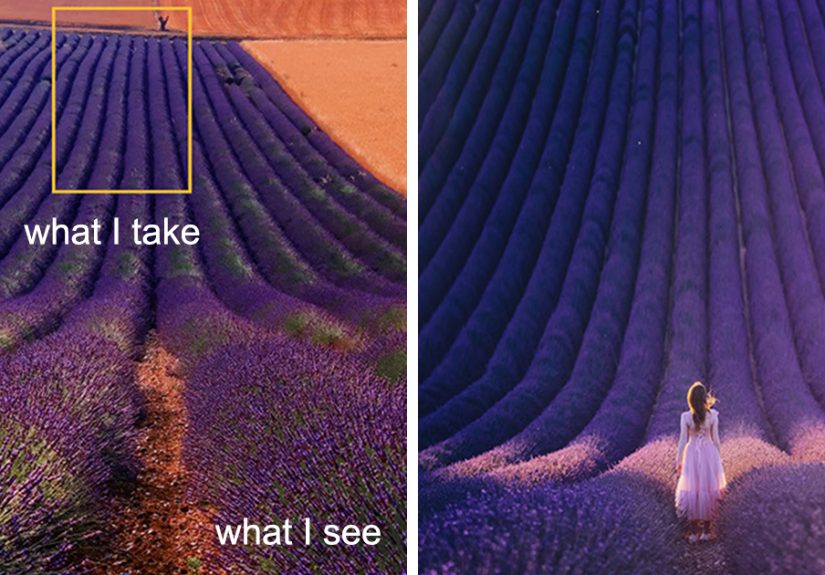
Most people walk past a street corner and think, “Nice lamp.” A photographer walks past the same corner and thinks, “Nice lamp, dramatic shadows, a clean leading line, and just enough mood to make this look like a movie poster.” That is the charm of the what I see vs. what I take format. It reveals the small miracle hiding inside great photography: the camera does not just record reality. In skilled hands, it edits reality, organizes it, and turns everyday chaos into something worth staring at for way too long.
That is exactly why side-by-side photo comparisons are so satisfying. On one side, you get the wide, ordinary scene: people, clutter, awkward backgrounds, maybe a trash can doing its best to ruin the vibe. On the other side, you get the final image: polished, dramatic, and strangely magical. The surprise is not that the photographer found a fantasy world. The surprise is that the fantasy world was standing there the whole time, right next to the sandwich board and the parked scooter.
What makes these 16 photos so compelling is not expensive gear alone, nor some secret camera button hidden behind a software update nobody asked for. The real trick is visual decision-making. Great photographers know how to isolate a subject, use perspective, shape light, control depth of field, and wait for the moment when all the pieces stop arguing and finally cooperate. In other words, the perfect shot is usually less about luck and more about seeing with intention.
Why “What I See Vs. What I Take” Keeps Going Viral
The format works because it teaches without sounding like a lecture. You immediately understand the difference between simply looking and truly seeing. A casual viewer sees a crowded environment. A photographer sees layers, geometry, contrast, texture, and emotional possibility. The wide scene explains the challenge; the final frame explains the skill. It is visual proof that composition matters, angle matters, patience matters, and yes, moving three steps to the left can sometimes save an entire shoot.
These comparisons also make photography feel more accessible. They remind beginners that beautiful images are not always hiding in exotic locations. Sometimes the perfect shot is waiting in a hotel hallway, beside a window, under a sign, in an alley, or in that weird patch of sunlight on the sidewalk that everyone else ignores. The difference is not always the place. It is the eye.
16 Things These Photos Reveal About How a Photographer Gets the Perfect Shot
1. The perfect photo is often buried inside a messy scene
The first lesson is simple: the photographer is not showing you the whole world, only the useful part of it. A wide scene may look cluttered and forgettable, but the final frame removes distractions and keeps only what supports the subject. This is why strong photography often feels cleaner than real life. Real life is busy. The frame is selective.
2. Angle changes everything
A step forward, a crouch downward, or a slight shift to one side can completely transform a shot. What looked flat from eye level may suddenly gain depth from a lower angle. What looked ordinary from the center may become cinematic from the edge. Great photographers treat camera position like a creative tool, not a fixed address.
3. Cropping is not cheating; it is editing with purpose
One of the biggest reveals in side-by-side images is how little of the original environment survives. The photographer crops tightly, trims dead space, and keeps the viewer’s attention on the real star of the frame. Think of it as decluttering, but for pixels. Marie Kondo would approve.
4. Light is doing half the storytelling
Good light can turn a basic location into something dramatic, soft, mysterious, or romantic. A photographer notices where the light falls, how it wraps around a face, and whether it separates the subject from the background. The final image often looks special not because the place is special, but because the light showed up and understood the assignment.
5. Depth of field helps the subject win the argument
When the background is too loud, a shallow depth of field politely asks it to calm down. Blur can isolate a person, object, or detail and keep the viewer from wandering into visual nonsense. In many of these comparisons, the final shot works because the photographer deliberately controls focus and turns background clutter into soft atmosphere.
6. Leading lines quietly guide the eye
Hallways, railings, sidewalks, fences, carts, windows, and shadows can all pull the viewer toward the subject. In the “what I see vs. what I take” trend, lines are often the hidden engine of the image. You may not notice them first, but your eye follows them automatically. It feels natural because the composition is doing the steering for you.
7. Framing inside the frame creates instant depth
Doorways, arches, branches, windows, curtains, and even light fixtures can create a frame within the photo. This adds structure and gives the viewer a clear visual entry point. It also makes the final image feel more intentional, almost like the photographer found a stage for the subject instead of just snapping a random scene.
8. Perspective can make ordinary places feel dramatic
Wide-angle views exaggerate distance and create a stronger sense of space. Longer focal lengths compress the scene and make background elements feel closer. That is why one location can produce wildly different moods depending on the lens and shooting distance. A photographer does not just capture a place; they choose how that place will feel.
9. The best photographers know when to simplify
Not every image needs more props, more people, or more information. Sometimes the winning move is subtraction. Remove visual clutter. Cut unnecessary corners. Leave negative space. A cleaner frame gives the subject room to breathe and the viewer room to feel something. Silence, visually speaking, can be very loud.
10. Color contrast can do a surprising amount of heavy lifting
If the subject pops against the background, the image becomes easier to read instantly. A bright dress against muted architecture, warm skin tones against cool shadows, or a bold object against a neutral backdrop can create clarity without much effort. Some photographers chase scenes for this exact reason: the color relationship does half the composition work for them.
11. Timing is often the invisible ingredient
The wide scene may show a location with potential, but the final shot usually depends on a specific moment. A glance, a gust of fabric, a passing reflection, a brief patch of light, or one perfect step forward can change everything. Great images are not always captured at the first click. Often they are earned by waiting a little longer than everyone else would.
12. Motion can be frozen or used creatively
Sometimes the perfect shot comes from freezing movement at the exact right instant. Other times it comes from allowing a little blur so the image feels alive. The point is control. Skilled photographers decide whether motion should look crisp, dreamy, urgent, or ghostlike. The camera records time, but the photographer decides how time behaves.
13. Eyes, details, and focal points matter more than people realize
When a portrait works, it usually has a clear point of emphasis. Most often, that is the eyes. In other images, it may be a hand, a flower, a face in profile, a reflection, or one sharply focused object inside a softer scene. The final shot succeeds because the viewer instantly knows where to look. Confusion is for group texts, not strong composition.
14. Background control is a superpower
Amateur photos often fail because the background is chaotic, distracting, or unintentionally funny. A photographer pays close attention to what is behind the subject, not just the subject itself. They reposition, reframe, blur, darken, brighten, or wait for a cleaner moment. The background is never just background. It is either helping or sabotaging the image.
15. Editing finishes the idea, not invents it
Yes, post-processing matters. Contrast, cropping, color balance, highlight control, and selective sharpening can turn a good capture into a polished final image. But the best edits build on a strong foundation. Editing is not a rescue helicopter for bad vision. It is more like tailoring: it makes the fit cleaner, sharper, and more flattering, but the material still has to be there.
16. The perfect shot is really a story with good manners
At the end of the day, the most memorable images are not just technically impressive. They communicate something. Mood. Wonder. Calm. Mystery. Humor. Romance. Scale. Solitude. The “what I see vs. what I take” trend works so well because it reveals that photographers are not merely documenting a scene. They are translating it into emotion.
What These 16 Photos Really Teach Aspiring Photographers
The biggest takeaway is wonderfully encouraging: you do not need a fantasy set to make a striking image. You need awareness. Train yourself to notice the edge of the light, the direction of a line, the cleanest background, the strongest angle, the most flattering focal length, and the brief instant when the scene finally clicks into place. Photography is part technique, part instinct, and part stubbornness. A lot of stubbornness, honestly.
If you want to create images like the ones in these side-by-side comparisons, start by slowing down. Do not just raise the camera and fire away. Walk around the subject. Try a tighter crop. Lower your angle. Check the edges of the frame. Wait for better light. Ask yourself what the photo is actually about. That small pause is often where the ordinary scene starts becoming the final image you were hoping for.
Experiences From Chasing the “Perfect Shot”
Anyone who has ever tried to recreate a stunning photo from a side-by-side comparison learns one humbling truth almost immediately: the camera sees differently than your eyes do, and your eyes are sneaky little optimists. In person, a scene may feel magical. The light looks warm, the subject looks amazing, and the atmosphere feels cinematic. Then you check the photo and discover a crooked sign, a distracting stranger, six random reflections, and a background that now looks like it was decorated by chaos itself. This is not failure. This is photography introducing itself properly.
One of the most common experiences photographers describe is the shock of how much movement is involved in getting one good frame. The final image may look effortless, but behind it there is often a small, unglamorous dance: step left, crouch down, back up, move closer, tilt the camera, adjust exposure, wait for someone to clear the frame, fix the focus, ask the subject to turn slightly, then repeat all of that because the light changed. From the outside, it may look artistic. From the inside, it sometimes feels like negotiating with sunlight.
There is also the strange thrill of discovering that ordinary places can become visually rich once you stop demanding that beauty arrive in obvious packaging. A plain wall becomes useful because the light is clean. A storefront window becomes interesting because it offers reflection. A narrow walkway becomes dramatic because the lines converge. A parking garage, of all places, becomes portrait-worthy because the shadows are structured and the background is simple. The experience changes the way you move through daily life. You stop just going places and start scanning them.
Another memorable part of the process is learning patience. The perfect shot is often not there when you first raise the camera. It appears a few seconds later when the wind lifts fabric, when a face relaxes, when a passing car adds a reflection, or when the sun slips behind a cloud and softens everything at once. This waiting can feel tedious until it suddenly feels magical. Then you understand why photographers are willing to stand in one spot for what seems like an unreasonable amount of time. They are not doing nothing. They are watching a scene ripen.
Perhaps the most meaningful experience, though, is realizing that improvement is less about buying more gear and more about seeing more clearly. Better photography usually begins when you become more intentional. You notice what distracts from the subject. You understand how background blur changes mood. You learn when to center a subject and when to push it off to the side. You begin to recognize that a good image is not random luck. It is a series of choices made with attention. That is what these “what I see vs. what I take” photos reveal so beautifully. The perfect shot is rarely hiding in another world. It is hiding in this one, waiting for someone to frame it well.
Conclusion
The brilliance of “What I See Vs. What I Take” lies in how clearly it shows the photographer’s real skill: not just pressing the shutter, but discovering a better version of the scene inside the scene. These 16 photos remind us that strong images are built through perspective, composition, timing, lighting, and storytelling. The next time you see a beautiful final shot, remember that the magic probably started in a totally ordinary place. The photographer just knew how to see it before anyone else did.