Table of Contents >> Show >> Hide
- Why Cleaning Gutters Matters (More Than You Think)
- How Often Should You Clean Gutters?
- Safety First: Decide If DIY Is the Right Call
- Tools and Supplies That Make Gutter Cleaning Easier
- Method 1: Cleaning Gutters from a Ladder (Most Thorough)
- Method 2: Cleaning Gutters from the Ground (Safest Option)
- What to Do After Cleaning: Inspect and Fix Small Problems Early
- How to Prevent Clogs (So You’re Not Doing This Every Weekend)
- Common Gutter-Cleaning Mistakes to Avoid
- When to Hire a Professional
- Quick Checklist: Clean Gutters Safely and Effectively
- Extra: Real-World Experiences People Have While Cleaning Gutters (So You’re Not Surprised)
- SEO Tags
Cleaning gutters is one of those home chores that’s easy to ignore until your house starts acting like it’s auditioning
for a water-park commercial. The good news: you don’t need superhero powers to do it well. You just need a plan, the
right tools, and a healthy respect for gravity (gravity is undefeated).
This guide walks you through safe, effective gutter cleaning methodsboth on a ladder and from the groundplus how to
clear downspouts, spot damage early, and keep clogs from coming back for an encore.
Why Cleaning Gutters Matters (More Than You Think)
Gutters are your roof’s drainage system. When they’re working, rainwater is directed into downspouts and safely away
from your foundation. When they’re clogged, water can spill over the sides and end up where you really don’t want it:
along fascia boards, behind siding, into basements, and pooled around the foundation.
Clogged gutters can also become heavy with wet leaves and standing watersometimes enough weight to pull gutters loose
or bend them out of slope. Add in cold weather and you may also be dealing with ice buildup along the roof edge that
stresses the system and traps water.
In plain English: clean gutters help prevent expensive surprises. Dirty gutters are basically an invitation for water
damage, rot, pests, and “Wait…why is that dripping?” moments.
How Often Should You Clean Gutters?
A practical baseline is twice a yeartypically spring and fall. If you have tall trees,
frequent storms, lots of pine needles, or you notice overflow during rain, you may need to clean them more often.
A good rule of thumb: if you can look up and see plants growing where water should be flowing, it’s time.
Signs Your Gutters Need Cleaning
- Water spills over the gutter edge during rain
- Plants, moss, or “mystery compost” in the trough
- Sagging sections or separated joints
- Stains on siding or water marks under the gutters
- Downspouts that trickle instead of gush
Safety First: Decide If DIY Is the Right Call
Gutters aren’t worth a fall. If your home is two stories (or more), the ground is sloped/uneven, the roof is steep,
you’re uncomfortable with heights, or the gutters are high above stair landings or hardscaping, hiring a pro can be
the smartest “tool” you use.
If you’re under 18: don’t do ladder-based gutter cleaning alone. Ask a parent/guardian to handle the ladder
work or hire a professional. This isn’t a bravery contestit’s basic safety.
Ladder Safety Basics (Non-Negotiable)
- Inspect the ladder before use (loose parts, missing rungs, wobble).
- Set the angle correctly: for extension/straight ladders, use the 4-to-1 rule (about 1 foot out for every 4 feet up).
- Extend the ladder above the edge when stepping off near a landing area (if applicable).
- Maintain three points of contact when climbing (two hands and one foot, or two feet and one hand).
- Never overreach; move the ladder instead of leaning your body outside the side rails.
- Keep ladders away from power lines and watch overhead hazards.
- Use a ladder stabilizer/standoff so you don’t lean directly on the gutter and dent it.
- Have a spotter whenever possibleespecially on uneven ground or for taller ladders.
Wear the Right Gear
- Thick gloves (wet leaves can hide sharp debris)
- Safety glasses (grit and gunk love to launch upward)
- Non-slip shoes
- Long sleeves if you’re dealing with pests or scratchy debris
Pick the Right Weather Window
Choose a dry day with calm wind. Wet leaves are heavier, messier, and more slippery. Wind turns ladder work into a
low-budget action scene. Save the heroics for video games.
Tools and Supplies That Make Gutter Cleaning Easier
You can clean gutters with just gloves and determination, but a few simple tools make it faster and less gross.
- Sturdy ladder (appropriate height for your home)
- Ladder stabilizer/standoff
- Bucket or bag (a bucket with a hook is handy)
- Plastic gutter scoop or small trowel
- Garden hose with spray nozzle
- Plumber’s snake (for stubborn downspout clogs)
- Tarp to catch debris (saves your landscaping and your mood)
- Optional: telescoping gutter wand (ground cleaning), wet/dry vac gutter kit
A Note on Leaf Blowers and Pressure Washers
They can work, but they can also spray sludge everywhere (including into your face) and may force water under roofing
edges if used carelessly. If you try them, use the right attachments, aim water along the gutter (not under shingles),
and wear eye protection like it’s your job.
Method 1: Cleaning Gutters from a Ladder (Most Thorough)
This method is typically the most effective because you can see what you’re doing, inspect for damage, and remove
compacted debris. It also requires the most caution.
Step 1: Prep the Area
- Lay a tarp under the section you’ll clean first.
- Move outdoor furniture and clear tripping hazards.
- Position the ladder on stable, level ground.
- Attach a ladder stabilizer to avoid crushing the gutter edge.
Step 2: Start Near a Downspout (Yes, Really)
Start near a downspout and work away from it in short sections. This helps you keep the downspout opening from getting
packed with debris while you scoop. Think of it like keeping the drain clear while you clean a sink.
Step 3: Scoop Out Debris
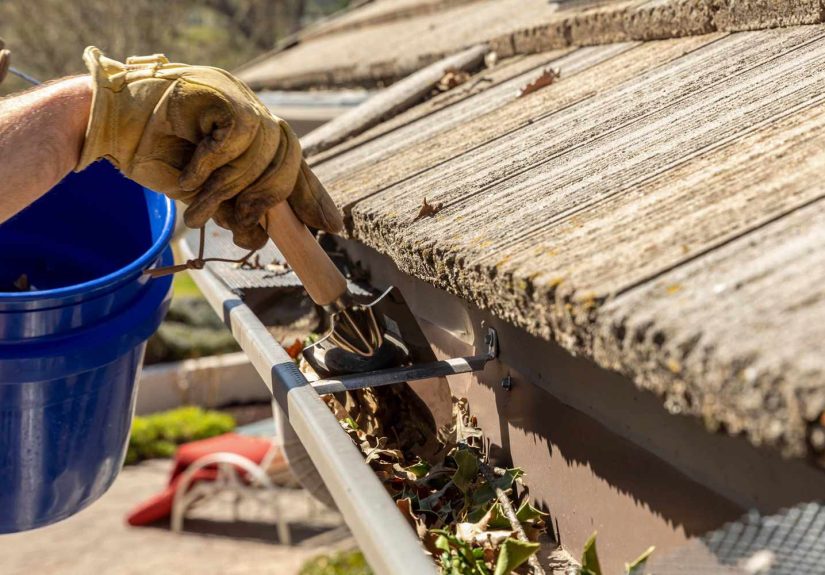
- Wear gloves and use a scoop to remove leaves, twigs, and sludge.
- Drop debris into your bucket/bag (or onto the tarp).
- Work in small sections, moving the ladder often to avoid overreaching.
Step 4: Flush the Gutter with Water
After the big debris is out, use a garden hose to flush the gutter. Spray water toward the downspout so remaining grit
moves in the right direction. You’re checking two things: flow and leaks.
- If water pools, the gutter may be sagging or pitched the wrong way.
- If water drips from seams, you may need to reseal joints or tighten hangers.
Step 5: Clear the Downspout
If the gutter is clean but water doesn’t drain fast, the downspout may be clogged. Try this sequence:
- Flush the downspout with a strong hose stream from the top (if safely accessible).
- If it backs up, check the elbow bend near the bottomclogs love to camp there.
- Use a plumber’s snake to break up stubborn blockages.
- Flush again until the water runs freely.
Example: The “Why Is It Still Overflowing?” Fix
Suppose you cleaned the gutter trough perfectly, but during the next rain it still overflows in one corner. That often
points to a downspout clog (water can’t exit fast enough) or a low spot in the gutter where water collects instead of
flowing. Flushing with a hose makes this visible immediatelywater should move steadily toward the downspout, not sit
like a sad puddle.
Method 2: Cleaning Gutters from the Ground (Safest Option)
If you want the lowest-risk method, stay on the ground. It can be slower and less precise (you can’t always see what
you’re clearing), but it greatly reduces fall risk.
Option A: Telescoping Hose Wand
A telescoping gutter-cleaning attachment lets you spray into the gutter from the ground. It’s best for light to
moderate debris and for rinsing after you’ve removed big clogs.
Option B: Wet/Dry Vac Gutter Attachment
A wet/dry vacuum with gutter extensions can pull dry leaves and debris out from below. It’s useful when debris is
fluffy and not cemented into sludge. It’s also one of the least messy optionsyour vacuum does the “ew” part for you.
Option C: Pressure Washer Extension (Use Carefully)
Pressure washers can blast debris out, but they can also blast it onto your siding, windows, and soul. If you use one,
keep pressure reasonable, direct spray along the gutter channel (not under shingles), and wear eye protection.
What to Do After Cleaning: Inspect and Fix Small Problems Early
Cleaning time is inspection time. While the gutter is empty (for once), look for:
- Loose or missing hangers
- Separated seams
- Rust spots or pinhole leaks
- Sagging sections or improper slope
- Water stains on fascia boards
Catching these early can prevent bigger repairs later. A small leak at a seam is much easier to deal with than rotted
wood behind the gutter.
How to Prevent Clogs (So You’re Not Doing This Every Weekend)
Install Gutter Guards (But Don’t Expect Magic)
Gutter guards can reduce large debris, but most still require periodic maintenance. Fine particles like shingle grit,
pollen, and tiny seeds can slip through or build up on top depending on the style.
Trim Overhanging Branches
Fewer leaves on your roof means fewer leaves in your gutters. Even modest trimming can make a noticeable difference.
Make Sure Downspouts Send Water Far Enough Away
Downspouts should direct water away from the foundation. If water dumps right next to the house, you can still get
pooling even with clean gutters.
Common Gutter-Cleaning Mistakes to Avoid
- Leaning the ladder on the gutter (easy way to dent or loosen it)
- Overreaching instead of moving the ladder
- Cleaning without gloves/eye protection (surprise debris is not fun)
- Skipping the downspouts (a clean gutter with a clogged downspout still fails)
- Waiting too long until debris turns into compacted sludge
- Working alone on tall ladders when a spotter is possible
When to Hire a Professional
Consider hiring a pro if any of these apply:
- Your home is two+ stories and you can’t safely access gutters
- The ground is steep, uneven, or slippery
- You suspect gutter damage, major clogs, or fascia/roof issues
- You’re not comfortable on ladders (no shamesmart is smart)
Professionals also often have specialized ladders, stabilizers, and vacuum systems that reduce mess and speed up the job.
If you’re weighing cost vs. risk, remember: the most expensive gutter cleaning is the one that ends in the emergency room.
Quick Checklist: Clean Gutters Safely and Effectively
- Pick a dry, calm day
- Wear gloves, eye protection, and non-slip shoes
- Use a stable ladder with the correct angle and a stabilizer
- Scoop debris (start near downspouts)
- Flush gutters toward downspouts
- Clear downspouts (hose, elbow check, snake if needed)
- Inspect for leaks, sagging, and loose hardware
- Plan prevention (guards, trimming, proper drainage)
Extra: Real-World Experiences People Have While Cleaning Gutters (So You’re Not Surprised)
If you ask homeowners what gutter cleaning is like, you’ll get a mix of “not that bad” and “I found an entire ecosystem
up there.” Both can be truesometimes in the same gutter run.
One common experience is the “dry leaves on top, swamp underneath” situation. From the ground, the gutter may look
merely leaf-filled. But once you start scooping, you discover layers: crispy leaves, then a dense mat of decomposed
sludge, then gritty roof granules packed like wet sand. This is why people often say the job takes longer than expected:
the first five minutes are easy, and the next thirty are you slowly convincing a mud brick to leave your gutter.
Another classic is the “mystery downspout clog”. You clean the gutter channel beautifully, flush it, and still see water
backing up. The clog is often lodged in an elbow near the bottom or stuck where the downspout meets an underground
drain. People describe pulling out debris that looks like a soggy cigar made of leaves and roof grit. The lesson: gutters
and downspouts are a team. If one stops working, the whole system fails.
Many DIYers also learn the hard way about ladder choreography. It’s tempting to “just reach a little farther” rather than
climb down and move the ladderespecially when you’re almost done. But overreaching is where things get sketchy fast.
A more experienced approach is to work in short, tidy sections, move the ladder frequently, and keep your belt buckle
between the rails. It feels slower, but it’s safer and usually faster overall because you’re not fighting for balance.
Then there’s the mess factor. Even careful scooping can drop debris onto landscaping. People who put down a tarp first
tend to feel like geniuses afterward because cleanup becomes a simple “fold and dump” instead of a leaf-by-leaf scavenger
hunt through shrubs. And if you flush with a hose, expect splatter. Eye protection turns out to be the MVP, because gutter
water doesn’t politely fall straight downit ricochets like it has opinions.
Finally, a surprisingly common experience is the “oh…these need repairs” moment. Once gutters are clean, it becomes obvious
where seams drip, where hangers are loose, or where the slope is off and water pools. DIYers often report that simply
noticing these issues early helped them avoid bigger damage later. In other words, gutter cleaning is not just cleaning
it’s a routine checkup for the parts of your home that quietly handle every storm without asking for applause.
If you go in expecting a little grime, a little mystery, and a lot of satisfaction once water finally runs freely again,
you’ll be mentally prepared. And if you find a tennis ball, a toy dinosaur, or something that definitely did not come from
a tree… congratulations: you’ve had the full gutter-cleaning experience.