Table of Contents >> Show >> Hide
- What Is Social Learning Theory?
- What Social Learning Theory Says About Human Behavior
- The Four Processes Behind Observational Learning
- The Famous Bobo Doll Experiment and Why It Still Matters
- How Social Learning Theory Explains Everyday Human Behavior
- Self-Efficacy: The Secret Sauce in Behavior Change
- Strengths of Social Learning Theory
- Limitations of Social Learning Theory
- Why Social Learning Theory Still Matters Today
- Experiences Related to Social Learning Theory in Real Life
- Conclusion
- SEO Tags
Human beings are not born knowing how to stand in line, say “thank you,” scroll a phone at lightning speed, or give the exact same side-eye as a parent. A huge amount of human behavior is learned by watching other people. That simple but powerful idea sits at the heart of social learning theory, one of the most influential frameworks in psychology.
Developed by Albert Bandura, social learning theory explains that people learn not only through direct experience, rewards, and punishment, but also through observation, imitation, modeling, and social context. In plain English: we watch, we think, we try, we repeat, and sometimes we copy things we definitely should not have copied in the first place.
If you have ever picked up slang from friends, learned a work habit from a boss, adopted your family’s way of handling conflict, or felt more confident after seeing someone like you succeed, you have already seen social learning theory in action. Understanding this theory helps explain why human behavior is shaped by families, schools, peer groups, media, communities, and culture. It also helps explain why behavior can change so quickly when the models around us change.
What Is Social Learning Theory?
At its core, social learning theory says that much of human behavior is learned socially. People observe what others do, notice what happens to them, mentally process that information, and then decide whether to do something similar. This means learning is not just about trial and error. Sometimes we do not have to touch the metaphorical hot stove ourselves. Watching someone else get burned is enough.
That was a major shift in psychology. Earlier behaviorist theories focused heavily on direct reinforcement: do something, get rewarded, repeat it. Social learning theory agreed that consequences matter, but it argued that this picture was incomplete. People also learn by watching models and by thinking about what they observe. In other words, humans are not passive sponge-cakes soaking up rewards. We are active interpreters of social life.
Bandura later expanded this approach into what became known as social cognitive theory. That broader version placed even more emphasis on mental processes such as beliefs, expectations, and self-efficacy. Still, when people ask what social learning theory says about human behavior, the main answer is clear: behavior develops through a constant interaction among people, their thoughts, and their social environment.
What Social Learning Theory Says About Human Behavior
So what exactly does social learning theory say about why people act the way they do? It says that behavior is not produced by one single force. We are not controlled only by our environment, and we are not guided only by inner traits. Instead, behavior grows out of a social loop.
1. People learn by observing others
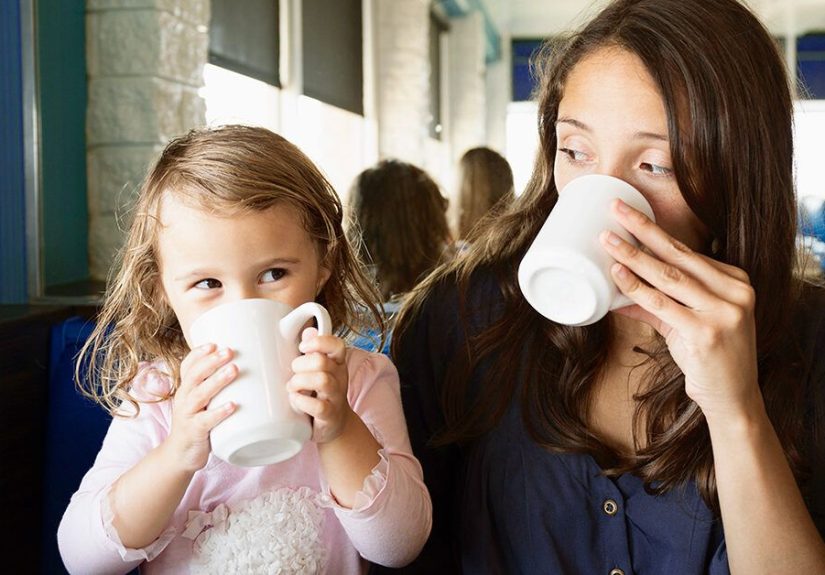
Observation is a big deal. Children watch parents. Students watch teachers. New employees watch coworkers. Teenagers watch peers. Adults watch influencers, managers, neighbors, athletes, and random strangers on the internet who somehow have very strong opinions about folding laundry.
When we observe others, we pick up far more than obvious actions. We also learn attitudes, emotional reactions, social rules, and expectations. A child may learn whether anger is expressed loudly or quietly. A student may learn whether effort is respected or mocked. A new worker may learn whether the workplace rewards creativity or caution.
2. People are more likely to copy behavior that seems rewarded
Social learning theory emphasizes vicarious reinforcement. That means we learn from seeing what happens to other people. If someone is praised, admired, promoted, liked, or accepted for a behavior, observers may be more likely to imitate it. If someone is mocked, punished, ignored, or excluded, observers may avoid that behavior.
This is one reason human behavior spreads in groups. A classroom can become more respectful if kind behavior gets attention. A workplace can become more cynical if rude behavior is rewarded with status. Social learning is efficient, but it is not always noble.
3. Learning involves thinking, not just copying
One of Bandura’s biggest contributions was showing that learning includes cognitive processes. People do not copy everything they see like confused little photocopiers. They pay attention selectively, store information in memory, judge whether they can perform the behavior, and decide whether the outcome is worth it.
That means two people can watch the same model and learn very different lessons. One person may see a confident speaker and think, “I can do that.” Another may think, “Absolutely not. I would rather merge with the wallpaper.” Same model, different internal processing.
4. Behavior, environment, and personal factors influence one another
This idea is called reciprocal determinism. Social learning theory says behavior is shaped by the environment, but behavior also changes the environment. At the same time, personal factors such as beliefs, expectations, skills, and emotions shape both.
Imagine a student who believes she is bad at math. Because of that belief, she avoids participating. Because she avoids participating, she gets less practice. Because she gets less practice, her performance stays weak. That poor performance then reinforces her belief. Social learning theory says this cycle can continue unless something in the person, behavior, or environment changes.
The Four Processes Behind Observational Learning
Bandura described four conditions that help explain when observational learning actually turns into behavior. These are not fancy decorations. They are the engine of the theory.
Attention
First, people must notice the model. We pay more attention to models who are familiar, high-status, competent, similar to us, nurturing, or emotionally engaging. This helps explain why peers, celebrities, parents, teachers, and online personalities can all have strong behavioral influence.
Retention
Next, the observer must remember what was seen. We store behavior in images, words, routines, and mental scripts. If the behavior is clear, repeated, or emotionally meaningful, it is more likely to stick.
Reproduction
Then the observer must be able to perform the behavior. You can admire a concert pianist all day long, but that does not mean your fingers will suddenly cooperate. Skills, practice, maturity, and physical ability all matter.
Motivation
Finally, there must be a reason to act. Maybe the behavior brings approval, success, belonging, or self-respect. Maybe it helps avoid embarrassment. Motivation can come from direct rewards, observed rewards, internal satisfaction, or a sense that the behavior fits who we want to be.
The Famous Bobo Doll Experiment and Why It Still Matters
No discussion of social learning theory is complete without the famous Bobo doll experiment. In Bandura’s classic research, children who observed an adult behave aggressively toward the doll were more likely to imitate aggressive behavior afterward. The study became a landmark demonstration that people, especially children, can learn behavior simply by observation.
The lasting importance of the experiment is not just that children copied what they saw. It is that the research challenged the idea that direct reinforcement was necessary for learning. The children learned from a model. That finding helped reshape psychology, education, parenting, and discussions about media influence.
Of course, real life is more complicated than a lab study. Human behavior is not controlled by one experiment, one video, or one role model. Still, the lesson remains powerful: what people repeatedly see in their environment can shape what they later do.
How Social Learning Theory Explains Everyday Human Behavior
Family behavior
Families are mini training grounds for human behavior. People often learn communication styles, emotional regulation, gender expectations, conflict patterns, manners, coping habits, and even humor through observation at home. A child who sees calm problem-solving may learn patience. A child who sees yelling rewarded with control may learn that volume equals power.
School and education
In education, social learning theory explains why modeling matters so much. Students learn academic behaviors, social routines, persistence, and confidence by watching teachers and peers. When students see classmates succeed through effort, their own motivation can rise. When they see mistakes treated as part of learning instead of public humiliation, they are more likely to participate.
Workplace culture
Adults keep learning socially at work. New hires quickly notice what actually gets rewarded, not just what the employee handbook claims in a cheerful font. If leaders model accountability, collaboration, and respect, those norms can spread. If leaders reward panic, blame, or performative busyness, those habits spread too. Human behavior in organizations often reflects the models with the most power and visibility.
Media and digital behavior
Social learning theory also helps explain the influence of media. People may learn scripts for romance, conflict, body image, humor, status, and aggression through repeated exposure to modeled behavior. Online spaces can accelerate social learning because they increase visibility, repetition, and public feedback. Likes, views, comments, and shares act like giant neon signs announcing what behavior gets attention.
Prosocial behavior
The good news is that social learning theory is not only about negative behavior. People also learn kindness, cooperation, empathy, self-control, generosity, and courage through observation. A culture of helpfulness often begins when helpful behavior is visible, repeated, and valued. In that sense, social learning theory gives us a practical reminder: if we want better behavior, we need better models.
Self-Efficacy: The Secret Sauce in Behavior Change
One of Bandura’s most important ideas connected to social learning is self-efficacy, or a person’s belief in their ability to succeed in a specific task or situation. This matters because people are more likely to try, persist, and recover from setbacks when they believe they can do something.
Social learning theory helps explain where that belief comes from. Watching someone similar to yourself succeed can raise your confidence. Seeing repeated failure, ridicule, or exclusion can lower it. That is why representation, mentoring, and visible role models matter so much. Human behavior is shaped not only by what we observe, but by what those observations teach us about our own possible future.
Strengths of Social Learning Theory
Social learning theory remains influential because it explains real behavior in a realistic way. It recognizes that people live in social systems. It accounts for both environment and cognition. It helps explain how behavior spreads through families, peer groups, schools, and media. It also offers practical tools for behavior change: model the behavior, make the consequences visible, build confidence, and create a supportive environment.
That practical usefulness is one reason the theory is applied in education, health promotion, therapy, parenting, leadership, and public communication. It is a theory with sneakers on. It does not just describe human behavior; it suggests what to do about it.
Limitations of Social Learning Theory
As useful as it is, social learning theory does not explain every corner of human behavior. Biology matters. Temperament matters. Genetics matter. Trauma, culture, structural inequality, and neurological differences matter too. Not every behavior comes from imitation, and not every observer responds the same way to the same model.
The theory can also be harder to test when it comes to internal mental processes. Researchers can observe actions, but beliefs and interpretations are not always visible. In addition, people are not blank slates waiting for a role model to walk by. They bring history, personality, identity, and goals into every social situation.
Still, these limits do not weaken the central insight. They simply remind us that social learning is one major piece of the puzzle, not the whole jigsaw box dumped dramatically on the floor.
Why Social Learning Theory Still Matters Today
Social learning theory may have started in twentieth-century psychology, but it feels almost suspiciously modern. In a world shaped by algorithmic feeds, influencer culture, remote work, online communities, and nonstop visibility, people are constantly observing models and receiving social feedback. The mechanisms Bandura described are now running on high-speed Wi-Fi.
That makes the theory especially valuable for understanding modern human behavior. It helps explain how norms spread, how online trends become identity signals, how prejudice can be transmitted, how confidence can be built through representation, and how positive behaviors can ripple through groups. It also reminds parents, teachers, leaders, creators, and communities that example is never neutral. People are always watching.
Experiences Related to Social Learning Theory in Real Life
To make social learning theory feel less like a chapter title and more like real life, it helps to look at ordinary experiences. Think about a child entering kindergarten. On the first day, that child does not know every classroom rule. But within a week, the child learns when to raise a hand, how to line up, when to whisper, and what kind of behavior earns a smile from the teacher. Much of that learning happens through observation. The child watches classmates, copies what seems to work, and gradually adopts the social code of the room.
The same thing happens in adolescence, just with more hairstyles and stronger opinions. A teenager may start dressing, speaking, or reacting in ways that match a peer group. That does not happen because the teen is mindless. It happens because belonging is rewarding, similarity signals safety, and peers are powerful models during identity development. If a friend group values studying, volunteering, or athletics, those behaviors may spread. If the group rewards risk-taking or cruelty, those patterns may spread too.
Adult life is no different, even if we like to pretend we are above all that. A young employee starts a first office job and quickly notices who gets respected. Is it the person who asks thoughtful questions? The person who stays calm under pressure? The person who sends emails at 11:48 p.m. to prove they are apparently powered by spreadsheet fumes? Workplace behavior often forms through social observation long before formal training sinks in.
Social learning also shows up in health behavior. A person may decide to start exercising after watching a friend succeed with a realistic routine. Another may finally schedule a medical appointment after seeing a family member take symptoms seriously. In these moments, behavior changes not because someone received a lecture, but because a model made a possible action feel visible and achievable.
Then there are emotional habits, which social learning theory helps explain surprisingly well. Many people grow up learning how to react to stress by watching caregivers. Some learn to speak openly. Others learn to stay silent. Some learn humor as a coping style. Others learn criticism, avoidance, or worry. Later in life, these patterns can feel deeply personal, but part of them may be socially learned scripts that were practiced for years.
There is also a hopeful side to these experiences. Because behavior is learned socially, it can also be relearned socially. A supportive teacher, a healthy relationship, a thoughtful coach, a kind boss, or a good friend can become a new model. People can discover that disagreement does not require disrespect, that leadership does not require intimidation, and that confidence can be built step by step. Social learning theory is powerful not only because it explains how behavior is acquired, but because it suggests behavior can change when the social environment changes.
Conclusion
So, what does social learning theory say about human behavior? It says that people are deeply shaped by what they observe in others, the consequences they witness, the beliefs they develop, and the environments they move through. Human behavior is social, cognitive, and dynamic all at once.
That insight has enormous practical value. It means role models matter. Culture matters. Representation matters. Visibility matters. The behavior we reward, laugh at, ignore, or praise does not stop with one person. It teaches the room. Social learning theory reminds us that human beings are always learning from one another, for better or worse. Which is both inspiring and a tiny bit terrifying.