Table of Contents >> Show >> Hide
- Why This Student Drone Is More Than a Viral Curiosity
- How a Hybrid Drone Pulls Off the Air-to-Water Trick
- The Real Engineering Monster Under the Bed: Transition
- What Makes Student-Built Amphibious Drones So Promising
- Where Fly-and-Dive Drones Could Be Useful in the Real World
- The Hard Truth: Hybrid Drones Still Have a Lot to Prove
- Why “Student Drone Flies, Submerges” Is a Snapshot of a Bigger Trend
- Composite Student Experience: What Building a Fly-and-Dive Drone Actually Feels Like
- Conclusion
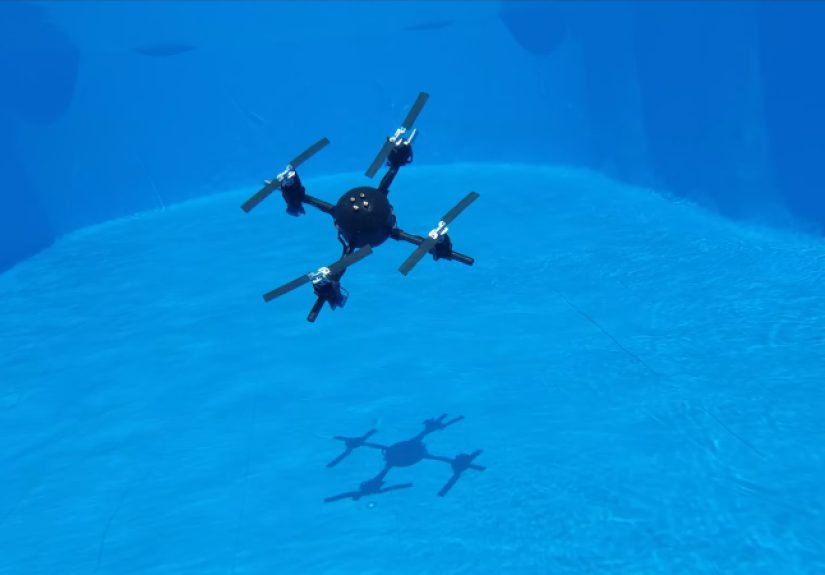
Every so often, a student engineering project comes along and makes the rest of us feel like our college accomplishments peaked at finding the least suspicious dining hall chicken. A recent hybrid drone project did exactly that. Built by students, the machine can fly through the air, dive into water, move below the surface, and then pop back up into flight. In one compact package, it behaves like a quadcopter, a submersible, and a very persuasive argument for not underestimating thesis season.
The bigger story is not just that the drone looks cool on video, though it absolutely does. It is that student-led robotics is inching closer to a long-standing engineering dream: an amphibious drone that can work in two wildly different environments without throwing a mechanical tantrum. Air is light. Water is dense. Propulsion, balance, buoyancy, drag, communication, waterproofing, and control all change when a vehicle crosses that boundary. Getting one drone to do both jobs well is like designing running shoes that also work as scuba fins. Possible? Maybe. Easy? Not even a little.
That is why the phrase student drone flies, submerges matters. It is not just a splashy headline. It signals where robotics, marine technology, and student innovation are heading next. The newest student prototype did not appear out of nowhere, either. It sits inside a larger, very real lineage of aerial-underwater research, from Rutgers’ Naviator to Johns Hopkins’ submersible launch systems to newer student capstone work focused on buoyancy control, waterproof housings, and transition mechanics. In other words, the students did not invent the dream, but they built a compelling new chapter in it.
Why This Student Drone Is More Than a Viral Curiosity
At first glance, a drone that flies and then submerges sounds like something engineered by a 12-year-old who got unlimited access to a hobby shop and zero adult supervision. But the concept solves real problems. Traditional aerial drones are excellent at getting somewhere fast, surveying wide areas, and capturing a top-down view. Underwater drones, on the other hand, are useful for inspecting structures, collecting marine data, or navigating spaces that people would rather not swim through for a living.
The problem is obvious: most drones pick a lane. They either fly or dive. If a search-and-rescue crew needs both aerial reconnaissance and underwater inspection, that usually means deploying multiple systems. A hybrid drone promises a simpler workflow. Fly to the site. Check from above. Submerge for a closer look. Re-emerge and move on. That is a serious operational advantage for infrastructure inspections, marine exploration, disaster response, environmental monitoring, and certain defense applications.
Student-built systems are especially interesting because they often test bold ideas before industry decides what is commercially worth polishing. Universities can afford to experiment in ways that product road maps sometimes avoid. That makes student drone projects a surprisingly useful crystal ball for the future of robotics.
How a Hybrid Drone Pulls Off the Air-to-Water Trick
The recent student project that inspired this topic drew attention for one reason above all: smooth transition. The drone did not just belly flop into a pool and call it innovation. It flew, entered the water, maneuvered underwater, and then took off again. That clean transition is the real magic act.
One of the central design ideas involves variable-pitch propellers. In plain English, the angle of the blades changes depending on whether the drone is operating in air or water. In air, the blades need a higher pitch to generate enough lift and thrust efficiently. Underwater, that same setup can create too much drag and waste energy. Lowering the pitch helps the vehicle move more effectively through a denser medium. Some designs also use reverse thrust to improve maneuverability underwater, especially in tight spaces.
That sounds neat in a demo, but the engineering demands are brutal. A drone crossing from air to water has to deal with impact forces at the surface, rapidly changing drag, shifts in stability, and control logic that can no longer assume the same physics from one second to the next. The software cannot have an identity crisis at the waterline. If the control system misreads the vehicle’s state, the drone may fail to dive properly, fail to surface, or fail to take off after surfacing. None of those outcomes are ideal unless your design goal is “expensive splash.”
The Real Engineering Monster Under the Bed: Transition
Ask almost any researcher in this space what the hardest part is, and the answer circles back to the transition between environments. This is where the project stops being a cool gadget and starts becoming a serious robotics problem.
In air, a drone depends on lift, prop wash, and lightweight construction. Underwater, it needs buoyancy management, hydrodynamic efficiency, and materials that do not mind getting wet in the way most electronics absolutely do. The water surface itself is not a polite doorway. It is a boundary filled with splash, turbulence, surface tension effects, and abrupt changes in resistance.
That is why other research efforts are so useful for context. Earlier work from Rutgers produced the Naviator, a hybrid drone designed to transition between flying and underwater operation. It demonstrated how valuable this concept could be for bridge inspection, search and rescue, and environmental response. Johns Hopkins Applied Physics Laboratory explored another angle with CRACUNS, a submersible UAV designed to launch from underwater into aerial missions. Student and university teams at places like Cal Poly and WPI have also explored practical design ideas such as detachable buoyancy chambers, amphibious quadrotor testing, and integrated control strategies.
Together, these projects show that there is no single magic recipe. Some teams focus on launch and deployment. Some focus on underwater maneuvering. Some focus on buoyancy systems. Others focus on control algorithms and propeller design. The recent student drone belongs to this larger ecosystem of experimentation, where each prototype solves one awkward piece of a much bigger puzzle.
What Makes Student-Built Amphibious Drones So Promising
1. They move fast from idea to prototype
Student teams tend to work with a blend of ambition, caffeine, and a frightening willingness to try weird ideas. That is a compliment. Because they are often building for capstones, theses, or lab milestones, they move quickly from concept sketches to prototype testing. With 3D printing, CNC machining, affordable sensors, and open-source control tools, students can now build systems that would have been much harder to prototype a decade ago.
2. They are practical, not just flashy
The best student drone projects are not trying to look futuristic for the sake of it. They usually begin with a real use case: inspect a pier, survey flood damage, study marine habitats, examine submerged structures, or improve response time in complex environments. That practicality matters because it keeps the design grounded. A drone that looks incredible and fails after 30 seconds underwater is a cool demo. A drone that works reliably in mixed conditions is a tool.
3. They help train the next generation of robotics talent
Even when a student prototype never becomes a commercial product, the people who built it carry the knowledge forward. They learn controls, systems integration, mechanical design, waterproofing, testing methodology, and the art of staying calm while a prototype behaves like it has personal beef with the pool. Those lessons feed directly into future work in robotics, aerospace, marine technology, and autonomous systems.
Where Fly-and-Dive Drones Could Be Useful in the Real World
Aerial drones are already proving valuable in marine research. Organizations studying the ocean use UAVs to photograph kelp canopies, monitor wildlife, map ocean surface conditions, and gather high-resolution imagery. Underwater vehicles, meanwhile, collect data below the surface, inspect infrastructure, and explore areas that are difficult or risky for human divers.
A hybrid drone could combine those strengths. Imagine a single vehicle that surveys a marina from above, spots a damaged piling, dives for close inspection, then re-emerges to send a complete report. Or picture a flood response team using one system to scan a submerged vehicle, inspect bridge supports, and then relocate quickly to another site. That is why this category attracts interest from infrastructure managers, emergency responders, environmental researchers, and defense planners.
The use cases keep multiplying. Ports could inspect seawalls and pilings. Conservation teams could study coastal habitats from above and below the surface. Researchers could use airborne imagery to identify a target area and then transition underwater for close measurement. Even signal and sensing research is expanding the field, with new work showing that aerial drones can detect information about what is happening underwater without having to dive at all. Put bluntly, the line between air robotics and water robotics is getting less rigid, and student projects are helping push it.
The Hard Truth: Hybrid Drones Still Have a Lot to Prove
Now for the reality check. A student drone that flies and submerges is exciting, but it is not the same thing as a mature product ready to replace specialized systems tomorrow morning.
Battery life remains a major constraint. Flight already drains power quickly, and underwater propulsion adds its own demands. Waterproofing adds weight. Weight makes flight harder. Communication underwater is much tougher than radio control in the air. Sensors can fog, seals can fail, corrosion can creep in, and repeated transitions can punish the hardware. There is also the small matter of regulations, safety, maintenance, and mission reliability.
In other words, hybrid drones are still closer to “promising frontier” than “standard issue toolbox.” But that is not a reason to dismiss them. It is exactly why these student projects matter. They reveal what is working, what is failing, and what needs another semester, another design revision, and probably another box of replacement screws.
Why “Student Drone Flies, Submerges” Is a Snapshot of a Bigger Trend
The deeper meaning of this story is not just about one drone. It is about convergence. Robotics is becoming more cross-domain, more autonomous, and more specialized at the same time. Researchers no longer think only in terms of flying robots, underwater robots, or surface robots. They increasingly think in terms of mission adaptability.
That shift makes sense. The world does not separate its problems into neat engineering categories. Bridges have above-water and below-water components. Coastal ecosystems span air, surface, and subsurface layers. Search missions do not pause just because the terrain changes from dry to wet. A vehicle that can operate across boundaries is often more valuable than one that excels in just a single medium.
Student teams are well positioned to lead this trend because they are often asked to solve hard problems without the luxury of bloated budgets or endless timelines. That forces clarity. It also encourages elegant solutions. A working student-built amphibious drone says something powerful: the tools of advanced robotics are no longer locked away in elite labs alone. They are increasingly in the hands of ambitious students who know how to prototype fast, test often, and learn from failure without making it dramatic enough for a documentary narrator.
Composite Student Experience: What Building a Fly-and-Dive Drone Actually Feels Like
To make this topic more concrete, it helps to picture what the experience is often like for students working on an amphibious drone project. Not as a movie montage, but as a very real cycle of design, testing, panic, revision, and occasional triumph.
It usually starts with confidence. The early sketches look wonderful. The CAD model spins on the screen like it already belongs in a trade show booth. Someone says, “How hard can it be?” and the universe quietly begins laughing. On paper, the project sounds straightforward enough: build a drone that flies, survives water entry, submerges, controls buoyancy, maintains stability, resurfaces, and flies again. In practice, each of those verbs hides three engineering headaches and at least one argument about cable routing.
Then comes the first prototype. It is never as sleek as the renderings. It is heavier, messier, and covered in test marks, tape, zip ties, and hope. Students spend hours debating motor placement, propeller geometry, seal materials, and how to keep the center of mass from sabotaging the center of buoyancy. Waterproofing becomes a full-time personality trait. Every opening feels suspicious. Every gasket becomes sacred. Someone inevitably learns that “water-resistant” and “submersible” are not cousins. They are strangers who do not return each other’s calls.
Testing day is where the project stops being theoretical and starts being honest. In air tests, the drone may fly beautifully. In water tests, it may immediately reveal all the ways physics had been politely waiting to embarrass the team. A propeller pitch that felt efficient in air suddenly looks ridiculous underwater. The vehicle may float when it should sink, sink when it should hover, yaw when it should track straight, or emerge from the water with the grace of a toaster being ejected from a bathtub. Students go back to the lab, dry everything out, review footage frame by frame, and make notes no one outside robotics would describe as relaxing.
But this is also where the learning gets real. Students see how mechanical design, controls, software, and materials science collide in one system. They discover that a tiny leak can invalidate a brilliant control algorithm, and that a stable control loop cannot compensate for a housing that was designed with too much optimism. They learn to test methodically, fail specifically, and improve incrementally. One good underwater turn can feel like a parade. One successful re-emergence into flight can erase a week of frustration.
By the end of a project like this, students have not just built a drone. They have built judgment. They understand trade-offs, integration, documentation, and the difference between a cool concept and a reliable system. That may be the most important output of all. The drone matters, yes. But so do the engineers it creates. When a student drone flies and submerges, it is also launching careers, not just hardware.
Conclusion
The phrase student drone flies, submerges captures a moment that is both fun and significant. It is fun because the idea feels almost science-fictional. It is significant because the engineering is real, the applications are real, and the momentum behind hybrid aerial-underwater systems is clearly growing. Recent student work shows how far accessible tools, smart design, and determined experimentation can go. Earlier research from universities and labs shows the concept has depth, not just splash.
Hybrid drones still face big challenges in energy use, waterproofing, controls, and reliability. But the direction of travel is clear. As student teams keep refining propeller systems, buoyancy strategies, transition control, and multi-environment sensing, the gap between prototype and practical tool will keep shrinking. For now, the best way to read this story is simple: today’s capstone oddity may become tomorrow’s inspection platform, rescue assistant, or marine research workhorse. And that is a pretty impressive journey for a machine that refuses to choose between sky and sea.