Table of Contents >> Show >> Hide
- Why Traffic Light Meanings Matter More Than You Think
- The Basic Traffic Light Signals
- Arrow Signals: The Plot Twist of Intersections
- Flashing Traffic Signals and What They Really Mean
- Pedestrian Signals: The Signs Drivers Ignore at Their Own Risk
- Special Situations Drivers Need to Know
- Common Driver Mistakes at Traffic Lights
- How to Read a Traffic Light Like a Smarter Driver
- Real-World Experiences With Traffic Light Signals
- Conclusion
- SEO Tags
Most people think traffic lights are simple. Red means stop. Green means go. Yellow means… well, maybe “floor it” if you are in a hurry and making bad choices. But real-world driving is a lot more nuanced than the childhood version of red light, green light. Modern intersections use arrows, flashing signals, pedestrian phases, countdowns, and even dark signals during outages. If you do not understand what each traffic light signal means, you are not just confused. You are one awkward left turn away from starring in someone else’s dashcam video.
This guide breaks down the meaning of each traffic signal in plain American English, with practical examples and easy explanations. Whether you are a new driver, a rusty driver, or a confident driver who still gets mildly offended by flashing yellow arrows, this article will help you read the road more clearly.
Why Traffic Light Meanings Matter More Than You Think
Traffic signals are designed to do more than tell you when to move. They manage right-of-way, protect pedestrians, reduce angle crashes, separate turning traffic from through traffic, and keep intersections from turning into rolling arguments. That is why a steady green is not the same as a green arrow, and a flashing red is definitely not the same as a flashing yellow.
Understanding traffic light signal meanings also makes you a calmer driver. Instead of improvising in the middle of an intersection like it is jazz night, you know exactly what the signal is telling you to do.
The Basic Traffic Light Signals
Steady Red Light
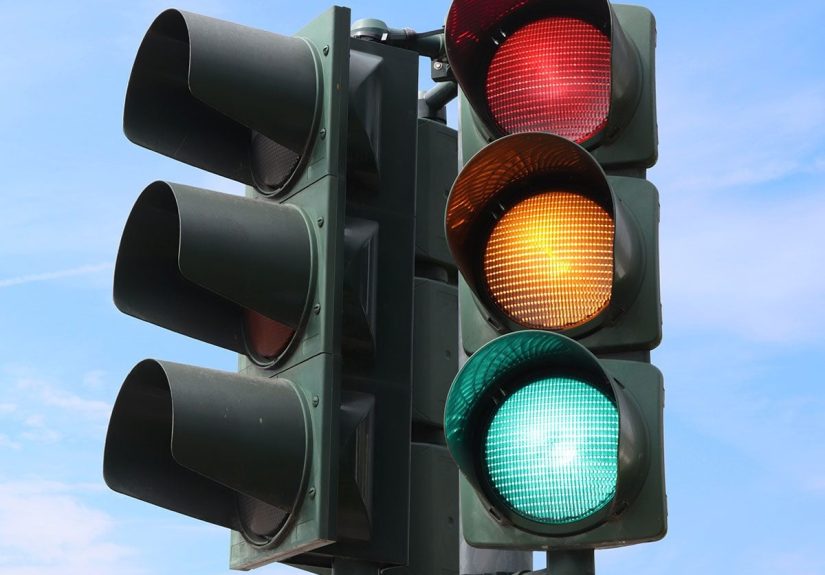
A steady red light means stop. Stop behind the marked stop line, before the crosswalk, or before entering the intersection if no line is present. This is the full, ordinary, classic stop. Not a “rolling stop.” Not an “I slowed down spiritually” stop. A real one.
In many places in the United States, you may turn right on a steady red light after stopping completely, unless a sign says No Turn on Red. You must also yield to pedestrians, bicyclists, and any traffic that has the right-of-way. In some situations, a left turn on red is allowed from a one-way street onto another one-way street, but only where state law permits it.
The key takeaway is simple: red means stop first, think second, move only if the law allows it and the way is clear.
Steady Green Light
A steady green light means you may proceed through the intersection, but it does not mean you own the place. You still must yield to pedestrians in the crosswalk, cyclists, and any vehicles already in the intersection.
This is one of the biggest misunderstandings on the road. Green means legal permission to go forward, not a magical force field. If someone is finishing a turn, a pedestrian is still crossing, or an emergency vehicle is approaching, your green light does not cancel reality.
Steady Yellow Light
A steady yellow light means the signal is about to turn red. Your job is to stop if you can do so safely. It is a warning phase, not an invitation to audition for an action movie.
Drivers often make the same two mistakes here: braking too late because they were not paying attention, or accelerating to “beat the red.” Both are risky. The safest habit is to scan intersections early so a yellow light does not feel like a personal betrayal.
Arrow Signals: The Plot Twist of Intersections
Green Arrow
A green arrow means you may move in the direction of the arrow. This is a protected movement, which usually means oncoming traffic is stopped. If you see a green left-turn arrow, that is your golden ticket to turn without negotiating with oncoming cars.
Still, keep an eye out for pedestrians stepping into the crosswalk and for drivers who run stale reds. A protected turn is safer, but it is not permission to turn with your eyes closed and your hopes up.
Yellow Arrow
A yellow arrow means the protected turn phase is ending. If you have not entered the intersection yet, prepare to stop. If you are already lawfully in the intersection completing a turn, finish it carefully when safe.
Think of the yellow arrow as the traffic signal politely saying, “This VIP turn lane is closing now.”
Red Arrow
A red arrow means stop for the specific movement shown by the arrow. If the arrow points left, you cannot make that left turn until allowed. If it points right, the same rule applies to the right turn.
Here is where many drivers get tripped up: red-arrow rules can vary by state. In some states, drivers must wait until the red arrow changes. In others, certain turns on a red arrow may be allowed after a complete stop, unless a sign prohibits the turn. That means the smartest move is not guessing. It is knowing your state handbook and watching the signs posted at the intersection.
In everyday driving, the safest general rule is this: treat a red arrow with more caution than a regular red circle and never assume the turn is allowed just because the intersection “looks empty.”
Flashing Traffic Signals and What They Really Mean
Flashing Red Light
A flashing red light means the same thing as a stop sign. Come to a complete stop, yield the right-of-way, and proceed when it is safe.
You will often see flashing red signals at dangerous intersections, late-night signal operation, or locations where a full stop is required but a regular stop-and-go cycle is not. If you blow through a flashing red because “it wasn’t solid,” congratulations, you have just misunderstood one of the easiest questions on a permit test.
Flashing Yellow Light
A flashing yellow light means proceed with caution. You do not have to stop, but you do need to slow down, scan carefully, and be ready for cross traffic, pedestrians, or changing road conditions.
A flashing yellow is often used near curves, school areas, or intersections where extra warning is needed. It is the road’s version of “keep your head on a swivel.”
Flashing Yellow Arrow
A flashing yellow arrow usually means you may turn in the direction of the arrow, but the turn is not protected. You must yield to oncoming traffic, pedestrians, and anyone else lawfully using the intersection.
This signal is common for left turns and is one of the most useful traffic upgrades in modern driving. It improves flow because drivers can turn when there is a safe gap instead of waiting through a whole cycle. But it also demands judgment. If you treat a flashing yellow arrow like a green arrow, you are not being efficient. You are being confidently incorrect.
Flashing Red Arrow
In some jurisdictions, you may also encounter a flashing red arrow. This generally means stop first, then make the indicated turn only when the way is clear and the rules allow it. It is less common than other signals, so many drivers hesitate when they see it. That hesitation is understandable. Random lunging forward is not.
Pedestrian Signals: The Signs Drivers Ignore at Their Own Risk
Traffic lights are not just for cars. Pedestrian signals are a crucial part of intersection safety, and drivers need to understand them too.
WALK or Walking Person Symbol
This means pedestrians may begin crossing. If you are turning, you need to look for people stepping off the curb, not just cars in the lane next to you. Many turning crashes happen because a driver checks for vehicles but forgets the crosswalk exists.
Flashing Hand or Flashing DON’T WALK
This means pedestrians should not start crossing, but people already in the crosswalk may continue to the other side. If there is a countdown timer, it tells pedestrians how much crossing time remains. It does not mean a driver gets to pounce the second the number gets low.
For drivers, this phase matters because pedestrians may still be lawfully in the crosswalk even when you are itching to turn.
Steady Hand or DON’T WALK
This means pedestrians should not enter the roadway. For drivers, it often means fewer conflicts, but not zero conflicts. There may still be someone finishing a crossing late, pushing a stroller, or walking more slowly than the signal designer probably imagined.
Special Situations Drivers Need to Know
When the Traffic Signal Is Dark
If a traffic light is not working because of a power outage or malfunction, many U.S. driver manuals instruct drivers to treat the intersection like an all-way stop. Stop, yield according to right-of-way rules, and proceed carefully. Do not assume dark means “free-for-all.” That only works in demolition derbies.
When a Sign Overrides Your Assumptions
Posted signs matter. A sign that says No Turn on Red, Left on Green Arrow Only, or similar wording overrides your habit, your guess, and your uncle’s strong opinions about how traffic “used to work.” Always read the signs at the intersection you are actually in.
School Zones, Transit Signals, and Lane-Specific Heads
Some intersections use lane-control signals, school crossing signals, transit priority signals, or separate signal heads for turn lanes. These are designed to give different instructions to different drivers at the same time. That is why it is important to follow the signal controlling your lane, not the one you happen to notice first.
Common Driver Mistakes at Traffic Lights
Even experienced drivers make predictable mistakes around signals. Here are some of the most common:
- Assuming a green light means you never need to yield
- Treating a flashing yellow arrow like a protected turn
- Rolling through a flashing red light
- Turning on red without checking for signs, pedestrians, or bikes
- Accelerating at a steady yellow instead of preparing to stop
- Ignoring crosswalk users during right turns
- Forgetting that dark signals still require controlled behavior
Most of these mistakes happen for the same reason: drivers reduce traffic lights to color only and ignore shape, flashing pattern, arrow direction, pedestrian timing, and posted signs.
How to Read a Traffic Light Like a Smarter Driver
If you want one practical strategy, use this five-step mental checklist every time you approach a signalized intersection:
- Check the color. Red, yellow, green, or flashing?
- Check the shape. Circular light or arrow?
- Check the lane. Which signal applies to you?
- Check the crosswalk. Are pedestrians crossing or about to cross?
- Check the signs. Is there a rule that changes the default movement?
That sounds simple because it is. Good driving is often boring in the best possible way.
Real-World Experiences With Traffic Light Signals
Anyone who drives long enough collects a few traffic-light stories. There is the new driver who freezes at a flashing yellow arrow because nobody warned them the turn was allowed but not protected. There is the commuter who learns, after one embarrassing honk symphony, that a flashing red means a full stop and not a casual nod to the intersection. And there is almost everyone who has stared at a dark signal during a power outage and suddenly realized that civilization is held together by painted lines, patience, and mutual fear.
One common experience happens during busy left turns. A driver gets a green circle instead of a green arrow and assumes the left turn is automatically theirs. Then they meet the unpleasant surprise of oncoming traffic that also has a green light. That moment teaches an unforgettable lesson: a green circle often means “go if clear,” not “charge heroically into destiny.” After that, many drivers become much better at reading the difference between protected and permissive turns.
Another frequent scenario happens downtown, where pedestrians seem to materialize from every corner at once. A driver sees a green light, begins a right turn, and then notices a WALK signal and people stepping into the crosswalk. It is not that the driver is reckless. It is that many people are trained to monitor vehicle traffic first and crosswalks second. City driving quickly corrects that habit. After a few close calls, smart drivers start scanning the pedestrian signal as carefully as the traffic light itself.
Night driving creates its own traffic-light education. At midnight, a steady cycle may switch to flashing operation. A familiar intersection that normally gives you a full green-red sequence may suddenly show flashing yellow for one direction and flashing red for another. Drivers who know the meanings glide through safely. Drivers who do not know them tend to improvise, stop when they do not need to, or worse, proceed when they absolutely should not. That contrast shows how valuable signal knowledge becomes when the road stops looking “normal.”
Road trips across state lines also teach humility. A driver who is perfectly comfortable at home may enter another state and notice that the local rules around red arrows, left on red from one-way streets, or signal placement feel slightly different. The lesson is not that traffic laws are chaos. The lesson is that local rules and signs matter more than assumptions. Good drivers adapt. Bad drivers insist the intersection is wrong.
Then there is the power-outage moment, a true test of character. The signal is dark. One driver stops. Another slows vaguely. A third appears to believe that confidence creates right-of-way. In those seconds, you can almost see who actually read the handbook and who has been freestyling since their road test. Experienced drivers learn to treat these situations with extra patience, because one bad assumption at a dark intersection can cause a very real crash.
Perhaps the biggest long-term experience is this: the more you understand traffic light signals, the less stressed you feel behind the wheel. Intersections stop feeling random. Yellow lights become predictable. Turn arrows stop being mysterious. Pedestrian phases make sense. Instead of reacting late, you anticipate early. That shift does not just make you safer. It makes driving smoother, calmer, and a lot less dramatic. Which, on public roads, is exactly the vibe we should all be aiming for.
Conclusion
So, what does each traffic light signal mean beyond red light and green light? It means the road is giving you layered instructions, not just colors. Red means stop. Green means proceed if clear. Yellow means the phase is ending. Arrows tell you which movement is controlled. Flashing signals change the level of caution or stopping required. Pedestrian signals tell you when people may be in your path. And dark signals demand calm, stop-sign thinking instead of panic.
The smartest drivers are not the fastest or the boldest. They are the ones who read the whole intersection. If you can do that, traffic lights stop being confusing decorations and start becoming what they are supposed to be: clear, reliable tools that keep everyone moving safely.