Table of Contents >> Show >> Hide
- Why Shop Cats Look Like They Own Everything
- The Rise of Bodega Cats on Social Media
- What Makes Bodega Cats Different From Ordinary Pets?
- The Comedy of Cats Taking Their Jobs Too Seriously
- Why These Photos Feel So Comforting
- The Real-Life Debate Behind the Cute Photos
- How Small Shops Benefit From a Beloved Cat
- Why the Internet Loves Cats With “Jobs”
- Specific Examples That Capture the Appeal
- How to Appreciate Shop Cats Responsibly
- Why This Twitter Account Keeps Winning Hearts
- Extra Experiences: What It Feels Like to Meet a Cat Who Owns the Shop
- Conclusion
Walk into a tiny corner shop for coffee, gum, batteries, or a suspiciously perfect breakfast sandwich, and you may discover the real manager is not behind the counter. The real manager is sitting on the counter. Or in the snack aisle. Or loafed on a case of sparkling water with the calm authority of a landlord inspecting rent payments.
That is the magic behind the internet’s love affair with shop cats, especially the famous Twitter account now known on X as @Bodegacats_. The idea is wonderfully simple: people spot cats in bodegas, delis, convenience stores, smoke shops, groceries, hardware stores, and other small businesses, snap a photo, and submit it. The account curates those moments into a glorious public archive of cats who appear to have reviewed the inventory, fired two employees, and approved the tuna display.
These are not just cute cat pictures. They are tiny urban portraits. Each photo tells a story about neighborhood shops, working animals, customer loyalty, social media culture, and the deep human need to see a tabby asleep on a stack of paper towels and whisper, “Excellent leadership.”
Why Shop Cats Look Like They Own Everything
Cats have a special talent for occupying space as if they personally signed the lease. Put a cat in a basket, and it becomes a throne. Put a cat on a checkout counter, and suddenly the entire store feels like a royal court where customers must pay tribute in chin scratches.
In bodega cat photos, this effect becomes even funnier because the setting is so ordinary. A cat wedged between potato chips and energy drinks looks absurd, but also strangely natural. A sleepy orange cat on a freezer case seems less like a pet and more like a regional supervisor. A black-and-white cat sitting beside the register has the posture of someone who knows exactly which customers are going to ask for credit.
The humor works because of contrast. Small shops are busy, practical spaces. There are shelves to stock, customers to help, deliveries to manage, and usually not enough room for anyone to turn around gracefully. Then a cat enters the scene with total emotional independence. It does not care about rush hour. It does not care about inventory. It does not care that you only came in for oat milk. The cat is on break, and the break may last six hours.
The Rise of Bodega Cats on Social Media
The Bodega Cats account became popular because it understands one of the oldest laws of the internet: cats plus oddly specific context equals instant joy. Random cat pictures are cute. Cats acting like unpaid employees in small shops are comedy with world-building.
The account’s format is ideal for social media. Each photo is fast, visual, and easy to understand without explanation. You see a cat in a store. The cat looks important. Your brain supplies the joke. Maybe it is guarding the cereal. Maybe it is judging your snack choices. Maybe it has been promoted to assistant regional meownager.
Unlike polished pet influencer accounts, bodega cat photos often feel spontaneous. The lighting may be fluorescent. The floor may be crowded. The cat may be half-asleep on a box of onions. That everyday quality makes the images feel more authentic. These cats are not posing in a studio with a branded bow tie. They are living their lives in the middle of neighborhood commerce, surrounded by gum, plantains, lottery tickets, and the comforting hum of a drink cooler.
What Makes Bodega Cats Different From Ordinary Pets?
Most house cats rule one apartment. Bodega cats rule an entire micro-economy.
They live in or around small retail spaces where they may serve several unofficial roles. Some are companions for shop owners who work long hours. Some become customer greeters. Some are local celebrities. Many are valued because cats are natural hunters, and small stores in dense cities often face pest problems. In that sense, the bodega cat is both mascot and night-shift security.
Of course, calling them “employees” is part joke, part truth. They do not clock in, although they do frequently sleep on the job. They do not wear uniforms, unless fur counts. They do not attend staff meetings, but they absolutely interrupt them. Still, many shop owners and customers describe them as part of the business’s personality. A beloved store cat can make a place feel warmer, more memorable, and more human.
They Build Community Without Trying
One reason these photos resonate is that small shops are already community spaces. In many neighborhoods, the corner store is where people buy morning coffee, hear local gossip, grab emergency groceries, or exchange a few friendly words after work. Add a cat, and the store gains a shared character everyone can talk about.
Customers may not remember the brand of chips they bought last Tuesday, but they remember the cat named Mimi, Oreo, Pumpkin, Simba, Kiki, or Mr. Business who stared at them from the bread shelf. The cat becomes a landmark. People might say, “Go to the deli with the gray cat,” and everyone knows exactly which one.
The Comedy of Cats Taking Their Jobs Too Seriously
The best shop cat photos usually fall into a few hilarious categories. There is the cashier cat, sitting near the register with the expression of someone who has seen every possible human mistake. There is the security cat, staring from the doorway as if checking IDs. There is the inventory cat, sleeping on merchandise and silently reducing shelf accessibility by 40 percent.
Then there is the classic customer service cat, who offers no service and accepts all admiration. This cat may sit in the middle of the aisle, forcing shoppers to step around it like royalty passing through a parade route. Its job description is unclear, but its confidence is excellent.
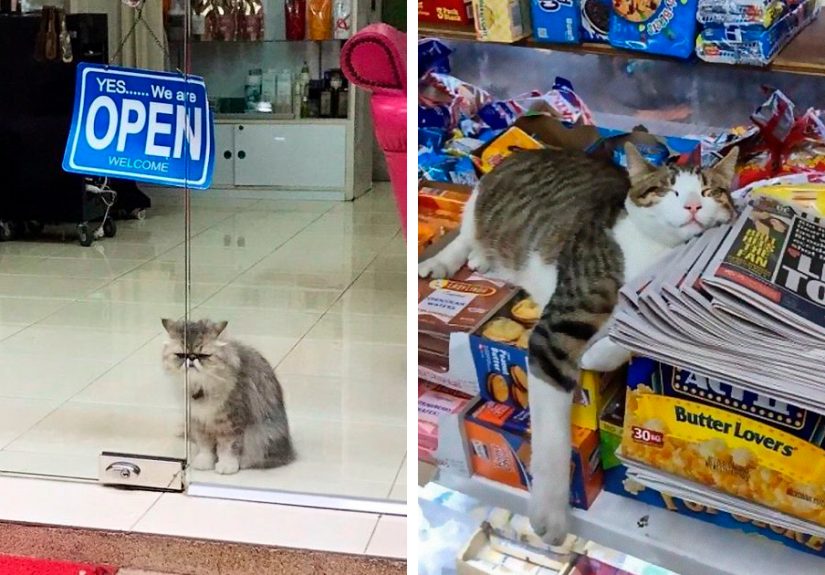
Part of the charm is that cats look serious even when doing ridiculous things. A cat curled in a cardboard box labeled “tomatoes” appears to have chosen that box after extensive market research. A cat blocking a freezer door looks like it is enforcing a strict policy on frozen pizza access. A cat stretched across a stack of newspapers seems to be personally editing the headlines.
Why These Photos Feel So Comforting
Shop cat content is funny, but it is also oddly soothing. In a digital world full of outrage, pressure, and endless bad news, a cat calmly napping beside bottled water feels like a tiny emotional reset button. It says life is strange, cities are chaotic, but somewhere a cat has found the perfect place to sleep on top of printer paper.
There is also nostalgia in these images. They remind people of local businesses with personality: the corner deli where the owner knows your order, the hardware store with a resident cat, the bookstore where a tabby sleeps in the window, the plant shop where a cat judges your ability to keep basil alive. These are not anonymous big-box spaces. They feel lived-in.
That is why the photos travel so well online. Even if you have never lived in New York City or visited a bodega, you understand the scene immediately. A small shop. A cat. A look of absolute ownership. The joke translates everywhere.
The Real-Life Debate Behind the Cute Photos
As adorable as bodega cats are, their real-world status is more complicated than the memes suggest. In many food-selling establishments, health rules restrict live animals because of concerns about contamination and sanitation. This means that, on paper, many shop cats exist in a gray area even when customers love them and owners see them as helpful.
Supporters argue that store cats can deter rodents, provide companionship, and become part of neighborhood culture. Critics and regulators point out that food safety matters, and animals in food environments require clear standards. The most reasonable conversation is not simply “cats or no cats,” but how to protect public health while also protecting the animals themselves.
That last part matters. Internet fame should never excuse neglect. If a cat lives in a shop, it still needs fresh water, proper food, veterinary care, vaccines, safe resting areas, and protection from unsafe products or aggressive customers. A cat should not be treated as a decoration, a pest-control machine, or a marketing prop. The best shop cat stories are the ones where the animal is loved, cared for, and allowed to be a cat.
How Small Shops Benefit From a Beloved Cat
A resident cat can give a small shop something no advertising budget can easily buy: personality. Customers may stop in because they need milk, but they come back because they want to see the cat sprawled across the counter like a furry paperweight with opinions.
For independent businesses, that kind of emotional connection is powerful. A friendly shop cat can make customers linger, smile, take photos, and share the store with friends. In the age of social media, one great cat photo can introduce a neighborhood shop to thousands of people who would otherwise never know it existed.
Still, the cat cannot be the whole customer experience. Cleanliness, safety, good service, and responsible animal care remain essential. The cutest tabby in America cannot make up for expired yogurt or a floor that looks like it lost a fight with a mop. The magic works best when the store is cared for and the cat is cared for too.
Why the Internet Loves Cats With “Jobs”
The popularity of Bodega Cats fits into a bigger trend: people love animals who appear to have occupations. Library cats, brewery cats, bookstore cats, office dogs, farm cats, museum cats, and even train-station cats all become fascinating because they blur the line between pet and public figure.
We enjoy imagining that animals understand the systems around them. A cat in a bodega becomes funnier when we pretend it knows how pricing works. A cat in a bookstore becomes charming when we imagine it recommending novels. A cat at a plant shop becomes iconic when it looks disappointed in your succulent choices.
This is classic human storytelling. We see a creature behaving naturally, then build a tiny narrative around it. The cat is not simply sitting on a box. It is managing shipping. It is not sleeping near the register. It is auditing receipts. It is not staring at a customer. It is conducting a performance review.
Specific Examples That Capture the Appeal
Some of the most memorable shop cat images show cats in places that are technically inconvenient but visually perfect. A cat curled inside a snack display. A cat perched on a stack of canned food. A cat peeking from behind cigarettes or lottery tickets. A cat sitting on the counter beside a card reader like it is waiting for you to tip 20 percent.
These images work because they transform ordinary errands into miniature adventures. You thought you were buying seltzer. Instead, you met a whiskered executive with yellow eyes and no interest in your schedule. The moment becomes worth sharing.
The captions often do very little because the photo does most of the work. “He owns the place” is funny because it feels true. The cat’s body language says, “This establishment has been under my management for years.” Whether it is lounging, glaring, stretching, or ignoring everyone, the cat projects the confidence of a CEO who cannot be reached by email.
How to Appreciate Shop Cats Responsibly
If you meet a cat in a small shop, admire it with manners. Ask before petting, especially if the cat is sleeping or eating. Do not pick it up unless the owner clearly says it is okay. Never feed it random snacks, no matter how convincingly it stares at your sandwich. Cats are excellent actors, and many of them perform starvation five minutes after dinner.
If you take a photo, avoid blocking customers or making the cat uncomfortable. A good shop cat picture should capture a real moment, not create stress. The best rule is simple: let the cat remain the boss. You are merely visiting its commercial empire.
Why This Twitter Account Keeps Winning Hearts
The success of the Bodega Cats account is not mysterious. It offers exactly what the internet needs more of: quick delight, real-world charm, and animals being unintentionally hilarious. The photos celebrate cats, but they also celebrate small businesses and the neighborhoods that give them life.
In an era when so much shopping has moved online, shop cats remind us why physical stores still matter. You cannot meet a sleepy tabby on aisle three while ordering batteries from a warehouse algorithm. You cannot exchange a smile with a cashier because their cat has chosen your tote bag as a temporary bed. These moments belong to the real world.
That is the heart of the trend. The account is not just collecting cat photos. It is collecting tiny scenes of urban life: fluorescent lights, crowded shelves, tired workers, loyal customers, and one extremely confident animal acting like the deed is in its name.
Extra Experiences: What It Feels Like to Meet a Cat Who Owns the Shop
The first time you meet a true shop cat, you understand immediately that normal rules have been suspended. You walk in expecting a transaction. The bell above the door rings, the drink refrigerator hums, someone behind the counter says hello, and then you see it: a cat seated beside the register like a judge hearing snack-related cases.
The experience is funny because nobody else reacts as dramatically as you do. The owner may simply say, “That’s Luna,” as if Luna is not currently sitting on top of the receipt printer with the gravity of a founding partner. Regular customers step around her without breaking stride. A delivery person places boxes nearby. Life continues. Only you are standing there thinking, “Why is this cat better at retail than most people I have met?”
There is a specific joy in discovering how each shop cat has its own style. Some are social butterflies, weaving around ankles and accepting compliments like celebrities on a red carpet. Some are mysterious back-room legends, visible only as a tail disappearing behind paper towels. Some are counter cats who supervise every purchase. Others are shelf cats, camouflaged among bread, chips, or hardware supplies until they blink and surprise everyone.
My favorite kind of shop cat is the one who chooses the least practical location possible. Not the soft chair. Not the sunny windowsill. No, this cat selects the exact box the owner needs to open, or the precise aisle where customers must pass. This is not laziness. This is strategy. By becoming a furry obstacle, the cat increases customer engagement. People stop, laugh, talk to the owner, take a picture, and remember the store. Marketing departments spend millions trying to create that kind of emotional response. The cat does it by lying down.
There is also something wonderfully democratic about shop cats. They do not care whether you are rich, famous, stylish, exhausted, or buying dinner with quarters. Everyone receives the same treatment: maybe a blink, maybe a sniff, maybe total indifference. In a city where people are always rushing, a cat in a small shop slows the room down. For a moment, strangers share the same silly delight. Someone says, “Look at him.” Someone else says, “He’s always there.” The owner smiles because this conversation has happened a thousand times and somehow never gets old.
That is why photos of cats in small shops keep circulating. They capture a feeling that is hard to manufacture: the cozy surprise of ordinary life becoming briefly magical. A bodega cat does not need a script, a filter, or a brand partnership. It only needs a cardboard box, a shelf, a counter, or a patch of sunlight near the door. Then it becomes the unofficial mayor of the block.
So the next time you step into a small shop and spot a cat acting like it owns the place, show some respect. You may be in the presence of senior management.
Conclusion
This Twitter Account Collects Photos Of Cats In Small Shops Looking Like They Own The Place succeeds because it turns everyday errands into tiny comedy scenes. The Bodega Cats phenomenon is funny, charming, and surprisingly meaningful: it highlights the bond between small businesses, neighborhood customers, working animals, and internet culture. These cats may not actually own the shops, but they bring warmth, personality, and unforgettable character to the places they inhabit. Whether they are guarding chips, sleeping on newspapers, or judging your beverage choice, shop cats remind us that joy often appears in the most ordinary aisles.