Table of Contents >> Show >> Hide
- Why These Questions Matter More Than You Think
- How to Ask These Questions Without Sounding Like a Robot
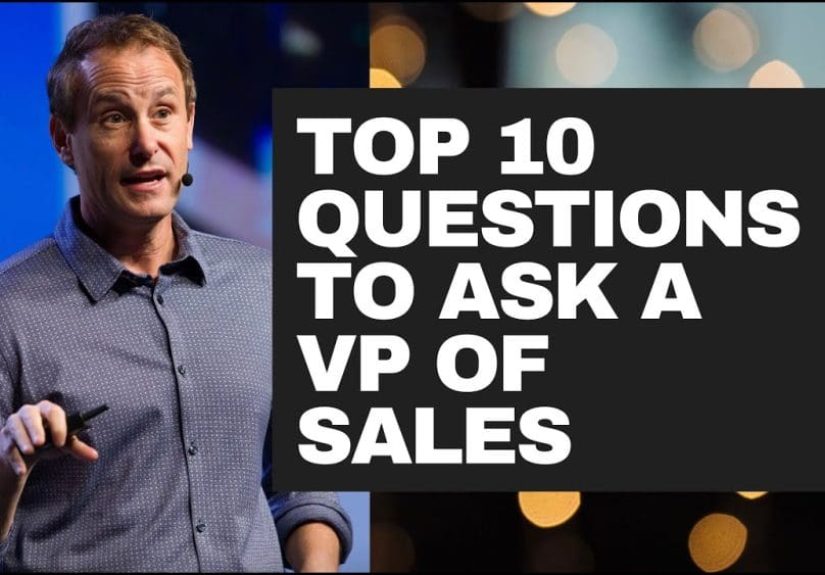
- The Top 12 Questions to Ask a VP of Sales During an Interview
- 1. What does success look like in the first 90 days, six months, and first year?
- 2. What separates your top performers from the rest of the team?
- 3. Where is the pipeline strongest right now, and where does it tend to get stuck?
- 4. How do you define a healthy quota and an achievable ramp?
- 5. What does your ideal customer profile look like today, and how has it changed?
- 6. How do sales, marketing, customer success, and RevOps work together here?
- 7. How do coaching and feedback actually happen on your team?
- 8. What are the most common reasons reps miss target here?
- 9. What tools, processes, and sales methodology do your best reps rely on most?
- 10. Why is this role open right now?
- 11. What career path have you seen for people who succeed on this team?
- 12. If you hired the ideal person tomorrow, what would they help you solve first?
- Quick Cheatsheet: Questions to Ask a VP of Sales During an Interview
- Questions You Should Probably Not Ask a VP of Sales First
- How to Turn Their Answers Into a Better Interview Performance
- Final Takeaway
- Extra Experiences and Real-World Lessons from Sales Interviews
- SEO Tags
You know that awkward final interview moment when the VP of Sales smiles and says, “So, what questions do you have for me?” That is not the time to panic, smile politely, and ask whether the company has free snacks. Snacks are lovely. Revenue clarity is better.
If you are interviewing for a sales role, the questions you ask a VP of Sales can tell you almost everything that matters: whether the pipeline is healthy, whether quotas are realistic, whether top performers are thriving or barely surviving, and whether the company is building something sustainable or simply stapling optimism to a shaky forecast. In other words, your questions are not filler. They are due diligence.
A great VP of Sales usually owns more than a number on a spreadsheet. They shape hiring, coaching, forecasting, sales process, territory design, compensation thinking, and cross-functional alignment with marketing, operations, and customer success. So when you ask smart, specific interview questions, you are not just trying to impress them. You are trying to protect your future self from accepting a role that looks shiny on LinkedIn and chaotic in real life.
This guide walks through the best questions to ask a VP of Sales during an interview, why each one matters, what a strong answer sounds like, and what should make your internal alarm bells ring like a fire drill at quarter-end. There is also a handy cheatsheet near the middle, because life is short and interviews are stressful.
Why These Questions Matter More Than You Think
Sales interviews are often treated like performance theater. The company wants to know whether you can sell. You want to know whether they can manage. Somewhere in the middle, everyone nods professionally while pretending “fast-paced environment” is a meaningful phrase.
But asking a VP of Sales the right questions helps you figure out five critical things fast:
- Whether success in the role is clearly defined or suspiciously magical
- Whether the team runs on process, guesswork, or caffeine-fueled heroics
- Whether quota, pipeline, and compensation are built to be achievable
- Whether coaching and career growth are real or just decorative recruiting language
- Whether the company understands its ideal customer and sales motion
Think of this as interviewing the sales organization, not just the job title. A good title cannot save a bad system.
How to Ask These Questions Without Sounding Like a Robot
You do not need to rapid-fire all 12 questions like you are reading from a hostage note. Pick the ones that fit the role, stage, and tone of the interview. If you are early in the process, focus on success metrics, team needs, and the reason the role is open. If you are in a final-round conversation with a VP of Sales, go deeper on pipeline health, coaching, compensation, and how departments work together.
Also, listen closely to the answer. The best insights usually show up in what people avoid, not just what they say. If the VP speaks clearly, uses specifics, and gives examples, that is usually a good sign. If the answer sounds like a motivational poster trying to dodge accountability, proceed with caution.
The Top 12 Questions to Ask a VP of Sales During an Interview
1. What does success look like in the first 90 days, six months, and first year?
This is the king of interview questions because it forces clarity. You are not asking for vague inspiration. You are asking for expectations, milestones, and measurable outcomes.
Why it matters: A strong sales leader can explain what early success looks like beyond “hit quota.” They should mention ramp, learning priorities, territory understanding, product knowledge, pipeline creation, and performance markers.
Green flag answer: “In the first 90 days, I want you certified on the product, comfortable in the CRM, and building qualified pipeline. By six months, you should be consistently progressing opportunities and trending toward target. By the first year, we expect full productivity.”
Red flag answer: “Just come in and crush it.” Translation: nobody built an onboarding plan, and they are hoping charisma solves systems problems.
2. What separates your top performers from the rest of the team?
This question reveals whether the VP understands what success actually looks like on their team. Good leaders know the behaviors, habits, and skills that drive results. Weak leaders say something generic like “they hustle.”
Why it matters: You want to know whether top performers win because of skill, market opportunity, strong territories, or sheer luck. Ideally, the answer includes discipline, discovery quality, follow-up, account planning, consistency in process, and coachability.
Green flag answer: “Our best reps qualify rigorously, manage multi-threaded deals, keep CRM data clean, and ask for coaching early.”
Red flag answer: “Honestly, they just have that killer instinct.” That is not a strategy. That is sales astrology.
3. Where is the pipeline strongest right now, and where does it tend to get stuck?
Now you are asking grown-up sales questions. This shows you understand pipeline health is more than lead volume. It is about stage conversion, velocity, and where deals go to nap forever.
Why it matters: A thoughtful VP of Sales should know whether the team struggles with early prospecting, demo-to-proposal conversion, late-stage stalls, or deal slippage.
Green flag answer: “We create plenty of top-of-funnel opportunities, but our biggest challenge has been moving mid-market deals from technical validation to executive alignment.”
Red flag answer: “Our pipeline is great.” Great where? Great how? Great according to whom?
4. How do you define a healthy quota and an achievable ramp?
This is one of the smartest questions you can ask a VP of Sales because it gets straight to the money without sounding like you only care about money. Even though, yes, salespeople do enjoy money. Wild concept.
Why it matters: You want to know whether targets are built from real conversion data, territory potential, and sales cycle length, or from executive wishful thinking wearing a blazer.
Green flag answer: “We calibrate quota against historical attainment, average deal size, territory potential, and time to productivity. Ramp expectations are adjusted for new hires.”
Red flag answer: “We keep the bar high.” Ambition is fine. Fantasy budgeting is less charming.
5. What does your ideal customer profile look like today, and how has it changed?
This question helps you figure out whether the organization truly understands who buys, why they buy, and whether that understanding is current.
Why it matters: A mature sales team knows its ICP, buying triggers, decision-makers, common objections, and segments with the best fit. It also knows when the market is shifting.
Green flag answer: “We win most consistently with mid-market companies in regulated industries where compliance and workflow visibility are major pain points. We have narrowed our ICP over the last year to improve win rates.”
Red flag answer: “Pretty much anyone can use our product.” That sentence should make you sit up straighter.
6. How do sales, marketing, customer success, and RevOps work together here?
Sales rarely fails alone. It usually fails with friends. This question exposes whether the company has alignment across the full revenue engine or whether departments treat each other like rival kingdoms.
Why it matters: Misalignment creates bad leads, messy handoffs, poor forecasting, and unhappy customers. Strong organizations have clear ownership, feedback loops, and shared definitions.
Green flag answer: “Marketing and sales meet weekly on lead quality, RevOps owns reporting hygiene, and customer success shares expansion and churn signals that improve future selling.”
Red flag answer: “We’re still working on that.” Fair if the company is tiny. Less comforting if they have 300 employees and a giant slide deck about operational excellence.
7. How do coaching and feedback actually happen on your team?
Notice the word actually. That is doing a lot of work here. Every company says it values coaching. Fewer can describe how often it happens, what it looks like, and how it improves performance.
Why it matters: Great sales orgs do not just inspect results. They coach behaviors. They review calls, deals, messaging, pipeline strategy, and skill gaps.
Green flag answer: “Managers run weekly one-on-ones, monthly call reviews, and quarterly development plans. Coaching is tied to specific competencies and deal execution.”
Red flag answer: “Our managers are available if people need help.” That is support. It is not a coaching system.
8. What are the most common reasons reps miss target here?
This is a brave question, and brave questions get real answers. Or at least they should.
Why it matters: You will learn whether performance issues come from weak qualification, poor onboarding, unrealistic quotas, territory imbalance, long sales cycles, product gaps, or leadership confusion.
Green flag answer: “The biggest issues have been inconsistent prospecting early in the quarter and weak multi-threading in larger deals. We have been training around both.”
Red flag answer: “The people who miss just are not hungry enough.” Maybe. But when every miss becomes a morality play, something deeper is usually broken.
9. What tools, processes, and sales methodology do your best reps rely on most?
You are asking how the sales machine works, not just whether it exists. This can tell you a lot about process maturity and whether the team wins through repeatability or improvisation.
Why it matters: Great teams have a clear sales process, CRM discipline, reporting standards, and a consistent approach to discovery, qualification, and forecasting.
Green flag answer: “We use a consistent discovery framework, clear exit criteria for stages, and CRM hygiene standards that support forecasting and coaching.”
Red flag answer: “We don’t like to be too rigid.” Flexibility is good. Chaos is expensive.
10. Why is this role open right now?
Simple. Powerful. Slightly dangerous. Excellent.
Why it matters: This question reveals whether the role exists because of growth, internal promotion, turnover, reorganization, or an unfortunate parade of quota casualties.
Green flag answer: “We are expanding into a new segment,” or “The previous rep was promoted after strong performance.”
Red flag answer: Long pause. Tiny smile. “We’ve had a few people in the seat.” You do not need detective music to know that means something.
11. What career path have you seen for people who succeed on this team?
Ambition is not a bad word in sales. In fact, when framed well, it signals commitment and drive.
Why it matters: You want to know whether the company develops talent, promotes from within, and creates opportunities for account management, enterprise selling, leadership, enablement, or strategic roles.
Green flag answer: “Our top reps have moved into enterprise accounts, team lead roles, and even management. We discuss career direction early.”
Red flag answer: “Let’s focus on this role first.” Fair in tiny doses, but if there is zero visibility into growth, the ceiling may be lower than the recruiter implied.
12. If you hired the ideal person tomorrow, what would they help you solve first?
This is an elite closing question because it reframes the interview around business impact. It also shows confidence without veering into chest-thumping nonsense.
Why it matters: You learn the VP’s most urgent priorities and can connect your experience directly to them.
Green flag answer: “We need someone who can build pipeline quickly in a specific segment, navigate complex stakeholders, and help us improve deal quality.”
Red flag answer: “We just need someone who can do everything.” Ah yes, the mythical unicorn seller-engineer-strategist-therapist.
Quick Cheatsheet: Questions to Ask a VP of Sales During an Interview
| Question | What It Reveals | Strong Signal | Warning Sign |
|---|---|---|---|
| What does success look like in 90 days, six months, and a year? | Clarity of expectations | Specific milestones and ramp plan | Vague “just crush it” answer |
| What separates top performers from average performers? | Performance model | Behavior-based answer | Only talks about hustle |
| Where does the pipeline get stuck? | Pipeline health and honesty | Knows stage friction points | Claims pipeline is “all good” |
| How do you define a healthy quota and ramp? | Target realism | Uses historical data and ramp logic | Targets feel arbitrary |
| What does your ICP look like today? | Market understanding | Clear segment and pain-point focus | “Everybody is a prospect” |
| How do revenue teams work together? | Cross-functional alignment | Defined meetings and ownership | Departmental finger-pointing |
| How does coaching happen here? | Manager quality | Regular one-on-ones and reviews | Coaching is ad hoc |
| Why do reps usually miss target? | Organizational self-awareness | Honest diagnosis with action plan | Only blames rep attitude |
| What tools and methods do your best reps use? | Process maturity | Consistent sales process | No shared method |
| Why is this role open? | Role stability | Growth or promotion | High turnover mystery |
| What career paths exist for strong performers? | Growth opportunity | Real internal mobility | No clear development path |
| What would the ideal hire solve first? | Business urgency | Clear priorities | Unrealistic catch-all expectations |
Questions You Should Probably Not Ask a VP of Sales First
Timing matters. Asking about compensation, accelerators, or promotion paths is not bad. Asking only about those things in your first serious conversation can make it seem like you care more about the scoreboard than the game. You can absolutely ask about money. Just do it after you establish that you also care about impact, process, fit, and success metrics.
Also avoid questions you could answer with a 30-second website visit. “What does your company do?” is not the bold strategy people think it is.
How to Turn Their Answers Into a Better Interview Performance
The smartest candidates do not ask great questions and then move on like nothing happened. They use the answers.
If the VP says the team struggles with late-stage deal slippage, share an example of how you multi-threaded stakeholders and improved close predictability. If they say coaching matters, talk about how feedback helped you sharpen discovery, objection handling, or forecast calls. If they say the company is narrowing its ICP, explain how you have sold effectively by prioritizing fit over volume.
That is the real magic of these interview questions. They do not just help you evaluate the role. They give you the exact material you need to position yourself as the solution.
Final Takeaway
The best questions to ask a VP of Sales during an interview do two jobs at once: they make you look sharp, and they help you decide whether the opportunity is actually worth chasing. That is a beautiful combination. Smart candidates know interviews are not talent shows. They are mutual evaluation sessions with better lighting.
So go in prepared. Ask about success, pipeline, coaching, quota, team alignment, and the realities behind the role. Listen for specifics. Look for self-awareness. Pay attention to whether the VP talks like an operator or a slogan machine.
Because if you are going to spend your days building pipeline, managing deals, and chasing targets, you deserve to know whether the person leading the sales organization has built a system you can win in. And yes, whether the snacks are good can still be your thirteenth question.
Extra Experiences and Real-World Lessons from Sales Interviews
One of the most common experiences candidates have in a VP of Sales interview is realizing, about 20 minutes in, that the job description sounded far more organized than the actual business. On paper, the role may promise “strategic growth, strong inbound demand, and a collaborative revenue team.” In conversation, you discover that inbound is inconsistent, the territory map was rebuilt last month, and nobody quite agrees on what counts as a qualified opportunity. That is exactly why asking about pipeline quality, top-performer behavior, and cross-functional alignment matters. Candidates who skip those questions often accept a role based on energy instead of evidence.
Another frequent experience is hearing a VP of Sales give an excellent answer to one question and a deeply worrying answer to the next. For example, a leader may sound thoughtful about coaching and development, then completely sidestep how quota is set. That split matters. A company can have kind managers and still have a broken compensation model. Some candidates leave interviews feeling emotionally sold because the VP was charismatic, only to realize later they never asked whether reps are actually hitting target. Charm is nice. Attainment is nicer.
Many experienced candidates also talk about how revealing it is to ask why a role is open. In strong organizations, the answer is refreshingly direct: growth, segment expansion, internal promotion, or new product launch. In weaker situations, the answer gets foggy fast. You may hear phrases like “We are figuring out the structure,” “We move quickly here,” or “This role has evolved.” Sometimes that is normal startup messiness. Sometimes it is a polite way of saying the seat has been a revolving door with a nice laptop. The key is not to panic at ambiguity, but to follow it with smart follow-up questions.
There is also a powerful experience candidates have when they ask, “What would the ideal hire solve first?” This question often changes the whole tone of the interview. Instead of staying in abstract career-talk mode, the conversation moves into real business problems. Suddenly the VP tells you they need stronger outbound motion in a certain vertical, better deal control in enterprise cycles, or more disciplined forecasting. That is your opening. Candidates who handle this moment well stop interviewing like applicants and start speaking like future teammates.
Finally, one of the best lessons from real sales interviews is simple: the quality of a VP’s answers often predicts the quality of the sales culture. Clear leaders usually run clearer systems. Specific leaders usually coach better. Honest leaders tend to build healthier teams. And vague leaders, unsurprisingly, often manage vague organizations where expectations shift, accountability blurs, and everybody is told to “sell harder” when the real issue is strategy. Asking good questions will not guarantee the perfect job, but it dramatically improves your odds of spotting a great one before you sign the offer and meet your new quota-shaped headache.