Table of Contents >> Show >> Hide
- What We Think a “Good” Business Plan Looks Like (and Why That’s Misleading)
- Why “Terrible” Business Plans Sometimes Create Wonderful Businesses
- The Other Side: Beautiful Business Plans That Ended Badly
- What “Terrible Business Plans, Wonderful Businesses” Really Means
- Using Common Sense to Evaluate “Terrible” Business Ideas
- How to Rewrite Your “Terrible” Plan Without Losing Its Genius
- Experiences and Lessons From “Terrible Plans” That Worked
- Conclusion: Bring Common Sense Back to Business Planning
If you judged businesses only by their original pitch decks, half of today’s giants would have been laughed out of the room.
“Rent a stranger’s couch on the internet.” “Buy books from a website that loses money on every box it ships.” “Pay for a ride in a random person’s car.”
On paper, many of the world’s most successful companies started out sounding… honestly, pretty terrible.
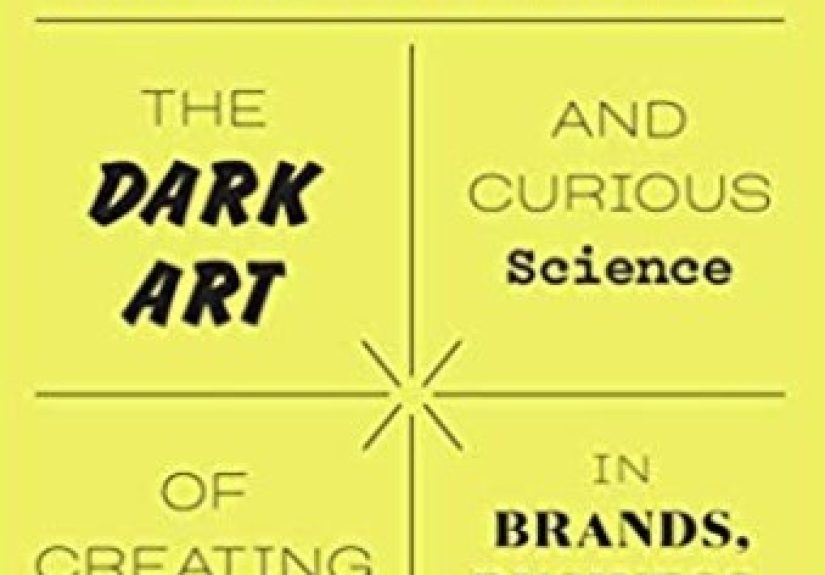
That paradox is exactly what Ben Carlson explored in his piece “Terrible Business Plans, Wonderful Businesses” on his blog
A Wealth of Common Sense, where he looks at how businesses that appear foolish in early financial statements can end up compounding value for decades.
It’s a reminder that common sense in business isn’t always what you see in a spreadsheet; it’s what actually happens in the real world with real customers and cash flows.
In this article, we’ll unpack why “terrible” business plans sometimes create wonderful businesses, why “perfect” plans can still implode spectacularly,
and how to use genuine common sense to evaluate business models, whether you’re a founder, investor, or just a curious bystander.
What We Think a “Good” Business Plan Looks Like (and Why That’s Misleading)
Traditional business plans are often 30–50 page documents packed with pro-forma financials, market share assumptions, and five-year projections drawn with
laser-precise numbers that have absolutely no relationship to reality. They look impressive, and that’s part of the problem.
Research on business plans and startup success has repeatedly found that these documents are weak predictors of which young companies will actually make it.
Modern startup practice has been moving away from treating the business plan as a crystal ball and more as a rough roadmap that will change as the market talks back.
The biggest issues with traditional business plans include:
- Static thinking in a dynamic world: Markets change far faster than a 40-page PDF can be updated.
- False precision: Forecasts that show neat growth curves but hide enormous uncertainty.
- Incentive problems: Founders are rewarded for optimistic slides, not accurate ones.
That’s why some of the world’s most interesting companies started with plans that looked chaotic, incomplete, or downright bad.
They weren’t selling polish; they were learning in real time.
Why “Terrible” Business Plans Sometimes Create Wonderful Businesses
1. They Start With a Real, Painful Problem
The first clue that a questionable business plan might secretly be brilliant is that it’s attached to a real problem people already have.
Think of many “weird business ideas that made millions” – from unconventional dating sites to niche product companies that seemed like jokes at first glance.
On the surface, they look frivolous. Underneath, they’re solving something real: loneliness, boredom, lack of convenience, or an unmet emotional need.
A business plan might sound ridiculous if you phrase it as, “We’re going to let you sleep in random people’s homes.” Rephrase it as,
“We’re unlocking underused space worldwide so travelers can find cheaper, more local stays,” and suddenly the logic sharpens. The underlying problem
hasn’t changed. The way we talk about it has.
Wonderful businesses often start where spreadsheets are weak: in messy human behavior. They notice where people are hacking together workarounds,
complaining repeatedly, or paying more than they should for clumsy solutions.
2. They Treat the Plan as a Hypothesis, Not a Script
Strong businesses treat their initial business plan like a first draft, not holy scripture.
Modern startup practice emphasizes quick experiments, rapid feedback, and constant iteration over rigid adherence to a document created months earlier.
That might mean:
- Changing the target customer after early sales calls.
- Adjusting pricing when the initial model proves unsustainable.
- Abandoning a whole feature set customers don’t actually want.
On paper, this looks messy and inconsistentlike a “bad” plan. In reality, it’s exactly what survival looks like.
Static plans can’t keep up, but learning organizations can.
3. They Build Moats Over Time, Not on Day One
Many of the best businesses look unimpressive at the beginning because their main advantages only show up at scale:
- Network effects: Marketplaces or social platforms that are useless with 100 users and unstoppable with 100 million.
- Brand and trust: Consumers may be skeptical at first but fiercely loyal after repeated good experiences.
- Learning and data: The more customers a company serves, the better it gets at serving the next one.
These compounding advantages rarely appear in a tidy first-year spreadsheet. They show up as ugly early losses and confusing numbers that make
traditional investors uncomfortable. That’s part of Carlson’s point: if you only look at short-term profitability, you may completely miss the long-term wealth creation story.
The Other Side: Beautiful Business Plans That Ended Badly
For every messy plan that turns into a wonderful business, there are gorgeous pitch decks that end up as expensive footnotes in startup history.
1. Bad Revenue Models Hidden in Pretty Slides
A common thread in startup post-mortems is the revenue model that never really made sense. A 2024 analysis of startup failures emphasizes that a huge share
of young companies collapse because their revenue model is fundamentally flawed or untested.
They may attract funding, media coverage, and plenty of talentbut if the math never works, the show eventually ends.
Typical revenue mistakes include:
- Assuming customers will pay a premium for something they only mildly care about.
- Underestimating customer acquisition costs and overestimating lifetime value.
- Ignoring how hard it is to get users to change behavior, even for a “better” product.
2. Classic Examples of Good-Looking Plans, Bad Outcomes
The dot-com era is filled with companies whose business plans looked fantastic on paper: pristine growth forecasts, enormous total addressable markets,
and bold visions of online dominance. Yet many collapsed because they scaled costs faster than they built a real business.
Take eToys, once hailed as a future leader in online retail. Despite a compelling story and big investor backing, the company struggled with execution,
timing, and profitability and ultimately went bankrupt, becoming a symbol of dot-com overreach.
Corporate history also offers cautionary tales of “successful” plans that hid deep problems. Enron’s complex financial engineering created the illusion
of a brilliant business model, but behind the scenes, revenue was being exaggerated and losses buried until the entire structure collapsed in one of the most infamous corporate failures in history.
3. When Storytelling Becomes Self-Deception
Strong business storytelling is essential, but there’s a thin line between vision and delusion. Recent scandals, like the case of fashion-rental startup CaaStle,
show how a glossy growth narrative can mask serious problems. Public claims of huge revenue and “highly profitable” business models were later contradicted
by audits showing far smaller revenue and deep losses, triggering investigations and a liquidity crisis.
The lesson is uncomfortable but important: a beautiful business plan can hide ugly realities. Common sense asks:
Are customers truly staying? Is cash actually coming in? Are claims independently verifiable?
What “Terrible Business Plans, Wonderful Businesses” Really Means
In his essay, Carlson’s point isn’t that planning is useless. It’s that investors and operators often focus on the wrong signals.
Early financial statements can make great businesses look terrible because heavy reinvestment, experimentation, and customer acquisition costs
distort traditional metrics like near-term earnings.
A few key themes tie his idea together:
- Short-term pain vs. long-term value: Companies that choose to reinvest heavily may show weak profitability early on but
build durable moats that pay off years later. - Negative knowledge: Learning what doesn’t workstrategy, pricing, customer segmentcan be just as valuable as the wins,
especially if you actually adjust course. - Simple, logical narratives: The best businesses often have a simple core story:
“We make this thing easier, cheaper, or better than anyone else,” even if the financials are noisy at first.
In other words, a “terrible” business plan might simply be an honest one: full of uncertainty, experimentation, and ugly numbersbecause that’s what
building something new actually looks like.
Using Common Sense to Evaluate “Terrible” Business Ideas
1. Start With the Customer, Not the Deck
Fancy pitch decks can distract from the most basic question:
Is someone in real pain, and is this product the aspirin?
When you look at a business that sounds strange or overly niche, ask:
- Who is already improvising their own solution because nothing good exists?
- Are people emotionally attached to the problem being solved (time, money, status, health)?
- Does the product create genuine “I can’t go back” moments once people try it?
If the answers to those are strong, a clumsy plan might be hiding a wonderful business.
2. Focus on Unit Economics Over Fantasy Forecasts
Five-year projections are guesses. Unit economicswhat it costs to serve one customer and how much that customer is worthare much closer to reality.
Key questions:
- At a realistic scale, can the gross margin become healthy?
- Is customer acquisition cost trending down as the brand grows?
- Do repeat purchases or subscriptions improve profitability over time?
A business with messy early numbers but improving unit economics is often far better than a polished plan with no clear path to real profitability.
3. Watch Behavior, Not Just Belief
Common sense says: don’t just listen to what people say; watch what they do.
- If customers say they love a product but churn quickly, that’s a problem.
- If investors rave about a company publicly but insiders keep selling shares, be cautious.
- If the company constantly changes the story but not the results, something’s off.
Wonderful businesses might still have confusing narratives early on, but you usually see a pattern of behavior that compoundsmore usage,
more referrals, more organic adoption.
How to Rewrite Your “Terrible” Plan Without Losing Its Genius
If you’re a founder, you might look at your own business plan and think, “Honestly, this looks terrible.” That’s not always a bad sign.
The goal isn’t to make the plan prettier; it’s to make it more honest and more useful.
Here’s how to bring a little “wealth of common sense” into your planning:
- Trim the fluff: Cut vague claims like “we’ll go viral” or “we’ll capture 3% of a giant market.” Replace them with specific, testable assumptions.
- Shorten the horizon: Focus on the next 6–12 months: concrete experiments, milestones, and customer targets.
- Build feedback loops: Show how you’ll learnwhat metrics you’ll track, what will trigger a pivot, and how customers will influence the roadmap.
- Highlight the moat in progress: Even if it’s early, describe how you’re building advantages that strengthen over time.
A business plan informed by realityeven if it looks messyis ultimately much more valuable than a sleek document divorced from how people and markets work.
Experiences and Lessons From “Terrible Plans” That Worked
When you study founder interviews, investor memos, and post-mortems of both failed and successful companies, you start to see repeating patterns.
The contrast between “terrible business plans” and “wonderful businesses” becomes less mysterious and more like a set of field notes.
1. The Subscription That No One Wanted (Until They Did)
Consider the many quirky subscription businesses that launched over the past decade. At first glance, some of them sound absurd:
boxes of hyper-specific snacks, themed novelty items, or ultra-niche hobbies. Early investors often see a tiny market and scoff.
Yet case studies repeatedly show that when these businesses nail three thingsclear positioning, strong brand voice, and high retentionthey can become
surprisingly durable. The “terrible plan” (“Let’s mail people oddly specific stuff every month”) becomes a wonderful business when:
- Customers feel part of a community, not just a transaction.
- Churn drops because people genuinely look forward to the next box.
- Suppliers begin approaching the company instead of the other way around.
In hindsight, the plan wasn’t terrible; it was just unconventional, and the early numbers looked weak until word-of-mouth kicked in.
2. The SaaS Startup That Pivoted Away From Its “Perfect” Plan
Many SaaS founders start with meticulously crafted enterprise-focused business plans: long sales cycles, big contracts, prestige logos.
On paper, the economics look incredible. In reality, they discover that winning enterprise deals is slower, more political, and more expensive than expected.
Several well-documented cases show SaaS companies drastically improving their fortunes by pivoting from an enterprise-first plan to small and mid-sized
businesses or even self-serve models.
The original plan looked “smart,” but the post-pivot versionserving many smaller customers with a simpler productturns out to be the real winner.
The experience teaches a humbling lesson: a business plan that flatters your ego is less useful than one that fits how customers actually buy.
3. The “Weird Product” That Built a Brand Moat
Some of the strangest product ideas evolve into powerful brands. Entrepreneurs launch something quirkymaybe a novelty item, a niche snack, or a
strange gadgetand the business plan is basically, “Let’s see if anyone buys this.”
Over time, a few of these businesses build cult followings. The founders invest in design, storytelling, and community. They expand into adjacent products,
deepen their relationships with retailers, or go direct-to-consumer with better margins.
What looked like a trivial idea grows into a recognizable brand with real pricing power.
Experienced founders often say that the original plan didn’t “deserve” the final outcome; it was their willingness to respond to demand and double down on
what worked that created the real value.
4. The Investor’s View: Betting on Behavior, Not Decks
When you listen to seasoned investors talk, a consistent theme appears: they rarely fall in love with business plans alone.
Instead, they look for a handful of grounded signals:
- Founders who are obsessed with the customer’s problem, not their own brilliance.
- Emerging evidence that customers use the product repeatedly without heavy incentives.
- Early data that unit economics are improving with each iteration.
- Honesty about what isn’t working yet.
That’s very much in line with the common-sense lens Carlson applies to investing as a whole: look less at the story being told and more at the
behavior and incentives underneath.
The real “experience” behind many wonderful businesses is not a perfect plan executed flawlessly. It’s a series of experiments, mistakes, and corrections
guided by a clear sense of what problem matters and a willingness to adapt. The plan evolves; the core purpose stays remarkably stable.
So if your current business plan feels terribleuncertain, full of caveats, littered with open questionsthat might be okay.
The key is whether you’re pairing that imperfection with disciplined learning, honest metrics, and a sharp eye for what actually works in the real world.
That’s where wonderful businesses are born.
Conclusion: Bring Common Sense Back to Business Planning
“Terrible business plans, wonderful businesses” is not a call to abandon planning. It’s a call to stop confusing cosmetics with substance.
The best companies in the world often looked odd, risky, or downright foolish at the beginningbut they were grounded in real customer problems,
evolving strategies, and eventually, undeniable results.
Whether you’re writing a business plan or reading one, the most valuable questions are simple:
Who is this really helping? How will we know if it’s working? What will we change when we’re wrong?
Answer those honestly, and your plan can look terrible on paper but still lead to something wonderful in practicea business built on common sense,
not just pretty slides.