Table of Contents >> Show >> Hide
- Why Winter Humidity Is So Tricky
- What Is the Ideal Indoor Humidity in Winter?
- Should You Use a Dehumidifier in Winter? When the Answer Is Yes
- When You Probably Shouldn’t Use a Dehumidifier in Winter
- How to Decide: A Simple Winter Humidity Checklist
- Best Practices for Using a Dehumidifier in Winter
- Dehumidifier vs. Humidifier in Winter: Which One Do You Need?
- Common Mistakes to Avoid
- Final Verdict: Should You Use a Dehumidifier in Winter?
- Winter Humidity Experiences: What Homeowners Commonly Notice
- SEO Tags
If winter in your house feels like a tug-of-war between “why is my skin so dry?” and “why are my windows sweating?”welcome to the humidity Olympics. The short answer to whether you should use a dehumidifier in winter is: sometimes. A dehumidifier can be a lifesaver in damp basements, laundry-heavy homes, and places with window condensation or musty smells. But in a lot of homes, winter air is already dry, and running one nonstop can make your comfort level drop faster than the temperature outside.
So what do experts recommend? Don’t guess. Measure your indoor humidity, then adjust. In most homes, the sweet spot is usually around 30% to 50% relative humidity, with many experts suggesting the lower end (around 30% to 40%) during the coldest part of winter to reduce window condensation. That means the real question isn’t “Dehumidifier: yes or no?” It’s “What’s your humidity level, and what problem are you trying to solve?”
In this guide, we’ll break down when a dehumidifier helps in winter, when it doesn’t, how to tell what your home needs, and the common mistakes that waste money and make your indoor air less comfortable.
Why Winter Humidity Is So Tricky
Winter humidity is weird because the same season can create two opposite problemssometimes in the same house.
Problem 1: Air gets too dry
In many homes, winter heating dries out indoor air. That can lead to dry skin, irritated nasal passages, static shocks, and that “my throat feels like sandpaper” feeling in the morning. This is especially common in cold climates and in homes running heat frequently.
In fact, indoor winter air can get surprisingly dry. If you’ve ever touched a doorknob and seen your soul leave your body via static shock, you already know the vibe.
Problem 2: Indoor moisture gets trapped
At the same time, everyday activities add moisture indoorsshowers, cooking, drying clothes, even breathing. In winter, windows stay closed and ventilation drops, so that moisture can build up. If humidity gets too high, it can cause:
- Window condensation (or frost on very cold windows)
- Musty smells
- Mold and mildew growth
- Dust mite growth
- Damp spots in basements, closets, or corners
This is why experts often say it depends: winter doesn’t automatically mean “use a humidifier” or “use a dehumidifier.” It means your house needs the right humiditynot too high, not too low.
What Is the Ideal Indoor Humidity in Winter?
Most expert guidance lands in the same general range: 30% to 50% relative humidity (RH) for homes. That range helps balance comfort and indoor air quality. But in winter, especially in colder climates, a target closer to 30% to 40% is often better because it helps prevent condensation on windows and cold surfaces.
Think of it like thermostat tuning. The “best” number is not one magic setting for every house. It depends on:
- Your climate (cold and very cold areas usually need lower winter RH)
- Your home’s insulation and window quality
- Whether you have a basement or crawl space
- How much moisture your household generates
- Whether anyone has allergies or asthma triggers (like mold or dust mites)
Rule of thumb: If you see condensation on windows, your indoor humidity is probably too high for your current outdoor temperature. If your skin, nose, and throat are all filing complaints, your indoor humidity may be too low.
Should You Use a Dehumidifier in Winter? When the Answer Is Yes
There are several situations where a dehumidifier in winter makes a lot of sense.
1) Your windows are fogging up (or frosting inside)
Condensation on windows is one of the biggest red flags in winter. It usually means warm, humid indoor air is hitting a cold surface and dropping moisture. If this happens often, a dehumidifier can helpespecially when paired with better ventilation and moisture control habits.
Example: You wake up and your bedroom windows are wet every morning. Running a dehumidifier in the room (or nearby zone), reducing humidity to around 35%–40%, and using the bathroom exhaust fan after showers can often reduce or stop the problem.
2) Your basement stays damp year-round
Basements are the classic dehumidifier territory. Even in winter, basements can stay damp because of foundation moisture, poor drainage, limited airflow, or cooler surfaces that encourage condensation.
If your basement smells musty, feels clammy, or has visible dampness, a dehumidifier is often worth running in winter. This is especially true if you store cardboard boxes, fabrics, books, or tools downstairsmoisture loves all of them.
3) You smell mildew or see mold-prone areas
If you notice mildew smells in closets, behind furniture, or near exterior walls, a dehumidifier can be part of the fix. Not the only fix, though. You still need to address leaks, ventilation issues, or water intrusion. A dehumidifier helps manage the moisture in the air, but it won’t magically repair a plumbing leak hiding behind drywall.
4) You dry laundry indoors during winter
Indoor laundry drying can push a lot of moisture into the air. If you don’t have a vented dryer, or you hang clothes indoors often, a dehumidifier can help remove moisture faster and cut down on condensation and stale air.
Bonus: It can also speed up drying time in a closed room. (No promises for socks. Socks have their own agenda.)
5) Your hygrometer is consistently above 50%
This is the most important reason of all: the numbers say you need one. If your RH is regularly above 50% in winter, a dehumidifier can help bring the space back into a healthier and more comfortable range.
When You Probably Shouldn’t Use a Dehumidifier in Winter
Here’s the part people skip: a dehumidifier can absolutely make winter comfort worse if the air is already dry.
1) Your humidity is already low (under 30%–35%)
If your home is sitting at 25%–30% RH, a dehumidifier is the wrong tool. At that point, many people feel dryness in the skin, nose, throat, and eyes. In homes like this, the better solution may be:
- Using a humidifier in occupied rooms
- Reducing over-ventilation during very dry weather
- Sealing drafts
- Adjusting heating settings
2) You’re trying to fix a leak with a machine
If there’s a roof leak, pipe leak, or water seepage in the basement, a dehumidifier can help control symptomsbut it won’t solve the source. Running a dehumidifier while ignoring a leak is like mopping the floor while the faucet is still on full blast.
3) The room is too cold for your unit
This one matters a lot in winter: many dehumidifiers work less efficiently in colder spaces. If the room drops below about 65°F, you should check whether your model is designed for low-temperature use. In unheated basements, garages, or utility rooms, performance can drop, and some units may cycle into defrost more often.
If your dehumidifier is in a cold space, don’t just assume it’s “working hard.” It may actually be working poorly.
How to Decide: A Simple Winter Humidity Checklist
Before buying (or plugging in) a dehumidifier, run through this checklist.
Step 1: Measure humidity with a hygrometer
Don’t guess based on how your hair looks. Use a hygrometer. They’re inexpensive and give you a real RH reading.
- Below 30% RH: Too dry for many homes
- 30%–40% RH: Often ideal in colder winter weather
- 40%–50% RH: Usually fine, but watch for condensation
- Above 50% RH: Moisture risk starts increasing
- Above 60% RH: Mold and moisture problems become more likely
Step 2: Look for signs of excess moisture
Even if RH looks “okay” in one room, problem zones may still exist. Check for:
- Condensation on windows
- Musty smells
- Damp basement walls or floors
- Mildew near bathrooms or laundry areas
- Closets or corners that feel stale
Step 3: Check room temperature
If the space is cold (especially below 65°F), make sure you choose a unit rated for low-temperature operation. This is a common reason people think a dehumidifier “isn’t doing much” in winter.
Step 4: Fix moisture sources first
A dehumidifier works best when it’s not fighting a losing battle. Improve the basics:
- Use exhaust fans in kitchens and bathrooms
- Vent the dryer outside
- Repair leaks
- Improve drainage around the foundation
- Seal gaps that let damp air in
Best Practices for Using a Dehumidifier in Winter
If your home really does need one, here’s how to use a dehumidifier effectively in winter without over-drying the place.
Set a target humidity (don’t run it nonstop)
Use the built-in humidistat if your unit has oneand many modern units do. Set the target around:
- 30%–40% RH in colder climates / cold snaps
- 40%–50% RH in milder winter conditions or basements
If the room already hits your target, let the machine cycle off. Continuous mode is usually overkill unless you’re dealing with a specific moisture event.
Close doors and windows in the area
A dehumidifier works best in a defined space. If windows are open or the room is connected to a huge open area, it has to work harder and uses more energy.
Place it correctly
Give the unit airflow clearance and keep it away from dust-heavy zones if possible. Dusty coils and filters reduce performance, and nobody buys a dehumidifier because they love extra maintenance.
Keep up with maintenance
Clean the filter, empty the bucket (or set up a proper drain hose), and check for airflow blockages. A neglected dehumidifier is basically a loud box with good intentions.
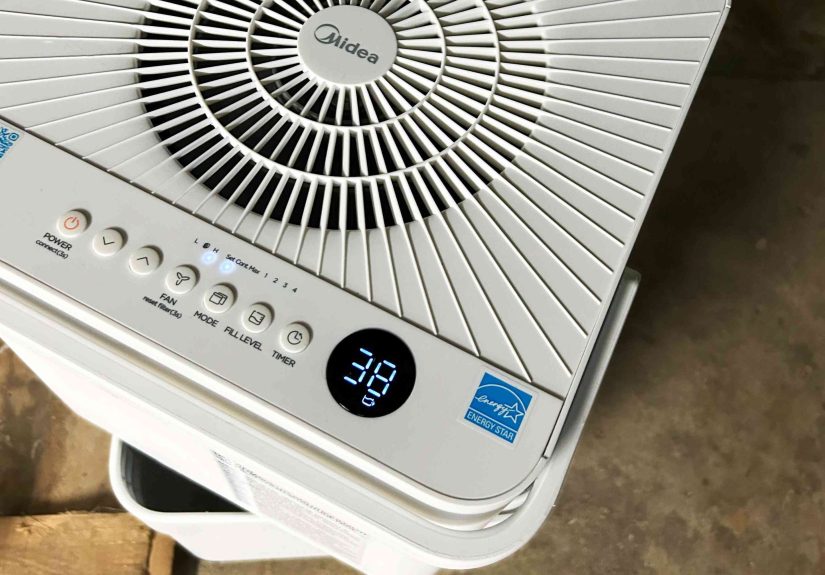
Use ENERGY STAR if you’re buying new
If you’re shopping for a unit, an ENERGY STAR-certified dehumidifier can improve efficiency and lower operating costs. Look for a model with:
- Built-in humidistat
- Auto shutoff
- Low-temp capability (if needed)
- Continuous drainage option (great for basements)
- Appropriate capacity for the space
Dehumidifier vs. Humidifier in Winter: Which One Do You Need?
This is the winter plot twist: some homes need a dehumidifier in one room and a humidifier in another.
Use a dehumidifier if:
- RH is too high (usually above 50%)
- You have condensation, damp smells, or mold concerns
- You’re dealing with a basement or laundry moisture issue
Use a humidifier if:
- RH is too low (often below 30%)
- You have dry skin, nosebleeds, or irritated breathing passages
- Your house is very dry from heating
Use neither if: your humidity is already in a healthy range and you don’t have moisture symptoms. Sometimes the best appliance choice is… not buying another appliance.
Common Mistakes to Avoid
- Skipping the hygrometer: The fastest way to waste money is treating humidity blindly.
- Setting RH too low: A super-dry home can be uncomfortable and rough on sinuses, skin, and wood furnishings.
- Ignoring condensation: Wet windows are not just “winter being winter.” They’re useful warning signs.
- Running the unit in a freezing-cold room without checking specs: Winter performance depends on operating temperature.
- Forgetting ventilation: Kitchen and bathroom exhaust fans are still your first line of defense.
- Using a dehumidifier as a leak solution: Moisture control and leak repair are teammates, not substitutes.
Final Verdict: Should You Use a Dehumidifier in Winter?
Experts say it dependsand that’s actually good news. It means you don’t have to guess. If your home is damp, musty, or showing condensation, a dehumidifier can be a smart winter tool. If your air is already dry, using one can make winter comfort worse.
The best approach is simple: measure your indoor humidity, watch for moisture signs, and adjust room by room. Aim for a balanced humidity range (typically 30%–50%, often 30%–40% in colder winter weather), and let your hygrometernot your hunchmake the call.
In other words: your dehumidifier is not a winter requirement. It’s a winter solutionbut only when your house actually has a humidity problem to solve.
Winter Humidity Experiences: What Homeowners Commonly Notice
One of the most useful ways to understand this topic is to look at what people actually experience at home in winter. The pattern is surprisingly consistent: many homeowners start the season thinking they need more moisture because the air feels dry, then discover one part of the house is quietly collecting too much moisture.
A common example is the “dry upstairs, damp basement” house. Upstairs bedrooms feel desert-dry at nightdry lips, scratchy throat, static in blanketswhile the basement smells musty and the windows near the laundry area fog up after a shower and a load of clothes. In that situation, running a dehumidifier in the basement often helps a lot, while a small humidifier may make more sense upstairs. Same house, same winter, two different humidity problems.
Another frequent experience happens in apartments. People keep windows shut all winter (totally normal), cook more often, take hot showers, and dry towels indoors. Then they notice condensation on bedroom windows in the morning and assume the windows are “bad.” Sometimes the windows are old, yesbut often the bigger issue is indoor humidity building up overnight. A dehumidifier in the main living area, plus better use of the bathroom fan and kitchen exhaust, can make a noticeable difference within a few days.
Families with kids also tend to notice humidity swings more quickly, especially in bedrooms. If the air is too dry, children may wake up with stuffy noses or irritated throats. If the air is too damp, rooms can feel stale and heavy, and mold may appear around windows or behind furniture. The biggest improvement usually comes from tracking humidity with a simple meter and stopping the “guess-and-buy” cycle. Once people see the number, the decision gets easier.
Homeowners in colder climates often report a learning curve with dehumidifiers in unheated spaces. A unit that works great in summer may seem slow or inconsistent in a chilly basement in January. That doesn’t always mean the appliance is broken. Sometimes the room temperature is just too low for that model to perform well. Moving the unit to a slightly warmer zone, improving airflow, or switching to a unit rated for lower temperatures usually solves the problem.
There’s also the “laundry room surprise.” People start line-drying clothes indoors to save money in winter, then notice foggy windows, damp smells, or slower drying everywhere nearby. A dehumidifier in that room can feel like a cheat codeit dries clothes faster and helps keep moisture from spreading through the house. It’s one of the most practical winter uses for a dehumidifier.
The main takeaway from real-world winter experiences is simple: humidity problems are local, not always whole-house. Instead of asking, “Should I use a dehumidifier in winter?” many homeowners get better results by asking, “Which room needs humidity control right now?” That small mindset shift usually leads to better comfort, fewer moisture headaches, and lower energy waste.