Table of Contents >> Show >> Hide
- Who Matt Dillon Is, and Why This Cookhouse Deserves Attention
- What Old Chaser Farm Actually Is
- The Cookhouse: Not a Restaurant, but the Soul of One
- From Ugly Garage to Pacific Northwest Fantasy
- Why Vashon Island Changes the Whole Conversation
- How the Cookhouse Connects to Dillon’s Food Philosophy
- What the Place Means for Seattle Food Culture
- The Experience of Old Chaser Farm and the Cookhouse on Vashon Island
- Final Thoughts
If Seattle’s restaurant scene had a secret second address, it might just be a ferry ride away. Not a flashy downtown dining room. Not a moody little chef’s counter with a 47-item natural wine list and exactly one candle pretending to do all the lighting. No, the real plot twist in chef Matt Dillon’s story lives on Vashon Island at Old Chaser Farm, where the famous Seattle chef built a cookhouse that feels equal parts working kitchen, farm headquarters, party barn, and Pacific Northwest daydream.
That is what makes the cookhouse so interesting. It is not just a pretty backdrop for food photos, and it is definitely not one of those places where a reclaimed wood table is doing all the emotional labor. The cookhouse at Old Chaser Farm matters because it helps explain who Matt Dillon is as a chef, why his food has long felt so rooted in place, and how the idea of “farm to table” can become something more than restaurant marketing wallpaper.
For people who know Dillon from Sitka & Spruce, The Corson Building, Bar Ferd’nand, Bar Sajor, or London Plane, the cookhouse fills in the missing chapter. It shows the source, the rhythm, and the physical landscape behind a chef whose reputation was built on local ingredients long before “seasonal” became a mandatory menu adjective.
Who Matt Dillon Is, and Why This Cookhouse Deserves Attention
Matt Dillon is not just another Seattle chef with a good palate and a sturdy pair of boots. He is one of the cooks most closely associated with modern Pacific Northwest cuisine. His early restaurant work helped define a style of eating that put regional produce, local meat, wild foods, fermentation, and wood-fired craft at the center of the plate. Long before that approach became standard issue, Dillon was already treating local ingredients as the headline act, not the garnish.
His credentials back that up. He was named one of Food & Wine’s Best New Chefs in 2007, and he later won a James Beard Award for Best Chef: Northwest. Those honors helped put him on the national map, but the more interesting part of his story is how he kept moving closer to the source. While many chefs expand into larger dining rooms, more polished hospitality groups, or lifestyle brands with suspiciously expensive olive oil, Dillon moved in the opposite direction. He dug deeper into farming.
That shift is the key to understanding Old Chaser Farm. The cookhouse is not a side project or a rustic accessory. It is part of a larger philosophy that says a chef should not only cook the food, but also understand the land, the weather, the timing, the harvest, the animals, the preservation, and the plain old chaos required to make dinner possible.
What Old Chaser Farm Actually Is
Old Chaser Farm sits on Vashon Island, southwest of Seattle, and it has long functioned as more than a private patch of countryside. Dillon bought the property in 2010 after finding what had been an organic U-pick blueberry farm. Over time, it became a working farm tied closely to his culinary life, raising vegetables, fruit, livestock, eggs, and honey while feeding both his restaurants and the broader community.
That matters because Old Chaser Farm is not a decorative hobby farm built for weekend selfies and one photogenic wheelbarrow. It has supported a seasonal CSA, fresh foods for local markets and restaurants, private and community events, and farm-and-larder offerings that connect island agriculture to Seattle-area diners. In other words, this place has a job.
And right at the heart of that job is the cookhouse.
The Cookhouse: Not a Restaurant, but the Soul of One
The word “cookhouse” sounds charming, but it also undersells the place. This is not simply a little outbuilding where someone makes soup and stares thoughtfully at radicchio. At Old Chaser Farm, the cookhouse has served as an all-purpose building used for everything from wedding receptions and corporate retreats to cookbook dinners, staff gatherings, canning sessions, packing CSA boxes, and long workdays that blur the line between labor and hospitality.
That flexible identity is what makes it special. The cookhouse is a kitchen, yes, but also a staging ground for food culture. It is where a chef’s ideas meet the practical side of a working farm. It is where vegetables get preserved, eggs get washed, bottles get opened, and the difference between “event space” and “real life” basically disappears.
There is something wonderfully honest about that. Plenty of food spaces are designed to look rustic. This one is rustic because real things happen there.
From Ugly Garage to Pacific Northwest Fantasy
One of the most compelling parts of the cookhouse story is that it was not always beautiful. When Dillon bought the property, the building was, by his own description, an ugly concrete-floored garage with a bathroom and a large closet. That is not exactly the beginning of a design fairy tale. It is more like the beginning of a contractor’s deep sigh.
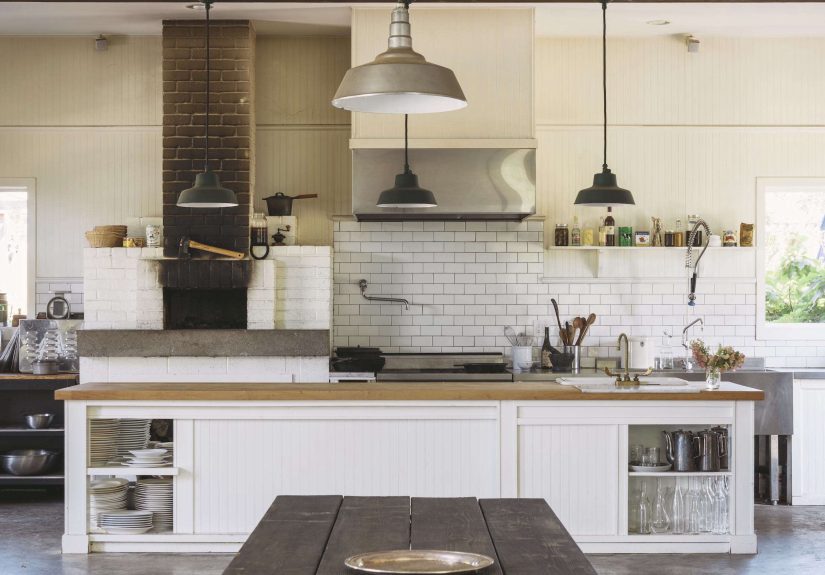
But Dillon, working with his friend Edward Pierce, reimagined the structure into something practical, warm, and deeply personal. The finished space leaned into function rather than showmanship: a woodstove, subway tile backsplash, large butcher-block island, generous storage, custom prep sink, marble work surface, trestle table, open shelves, and custom barn doors. The decor is not overworked. Much of it comes from the farm itself, including dried materials gathered from the land.
The result is a room that feels elegant without acting fancy about it. It is stylish, but in the way a great field jacket is stylish: handsome, useful, and clearly built for weather. Even better, the cookhouse reflects Dillon’s collaborative instincts. Friends made pieces for the space. Craftspeople helped shape the details. The building feels assembled by a community, not just decorated by one.
Perhaps the most revealing detail of all is that Dillon reportedly lived in the cookhouse during the first three years he owned the farm. That fact alone tells you this was never a detached design exercise. The place was lived in, worked in, and tested by daily use.
Why Vashon Island Changes the Whole Conversation
You cannot really talk about the cookhouse without talking about Vashon Island. The setting is not a scenic extra; it is part of the point. Reaching Vashon typically means taking a ferry, and that small layer of travel changes your mindset before you even arrive. Seattle fades. The pace slows. The air feels different. Your phone still works, unfortunately, but your soul starts pretending it does not.
Vashon has long been associated with farming, orchards, food makers, and a quieter relationship to the region’s natural abundance. In that context, Old Chaser Farm feels less like an isolated chef compound and more like part of a larger island culture. The farm belongs to a place where agriculture is still visible, seasonal eating still feels normal, and community food systems still have real texture.
That geography helps explain why Dillon’s cooking philosophy makes sense there. On Vashon, the idea of building menus around weather, harvest, preservation, and proximity does not feel performative. It feels practical. It feels local. It feels earned.
How the Cookhouse Connects to Dillon’s Food Philosophy
Dillon’s restaurants were long celebrated for ingredient-driven cooking, and Old Chaser Farm helped make that possible in a literal, physical way. Reporting over the years has tied the farm to the produce, meat, eggs, and honey that supplied his restaurant group. Seattle food writers also noted how Old Chaser Farm pushed the farm-to-table idea beyond the usual restaurant shorthand by linking the growing, preserving, and cooking sides of the operation.
That is where the cookhouse becomes more than architecture. It becomes infrastructure. It is the room where ingredients are organized, preserved, shared, and transformed. It is also where hospitality gets redefined. Instead of separating “back of house” from “guest experience,” the cookhouse smudges the boundary in the best possible way. A place can host a special dinner one day, process the season’s work the next, and welcome a private gathering after that.
This is also why the cookhouse fits so neatly into Dillon’s larger culinary reputation. His work has always balanced refinement with restraint. The food is thoughtful, but not fussy. The spaces are beautiful, but not sterile. Old Chaser Farm’s cookhouse follows the same logic. It is carefully designed, but it still looks like it could handle a muddy boot, a stack of produce boxes, and a very serious pot of stock.
What the Place Means for Seattle Food Culture
Seattle has no shortage of talented chefs, but Matt Dillon’s influence stands out because he helped shape how the city thinks about regional food. He was part of a generation that treated the Pacific Northwest not just as a location, but as a pantry, a growing calendar, and a creative discipline. The cookhouse at Old Chaser Farm helps explain the engine behind that mindset.
It also offers a quiet critique of modern restaurant culture. In a dining era that can sometimes feel built around expansion, branding, and social-media shininess, the cookhouse suggests a different measure of success: build something durable, make it useful, keep it beautiful, feed people well, and stay close to the land that makes the whole thing possible. Not bad for a former garage.
The Experience of Old Chaser Farm and the Cookhouse on Vashon Island
If you are trying to imagine the experience of the cookhouse at Old Chaser Farm, the first thing to understand is that it probably does not feel like arriving at a standard restaurant at all. There is no obvious hostess stand energy to it. No frantic check-in moment. No loud bar crowd pretending to be casual while clearly fighting for the best stool. The appeal here is slower and more layered.
You start with the trip itself. Getting to Vashon already separates this experience from a normal Seattle meal. The ferry ride acts like a palate cleanser before the food ever appears. By the time you roll off the boat and head toward the farm, the city feels far away, even though it really is not. That little bit of distance changes how a meal, an event, or even an afternoon gathering can feel. You are not just going out to eat. You are crossing into a different tempo.
Then there is the visual side of the place. The cookhouse is beautiful, but it is not polished in a way that feels intimidating. It reads as warm, serviceable, and lived in. The materials are simple. The shelves are practical. The tables seem ready for both supper and work. Dried botanicals, wine glasses, pickled goods, pantry staples, and kitchen tools all share the same universe. Nothing looks like it was placed there by a stylist who has never cleaned a prep sink.
That is what makes the experience memorable. The cookhouse does not separate beauty from labor. It lets you feel both at once. You can picture a communal dinner there, sure, but you can also picture plums being canned, bread being sliced, eggs being sorted, and boxes being packed for the farm share. The atmosphere carries the satisfaction of a place that earns its charm honestly.
Food experiences tied to Old Chaser Farm also seem to carry that same mix of celebration and utility. The farm has hosted private and community events, seasonal offerings, and food-centered gatherings that feel rooted in the land rather than staged above it. Even its farm stand language has a warm, conversational spirit, with mentions of wood-fired pizza, asados, meal kits, and seasonal products that reflect what is available rather than what some branding meeting wished were available.
That flexibility may be the cookhouse’s most distinctive quality. It can hold a supper, a workshop, a retreat, a preservation day, or a gathering of friends without losing its identity. It is not trying to be one perfect thing. It is trying to be useful, generous, and grounded. In food culture, that combination is rarer than it should be.
And maybe that is the lasting appeal of Matt Dillon’s cookhouse on Vashon Island. It represents a version of hospitality that feels deeply Northwestern: seasonal, collaborative, handmade, a little muddy, a little elegant, and completely uninterested in fake perfection. It reminds us that some of the most meaningful food spaces are not the ones shouting the loudest. They are the ones quietly doing the work, one meal, one season, and one ferry ride at a time.
Final Thoughts
Seattle Chef Matt Dillon’s cookhouse at Old Chaser Farm on Vashon Island is more than a stylish outbuilding with excellent bones. It is a window into a whole approach to food: grow it, gather it, preserve it, cook it, share it, and let the place itself shape the meal. That idea may sound simple, but in practice it requires vision, labor, and a lot more than one good dinner party.
What makes the cookhouse memorable is that it captures both halves of Dillon’s identity. He is the award-winning Seattle chef with serious culinary credibility, and he is also the farm-minded builder of systems, spaces, and experiences that begin well before a plate hits the table. Old Chaser Farm brings those two versions of him together beautifully.
And really, that may be the biggest takeaway here: the cookhouse is not just where food gets made. It is where a philosophy becomes visible. It is the kind of place that makes you rethink what a “food destination” can be. Sometimes it is not a downtown restaurant at all. Sometimes it is a ferry ride, a farm, a former garage, and a room full of dried flowers, pantry jars, and possibility.